
TL;DR:
- Recurring revenue for food creators comes from subscriptions, memberships, or digital sales that provide predictable, ongoing income.
- Launching small subscription programs early helps food businesses establish stable cash flow and growth potential.
Recurring revenue is defined as income food creators earn on a scheduled, ongoing basis from customers who pay repeatedly through subscriptions, memberships, or automated billing. Unlike one-time sales, this model gives meal preppers, chefs, and digital recipe authors a predictable cash flow they can plan around. Understanding what is recurring revenue for food creators means recognizing it as the difference between chasing new orders every week and waking up to income that is already confirmed. The industry term for the core metric is Monthly Recurring Revenue, or MRR, and it is the number every serious food business should track. A 5% increase in customer retention can raise profits by 25–95%. That single statistic explains why subscription models have moved from a nice-to-have to a core business strategy.
What is recurring revenue for food creators?
Recurring revenue in the food industry takes several distinct forms. Each model suits a different type of creator, and choosing the right one early saves a lot of rework later.

Subscription meal plans
A subscription meal plan charges customers a fixed weekly or monthly fee for a set number of meals. This is the most direct recurring income model for meal preppers and catering chefs. Small-scale food creators can generate $300 to $875 weekly with just 5 to 25 subscribers. With 15–25 subscribers and added utility-focused products, profits improve by 10–20%. That range proves you do not need hundreds of customers to build meaningful recurring income.
Membership programs and prepaid credits
Membership programs charge a recurring fee in exchange for perks like priority booking, discounted meals, or exclusive recipes. Customers who prepay psychologically invest in the relationship, which drives higher engagement and more consistent orders. This model works especially well for chefs with a loyal following who want to deepen customer relationships beyond a single transaction.
Digital recipe subscriptions
Digital recipe authors can charge a monthly fee for access to a recipe library, meal planning guides, or cooking tutorials. This model has near-zero food cost, which makes margins exceptionally strong. It also scales without the operational complexity of physical meal delivery.
Hybrid models
Hybrid subscription models combine a fixed base fee with usage-based pricing. A catering chef might charge a monthly retainer for corporate clients and then bill per head for each event. This structure provides both predictability and flexibility, which is critical for businesses with variable order volumes.
Pro Tip: Subscription programs work best as a revenue floor that supplements your existing sales channels, not as a replacement. Keep farmers market or direct sales running to acquire new customers, then convert them to subscribers.
| Model | Best for | Key benefit |
|---|---|---|
| Subscription meal plans | Meal preppers, catering chefs | Predictable weekly income |
| Membership programs | Chefs with loyal audiences | Higher customer lifetime value |
| Digital recipe subscriptions | Recipe authors, cooking educators | High margins, no food cost |
| Hybrid fixed + usage | Caterers, corporate meal providers | Flexibility with a revenue floor |
How do you calculate recurring revenue for your food business?
MRR is the foundation of any subscription business. MRR equals the number of paying subscribers multiplied by the average monthly subscription price. It measures ongoing business momentum in a way that one-time sales never can. Annual Recurring Revenue, or ARR, is simply MRR multiplied by 12, and it is useful for annual budgeting and planning.
Here is a practical framework for calculating and forecasting your recurring income:
-
Set your subscription price. Subscription pricing for food creators typically ranges from $9.99 to $19.99 per month. Annual plans improve cash flow and retention because customers commit upfront.
-
Calculate your MRR. If you have 30 subscribers paying $15 per month, your MRR is $450. That is your confirmed baseline income before any one-time orders.
-
Estimate customer lifetime value (CLV). CLV equals average monthly revenue per customer multiplied by the average number of months they stay subscribed. A customer paying $15 per month for 10 months has a CLV of $150.
-
Track your churn rate. Churn is the percentage of subscribers who cancel in a given month. A 5% monthly churn rate means you lose 1 in 20 subscribers every month. Reducing churn is the fastest way to grow MRR without adding new customers.
-
Model growth scenarios. Project MRR at 20, 50, and 100 subscribers to understand what operational investment each level requires.
Pro Tip: Meal prep clients ordering 10–15 meals per week generate $560–$840 per month in revenue. At 50 clients, gross profit can reach $7,600–$13,400 monthly at margins of 65–70%. Use those numbers as your growth targets, not abstract goals.
| Subscribers | Price/month | MRR | Annual (ARR) |
|---|---|---|---|
| 10 | $15 | $150 | $1,800 |
| 30 | $15 | $450 | $5,400 |
| 50 | $20 | $1,000 | $12,000 |
| 100 | $20 | $2,000 | $24,000 |
What strategies build sustainable recurring income for food creators?
Building monthly revenue streams for food businesses requires more than setting up a subscription page. The creators who succeed combine smart pricing, strong customer relationships, and multiple income layers.
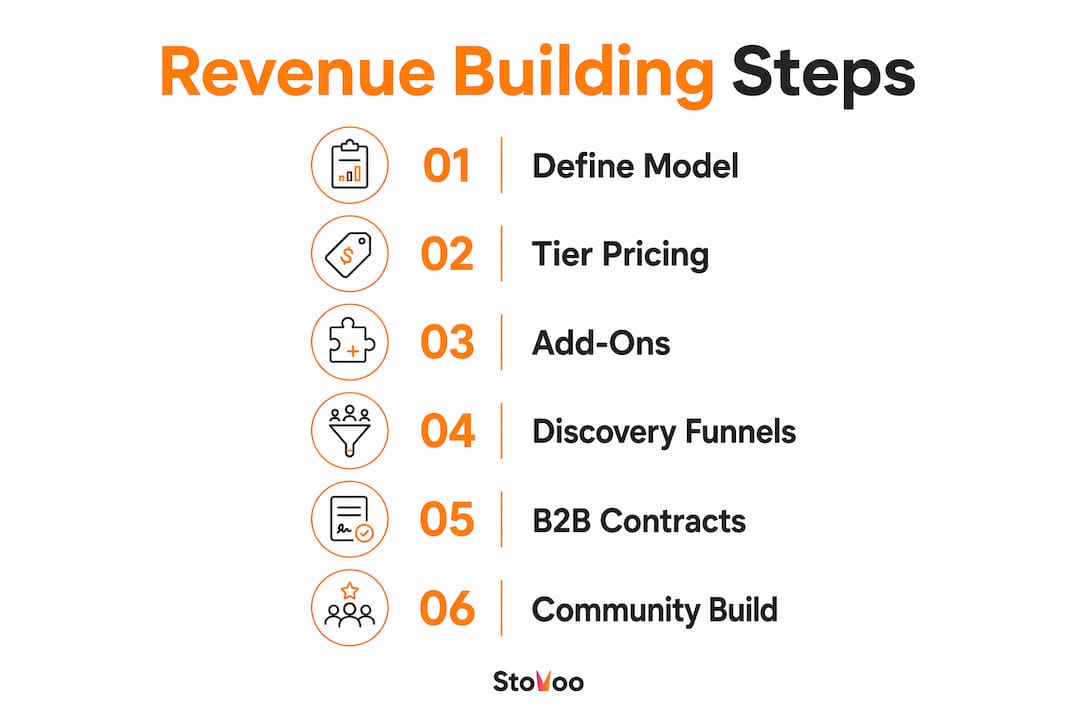
Price in tiers. Offer two or three subscription levels. A basic tier might include five meals per week, while a premium tier adds custom meal planning or priority delivery. Tiered pricing increases average revenue per customer and gives new subscribers a low-risk entry point.
Use add-ons and upsells. A meal prep subscriber might add a weekly smoothie pack or a digital grocery list. Add-ons increase revenue without requiring new customer acquisition. They also deepen the customer's reliance on your service, which reduces churn.
Turn existing sales channels into discovery funnels. Your farmers market table, Instagram page, or catering inquiry form is not just a sales channel. It is a pipeline for converting one-time buyers into subscribers. Offer a first-week discount or a free recipe download to move people from a single purchase to a recurring commitment.
Secure B2B contracts early. Corporate catering contracts establish a stable revenue floor because corporate clients churn far less than retail subscribers. A single office lunch contract paying $800 per month provides more stability than 50 individual subscribers at $15 each. Pursue B2B relationships early, even at a slight discount, to anchor your MRR.
Build community around your food brand. Subscribers who feel connected to your story and values stay longer. Share behind-the-scenes content, run subscriber-only polls on next week's menu, and respond personally to feedback. Community is the most underrated retention tool in the food creator space. You can also grow your restaurant followers to widen the top of your subscriber funnel.
Pro Tip: Stacking multiple revenue streams with subscriptions at the core reduces risk and accelerates sustainable growth. Combine a meal subscription with digital recipe sales and one B2B catering contract to create three income layers that protect each other.
What challenges do food creators face with recurring revenue?
Recurring revenue is not automatic. The most common obstacles are predictable, and knowing them in advance puts you ahead of most creators who learn the hard way.
-
Customer churn. Subscribers cancel for many reasons: price sensitivity, menu fatigue, or life changes. The fix is proactive engagement. Send a check-in message before renewal, offer a pause option instead of a cancellation, and rotate your menu regularly to keep things fresh.
-
Operational complexity at scale. Managing 10 subscribers manually is fine. Managing 100 with WhatsApp messages and spreadsheets creates errors, missed orders, and frustrated customers. Automated billing and a centralized order management system are not optional at that scale. They are the only way to maintain quality.
-
Payment friction. Failed payments are a silent churn driver. Enrolling at least 75% of customers in automated billing maximizes retention and removes the awkward manual follow-up on overdue payments. Set up automatic retry logic for failed cards.
-
Over-reliance on one revenue stream. A single subscription tier with no add-ons or B2B contracts leaves your business exposed. If one corporate client cancels or a price increase triggers a wave of cancellations, you need other income layers to absorb the impact.
-
Underpricing. Many food creators set prices based on what feels comfortable rather than what the numbers require. Calculate your food cost, labor, packaging, and delivery before setting a price. Margins of 65–70% are achievable in meal prep, but only if pricing is grounded in real costs. You can also review catering budget frameworks to understand what corporate clients expect to pay.
Key Takeaways
Recurring revenue is the most reliable path to financial stability for food creators, and MRR is the single metric that tells you whether your subscription business is growing or shrinking.
| Point | Details |
|---|---|
| Define your model first | Choose between meal subscriptions, memberships, digital recipes, or hybrid models based on your audience and capacity. |
| Track MRR from day one | MRR equals subscribers multiplied by price. It shows real momentum better than one-time sales ever will. |
| Secure B2B contracts early | Corporate clients churn less and provide a stable revenue floor that individual subscribers cannot match. |
| Automate billing immediately | Enrolling 75% of customers in auto-pay reduces payment friction and directly improves retention. |
| Stack revenue streams | Combining subscriptions with digital products and B2B contracts protects income when one stream dips. |
Why I think most food creators wait too long to build recurring revenue
The most common mistake I see food creators make is treating subscriptions as something to add later, once the business is "established." That thinking has it backward. Recurring revenue is what makes a food business feel established in the first place.
When I first watched a meal prep creator launch a subscription with just eight customers, the reaction was almost apologetic. Eight subscribers felt too small to matter. But those eight customers generated a confirmed $120 per week before a single new order came in. That baseline changed how the creator planned, purchased, and priced everything else.
The creators who build the most durable businesses are not the ones with the biggest social followings. They are the ones who converted even a small audience into a recurring commitment early. A B2B catering contract secured in month two of a food business provides more stability than six months of viral recipe posts.
My honest recommendation: do not wait for a large audience before launching a subscription. Launch with a small, committed group, price it based on real costs, and use the predictable income to fund growth. The meal subscription models that succeed are rarely the most elaborate ones. They are the ones that started early and iterated consistently.
— freeman
How Stovoo helps food creators build recurring revenue
Food creators who are ready to move beyond manual orders and scattered messages have a purpose-built option in Stovoo.
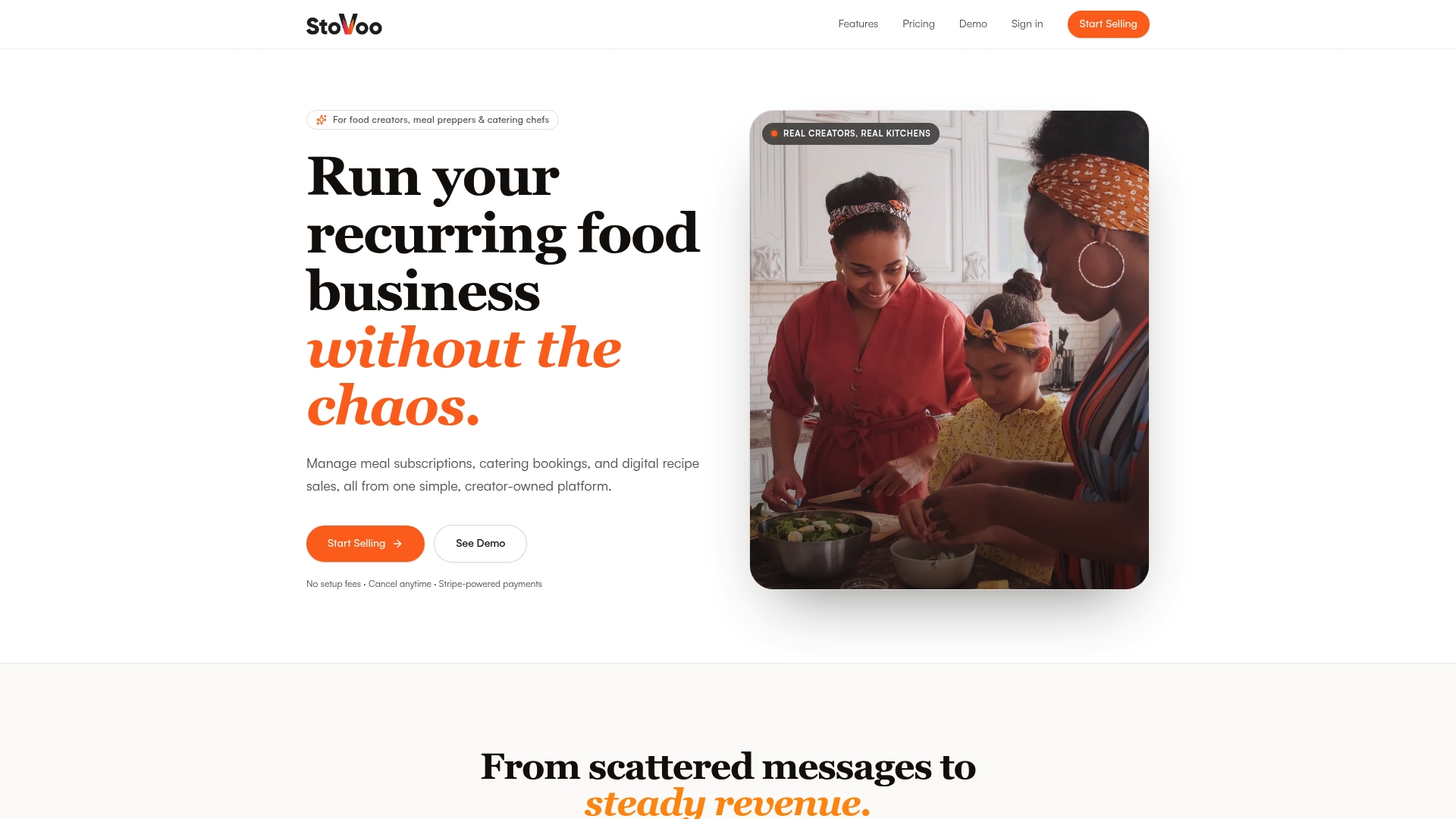
Stovoo is a platform built specifically for meal preppers, catering chefs, and digital recipe authors who want to generate consistent, recurring income without the administrative chaos. The platform handles automated billing, meal subscription management, catering bookings, and digital recipe sales from a single dashboard. Creators set up a mobile-first shopfront, share the link across social media and messaging apps, and start accepting recurring orders immediately. Customers on Stovoo, like those on the Express Kitchen Lagos storefront, can browse meal plans, place recurring orders, and pay automatically. If you are ready to build predictable income from your food business, Stovoo gives you the tools to do it without the spreadsheet headaches.
FAQ
What is recurring revenue for food creators?
Recurring revenue for food creators is income earned on a scheduled, repeating basis through subscriptions, memberships, or automated billing. It differs from one-time sales because customers commit to paying regularly, giving creators a predictable monthly income baseline.
How do I calculate MRR for my food subscription business?
MRR equals the number of paying subscribers multiplied by the average monthly subscription price. For example, 30 subscribers paying $15 per month produces an MRR of $450.
What subscription price should I charge for food plans?
Subscription pricing for food creators typically ranges from $9.99 to $19.99 per month for digital products, while meal prep plans are priced based on food cost, labor, and delivery. Annual plans improve cash flow and tend to reduce churn compared to monthly billing.
How do I reduce subscriber churn in my food business?
Offer a pause option before cancellation, rotate your menu to prevent fatigue, and enroll at least 75% of customers in automated billing to remove payment friction. Proactive check-ins before renewal dates also catch at-risk subscribers before they cancel.
Can a small food creator realistically earn recurring income?
A food creator with just 5 to 25 subscribers can generate $300 to $875 per week through a subscription model. Starting small with a committed group and iterating on pricing and offerings is a proven path to building sustainable recurring income.