
TL;DR:
- Successful meal plan businesses are multi-layered, leveraging smart pricing, diverse revenue streams, and operational efficiency. Building on subscriptions, adding B2B contracts and strategic upsells provide stability and scalability, while minimizing churn requires strong onboarding and disciplined pricing strategies. Using cloud kitchens and route density optimization accelerates growth, with a focus on core fundamentals ensuring long-term profitability.
Most people assume a meal plan business is just a fancy subscription box with chopped vegetables inside. That assumption leaves a lot of money on the table. The reality is that successful meal plan businesses are multi-layered operations built on smart pricing psychology, diversified revenue streams, and a relentless focus on operational efficiency. The meal kit market generates $5.95 billion in US revenue annually, and the businesses that capture the biggest share are not the ones with the prettiest packaging. They are the ones that understand the real profit levers. This guide breaks all of them down.
Table of Contents
- Defining the meal plan business model
- Revenue streams and scalability explained
- Managing churn, loyalty, and profit levers
- Step-by-step framework to launch and scale
- A fresh perspective on meal plan business success
- Grow your meal plan business with Stovoo
- Frequently asked questions
Key Takeaways
| Point | Details |
|---|---|
| Multiple revenue streams | Meal plan businesses thrive on diverse sources like subscriptions, catering, and B2B deals. |
| Scaling requires smart operations | Cloud kitchens, route density, and supplier consolidation are essential for growth without high overhead. |
| Avoid discount traps | Heavy reliance on promotions increases churn and lowers lifetime customer value. |
| Prioritize pricing strategy | Middle-tier pricing and quarterly reviews help boost profits and customer retention. |
| B2B contracts stabilize income | Partnering with businesses ensures consistent revenue and reduces customer turnover. |
Defining the meal plan business model
The term "meal plan business" covers a surprisingly wide range of operations. At the simplest level, you have direct-to-consumer meal kits where customers receive pre-portioned ingredients with recipe cards. But that is only one slice of the market. Meal prep services cook food in full and deliver ready-to-eat containers. Recurring catering businesses serve corporate clients, schools, or healthcare facilities on consistent schedules. Each of these structures has different margins, customer relationships, and operational demands.
The key distinction between meal kits and meal prep services is labor intensity. Meal kits keep labor costs lower because you are assembling, not cooking. Meal prep services take on more kitchen time but can charge higher prices and build stronger loyalty because customers are buying convenience, not just ingredients. Recurring catering, meanwhile, is the quiet engine that most entrepreneurs overlook entirely.
Three core drivers determine success across every variant:
- Operational efficiency: Can you prep, pack, and deliver at a cost that leaves room for profit?
- Pricing strategy: Are you pricing to reflect value, or are you racing to the bottom?
- Customer experience: Does your onboarding, communication, and product quality earn repeat business?
HelloFresh derives over 95% of its revenue from subscriptions, which illustrates exactly how central recurring income is to a viable, scalable recurring food business.
Running a meal plan business without a subscription anchor is like filling a bucket with a hole in it. You replace customers faster than you grow. The subscription model is not just a revenue structure. It is a stability mechanism.
Revenue streams and scalability explained
Building a meal plan business on a single revenue stream is risky. The strongest operations stack multiple income sources that complement each other. Here is how that looks in practice.
Subscriptions form the backbone. Weekly plans carry the highest engagement because customers interact with your brand every single week. Monthly or quarterly subscriptions are less frequent but attract customers who want flexibility, and they often convert well with tiered pricing. The tiered approach is worth examining closely. Research shows that middle-tier plans capture 70% uptake, which means designing your pricing architecture around a "goldilocks" option in the center is not just a nice idea. It is a proven driver of revenue.
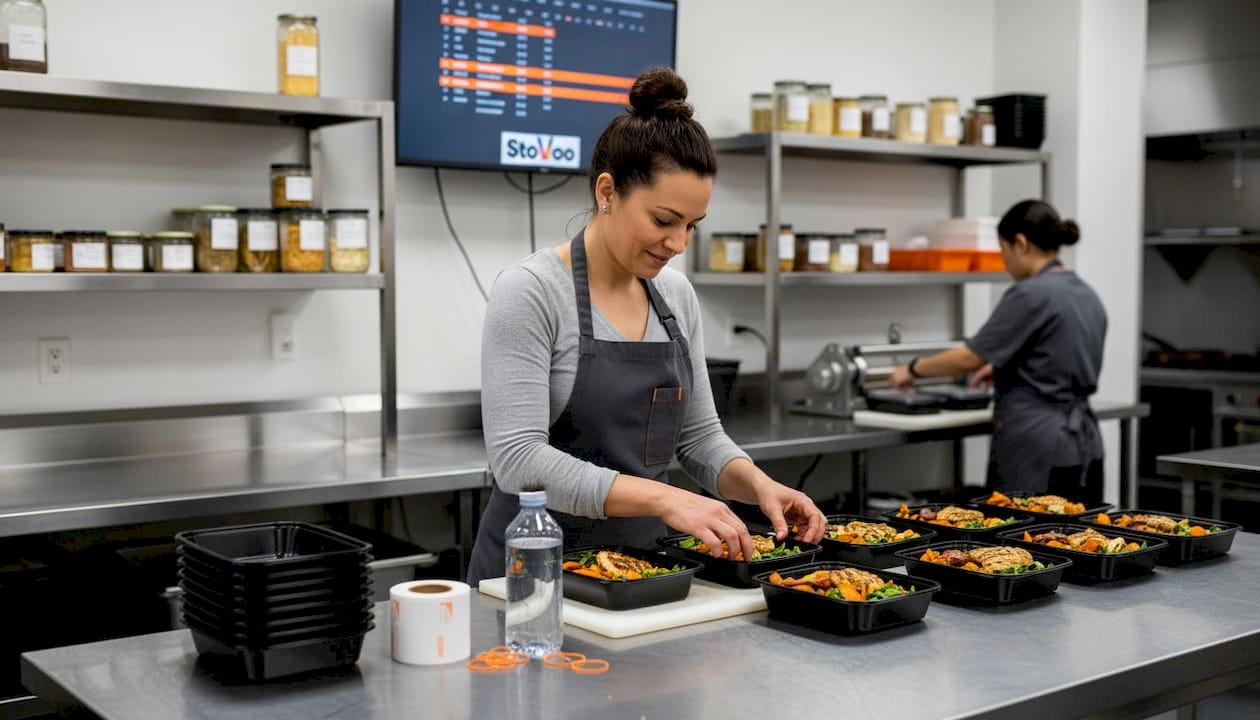
Catering and B2B contracts provide something subscriptions alone cannot: predictability. A corporate lunch contract for 50 employees three times a week gives you a fixed floor of revenue you can plan around. Scaling event catering into large group bookings amplifies this effect further. B2B clients also tend to churn less than individual consumers, making them a stabilizing force in your revenue mix.
Upsells and add-ons are where smart operators quietly boost their margins. Adding snacks, cold-pressed juices, sides, or pantry staples to a core meal plan can lift average order value by 10 to 20% without adding significant complexity. The key is to offer add-ons that are genuinely useful rather than random. If your customers are eating clean, a protein bar pack or a bag of specialty coffee makes sense. Random merchandise does not.
Here is a comparison of the major revenue streams and how they scale:
| Revenue stream | Predictability | Scalability | Margin potential |
|---|---|---|---|
| Weekly subscriptions | High | Medium | Medium |
| Monthly/quarterly plans | Medium | High | Medium to high |
| B2B/corporate catering | Very high | Medium | High |
| Event catering | Low | High (per event) | Variable |
| Add-ons/upsells | Medium | High | High |
Scaling operations without ballooning overhead is where most new entrants struggle. The two most effective levers are cloud kitchens and route density optimization. Cloud kitchens eliminate the overhead of a traditional restaurant build-out. You rent commercial kitchen time as needed, which keeps fixed costs low while you prove your model. Founders who scale their food business using this approach can reach break-even faster because capital is not tied up in real estate.
Industry benchmarks suggest that meal plan startups project $1.5 to $3M in year-one revenue, with break-even typically achieved between years two and three, and EBITDA scaling to $9 to $11 million by year five for well-run operations.
Pro Tip: Route density, the practice of clustering deliveries in the same geographic zones, can reduce delivery costs by 15 to 25%. Plan your launch geography deliberately rather than spreading thin across a wide area.
A numbered breakdown of how to layer revenue streams smartly:
- Launch with a subscription-only model to build a predictable customer base.
- Add a B2B or corporate catering contract within the first six months for stability.
- Introduce two or three add-on products once your core menu is running smoothly.
- Expand into event catering selectively, using it to test new markets without permanent overhead.
- Revisit tier pricing quarterly to find the sweet spot between volume and margin.
Managing churn, loyalty, and profit levers
Churn is the silent killer in meal plan businesses. You can acquire customers efficiently and still bleed money if they leave within a few months. The Blue Apron story is the clearest case study in what happens when over-reliance on promotional pricing trains customers to only buy when there is a deep discount. Once the discount disappears, so do the customers.
What actually drives churn:
- Discount-dependent acquisition: Customers who join because of a 50% off promo are not loyal to your product. They are loyal to the deal.
- Weak onboarding: If a new subscriber does not understand the value in their first two weeks, they cancel. First impressions are everything.
- Wrong segment targeting: Marketing to price-sensitive consumers when your product is premium creates a fundamental mismatch between expectations and reality.
- Inconsistent product quality: One bad delivery can undo months of goodwill.
The risk that over-reliance on promos trains churn is not a theory. It is a documented pattern. Smart operators need 8 to 14 months of average customer tenure to reach true viability. Anything shorter means you are constantly spending on acquisition to replace lost customers rather than building compounding retention.
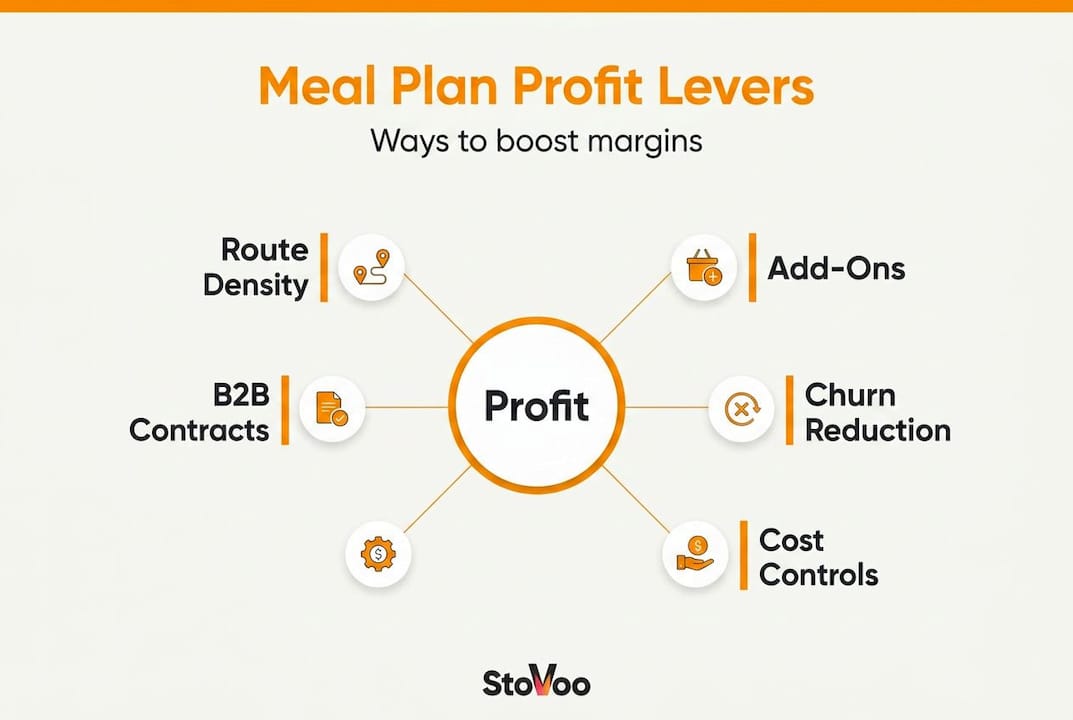
Here is a data table showing the major profit levers and their realistic impact:
| Profit lever | Estimated impact | Implementation difficulty |
|---|---|---|
| Route density optimization | 15 to 25% delivery cost reduction | Medium |
| Supplier consolidation | 8 to 12% food cost reduction | Low to medium |
| Add-ons and upsells | 10 to 20% AOV lift | Low |
| B2B contracts | Reduced churn, stable floor revenue | Medium |
| Tiered pricing psychology | 70% uptake on middle tier | Low |
Research confirms that profit levers including route density and add-ons can meaningfully shift unit economics even for small operations. A B2B food service contract that covers your baseline overhead means your consumer subscriptions become pure upside.
Pro Tip: Run quarterly pricing tests by adjusting one tier at a time. Small increases of 5 to 8% annually, framed around added value, tend to lift revenue without causing meaningful cancellations.
Common traps to avoid:
- Offering blanket discounts to win back churned customers. This rewards leaving rather than staying.
- Targeting segments that are inherently low-loyalty, such as students or one-off event buyers, as your primary audience.
- Skipping the onboarding sequence. An automated welcome series that sets expectations and highlights key benefits dramatically improves early retention.
- Expanding the menu too fast. Complexity increases food waste and operational risk before you have the systems to manage it.
Step-by-step framework to launch and scale
With the theory clear, here is a practical roadmap you can actually follow. This is not a generic business plan template. It is built around the real benchmarks and pressure points specific to meal plan operations.
-
Start with market research and niche selection. Identify whether your local market is underserved for meal prep, corporate catering, or specialty dietary plans. Niche operators such as keto-focused or allergy-friendly services compete on a different axis than generalists and typically command higher prices.
-
Set up production in a cloud kitchen. Avoid the capital trap of leasing a full commercial kitchen before you have validated demand. Cloud kitchen access gives you professional-grade production at a fraction of the cost.
-
Build supplier relationships early. Supplier consolidation is a meal plan operations lever that compounds over time. Fewer suppliers means better pricing, more reliable delivery, and less administrative overhead.
-
Design your pricing tiers intentionally. Create three clear options: a starter plan, a core plan, and a premium plan. Price the middle option to represent the best value. Research consistently shows middle-tier pricing psychology drives the highest volume at solid margins.
-
Launch with a B2B or recurring catering client. Trying to fill your schedule entirely with retail subscribers from day one is slow and expensive. One corporate lunch contract gives you a revenue floor and allows you to refine operations at consistent volumes before scaling consumer marketing.
-
Build a churn-reduction system from week one. This means a structured onboarding sequence, clear communication on delivery schedules, and a feedback loop that catches unhappy customers before they cancel. Customized menu options increase perceived value and make plans stickier.
-
Run quarterly pricing reviews. Apply 5 to 8% annual increases strategically, tied to genuine improvements like new menu items, better packaging, or expanded delivery zones. Customers accept increases when they see value growing alongside price.
-
Track and optimize route density as you grow. As your subscriber base expands, geographic clustering of deliveries directly lowers your cost per delivery and improves on-time performance.
Pro Tip: Focus your first marketing dollars on a single geography and a single customer segment. Mastering one zone before expanding protects your margins and builds word-of-mouth faster than spreading thin.
A fresh perspective on meal plan business success
Here is something most launch guides will not tell you: chasing direct-to-consumer subscriptions as your only strategy in year one is a high-risk move. The acquisition costs are steep, the competition for attention is fierce, and a single bad review or delivery failure can send churn spiking before you have built any buffer.
The businesses that actually survive the first two years almost always have a B2B anchor. B2B revenue strategies are undervalued precisely because they are less glamorous than building a sleek consumer brand. But a corporate lunch contract does not cancel because of a bad week or a competitor's promo code. It shows up on your invoice reliably.
The other uncomfortable truth is about discounting. It feels like growth when signups spike after a promotion, but DTC heavy discounting risks building an audience of deal hunters who will never pay full price. HelloFresh scaled aggressively with promotions and then spent years and enormous marketing budgets trying to improve retention. Most independent meal plan operators do not have those resources to burn.
What should founders prioritize in year one? Three things: operational consistency, a B2B revenue anchor, and a disciplined pricing strategy that does not rely on discounts to close new customers. Everything else, the brand story, the social media presence, the expanded menu, can come later. Get the fundamentals producing reliable cash flow first.
Grow your meal plan business with Stovoo
Running a meal plan business means juggling subscriptions, catering bookings, customer communications, and delivery logistics all at once. Most founders start managing this across WhatsApp, spreadsheets, and whatever booking tool they stumbled across first. It works until it does not.
Stovoo is built specifically to streamline meal plan operations for food entrepreneurs who want to grow without the administrative chaos. The platform brings subscriptions, catering bookings, customer management, and automated billing into a single dashboard. You get a professional mobile-first shopfront you can share across social media and messaging apps, plus the tools to manage recurring orders and digital product sales without needing a developer or a full-time admin. If you are ready to build a food business that runs as smoothly as it cooks, Stovoo is where that journey starts.
Frequently asked questions
What are the main types of meal plan business models?
The main types are subscription-based meal kits, meal prep services, and recurring catering for businesses or groups. The meal kit market generates $5.95 billion in US revenue, with subscription revenue driving the vast majority of income for leading players.
How do meal plan businesses scale efficiently?
Efficient scaling relies on cloud kitchens, route density, partnerships, and supplier consolidation. Cloud kitchens and partnerships reduce capital expenditure significantly, allowing operators to grow production capacity without proportional cost increases.
What causes high churn in meal plan businesses?
Primary causes include discount fatigue, short-term customers, and weak onboarding processes. Over-reliance on promos trains churn by attracting customers who only engage at discounted prices rather than building genuine product loyalty.
What gross margin and revenue milestones should a founder aim for?
The initial goal is $1.5 to $3M in year one, with break-even by year two or three. Well-run operations can see EBITDA scaling to $9 to $11M by year five with disciplined pricing and operational efficiency.
How can meal plan businesses minimize customer churn?
Focus on B2B contracts, high-quality onboarding, and periodic pricing reviews. B2B contracts and quarterly pricing tests together create a revenue structure that is both stable and gradually growing without relying on constant new customer acquisition.