
TL;DR:
- Simplifying food business admin reduces hidden costs and saves entrepreneurs thousands annually in lost time.
- Implementing automated, integrated systems streamlines operations, improves accuracy, and enables scalable growth.
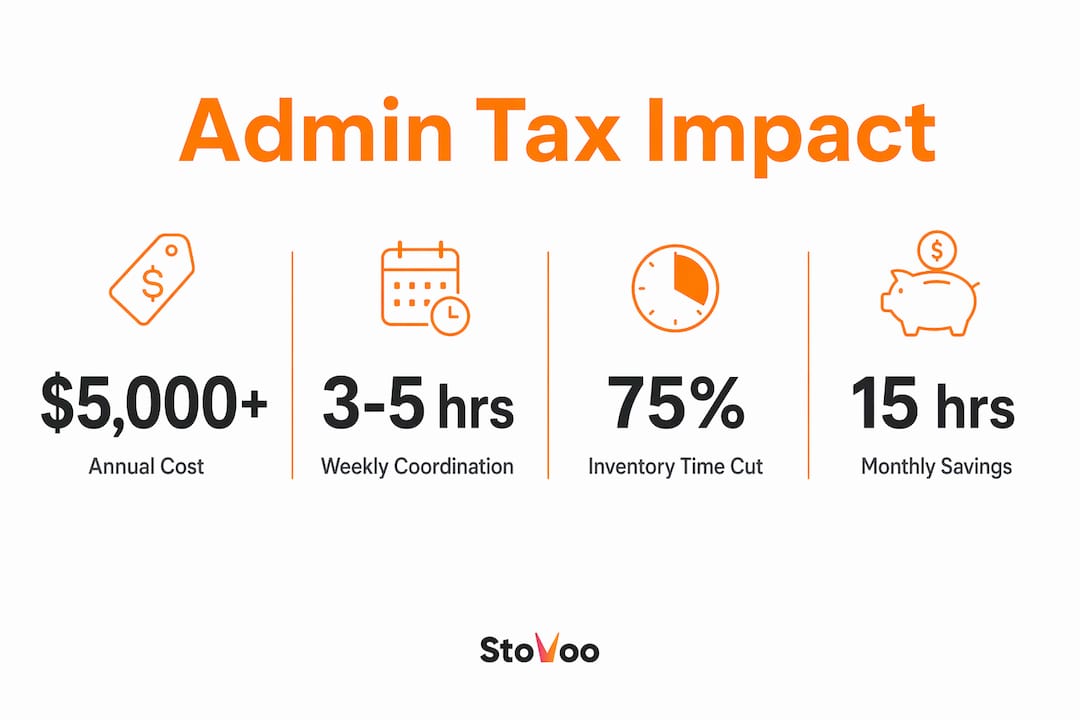
Simplifying food business admin means replacing manual, scattered processes with connected systems that handle billing, orders, and customer management automatically. Food entrepreneurs who rely on WhatsApp threads, spreadsheets, and handwritten notes face a real financial penalty. Food and restaurant operators lose 10–18 hours weekly on manual tasks, creating a hidden "Admin Tax" that costs $5,000–$32,000 per year per location. That is money and time that could go directly into growing your food business. This guide breaks down why simplify food business admin is the single most important operational decision you can make in 2026.
Why food businesses struggle with admin overload
The core problem is fragmentation. Most small food businesses run on a patchwork of tools: a spreadsheet for inventory, WhatsApp for catering inquiries, a notes app for orders, and a separate payment link for billing. Each tool works in isolation, so data never flows automatically from one place to another.
The result is a daily grind of manual reconciliation. Consider what a typical week looks like for a meal prep entrepreneur:
- Manually tracking which customers paid and which did not
- Copying order details from WhatsApp into a spreadsheet
- Sending individual invoices by hand after each delivery
- Chasing customers for confirmations and dietary updates
- Rebuilding the same catering quote from scratch every time
Manual catering coordination alone consumes 3–5 hours weekly, and that is before you count inventory checks, customer follow-ups, and billing reconciliation. For a solo food entrepreneur, that is a part-time job that produces zero revenue.
The fragmented system problem also creates a data lag. Managers spend 8–12 hours weekly consolidating stale data from disconnected tools, which means decisions get made on outdated information. You order too much of one ingredient and run short on another. You miss a catering inquiry because it got buried in a message thread.

Pro Tip: Map every admin task you do in a single week by writing it down as you go. Most food entrepreneurs are shocked to discover they spend more time on admin than on cooking or customer acquisition.
How does automation simplify food business operations?
Automation in food business administration is not about replacing people. It is about removing the repetitive, low-value tasks that eat your time and replacing them with systems that run in the background.
Integrated back-office automation reduces inventory count time by up to 75% and saves 15 hours of kitchen admin monthly per operation. That is nearly two full workdays returned to you every month. The same systems improve food cost variance by 2–3%, which compounds into meaningful savings over a year.
The key distinction is between tools that are merely connected versus tools that share a unified data architecture. A true integrated platform does not just give you one login. It means your orders, billing, inventory, and customer records all update from the same source of truth automatically. When a customer places a meal plan order, the system logs the payment, updates your customer record, and adjusts your prep count without you touching anything.
| Feature | Fragmented tools | Integrated platform |
|---|---|---|
| Order management | Manual entry across apps | Automatic, centralized |
| Billing | Hand-sent invoices | Automated recurring billing |
| Inventory updates | Manual spreadsheet edits | Real-time sync |
| Customer records | Scattered across messages | Single customer profile |
| Reporting | Hours of manual consolidation | On-demand dashboards |
Legacy fragmented systems force reactive management. You find out about a problem after it has already cost you. Integrated platforms give you near-real-time intelligence so you can act before a small issue becomes a costly one. Platforms like Stovoo are built specifically for food creators and meal preppers, centralizing orders, subscriptions, catering bookings, and billing in one place so nothing falls through the cracks.
Pro Tip: When evaluating any food business software, ask one question: does data flow automatically between modules, or do I still need to copy and paste? If the answer is the latter, it is not truly integrated.
What are the real benefits of simplifying food admin tasks?
The benefits of simplifying food admin reach further than most entrepreneurs expect. Time savings are the most obvious win, but the downstream effects on service quality, team morale, and business growth are just as significant.
Food businesses using automated scheduling and inventory see 20–30% less food waste and 15–20% increased seat turnover through data-aligned orders. Less waste means lower food costs. Higher turnover means more revenue from the same kitchen. Both outcomes flow directly from removing the guesswork that manual admin creates.
Here is what food entrepreneurs consistently report after simplifying their admin processes:
- More time for customers. When billing and order tracking run automatically, you spend your energy on relationships and quality, not paperwork.
- Fewer errors. Automated systems do not misread a WhatsApp message or forget to log a payment. Order accuracy improves immediately.
- Better team performance. Reducing admin noise improves frontline service quality and decreases employee turnover. Your team focuses on food and service instead of chasing down information.
- Scalability. A manual system that works for 20 customers breaks at 80. An automated system scales without adding proportional admin hours.
- Data-driven decisions. You can see which meal plans sell best, which customers order most frequently, and where your food costs are running high, all without building a report by hand.
The financial case is direct. If the admin tax costs your business $5,000 annually at the low end, and a purpose-built platform costs a fraction of that, the return on investment is clear within the first month of use. You can explore meal prep operations strategies to see how other food entrepreneurs have quantified these gains.
What practical steps can you take to start simplifying admin?
Starting the process of simplifying admin processes in the food industry does not require a complete overhaul on day one. A phased approach works better and sticks longer.
-
Map your current workflows. Write down every admin task you perform in a week. Include time estimates. This gives you a baseline and shows you where the biggest time sinks are. Most food entrepreneurs find that billing, order tracking, and customer communication account for 70% of their admin hours.
-
Prioritize the highest-cost tasks first. Catering coordination and recurring billing are usually the best starting points. Automation can reduce catering coordination time by 90%, which makes it the fastest win available. Tackle the tasks that cost you the most time before moving to secondary processes.
-
Build a clean data foundation early. Food and beverage startups that implement ERP or management systems early avoid costly retrofits later. Starting with clean, centralized data is far easier than untangling years of spreadsheets and message threads after you have scaled. Do not wait until you are overwhelmed to make the switch.
-
Select software built for food businesses specifically. Generic project management tools or accounting software were not designed for meal plans, catering bookings, or recipe sales. Purpose-built platforms like Stovoo handle the specific workflows of food creators without requiring you to customize or hack a general tool. Read more about food business admin tasks to understand what a purpose-built solution should cover.
-
Train your team and track results. Adoption matters as much as the tool itself. Set clear expectations for how orders, payments, and customer records should flow through the new system. Review your time savings and error rates after 30 days to confirm the change is working.
The most common mistake food entrepreneurs make is adding headcount instead of redesigning the work. Hiring additional operations staff without process redesign fails to fix admin backlogs and significantly increases fixed costs. Automation clears the backlog more effectively at a fraction of the cost. You can also explore catering business tips for specific guidance on applying these steps to catering operations.
Key takeaways
Simplifying food business admin is the highest-ROI operational change a food entrepreneur can make, delivering time savings, cost reductions, and scalable growth from a single decision.
| Point | Details |
|---|---|
| Admin tax is real | Manual tasks cost food businesses $5,000–$32,000 annually in lost time and productivity. |
| Integration beats connection | True platforms unify data automatically; connected tools still require manual reconciliation. |
| Automation reduces waste | Automated inventory and scheduling cut food waste by 20–30% and improve order accuracy. |
| Start early, not late | Building clean systems before you scale avoids costly and disruptive retrofits later. |
| Hire less, automate more | Adding staff without redesigning workflows increases costs without fixing the underlying problem. |
The mindset shift that actually changes everything
I have worked with enough food entrepreneurs to know the real barrier to simplifying admin is not technical. It is psychological. Most founders believe that chaos is the price of passion. They think that if they just hire one more person or work a few more hours, the backlog will clear. It never does.
The shift that actually works is treating your admin system as a product you build, not a problem you endure. When you design your workflows the same way you design a menu, with intention and structure, the business starts to run instead of just survive.
The entrepreneurs I have seen grow fastest are not the ones who cook the best food. They are the ones who figured out early that their time is worth more than data entry. They automated billing before they had 50 customers. They set up a proper shopfront before they needed one. They stopped managing orders through WhatsApp before it became a crisis.
The other thing worth saying plainly: the quality of your food and service goes up when your admin load goes down. Your team is less stressed. Your customers get faster responses. You show up to prep day with a clear head instead of a backlog of unanswered messages. That connection between back-office efficiency and front-of-house quality is real, and it is underestimated by almost every food entrepreneur I have met.
Start small. Pick one process this week and automate it. The momentum builds quickly.
— freeman
How Stovoo helps food entrepreneurs run leaner operations
Running a food business without the right tools means spending your best hours on tasks that should run themselves. Stovoo is built specifically for food creators, meal preppers, and catering chefs who want to grow without drowning in admin.
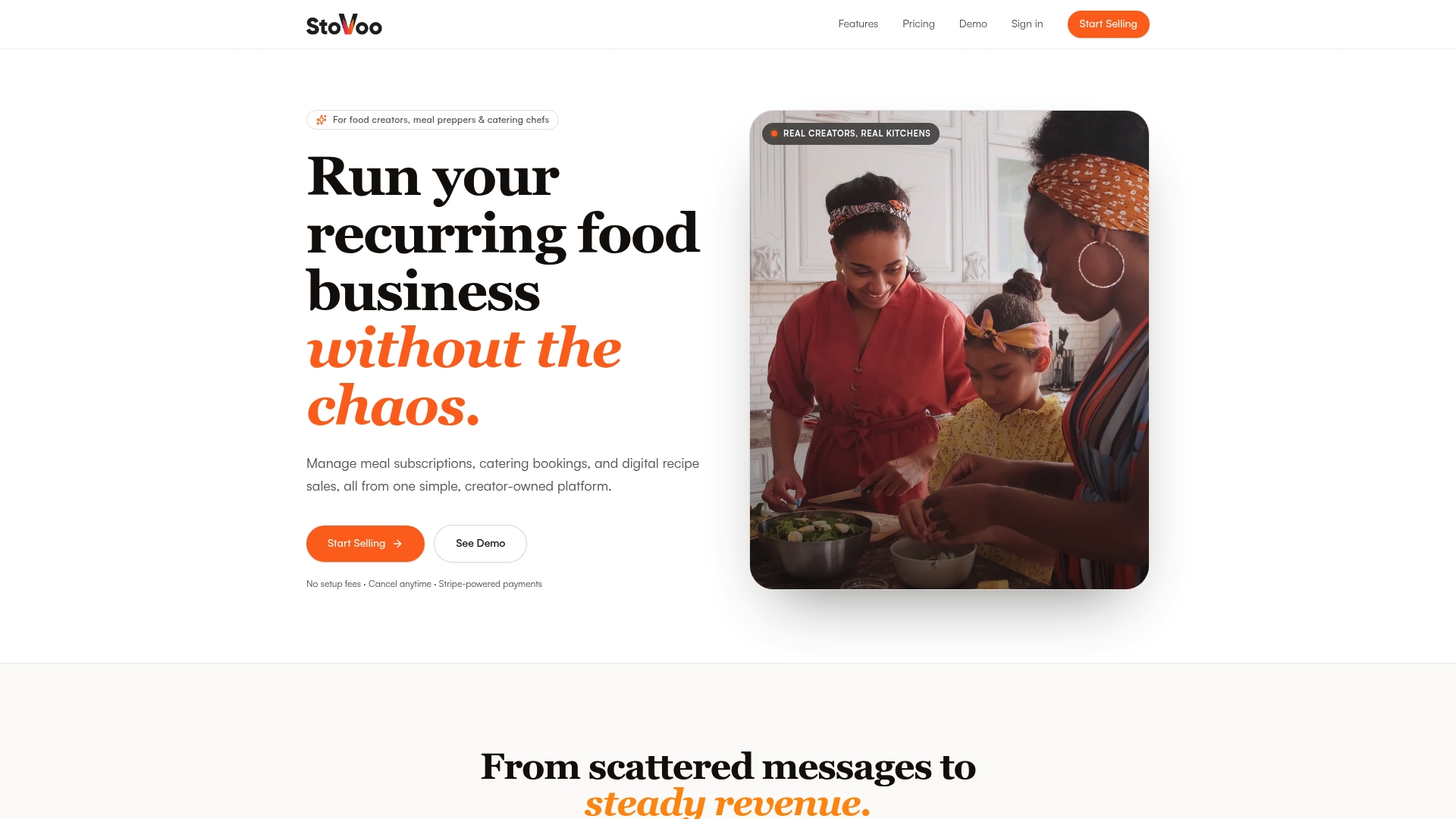
Stovoo gives you a centralized dashboard to manage meal subscription plans, catering bookings, digital recipe sales, and customer records in one place. Automated billing replaces hand-sent invoices. A mobile-first shopfront replaces scattered payment links and WhatsApp orders. You can start selling on Stovoo in minutes and share your shopfront link across social media and messaging apps immediately. Food entrepreneurs using Stovoo report spending significantly less time on admin and more time on the work that actually grows their business. See how real food businesses on Stovoo are running cleaner, more profitable operations today.
FAQ
Why should food businesses simplify their admin processes?
Simplifying admin processes removes the hidden "Admin Tax" that costs food businesses $5,000–$32,000 annually in lost time. It frees up 10–18 hours weekly for revenue-generating work like customer acquisition and food quality.
What is the fastest admin task to automate in a food business?
Catering coordination is the fastest win. Automation reduces catering coordination time by 90%, making it the highest-impact change a food entrepreneur can make with the least disruption.
Does simplifying admin really improve food quality and service?
Yes. Reducing back-office admin noise directly improves frontline service quality and decreases employee turnover, because your team focuses on food and customers instead of chasing down information.
When should a food startup implement a management system?
Early adoption is critical. Food and beverage startups that build management systems before scaling avoid costly retrofits and gain a competitive advantage through operational visibility and accurate data from day one.
Is hiring more staff a good solution to admin overload?
No. Adding operations staff without redesigning workflows increases fixed costs without solving the underlying problem. Automation clears admin backlogs more effectively and at a fraction of the cost of a new hire.