
TL;DR:
- A centralized dashboard combines inventory, orders, and production data into one real-time view for meal prep businesses. It reduces waste, errors, and response times by automating inventory management, planning, and compliance records. Using such platforms improves operational efficiency and financial ROI compared to disconnected, siloed systems.
A centralized dashboard is defined as a single operational interface that pulls inventory, scheduling, customer orders, and production data into one real-time view. This is exactly why meal preps need centralized dashboards: without one, food businesses run on scattered spreadsheets, WhatsApp threads, and disconnected apps that create costly errors. Meal prep professionals who consolidate their operations into one platform gain faster decisions, less waste, and cleaner records. Platforms like Stovoo are built specifically for this, giving food creators a unified control layer for subscriptions, catering, and customer management. The gap between a chaotic kitchen and a profitable one often comes down to where your data lives.
Why meal preps need centralized dashboards: the core case
A centralized dashboard converts fragmented data into daily decision support by combining information from multiple sources into one actionable view. Meal prep managers use this approach to get real-time margin and lead time insights that scattered tools simply cannot deliver. Without that unified view, a meal prep business is essentially flying blind, reacting to problems instead of preventing them.
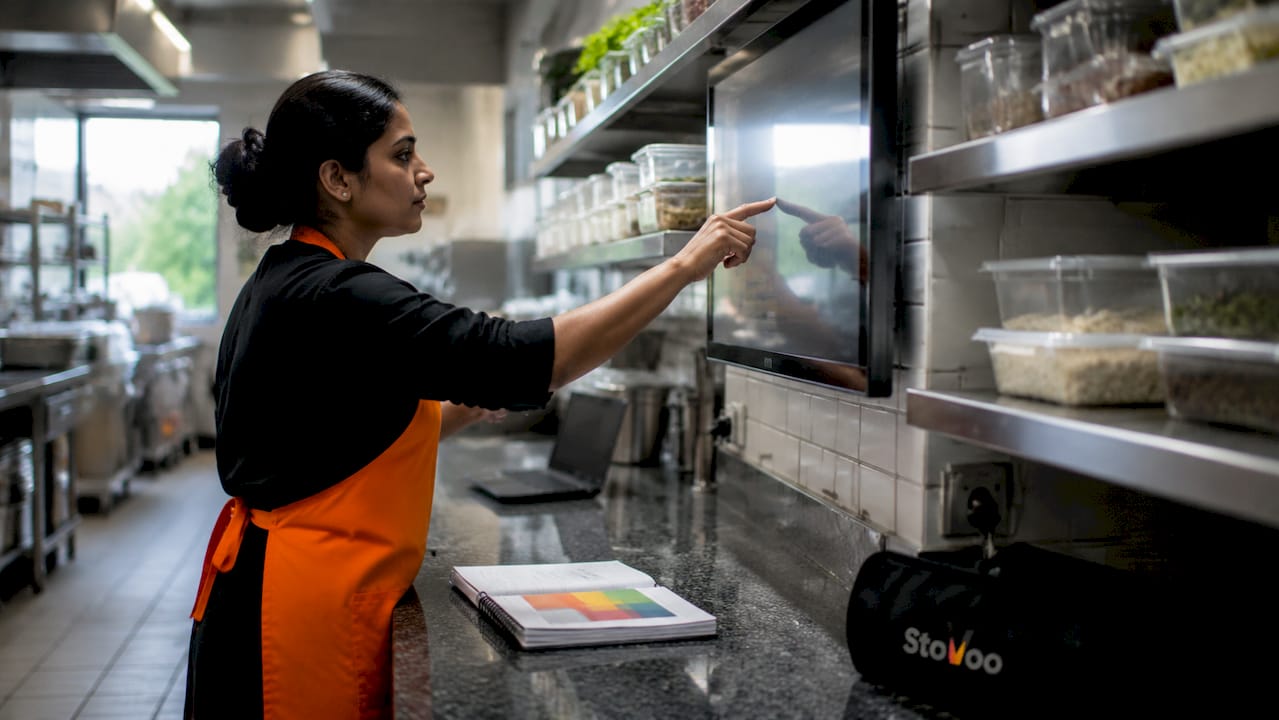
The practical difference shows up fast. When your inventory count, production schedule, and customer orders all live in separate places, small errors compound. A missing ingredient update in one spreadsheet means over-ordering in another, which means spoilage, which means lost money. Centralized meal planning tools cut that chain of errors at the source.
For home cooks scaling up to a small food business, the stakes are just as real. Managing weekly meal plan subscribers through WhatsApp while tracking ingredients in a notes app is not a system. It is a liability. A single dashboard replaces that chaos with one place to check, update, and act.
How dashboards reduce food waste through inventory control
Real-time inventory tracking is the most direct way dashboards reduce food waste in meal prep operations. Digital tools enabling dynamic inventory management support traceability and process optimization, as confirmed by a systematic review of 73 studies published between 2020 and 2025. That body of research points to quality monitoring and inventory management as the two biggest wins from dashboard adoption. The implication is clear: knowing exactly what you have, in real time, prevents you from buying what you do not need.
The mechanism works like this:
- Live stock counts update automatically as ingredients are used, so you never order duplicates or miss a low-stock alert.
- Traceability logs track each ingredient from purchase to plate, making it easy to spot spoilage patterns before they become routine losses.
- Demand forecasting ties your ingredient orders to actual customer subscriptions, not guesswork.
- Expiry alerts flag perishables before they go bad, giving you time to redirect them into that week's menu.
- Waste reporting shows which ingredients are consistently over-ordered, so you can adjust purchasing habits over time.
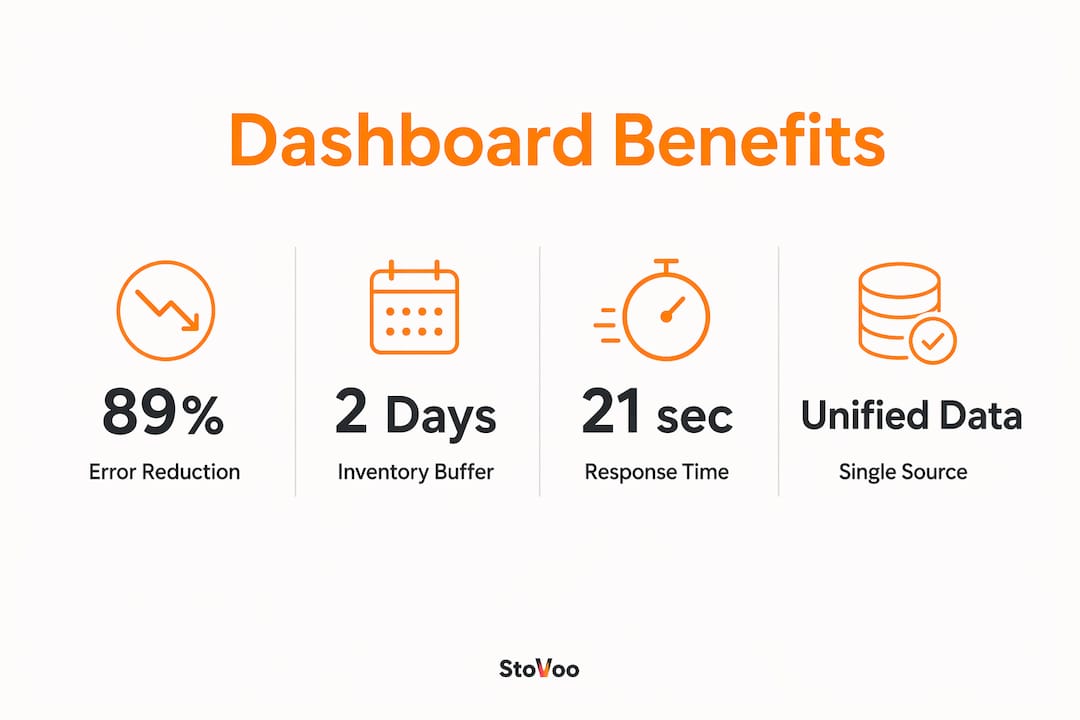
Centralized monitoring with automated workflows decreased inventory record inaccuracies by 88.86% in a food logistics smart-warehouse study. That level of accuracy is the difference between a profitable week and a write-off. For a meal prep business running on tight margins, 88.86% fewer record errors is not a minor improvement. It is a structural advantage.
Pro Tip: Set your dashboard's low-stock alerts to trigger at two days of supply remaining, not one. That buffer gives you time to reorder without emergency shipping costs.
How dashboards connect planning and execution to cut errors
Meal prep efficiency with dashboards depends on more than data collection. The dashboard must flow automatically into production instructions, calculating batch quantities from accurate forecasts and actual inventory rather than manual estimates. Effective dashboards convert plans into timed batch instructions without requiring re-keying at any step. When that automation is missing, operators just shift the reconciliation work to a different screen instead of eliminating it.
The productivity gains from closing that loop are significant. A mid-size food manufacturer that integrated SAP S/4HANA production planning with its warehouse and lab systems saw the following results:
- Backlog clearance time dropped by 92%, meaning production bottlenecks resolved in hours instead of days.
- Inventory accuracy improved by 35%, reducing the gap between what the system said was available and what was actually on the shelf.
- Rework fell by 20%, cutting the cost of fixing batches that did not meet quality standards.
- Annual savings reached $2.5M–$3.0M, driven by reduced backlog and fewer quality risks across the operation.
Those numbers come from a large manufacturer, but the logic applies directly to a meal prep kitchen. When your production schedule automatically updates based on confirmed orders and current stock, you stop making too much of one dish and not enough of another. You also stop the manual back-and-forth between whoever takes orders and whoever cooks them.
Pro Tip: Before choosing a dashboard tool, test whether it can push a production batch list to your kitchen team automatically. If it requires manual export and re-entry, it will create new admin work rather than removing existing work.
Real-time synchronization between planning, execution, and quality control shortens feedback loops. That is what turns a dashboard from a reporting tool into a genuine control layer for meal prep operations.
Are dashboards useful for compliance and audit readiness?
Dashboards secure audit readiness by consolidating invoices, temperature logs, and inventory counts into one timestamped record. Centralized dashboards reduce audit risk by removing disconnected records and manual reconciliation, with audit readiness achievable in 30–90 days when records are properly centralized. That timeline matters for any meal prep business that handles food safety inspections or subscription billing reviews.
The compliance benefits break down into three clear areas:
- Temperature and storage logs are captured automatically, with timestamps and provenance data that let you reconstruct inspection timelines without manual data stitching.
- Invoice and purchase records are stored in one place, making supplier audits straightforward instead of a multi-spreadsheet search.
- Customer billing records for subscription plans are automatically matched to delivery records, eliminating the manual reconciliation that creates gaps in financial audits.
| Compliance task | Siloed system | Centralized dashboard |
|---|---|---|
| Temperature log retrieval | Manual search across multiple files | Instant filter by date and location |
| Invoice reconciliation | Cross-referencing spreadsheets | Automated matching with purchase orders |
| Subscription billing audit | WhatsApp threads and bank statements | Timestamped records in one view |
| Food safety inspection prep | Hours of document gathering | Pre-built audit trail with provenance |
Centralizing audit evidence streams with timestamps lets operators reconstruct inspection timelines easily, avoiding the manual data stitching that creates compliance gaps. For a growing meal prep business, that capability is not optional. It is what separates a business that passes inspections confidently from one that scrambles every time an auditor calls.
Centralized dashboards vs. siloed systems: what you actually gain
Disconnected tools create inconsistent data, and inconsistent data costs money. When your order management, inventory, and billing systems do not talk to each other, every decision is based on incomplete information. The operational and financial impact of that gap is measurable.
Vallarta Supermarkets replaced disconnected tools with one unified platform using Logile Fresh Inventory Management and achieved a 1,070% ROI through better demand forecasting, reduced overproduction, and improved labor efficiency. That result came directly from collapsing siloed systems into one operational plan that improved forecasting visibility and cut spoilage. A meal prep business running weekly subscription plans faces the exact same dynamic at a smaller scale.
| Factor | Siloed tools | Centralized dashboard |
|---|---|---|
| Data consistency | Frequent mismatches between systems | Single source of truth across all functions |
| Response time to freshness risk | Hours (manual check required) | Minutes (automated alert) |
| Labor alignment | Staff work from different data versions | Everyone sees the same real-time view |
| Forecasting accuracy | Based on estimates and past habits | Based on confirmed orders and live stock |
| Audit preparation | Days of manual document gathering | Pre-built, timestamped record trail |
Notification response time dropped from 21,600 seconds to 2.2 seconds in a smart-warehouse study that centralized monitoring and automated alerts. That is a shift from a six-hour lag to near-instant action on freshness risks. For perishable meal prep businesses, that speed is the difference between catching a refrigeration issue and losing an entire week's inventory.
The importance of meal prep organization becomes undeniable when you see what siloed systems cost in real operations. The gains from consolidation are not theoretical. They show up in spoilage rates, labor hours, and customer retention.
Key Takeaways
Centralized dashboards give meal prep businesses a single source of truth that reduces waste, cuts errors, speeds up compliance, and delivers measurable ROI that disconnected tools cannot match.
| Point | Details |
|---|---|
| Inventory accuracy | Centralized tracking reduces record inaccuracies and prevents over-ordering and spoilage. |
| Production automation | Dashboards that push batch instructions automatically eliminate manual re-entry and reduce rework. |
| Audit readiness | Timestamped, consolidated records make compliance reviews faster and more reliable. |
| Operational speed | Automated alerts cut response time to freshness risks from hours to minutes. |
| Financial return | Unified platforms consistently deliver higher ROI than siloed tools through better forecasting and labor alignment. |
The single source of truth is the only thing that matters
Running a meal prep business from multiple disconnected apps is not just inefficient. It is a decision-making problem. Every time you check inventory in one place, orders in another, and billing in a third, you are working from three different versions of reality. None of them is fully accurate, and the gaps between them are where money disappears.
The concept of a "single source of truth" sounds like corporate language, but in a meal prep kitchen it is completely literal. If your dashboard does not reflect current stock, your production plan is wrong. If your production plan is wrong, you either over-cook and waste food or under-cook and disappoint customers. Both outcomes cost you.
What I find most operators miss is the latency problem. The costliest dashboard failure is not bad data. It is slow data. A freshness alert that arrives six hours after a refrigeration issue is not a safety net. It is a post-mortem. The best centralized systems measure alert latency in minutes, and that speed is only possible when monitoring, inventory, and production are all connected in one place.
The other thing worth saying directly: a dashboard that only collects data is not enough. Food business analytics only deliver value when they flow into production instructions automatically. If your team still has to manually export a report and re-enter numbers somewhere else, you have not solved the problem. You have just moved it.
— freeman
How Stovoo brings centralized meal prep management together
Stovoo is built for exactly the kind of food business this article describes: meal prep creators, catering chefs, and small food operations that need one place to manage orders, subscriptions, customer relationships, and billing without the chaos of spreadsheets and messaging apps.
The Stovoo platform gives food creators a centralized dashboard for managing meal subscription plans, catering bookings, digital recipe sales, and customer data in one mobile-first interface. Automated billing replaces manual invoicing. A shareable shopfront link replaces scattered social media DMs. Operators on Stovoo, from Express Kitchen in Lagos to cloud kitchens in London, use the platform to run recurring food businesses with less admin and more control. If you are ready to move your meal prep operation off WhatsApp and onto a real system, create your Stovoo account and set up your shopfront in minutes.
FAQ
What is a centralized dashboard in meal prep?
A centralized dashboard is a single platform that combines inventory, orders, production schedules, and customer data into one real-time view. It replaces disconnected tools like spreadsheets and messaging apps with one operational interface.
How do dashboards reduce food waste for meal preppers?
Dashboards reduce food waste by enabling real-time inventory tracking, expiry alerts, and demand-based ordering. A systematic review of 73 studies confirmed that digital inventory tools support traceability and process optimization that directly cut spoilage.
Can a small meal prep business benefit from a centralized dashboard?
Yes. Small meal prep businesses benefit most from centralized tools because they typically lack dedicated admin staff to manage multiple systems. Platforms like Stovoo are designed specifically for individual food creators and small operations.
How does a dashboard improve audit and compliance readiness?
Centralized dashboards consolidate invoices, temperature logs, and billing records with timestamps, making it possible to reconstruct inspection timelines without manual document gathering. Audit readiness can be achieved in 30–90 days with properly centralized records.
What is the difference between a dashboard and a siloed system?
A siloed system stores data in separate, disconnected tools that do not share information automatically. A centralized dashboard pulls all data into one view, eliminating the inconsistencies and manual reconciliation that siloed tools create.