

If you're wondering what to sell online as a food creator, the shortlist is shorter than you think: prepared meal subscriptions, catering bookings, single-order prepared meals, digital recipe ebooks or courses, meal kits, and shelf-stable specialty foods. For most small operators, the single best entry point is a weekly prepared-meal subscription or a B2B office program, because both generate predictable, recurring revenue instead of one-off sales you have to chase every week.
Prepared meal subscriptions currently outperform meal kits for growth and retention in the market, with future food trends highlighting the growing demand for fresh, colorful meals, and mainstream pricing runs $12 to $18 per meal with room for a 44 to 54% gross margin on premium tiers. That combination of recurring revenue and defensible margin is why it tends to beat a one-time catering gig or a single ebook launch as a starting model.
- Prepared meal subscriptions
- Catering bookings
- Single-order prepared meals or frozen retail
- Digital recipe ebooks and cooking classes
- Meal kits
- Shelf-stable specialty foods
Platforms built for this exact business, like Stovoo, let you manage subscriptions, catering inquiries, and digital sales from one dashboard instead of juggling five apps.
Key Takeaways
| Point | Details |
|---|---|
| Start with subscriptions or B2B | Weekly meal plans or office catering accounts build recurring revenue faster than one-off sales. |
| Price with margin in mind | Keep food cost at 25 to 35% of price to protect a 44 to 54% gross margin on premium tiers. |
| Check legality before selling | Confirm cottage food eligibility for shelf-stable items and use a licensed kitchen for perishables. |
| Add a digital product fast | Recipe ebooks or paid classes need no cold chain and can launch within days. |
| Use Stovoo to launch faster | Stovoo centralizes subscriptions, catering bookings, digital sales, and billing in one dashboard. |
Table of Contents
- What to Sell Online: Six Food Business Models Compared
- How Do You Choose the Right Product to Sell?
- What Should You Charge, and What Margin Should You Expect?
- Where Do You Sell, and How Do You Fulfill Orders?
- What Legal and Operational Boxes Do You Need to Check First?
- What Digital Products Can You Launch Fast?
- How Stovoo Helps You Launch Faster
- Sources
- FAQ
What to Sell Online: Six Food Business Models Compared
Each of these models asks something different of your kitchen, your cash flow, and your time. Here's what to expect from each one before you commit.
- Prepared meal subscriptions. Fully cooked meals delivered on a weekly cadence, best for creators with reliable cold storage and a delivery radius they can actually service. Cold-chain packaging and a consistent menu matter more here than menu variety. Mainstream pricing sits at $12 to $18 per meal, and meal-prep operators broadly aim for $10 to $25 depending on portion size and positioning.
- Meal kits. These work when you can offer a genuinely different cooking experience, not just pre-chopped vegetables. They demand more packaging complexity per order than fully prepared meals, so margins tend to run tighter unless you charge a premium.
- Catering services. Event-based, with longer lead times and bigger order sizes than daily meal sales. One wedding or corporate lunch order can equal a week of subscription revenue, but you need buffer time to plan and staff for it.
- Single-order prepared meals or frozen retail. Good for testing demand without a subscription commitment. Packaging needs to survive shipping and look retail-ready if you're selling through a marketplace or your own shopfront.
- Shelf-stable specialty foods. Jams, spice blends, baked goods, and dry mixes avoid cold-chain logistics entirely and often qualify under cottage food rules.
- Digital products. Recipe ebooks, paid classes, and membership content require no packaging, shipping, or kitchen capacity at all, which makes them the fastest thing on this list to launch.
Pro Tip: Pick one model to validate first. Running a subscription pilot alongside a catering menu and a meal kit test all in the same month is the fastest way to burn out before you learn anything.
How Do You Choose the Right Product to Sell?
Match the product to your kitchen, not just your audience's taste. A brilliant meal kit idea means nothing if you don't have the packaging line to fulfill 50 orders a week without falling behind.
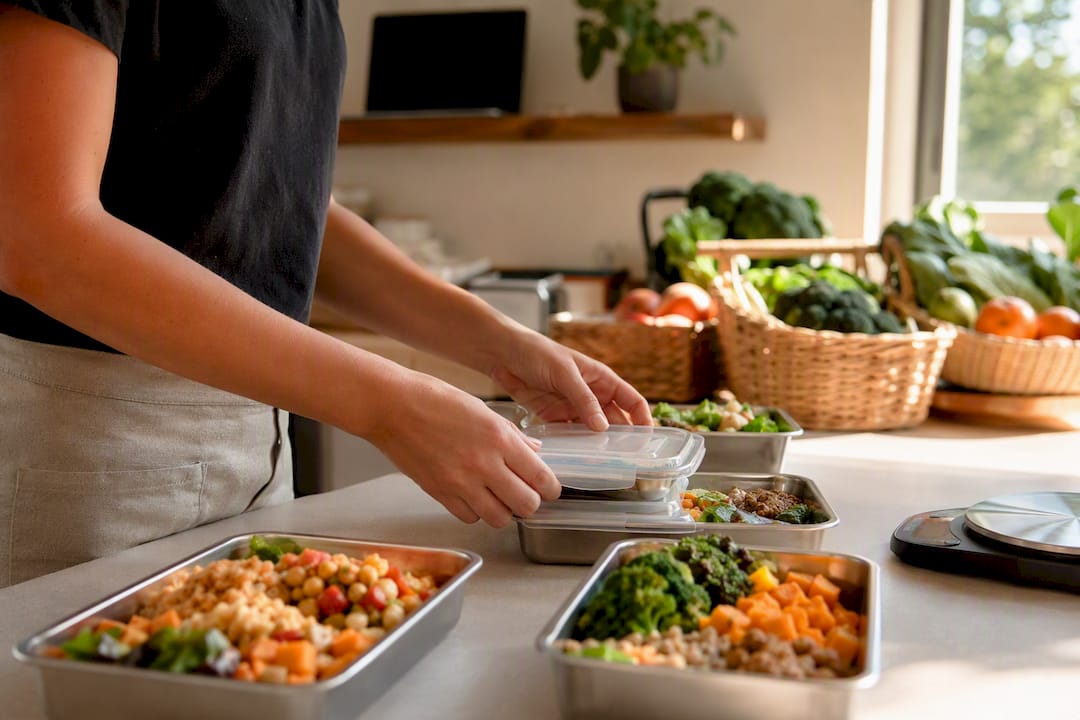
Run through demand fit first: where does your audience already find you, and does that channel favor recurring orders (social-driven subscriptions) or one-time purchases (marketplace browsing)? Then check operational fit. Do you have consistent kitchen access, insulated packaging on hand, and cold-chain capability, or are you working from a home kitchen with real limits on what you can legally prepare? Economics come next. Your food cost should land between 25% and 35% of your selling price, and if a product can't hit that target at a price your customers will actually pay, it's not viable yet. Finally, confirm legal fit: shelf-stable items may qualify for cottage food production, while anything perishable almost certainly needs a licensed commercial kitchen.
Ask yourself:
- Can I fulfill 40 orders a week without hiring help?
- Does my food cost stay under 35% at a price customers will pay?
- Do I need a commercial kitchen, or does my state's cottage food law cover this?
- Is there a channel where my audience already buys food regularly?
- Would a corporate or B2B account be easier to land than 40 individual customers?
Pro Tip: If you can't answer the food-cost question with a real number, you're not ready to price the product yet. Cost out three sample menus before you build a shopfront.
What Should You Charge, and What Margin Should You Expect?
Price per meal typically runs $12 to $18 for mainstream prepared subscriptions, with some meal-prep operators pricing as high as $25 for premium or specialty diets. Keep ingredient cost at 25 to 35% of your selling price, and you'll land in a healthy zone: subscription operators who hit that target often see gross margins in the 44 to 54% range on their better-performing tiers.
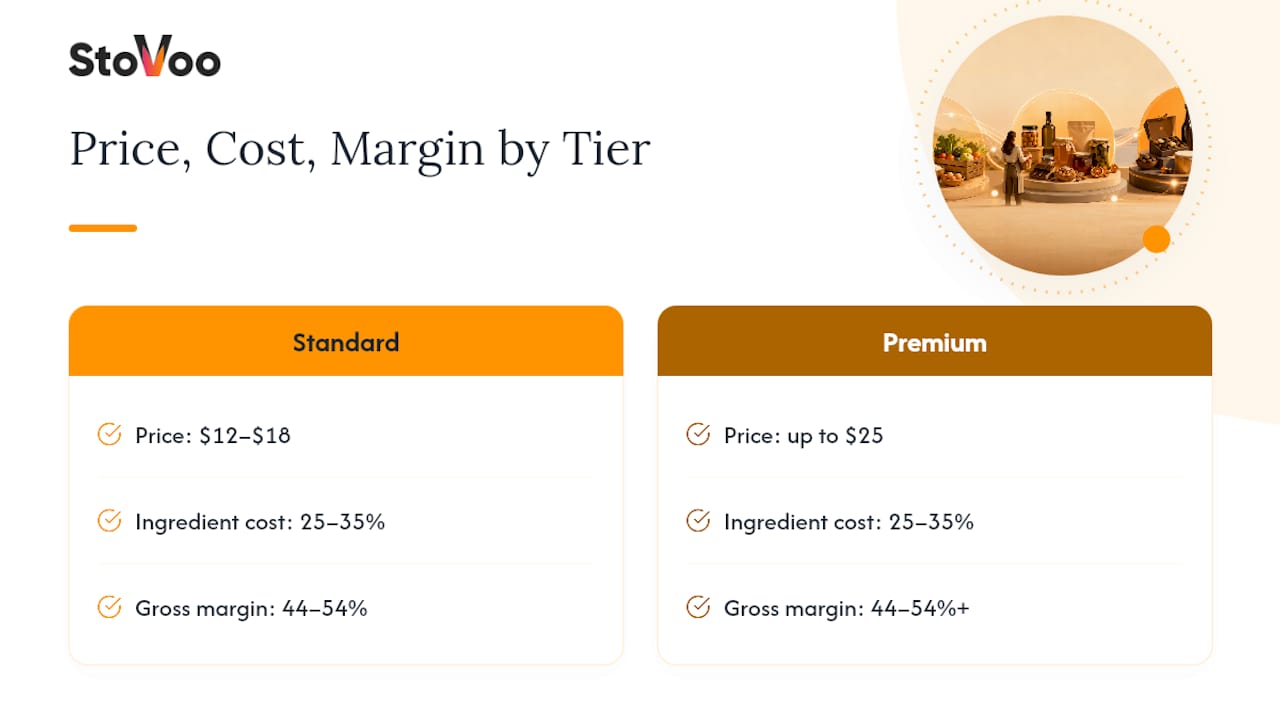
Here's what that looks like for a small subscription selling 10 meals a week per customer to 40 subscribers:
Premium tiers built around dietary needs, athletic macros, or GLP-1 portion control can often support a higher price point without a proportional jump in ingredient cost, which lifts your blended margin across the whole subscriber base.
Where Do You Sell, and How Do You Fulfill Orders?
Your own shopfront paired with a subscription platform gives you full customer ownership: their emails, their order history, their repeat business, without a marketplace taking a cut or hiding your customer data. Delivery apps and marketplaces bring reach you don't have yet, but at the cost of fees and a customer relationship that belongs to the platform, not you.
- Own shopfront and subscription tools: best margin, full customer data, slower initial reach.
- Marketplaces and delivery apps: faster discovery, real commission costs, no direct customer relationship.
- B2B and corporate accounts: one steady office program can outweigh dozens of individual subscribers in revenue stability and lower churn.
- Fulfillment: self-delivery works for tight local radii; third-party couriers scale faster but eat into margin, so route planning and insulated packaging matter either way.
A practical launch plan usually pairs an ordering and subscription platform with basic CRM and retention analytics, since knowing which customers are about to churn is worth more than another marketing push. Online ordering systems built for food businesses tend to handle this better than generic ecommerce tools built for retail goods.
What Legal and Operational Boxes Do You Need to Check First?
Before you take a single order, confirm these:
- Cottage food eligibility. Every state allows some form of home-kitchen sales for shelf-stable goods like jams, spice blends, and baked items, but refrigerated and perishable products typically require a licensed commercial kitchen. Check your specific state's rules before you assume anything is covered.
- Commercial or shared kitchen access. If your product needs refrigeration or complex prep, look into commissary kitchens in your area rather than trying to scale from a home stove.
- Permits and certifications. A food-handler certificate, business registration, product liability insurance, and correct nutrition labeling are non-negotiable, not optional paperwork.
- Packaging for shipping. Insulated boxes, gel packs, and tamper-evident seals protect both food safety and your reputation when a box sits on a porch for six hours.
What Digital Products Can You Launch Fast?
Digital products carry no cold chain, no shipping box, and no spoilage risk, which makes them the fastest thing on this whole list to get to market. A recipe ebook, a paid cooking class, or a monthly recipe membership can go live in days once you've picked one hero product to sell.
- Recipe ebooks: package your best-performing recipes into a themed collection; launch simplicity is high since there's no physical inventory.
- Paid cooking classes: monetize your expertise directly through live or recorded sessions.
- Recipe memberships: recurring digital revenue that pairs naturally with a meal subscription business.
To launch fast, pick one hero digital product, set up checkout and automatic delivery, and follow up with buyers by email. Bundling a digital product with a physical order tends to raise average order value without adding kitchen work, and ebooks in particular have shown real staying power as a food-business revenue line. Price a standalone ebook or class in the $15 to $40 range, and consider offering it free with a first subscription order to boost signups.
What Actually Works, and Three Mistakes to Avoid
The most reliable first step is testing a subscription or a small B2B sample program before building anything bigger. Three mistakes show up constantly: under-costing meals because nobody ran the food-cost math, launching with too many SKUs when one tight weekly menu would perform better, and skipping a licensed kitchen because a home setup felt good enough. Give any new offer a 12-week test to see if demand and retention actually hold before scaling it.
How Stovoo Helps You Launch Faster
Once you know what to sell, the harder part is usually admin, not cooking. Stovoo replaces scattered spreadsheets and WhatsApp threads with one dashboard for subscription plans, catering inquiries, digital recipe sales, and customer records, plus automated billing so you're not chasing payments by hand.
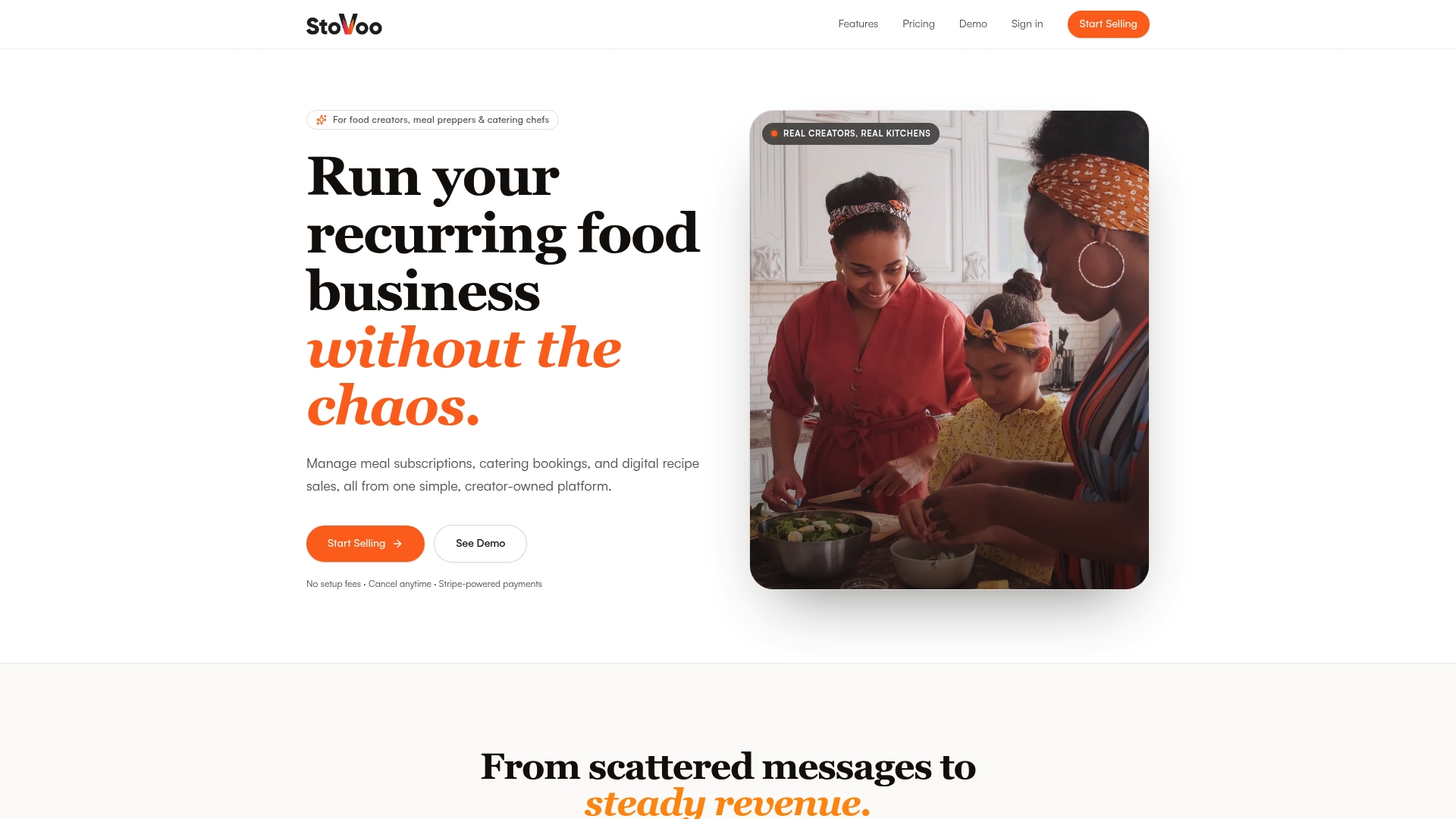
That centralization cuts the time between "I have a product" and "I have a paying customer." A mobile-first shopfront link goes live in minutes and shares directly to Instagram, TikTok, or WhatsApp, which means you can start taking subscription or catering orders the same day you set it up, rather than waiting on a custom website build. You can see this in action on live vendor shopfronts already running meal plans and catering on the platform. If you're ready to turn one of the models above into recurring revenue, create your Stovoo account and set up your shopfront today.
Sources
- How do you start a meal prep service business in 2027?
- How To Sell Food Online in 2026: 10 Step Guide for Beginners | UpMenu
FAQ
What Is the Easiest Food Product to Sell Online for Beginners?
A digital recipe ebook or a small weekly meal subscription tends to be the easiest starting point, since both require minimal upfront investment and can launch within days.
How Much Should I Charge for Prepared Meals?
Mainstream prepared meals typically sell for $12 to $18 per meal, with some specialty or dietary-focused meals priced up to $25.
Do I Need a Commercial Kitchen to Sell Food Online?
Only for refrigerated or perishable items; most states allow shelf-stable products like jams and baked goods to be made in a home kitchen under cottage food laws.
How Many Subscribers Do I Need to Make a Meal Subscription Profitable?
Many operators treat many weekly subscribers in the range of a few dozen as a realistic early goal for a local meal-prep subscription business.
What Platform Should I Use to Sell Meal Subscriptions and Catering Online?
Stovoo offers a centralized dashboard for meal subscriptions, catering bookings, and digital recipe sales, with automated billing and a mobile-first shopfront built specifically for food creators.