
TL;DR:
- Automating inquiries, building playbooks, and connecting their systems improve catering efficiency and increase revenue.
- Focusing on fast responses and standardized workflows helps achieve better bookings, lower waste, and happier clients.
Efficient catering operations management is defined as the use of automation, standardized workflows, and integrated systems to reduce errors, speed up bookings, and increase revenue. The catering industry is a $128 billion segment where sales velocity wins revenue just as much as food quality does. Full-service restaurants running manual catering processes lose an average of $47,000 annually in missed bookings alone. The most practical ways to streamline catering operations combine automation tools, documented playbooks, and kitchen-to-sales integration. This guide breaks down exactly how to do that.
1. Ways to streamline catering operations: automate your inquiry process
Automating the inquiry process is the single highest-return move a catering business can make. Restaurants that process bookings with automation handle 40% more bookings with the same staff and cut quoting errors by 85% compared to manual methods. That means more revenue without hiring more people.

The first step is centralizing all incoming inquiries. Catering requests arrive through websites, social media, email, and phone calls. Without a central system, leads fall through the cracks. A centralized inbox or catering management platform captures every request in one place and routes it to the right person automatically.
Personalized auto-responses make a measurable difference. Dedicated catering landing pages generate 52% more inquiries, and personalized automated responses convert at 3.2 times the rate of generic replies. The response should reference the event type, date, and guest count from the inquiry form. That level of specificity builds trust before a human ever gets involved.
- Centralize inquiries from all channels into one dashboard
- Use event-specific auto-response templates (corporate lunch vs. wedding vs. birthday)
- Automate proposal generation with pre-built pricing and menu options
- Add e-signature and deposit collection to the proposal workflow
- Set follow-up reminders at 24, 48, and 72 hours post-inquiry
E-signatures speed contract closures by an average of 3.8 days compared to manual wet signatures. Faster closures mean less time chasing clients and more confirmed events on the calendar.
Pro Tip: Start automating the first-mile process, meaning the inquiry-to-proposal step, before anything else. Responding within minutes and delivering a polished proposal quickly can increase annual revenue by $18,000 to $35,000 per operation.
2. Build a formal catering playbook
A catering playbook is a documented set of procedures that covers every step from the first client call through post-event cleanup. Standardized catering playbooks align teams, reduce improvisation, and cut service errors during peak seasons. Without one, your team makes different decisions every event, and quality becomes unpredictable.
The playbook should connect four core areas: sales, kitchen production, staffing, and delivery. Each area needs its own documented process. Sales covers how inquiries are handled and how proposals are sent. Kitchen production covers prep timelines, storage protocols, and labeling standards. Staffing covers shift assignments and roles for each event type. Delivery covers packing checklists, transport protocols, and setup procedures.
A well-built playbook also covers the details most teams skip. Document how tips are handled, how food is stored at different temperature zones, and how cleaning is done between events. Standardized cleaning processes reduce downtime between back-to-back events. That kind of specificity is what separates a professional catering operation from one that wings it.
- Document the full order flow from inquiry to post-event review
- Create kitchen prep checklists for each menu category
- Write packing protocols with item-by-item verification steps
- Define cleaning schedules and assign responsibility by role
- Include a tips handling policy to avoid end-of-event confusion
Pro Tip: Define your operational path on paper before adopting any new software. Technology works best when it supports a clearly defined process. Software built on a vague process just automates the chaos.
3. Apply batch prep and ingredient cross-utilization in the kitchen
Kitchen efficiency in catering is not about cooking faster. It is about removing repeated tasks and reducing the number of decisions your team makes under pressure. Batch prepping reduces time and stress in busy catering kitchens by preparing ingredients in bulk for multiple menu items at once. A team that preps 200 portions of roasted vegetables in one session is far more efficient than one that preps in batches of 20 throughout the day.
Cross-utilizing ingredients across your catering and dine-in menus reduces food waste and simplifies inventory tracking. When the same grilled chicken breast appears in your corporate lunch box, your buffet salad, and your dine-in entrée, you buy in larger quantities, negotiate better prices, and waste less. This is one of the most underused cost-control strategies in catering.
Bottleneck detection is the third piece. Walk your kitchen during a busy prep session and identify where work stalls. Common bottlenecks include a single oven used for multiple items, one person responsible for all labeling, or a packing station that is too small for the volume. Fixing one bottleneck often improves the entire operation's output.
- Prep high-volume ingredients in bulk at the start of each shift
- Design menus around shared core ingredients across event types
- Use color-coded labels to identify allergens, dates, and destinations
- Assign dedicated packing stations with printed checklists per event
- Review bottlenecks after every large event and adjust protocols
Pro Tip: Use a shared ingredient matrix. List every ingredient you buy and map which menu items use it. This one document will cut your ordering time and reduce over-purchasing significantly.
For catering businesses looking at how to plan menus around shared ingredients, the catering menu planning guide on the Stovoo blog covers the full process.
4. Link your sales system to kitchen and delivery operations
The gap between a confirmed booking and a prepared kitchen is where most catering operations lose money. Orchestrating bookings with kitchen prep schedules, ingredient orders, and staffing adjustments reduces food waste and operational stress. When these systems do not talk to each other, your kitchen preps for 80 guests when the final headcount was 65.
The fix is a connected workflow. When a booking is confirmed, the system should automatically update the prep quantity, trigger an ingredient purchase order, and adjust staff shift assignments. Scheduling kitchen assignments 24 hours before an event gives your team enough lead time to prepare without last-minute scrambling.
Delivery checklists and route planning close the loop. A printed or digital checklist that matches every packed item to the event order prevents missing items. Optimized delivery routes reduce fuel costs and ensure food arrives at the right temperature. Automated pre-event communication sequences reduce day-of logistics issues by 67%. That number reflects fewer forgotten items, fewer client calls, and fewer on-site surprises.
| Workflow Stage | Manual Process | Automated Process |
|---|---|---|
| Booking confirmation | Email sent manually | Auto-confirmation with event details |
| Prep quantity update | Verbal or written note | Auto-update from headcount |
| Ingredient ordering | Manager reviews and orders | Triggered purchase order |
| Staff scheduling | Phone calls or texts | Auto-shift assignment |
| Delivery checklist | Paper list, often incomplete | Digital checklist per event |
For a deeper look at how automation tools connect these stages, the Stovoo blog covers the full workflow in detail.
5. Manage catering enquiries with a structured response system
How you handle a catering enquiry in the first 10 minutes determines whether you win that booking. A structured response system means every enquiry gets a reply within a defined time window, every reply includes relevant details, and no lead is forgotten. This is one of the most direct ways to improve catering efficiency without adding staff.
The structure starts with a triage step. Categorize each enquiry by event type, size, and date. Corporate events, weddings, and private parties each have different needs and different price sensitivities. A corporate client asking about live stations for 300 guests needs a different response than a family booking a birthday dinner for 20. Sofnade's corporate live station model is a good example of how specialized offerings can be packaged for faster enquiry-to-proposal conversion.
Follow-up cadence matters as much as the first response. Set a system rule: if a prospect does not respond to a proposal within 48 hours, send a follow-up automatically. If they do not respond after 72 hours, escalate to a phone call. This cadence keeps deals moving without requiring a manager to track every lead manually. For more on managing catering bookings efficiently, the 2026 guide on the Stovoo blog covers the full process.
6. Use pre-event communication to reduce day-of problems
Pre-event communication is the most overlooked efficiency lever in catering. Most operations confirm a booking and then go silent until the event day. That silence creates uncertainty for the client and last-minute surprises for your team.
A structured pre-event sequence should include a booking confirmation with full event details, a 7-day reminder with the final menu and headcount deadline, a 48-hour confirmation with logistics details, and a day-before summary for your kitchen and delivery team. Automated systems can send all of these without manual effort. The result is a 67% reduction in day-of logistics issues, which translates directly to fewer refund requests and stronger client reviews.
The client-facing messages also serve as a sales tool. The 7-day reminder is a natural moment to offer add-ons like dessert packages, beverage service, or staffing upgrades. A well-timed upsell in a pre-event email costs nothing to send and can add meaningful revenue to each booking.
7. Track the right metrics to improve catering efficiency
Catering operations that improve consistently are the ones that measure consistently. The right metrics tell you where time and money are being lost before those losses compound. Most catering businesses track revenue and food cost but skip the operational metrics that actually drive improvement.
The metrics worth tracking include inquiry-to-booking conversion rate, average time from inquiry to proposal sent, average time from proposal to signed contract, food waste percentage per event, and client satisfaction scores. Each of these points to a specific part of the operation. A low conversion rate points to the proposal process. A high food waste percentage points to the kitchen-to-booking integration. A slow proposal time points to the inquiry workflow.
Review these numbers after every event, not just at the end of the month. Post-event reviews catch problems while the details are still fresh. A 15-minute debrief with your team after each event, focused on what went wrong and what slowed the team down, builds a continuous improvement habit that compounds over time. For more catering business tips on building this kind of review process, the Stovoo blog has a full breakdown.
Key takeaways
The most effective way to improve catering operations is to connect automation, documented workflows, and kitchen-to-sales integration into one consistent system.
| Point | Details |
|---|---|
| Automate the inquiry process | Automated responses and proposals convert 3.2x better and close contracts 3.8 days faster. |
| Build a catering playbook | Documented workflows reduce team improvisation and service errors across every event. |
| Apply batch prep and cross-utilization | Bulk ingredient prep and shared menus cut waste and simplify inventory ordering. |
| Link bookings to kitchen operations | Connected systems reduce food waste and cut day-of logistics issues by 67%. |
| Track operational metrics | Measuring conversion rate, proposal speed, and food waste reveals where to improve first. |
What I've learned about catering efficiency after years in the field
The catering businesses that struggle most are not the ones with bad food. They are the ones with great food and no system behind it. I have seen talented chefs lose clients simply because a proposal took four days to arrive or because the kitchen prepped for the wrong headcount. The food was excellent. The operation was not.
The insight that changed how I think about this: technology is an enabler, not a fix. Buying a booking platform does not fix a broken inquiry process. It just makes the broken process faster. The businesses that get real results from automation are the ones that defined their process first, then found tools to support it. That sequence matters more than the tools themselves.
The revenue impact of fast response times is also underappreciated. Responding to an enquiry within minutes and delivering a polished proposal the same day is not just good service. It is a competitive advantage in a market where most operations take 24 to 48 hours to reply. That speed alone can add tens of thousands of dollars in annual revenue to a catering operation of any size.
My honest recommendation: start with your playbook, then automate the inquiry-to-proposal step, then connect your kitchen to your booking system. Do it in that order and the results will compound.
— freeman
Stovoo makes catering operations work for you
Running a catering business across WhatsApp messages, spreadsheets, and manual invoices costs you time and bookings every week. Stovoo is built specifically for food businesses that want to manage catering enquiries, bookings, payments, and customer relationships from one place.
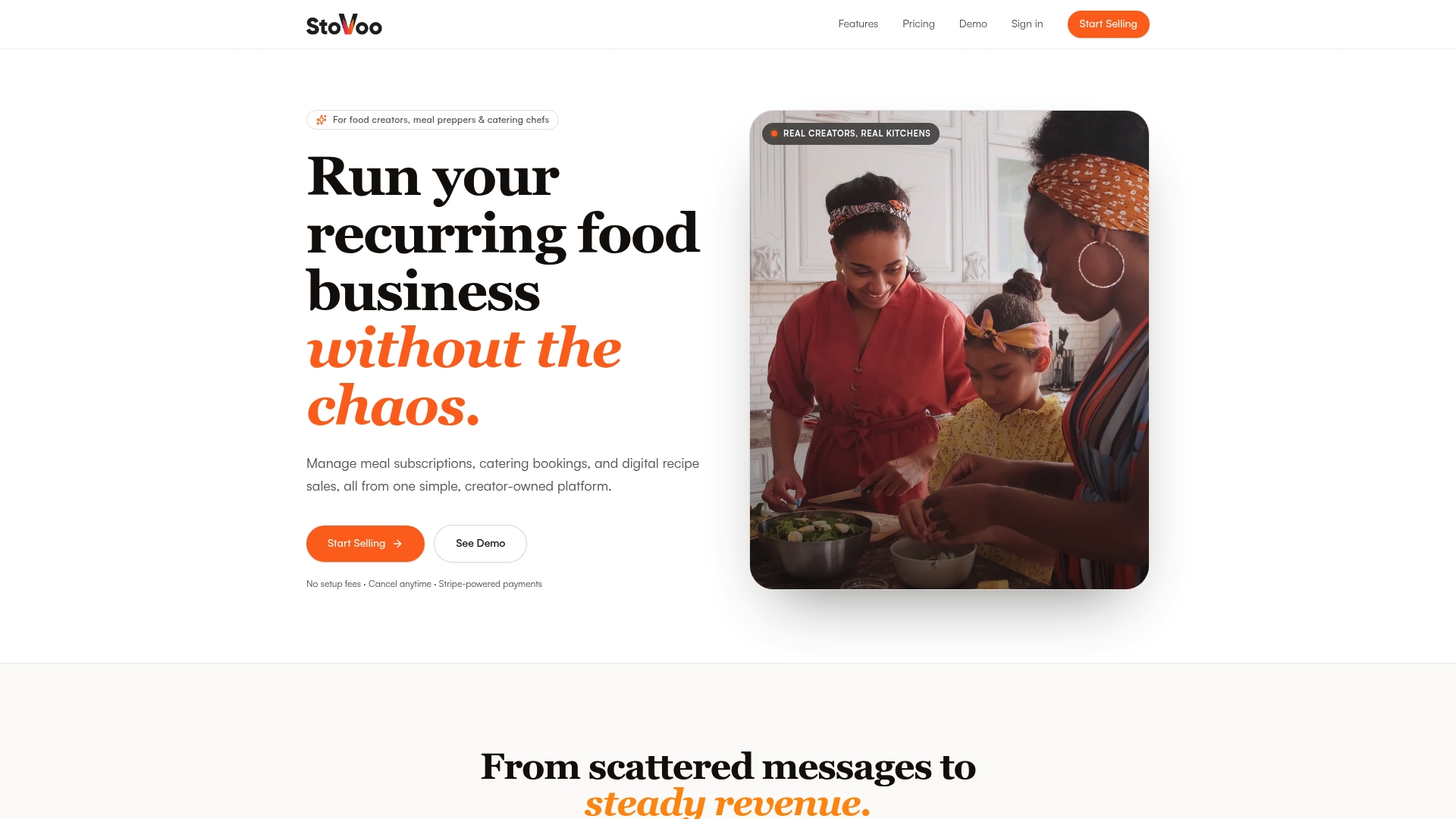
Catering professionals using Stovoo set up a professional shopfront, share it across social media and messaging apps, and start accepting bookings with automated billing built in. No technical setup required. Whether you run weekly meal plans, event catering, or both, Stovoo gives you the tools to manage catering orders without the admin chaos. Create your account and see how much time you get back in your first week.
FAQ
How does automation improve catering bookings?
Automation handles inquiry routing, proposal generation, and follow-up sequences without manual effort. Restaurants using catering automation process 40% more bookings with the same staff and reduce quoting errors by 85%.
What should a catering playbook include?
A catering playbook should document the full order flow, kitchen prep checklists, packing protocols, staffing assignments, and post-event cleaning procedures. It connects sales, production, and delivery into one consistent process.
How do I reduce food waste in catering operations?
Cross-utilizing ingredients across menus and linking final headcount to automated prep quantities are the two most effective methods. Connected booking-to-kitchen systems prevent over-prepping and reduce waste at the source.
What metrics should catering businesses track?
The most useful metrics are inquiry-to-booking conversion rate, time from inquiry to proposal, time from proposal to signed contract, food waste percentage, and client satisfaction scores. These reveal exactly where the operation is losing time or money.
How quickly should I respond to a catering enquiry?
Responding within minutes and delivering a proposal the same day yields the strongest conversion results. Fast first-mile response speed can increase annual revenue by $18,000 to $35,000 per operation.