
The fastest way to increase restaurant sales is to stack four moves in order: engineer your menu for higher-margin items, complete your Google Business Profile and delivery listings with photos, train staff on one upsell script, and set up a simple loyalty or email recapture flow. These four levers cover all three revenue drivers identified by DirectOrders: more customers, higher average order value (AOV), and greater visit frequency. Start with menu and listing photos this week — both are free and produce measurable lift within 14 days. Add the staff script in week two. Build the loyalty flow in month two once you have a small email or phone list. Scale paid channels and events in month three only after the free wins are confirmed. The sections below give you the exact steps, scripts, and metrics for each phase.
Key Takeaways
The most effective way to increase restaurant sales is to stack free quick wins — photos, GBP, and one upsell script — before investing in paid channels or new platforms.
| Point | Details |
|---|---|
| Photos drive orders fast | Photographed menu items get 2–3x more orders; DoorDash header photos drove 5x more sales in 28 days. |
| GBP is your free discovery engine | Complete every field — hours, ordering link, photos, posts — to maximize local search click-throughs. |
| Upsells lift AOV by 15–20% | One trained server script, applied consistently, raises average check without additional marketing spend. |
| Loyalty costs less than acquisition | A 3-message welcome flow and reactivation sequence increases repeat rate and lifetime value at near-zero cost. |
| Stovoo adds a direct revenue channel | A Stovoo shopfront captures direct orders and customer data outside third-party platforms, protecting your margin. |
Table of Contents
- What are the best ways to boost food sales right now?
- High-ROI actions you can take this week
- How does Google Business Profile drive local discovery?
- How do you maximize delivery and takeout revenue?
- How does menu engineering raise your average check?
- How do loyalty programs and email flows increase repeat visits?
- Which promotions actually drive incremental revenue?
- How do you train staff to increase check size without annoying guests?
- What metrics should you track to know if tactics are working?
- Your 30–60–90 day implementation plan
- What small restaurants should prioritize first
- Stovoo gives food businesses a direct revenue channel
- Sources
- FAQ
What are the best ways to boost food sales right now?
The single highest-ROI cluster for most operators is photos plus descriptions plus one upsell prompt. Photographed menu items receive 2–3x more orders than text-only listings across delivery platforms and digital menus. That lift costs nothing except the time to shoot with a decent smartphone. Pair that with a complete Google Business Profile and a trained server line, and you have a revenue stack that works before you spend a dollar on ads.
The sections that follow are organized by speed of impact. Quick wins come first, then the structural changes (menu engineering, loyalty), then the longer-horizon plays (events, paid search, data testing). Each section includes the specific field to edit, the script to use, or the metric to watch.
High-ROI actions you can take this week
Speed matters here. These six steps can be completed in a single workday and produce measurable results within two weeks.
- Add a header photo to every delivery listing. DoorDash internal data shows that merchants with header photos saw a significantly higher increase in sales in their first 28 days compared with stores that had none. Log into your DoorDash, Uber Eats, and Grubhub merchant portals and upload a high-resolution hero image today.
- Photograph every menu item. Shoot in natural light against a clean background. Upload to each delivery platform's item-level photo field and to your Google Business Profile menu section.
- Update your Google Business Profile hours, ordering link, and menu URL. Outdated hours are the single most common reason a diner clicks away. Log into your GBP dashboard, confirm hours are current, and paste your direct ordering URL into the "Order Online" field.
- Train staff on one upsell line before the next shift. Pick your highest-margin add-on (a side, a dessert, a premium drink) and give every server one natural prompt. Example: "Our truffle fries are really popular tonight — want to add them?" Smart upsells at checkout can add roughly 15–20% to average tickets when the prompt is relevant and non-pushy.
- Add one bundle to your delivery menu. A "family meal" or "date-night" combo priced at a slight discount to à la carte drives higher AOV and simplifies the customer's decision. Create it in your delivery portal's "combo" or "group order" section.
- Respond to your five most recent Yelp and Google reviews. Reply to every review — positive and negative — within 24 hours. Responses signal to both the algorithm and potential customers that you are active and attentive. Customer reviews are a significant trust signal in hospitality, and how you respond shapes conversion as much as the rating itself.
How to verify progress: Check your delivery platform's merchant dashboard after 7–14 days. Look for a lift in impressions, click-through rate, and orders per listing. In GBP Insights, watch "searches" and "direction requests." If AOV moved, your upsell script is working.
Statistic callout: Merchants with a DoorDash header photo saw 5x more sales in their first 28 days versus those without one. That single photo upload is the fastest documented lift in delivery sales data.
How does Google Business Profile drive local discovery?
A complete Google Business Profile is often the highest-ROI free action available to a local restaurant. When someone searches "tacos near me" or "best brunch in [city]," GBP is what determines whether your name appears, and whether they click through to order or call.
Fill every field in this order:
- Name, address, phone, hours: Must match exactly across your website, Yelp, and every delivery platform. Inconsistent NAP (name, address, phone) data suppresses local rankings.
- Category: Choose the most specific primary category (e.g., "Mexican Restaurant," not just "Restaurant"). Add secondary categories for delivery, catering, or bar if applicable.
- Menu link and ordering link: Paste your direct ordering URL into the "Order Online" field. This is the single field most operators leave blank.
- Photos: Upload at least 10 photos — exterior, interior, food, team. GBP profiles with photos receive significantly more direction requests and website clicks than those without.
- Attributes: Mark "dine-in," "takeout," "delivery," "outdoor seating," and any accessibility attributes that apply.
- Posts: Publish one GBP post per week featuring a limited-time offer, a new menu item, or an event. Posts appear in the knowledge panel and in local search results.
- Messaging: Enable the messaging feature so customers can ask questions directly from search.
Citations audit: Search your restaurant name on Google, Yelp, and three local directories. If your address or phone number appears differently anywhere, correct it. Inconsistent citations are a quiet ranking suppressor that most operators never fix.
Metrics to track: Inside GBP Insights, monitor "searches" (how often you appear), "views" (impressions), and "customer actions" (clicks to call, get directions, or visit your website). In Google Search Console, watch branded query impressions week over week. For deeper local SEO guidance, the Stovoo blog's food business SEO guide covers schema markup and citation-building steps specific to food operators.
Pro Tip: Add a UTM parameter to your GBP ordering link (e.g., ?utm_source=gbp&utm_medium=organic) so you can see exactly how many orders originate from Google search in your analytics or POS dashboard.
How do you maximize delivery and takeout revenue?
Delivery platforms are a discovery engine first and a revenue channel second. The goal is to convert that discovery into a high-AOV order, then recapture the customer directly on the next visit.
Photos and descriptions come first. Every item needs a photo and a two-sentence description that names the key ingredients and a sensory detail ("slow-braised, fall-off-the-bone short rib with house-made chimichurri"). The 2–3x order lift for photographed items applies at the item level, not just the header.
Bundle types and when to use them:
- Family meal bundles: High volume, lower per-item margin, excellent for weekends and holidays. Price at 10–15% below à la carte to drive conversion without destroying margin.
- Date-night bundles: Two entrées, a shared starter, and a dessert. Higher per-order value, works best Friday and Saturday. Photograph as a styled set.
- Add-on packs: A side, a sauce, or a drink upgrade offered at checkout. These are the delivery equivalent of an upsell and add $3–$8 per order with minimal prep complexity.
Packaging checklist: Seal soups and sauces separately. Label every container with the item name and reheating instructions. Use tamper-evident stickers. Poor packaging is the leading cause of one-star delivery reviews, and one-star reviews suppress your listing's ranking on every major platform.
Promo structures that protect margin:
- Free delivery above a minimum: Set the minimum at your target AOV plus 10%. This drives customers to add one more item rather than giving away margin on small orders.
- Limited-time discount (15–20% off, first order only): Effective for new-customer acquisition on DoorDash and Uber Eats. Cap it at 30 days, then remove it and measure retention.
- BOGO on a low-cost, high-margin item: Works well for beverages and sides. The perceived value is high; the actual margin hit is small.
For a broader look at how delivery fits into your overall hospitality model, the Wild Foodz guide on food delivery in hospitality covers platform selection and margin management in useful detail.
How does menu engineering raise your average check?
Your menu is your highest-leverage sales tool, and most operators treat it like a list instead of a conversion page. Menu engineering classifies every item by two variables: popularity and contribution margin. The result is four quadrants:
- Stars: High popularity, high margin. Feature these prominently — top-right of a physical menu, first row of a digital menu.
- Plowhorses: High popularity, low margin. These sell themselves; the goal is to raise their margin through a small price increase or a lower-cost ingredient swap.
- Puzzles: Low popularity, high margin. These need better descriptions, photos, and placement. Move a puzzle item to a "Chef's Pick" callout box.
- Dogs: Low popularity, low margin. Remove them. Every dog on your menu adds complexity and dilutes focus.
Menu engineering applied systematically can yield a 15–25% revenue increase without adding a single new customer — purely by shifting the mix toward higher-margin items.
Pricing tactics that work:
- Selective small increases: Raise the price of your top three stars by $1–$2. Guests who already love those items rarely notice a small increase.
- Anchoring: Place a premium item at the top of a category. It makes the items below it feel reasonably priced, and it occasionally sells.
- $.95 endings: Prices ending in $.95 read as "value" without the discount signal of $.99. Use them on mid-tier items.
- 30-day price test: Change one item's price, hold everything else constant, and measure unit sales and margin at day 30.
Before/after description example:
Before: "Grilled salmon with vegetables — $22"
After: "Wild-caught Pacific salmon, grilled over oak, with roasted seasonal vegetables and lemon-caper butter — $23.95"
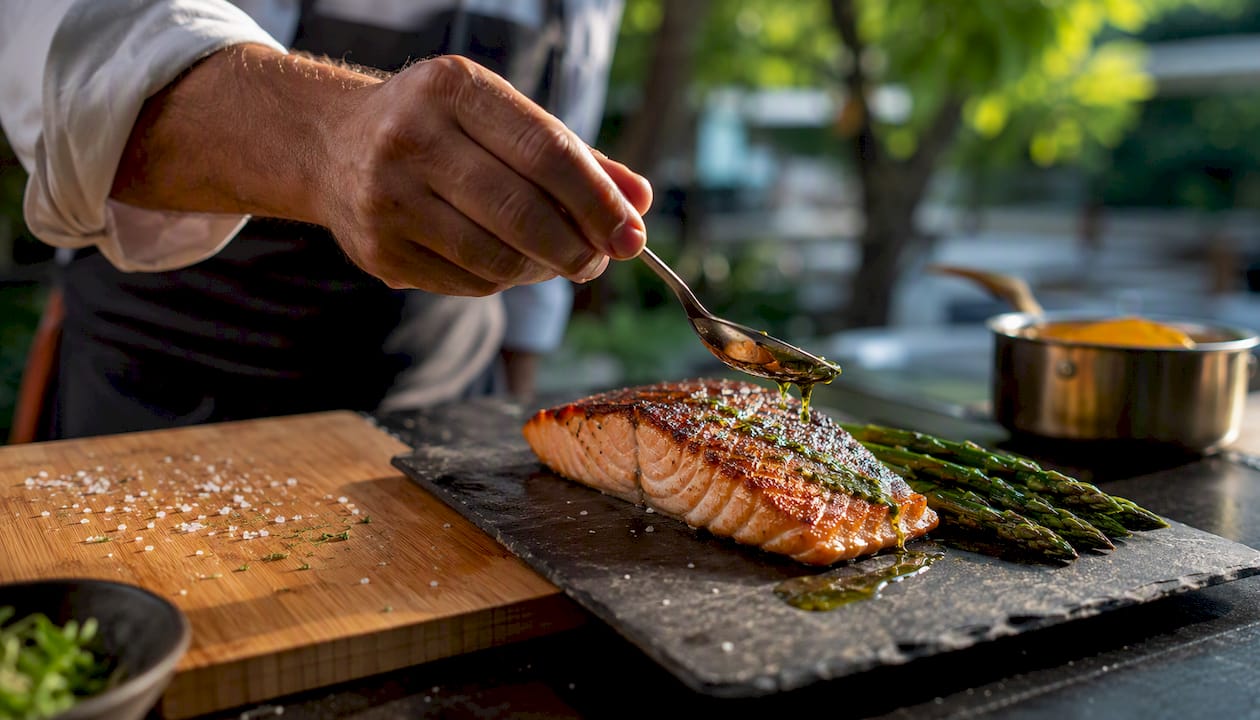
The second version justifies the higher price, creates appetite appeal, and signals quality. The photo next to it closes the sale.
Pro Tip: For "puzzle" items with high margin but low orders, add a one-line server recommendation to the menu ("Ask your server about our house favorite") and train staff to mention it once per table. That combination of placement and verbal cue typically moves puzzle items into the star quadrant within 60 days.
How do loyalty programs and email flows increase repeat visits?
Acquiring a new customer costs significantly more than retaining an existing one — which means your loyalty and messaging program is one of the highest-return investments you can make. The goal is a simple, automated flow that keeps your restaurant top of mind without requiring daily manual effort.
The 3-message welcome flow:
- Message 1 (sent immediately after first order): "Thanks for your order! Here's 10% off your next visit — use code WELCOME10. Valid for 14 days." Capture the phone number or email at checkout or via a QR code on the receipt.
- Message 2 (sent on day 7): "We hope you loved your meal. Our [signature dish] is back this week — come see us." No discount. Pure value reminder.
- Message 3 (sent on day 14 if no return visit): "We miss you! Here's a free [low-cost item] with your next order. Expires in 7 days." This is the reactivation prompt.
Reactivation template (for guests inactive 30+ days):
Subject: "It's been a while — here's something for you." Body: "We noticed it's been a month since your last visit. We'd love to see you back. Show this message for a complimentary [item] on your next order. Offer valid through [date]."
Tools and integration notes:
- Mailchimp: Free up to 500 contacts, integrates with most POS systems via Zapier. Use it for email flows and weekly newsletters.
- SMS platforms (e.g., Attentive, Klaviyo): Higher open rates than email for time-sensitive offers. Capture phone numbers at checkout with a simple opt-in prompt.
- POS integration: Sync first-order data to your CRM or email tool automatically. Segment by first-time vs. repeat customer so your messaging stays relevant.
Email marketing carries among the highest ROI of any digital channel for restaurants. A twice-monthly cadence — one value email, one offer email — is a solid baseline that keeps your list warm without fatiguing subscribers.
For more on building a marketing flow that compounds over time, the Stovoo food business marketing guide covers email, SMS, and social sequencing in practical detail.
Which promotions actually drive incremental revenue?
The promotions that move real revenue are behavior-targeted, not broad.
Promo templates that work:
- New-customer offer: 15% off first order, available only to first-time guests via a delivery platform or a referral link. Set a 30-day window and measure new-customer count before and after.
- Off-peak special: A weekday lunch or early-dinner bundle priced to drive traffic during your slowest two-hour window. Off-peak promotions capture revenue from unused capacity without cannibalizing peak-hour margin.
- Limited-time premium item: A seasonal dish available for 4–6 weeks only. Scarcity drives trial, and a premium price point lifts AOV. Announce it on Instagram and in your GBP post.
- Family-meal promo: A bundled dinner for four, available Thursday through Sunday. Measure incremental covers versus your baseline Thursday count.
Event and community tactics:
Themed nights (trivia, wine pairing, chef's table) fill seats on slow nights and generate social content. Partner with a local hotel or venue to offer a "dinner package" — the hotel recommends you to guests, you offer a small group discount. The operational cost is low; the new-customer acquisition value is high. For operators running catering alongside their restaurant, the Stovoo catering tips guide covers off-peak revenue strategies and operational checklists worth reviewing.
Metrics to watch post-promo:
- Incremental orders: Compare order count during the promo window to the same period the prior week or month.
- Cannibalization rate: Did the promo pull forward orders that would have happened anyway, or did it generate genuinely new transactions?
- Promo margin: Calculate revenue minus food cost minus discount value. If the margin is negative, the promo is destroying value even if order count rises.
How do you train staff to increase check size without annoying guests?
Small behavioral scripts, consistently applied, reliably lift AOV. Smart upsells at checkout and point of sale can add roughly 15–20% to average tickets — and the key word is "smart." Pushy or scripted-sounding prompts backfire; natural, specific ones work.
Script snippets:
- Suggestive selling: "The short rib is really popular tonight — it pairs beautifully with our roasted garlic mashed potatoes if you want to add a side."
- Pairing recommendation: "Are you thinking about wine? Our sommelier loves the Malbec with that dish — it's on the menu under 'reds.'"
- Dessert/coffee close: "Can I tell you about our desserts? The chocolate lava cake takes about eight minutes, so I can put it in now if you'd like."
Each line is specific, non-pushy, and gives the guest a reason to say yes.
Sample incentive plan:
Run a monthly upsell leaderboard. Track each server's average check size from your POS. The top performer gets a $50 bonus or a preferred shift. The cost is low; the competitive motivation is real. Announce results at the weekly pre-shift meeting.
Do/don't list:
- Do: Mention one specific item with a sensory detail.
- Do: Role-play the script for 5 minutes at the pre-shift meeting.
- Don't: Ask "Do you want anything else?" — it invites a no.
- Don't: Upsell every course; pick one moment per table.
- Don't: Push the most expensive item on the menu; push the highest-margin one.
What metrics should you track to know if tactics are working?
Focus on a short KPI set and review it on a fixed cadence. More metrics create noise; fewer, well-chosen ones create clarity.
| KPI | Formula | Where to find it | Review cadence |
|---|---|---|---|
| Average order value (AOV) | Total revenue ÷ total orders | POS dashboard, delivery platform reports | Daily (ops), weekly (marketing) |
| Repeat rate | Returning customers ÷ total customers | POS CRM, loyalty platform | Weekly |
| Conversion from discovery | Orders ÷ listing views (delivery) or clicks-to-order ÷ GBP views | Delivery merchant dashboard, GBP Insights | Weekly |
| Promo margin | (Revenue during promo – food cost – discount value) ÷ revenue | POS + manual calculation | Per promo |
| Review score trend | Average star rating, rolling 30 days | Yelp, Google, delivery platforms | Weekly |
A/B test template:
- Hypothesis: "Adding a photo to our chicken sandwich listing will increase its order rate by at least 20%."
- Change: Upload one photo to the item on DoorDash. Leave Uber Eats unchanged as a control.
- Measurement window: 14–28 days (long enough to smooth day-of-week variation).
- Sample size guidance: You need at least 100 orders per variant to draw a meaningful conclusion. If your volume is lower, extend the window.
- Decision rule: If the test variant outperforms the control by more than 10%, roll the change to all platforms.
Run one test at a time. Simultaneous changes make it impossible to attribute a result to a specific action.
Your 30–60–90 day implementation plan
This plan is sequenced by cost and complexity. Free wins come first; paid channels come last, after you have data to justify the spend.
Days 1–30: Quick wins (no cost or under $100)
- Complete your Google Business Profile (all fields, photos, ordering link, first post).
- Upload header photos and item photos to DoorDash, Uber Eats, and Grubhub.
- Add one bundle to each delivery platform.
- Train staff on one upsell script at the next pre-shift meeting.
- Respond to all outstanding reviews on Google and Yelp.
- Set up a free Mailchimp account and create a 3-message welcome flow.
- Run your first menu engineering pass: identify your stars, plowhorses, puzzles, and dogs.
Expected KPI move: AOV up slightly from the upsell script; delivery impressions up from photos; GBP click-through rate up from completed profile.
Days 31–60: Build ($100–$500 investment)
- Rewrite descriptions for your top 10 menu items using sensory language.
- Remove or reposition your "dog" items.
- Launch a new-customer promo on one delivery platform (15% off first order, 30-day window).
- Add an SMS opt-in at checkout (use a QR code on receipts or table cards).
- Publish two GBP posts per week.
- Run your first A/B test (one menu item photo vs. no photo on a control platform).
Expected KPI move: Repeat rate begins to rise as the welcome flow activates; new-customer count up from the delivery promo; AOV up from description rewrites.
Days 61–90: Scale ($500–$3,000 investment)
- Invest in professional food photography for your top 15 items.
- Launch a themed event or community partnership (local hotel, venue, or neighborhood event).
- Activate a paid Google search campaign targeting "[your cuisine] near me" in your zip code.
- Evaluate adding a direct ordering channel or shopfront to capture orders without platform fees.
- Review all KPIs against your day-1 baseline and decide which tactics to double down on.
Expected KPI move: Conversion from discovery up from paid search; event-driven new customers; direct-order revenue beginning to offset platform commission costs.
One-week sprint (Days 1–7 in detail):
- Monday: Log into GBP, update hours and ordering link, upload 5 photos.
- Tuesday: Log into DoorDash and Uber Eats, upload header photos.
- Wednesday: Photograph 5 menu items, upload to all platforms.
- Thursday: Pre-shift meeting: introduce the upsell script, role-play for 5 minutes.
- Friday: Respond to all Google and Yelp reviews from the past 30 days.
- Saturday: Create your Mailchimp account, set up the 3-message welcome flow.
- Sunday: Review delivery dashboard metrics from the week; note baseline numbers.
What small restaurants should prioritize first
Most operators who struggle with sales are not missing a tactic. They are missing a sequence. The temptation is to run a promotion or launch on a new platform before the fundamentals are in place — and that is where margin gets destroyed without a corresponding revenue gain.
The operators who see the strongest results stack three moves in the right order: fix discovery (GBP and delivery photos), fix conversion (menu descriptions and upsell scripts), then fix retention (loyalty flow). Each layer amplifies the one before it. A customer who finds you on Google, orders a well-described item, gets a welcome email, and receives a reactivation offer is worth three to five times more over a year than a one-time delivery customer.
The tech question comes up constantly: when should a small operator invest in a dedicated platform versus focusing on operational execution? The honest answer is that no platform replaces a well-trained team and a well-engineered menu. But once your free-channel tactics are working — once you have a repeat rate you can measure and a loyalty list you are actively growing — a direct ordering channel starts to pay for itself. At that point, the platform fee savings from even a fraction of your delivery volume shifting to direct orders can fund the subscription cost several times over. The role of online ordering in food businesses is worth reading before making that call.
One more thing worth saying plainly: the operators who treat their customer data as an asset — who own their email list, their phone numbers, their order history — are the ones who can run a reactivation campaign on a slow Tuesday without paying a platform for the privilege. That ownership is the long-term competitive advantage.
Stovoo gives food businesses a direct revenue channel
Running your sales entirely through DoorDash, Uber Eats, and Grubhub works for discovery. It does not work for margin or customer ownership. Every order placed through a third-party platform costs you a commission and hands the customer relationship to the platform, not to you.
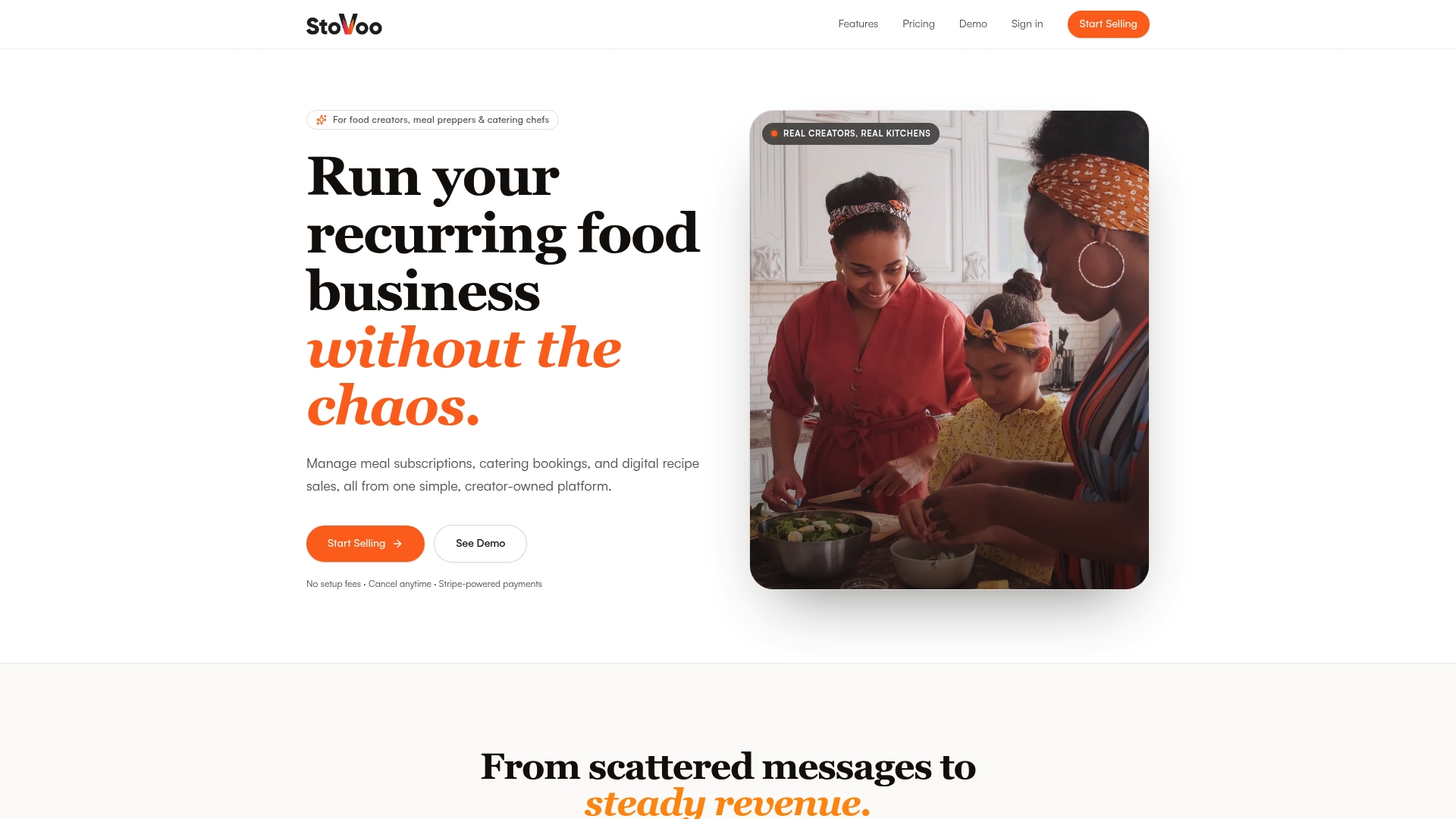
Stovoo is built for exactly the moment when you are ready to take that relationship back. It gives food creators, meal preppers, and small food businesses a mobile-first shopfront where customers can order meal plans, book catering, buy digital recipes, and subscribe to recurring deliveries — all without a platform taking a cut of each transaction. Setup takes minutes: create your shopfront link, share it on Instagram, in your email welcome flow, or via a QR code on your packaging, and start accepting direct orders with automated billing. Vendors like CakesbyCoco use Stovoo to sell bundled products and capture repeat customers on their own terms. When you are ready to add a direct channel alongside your delivery platforms, create your Stovoo account and have your shopfront live the same day.
Sources
- How to Increase Restaurant Sales: 15 Tactics with Real DoorDash Data
- Increase restaurant sales | NetSuite
- Google Business Profile help
- How to Increase Restaurant Sales: 15 Data-Backed Strategies for 2026 | Fudie
- How to Increase Restaurant Sales: 15 Strategies for 2026 | DirectOrders
FAQ
What are the fastest ways to boost food sales with no budget?
Complete your Google Business Profile, add photos to every delivery listing, and train staff on one upsell line. These three steps cost nothing and produce measurable results within two weeks.
What are the four ways to increase restaurant sales?
The four core levers are: attract more customers (discovery and marketing), raise average order value (upsells, bundles, menu engineering), increase visit frequency (loyalty and email flows), and reduce customer loss through review management and reactivation campaigns.
What is the 30/30/30 rule for restaurants?
It is a benchmarking framework, not a universal standard — actual ratios vary by concept and market.
How much can menu engineering increase revenue?
When should a restaurant add a direct ordering channel?
Once your delivery platform traffic is consistent and you have a growing loyalty list, a direct ordering channel starts to pay for itself through commission savings. Stovoo lets food businesses set up a direct shopfront quickly, capturing orders and customer data outside third-party platforms.