
TL;DR:
- Food business types vary by how they produce and sell food, each with unique regulations. Entrepreneurs should assess their operational capacity and local rules before choosing a model like restaurants, food trucks, or cottage businesses. Effective management relies on understanding regulatory frameworks and selecting a business structure that matches demand, resources, and compliance requirements.
Types of food businesses are distinct operational models in the food industry, each defined by how food is produced, sold, and regulated. The U.S. food industry broadly segments into manufacturing, distribution, foodservice, and retail. Each segment serves different consumer needs, carries different licensing requirements, and demands a different operational structure. If you are planning to launch a food venture, understanding these distinctions before you commit to a concept is one of the most practical decisions you can make.
1. What are the main types of food businesses?
The FDA Food Code defines a food service establishment as any operation that prepares and serves food directly to consumers. That definition covers restaurants, catering companies, food trucks, vending operations, and cafeterias. Beyond foodservice, the industry also includes food manufacturing, beverage production, and retail grocery. Each category falls under a different regulatory framework and requires a different operational approach.
Knowing which category your business fits into shapes every decision you make, from kitchen setup to licensing to staffing. A catering chef and a packaged sauce producer may both work with food, but they answer to different agencies, follow different safety plans, and target different revenue models.
2. Full-service restaurants
Full-service restaurants are the most recognized food business model in America. NAICS 722511 defines full-service restaurants as operations where wait staff serve patrons at tables, with payment collected after the meal. These businesses often include alcohol service and carryout options alongside dine-in.
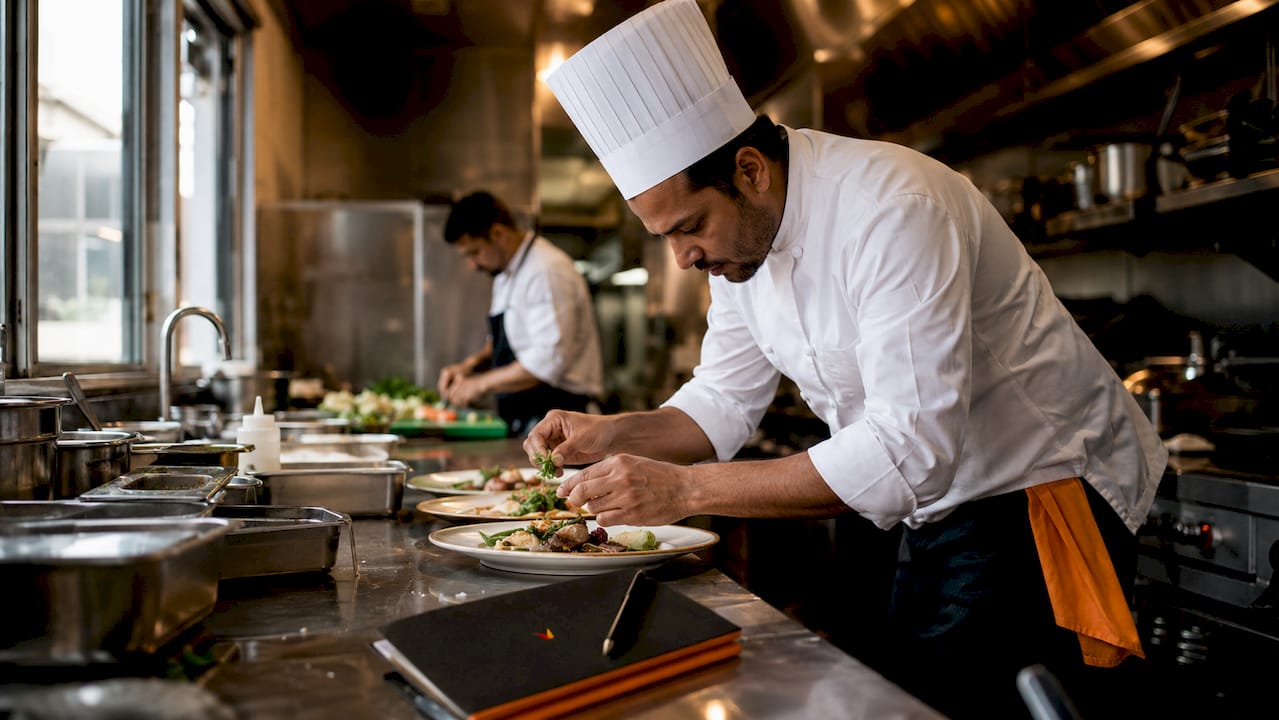
The operational complexity of full-service restaurants is high. You need front-of-house staff, back-of-house kitchen teams, a point-of-sale system, and a reservation process. Profit margins are tight, and labor costs are the biggest variable. The upside is a loyal customer base and a strong brand identity when the concept is well executed.
Pro Tip: Before signing a lease, map your projected weekly covers against your fixed costs. Most full-service restaurants need consistent table turns to stay profitable.
3. Limited-service restaurants
Limited-service restaurants require customers to order and pay before receiving their food. Fast food chains, fast casual concepts like Chipotle, and counter-service cafes all fall into this category under NAICS sector 72. The ordering model reduces labor costs and speeds up service.
This model suits entrepreneurs who want lower staffing overhead and faster table turnover. The tradeoff is a narrower customer experience. You build loyalty through consistency and speed rather than hospitality. Limited-service models also tend to be easier to replicate across multiple locations.
4. Food trucks and mobile food units
Food trucks are a legitimate food service model with a lower barrier to entry than a brick-and-mortar restaurant. They operate under the same FDA Food Code framework as other consumer-facing food businesses, but local health departments set the specific permit requirements. Costs vary widely by city.
The appeal of a food truck is flexibility. You can test a concept at farmers markets, festivals, and office parks before committing to a fixed location. The challenge is that mobile units face stricter space constraints, limited storage, and weather dependency. Many successful food truck operators eventually use their truck as a proof-of-concept before opening a permanent location.
5. Catering businesses
Catering is one of the most flexible catering business types in the food industry. Caterers prepare food for events, corporate clients, and private gatherings, either on-site or off-site. The model can range from a solo chef handling intimate dinner parties to a full-scale operation serving weddings with hundreds of guests.
Catering businesses often generate revenue through deposits and advance bookings, which creates a more predictable cash flow than a restaurant. The regulatory requirements depend on whether you operate from a licensed commercial kitchen or a shared facility. Many caterers also add meal subscription plans to their offering to build recurring income between events.
6. Ghost kitchens and cloud kitchens
Ghost kitchens, also called cloud kitchens or virtual kitchens, are commercial cooking facilities with no dine-in space. Orders come in through delivery apps like DoorDash or Uber Eats, and food goes out through third-party couriers. The model eliminates front-of-house costs entirely.
This format has grown quickly because it reduces startup costs compared to a traditional restaurant. A single ghost kitchen space can house multiple virtual restaurant brands simultaneously. The challenge is that you are entirely dependent on delivery platform algorithms and fees for visibility. Building a direct customer relationship requires extra effort outside the platform.
7. Home-based and cottage food businesses
Cottage food laws allow entrepreneurs to prepare certain low-risk foods at home and sell them without a commercial kitchen license. Permitted products typically include baked goods, jams, and candies. Revenue caps and sales channel restrictions vary by state.
Home-based food businesses are the lowest-cost entry point into the food industry. They suit bakers, confectioners, and specialty food producers who are testing demand before scaling. The limitation is that cottage food laws generally prohibit selling products that require refrigeration or have a higher contamination risk. Graduating to a licensed commercial kitchen opens up a much wider product range.
Pro Tip: Check your state's specific cottage food statute before you start selling. Some states allow online sales; others restrict you to direct, in-person transactions only.
8. Meal subscription and food delivery services
Meal subscription businesses sell recurring weekly or monthly food packages directly to customers. The model includes meal kit services like HelloFresh, prepared meal delivery, and specialty diet boxes. Food subscription trends show strong growth driven by consumer demand for convenience and personalized nutrition.
The recurring revenue structure is the core advantage here. A stable subscriber base creates predictable income that a restaurant or catering business cannot easily replicate. The operational challenge is managing weekly production volume, packaging, and cold-chain logistics. Platforms like Stovoo are built specifically to help food entrepreneurs manage meal plan subscriptions without relying on spreadsheets or WhatsApp threads.
9. Food manufacturing and packaged food businesses
Food manufacturing businesses produce goods at scale for wholesale distribution to retailers, restaurants, or direct consumers. This includes everything from a small-batch hot sauce producer to a large snack food company. These operations fall under FDA's Food Safety Modernization Act (FSMA), which requires written Food Safety Plans with preventive controls oversight by a qualified individual.
Manufacturing is a different business entirely from foodservice. You are not serving a customer at a table. You are producing a product that must maintain safety and quality through storage, shipping, and retail display. Documentation discipline is not optional. FSMA compliance depends on evidence of active monitoring, not just a written plan sitting in a binder.
10. Retail grocery and specialty food stores
Retail food businesses sell packaged or fresh food products directly to consumers through a physical or online storefront. Grocery stores, specialty food shops, butcher shops, and farm stands all fall into this category under NAICS codes 44 and 45, distinct from foodservice under NAICS 72.
Specialty food retail is a strong niche for entrepreneurs with a defined product focus. A cheese shop, a spice store, or an ethnic grocery serving an underserved community can build a loyal local customer base. The regulatory requirements center on food storage, labeling, and handling rather than the active cooking and serving rules that govern restaurants.
11. How do manufacturing and foodservice regulations differ?
The regulatory gap between manufacturing and foodservice is significant and often surprises new entrepreneurs. Mixed-type facilities that both manufacture wholesale products and serve retail customers must register the manufacturing side separately, even if the retail side is exempt. Running both operations under one roof without separate registrations is a compliance risk.
Foodservice businesses operate under the FDA Food Code, enforced by state and local health departments through inspections. Manufacturing facilities operate under FSMA, with federal oversight and a written Food Safety Plan requirement. The FDA Food Code emphasizes active managerial control, which means building preventive food safety habits into daily operations rather than reacting to problems after they occur.
| Business type | Regulatory framework | Key requirement |
|---|---|---|
| Full-service restaurant | FDA Food Code / state health dept. | Active managerial control, inspections |
| Food manufacturer | FDA FSMA | Written Food Safety Plan, PCQI oversight |
| Cottage food operation | State cottage food law | Revenue cap, permitted product list |
| Mixed-type facility | FDA Food Code + FSMA | Separate registration for manufacturing side |
Pro Tip: If you plan to sell both at a farmers market and wholesale to a retailer, consult a food safety attorney before you launch. The registration requirements for mixed-type operations catch many entrepreneurs off guard.
12. How service models affect daily operations
Your choice of food service model shapes staffing, workflow, and inspection readiness from day one. A full-service restaurant needs a floor manager, servers, and a host. A limited-service counter operation needs fewer front-of-house staff but more efficient kitchen throughput. A food business model that does not match your operational capacity will create problems that no amount of marketing can fix.
Active managerial control is the FDA's preferred approach to food safety in consumer-facing operations. It means integrating monitoring and verification into daily routines rather than waiting for an inspection to reveal a problem. Successful foodservice operators build checklists, temperature logs, and staff training into their opening and closing procedures. This approach reduces violations and builds a culture of accountability.
Licensing and permitting details vary by jurisdiction even for the same business model. A food truck permitted in Austin operates under different rules than the same concept in Chicago. Research your local requirements early, and budget for permit fees, commissary kitchen agreements, and health inspections before you open.
Key takeaways
The most effective way to choose a food business model is to match your concept to your operational capacity, local regulations, and target revenue structure before investing in equipment or a lease.
| Point | Details |
|---|---|
| Know your regulatory category | Foodservice, manufacturing, and retail each fall under different agencies and compliance rules. |
| Match model to capacity | Full-service restaurants demand more staff and capital than limited-service or ghost kitchen models. |
| Cottage food is a real starting point | Home-based food businesses are legal in most states under cottage food laws, with product and revenue limits. |
| Mixed-type facilities need dual registration | Operating both wholesale manufacturing and retail service requires separate registrations to stay compliant. |
| Recurring revenue models build stability | Meal subscriptions and catering retainers create predictable income that one-off restaurant sales cannot match. |
Why most food entrepreneurs pick the wrong model first
The most common mistake I see is choosing a food business concept based on passion alone, without mapping it to operational reality. Someone who loves cooking for friends decides to open a full-service restaurant, not realizing that running a restaurant is primarily a logistics and staffing job with cooking as a secondary function. The food is almost never the reason a restaurant fails.
The smarter path is to start with the simplest version of your concept and validate demand before adding complexity. A cottage food baker who sells out at a farmers market has real proof of demand. A catering chef who builds a recurring client base before renting a commercial kitchen has real proof of revenue. Ghost kitchens and meal subscription models exist precisely because they let you test a concept with lower fixed costs.
Regulatory fit matters as much as concept fit. I have seen food entrepreneurs spend months building a product line only to discover their state's cottage food law prohibits online sales, or that their mixed-use facility needs a separate FDA registration they did not budget for. Read the regulations for your specific model and jurisdiction before you spend money on equipment. The food industry rewards preparation, not just creativity.
How Stovoo supports food entrepreneurs across business models
Running a food business across multiple revenue streams, meal plans, catering bookings, and digital recipe sales, gets complicated fast without the right tools.
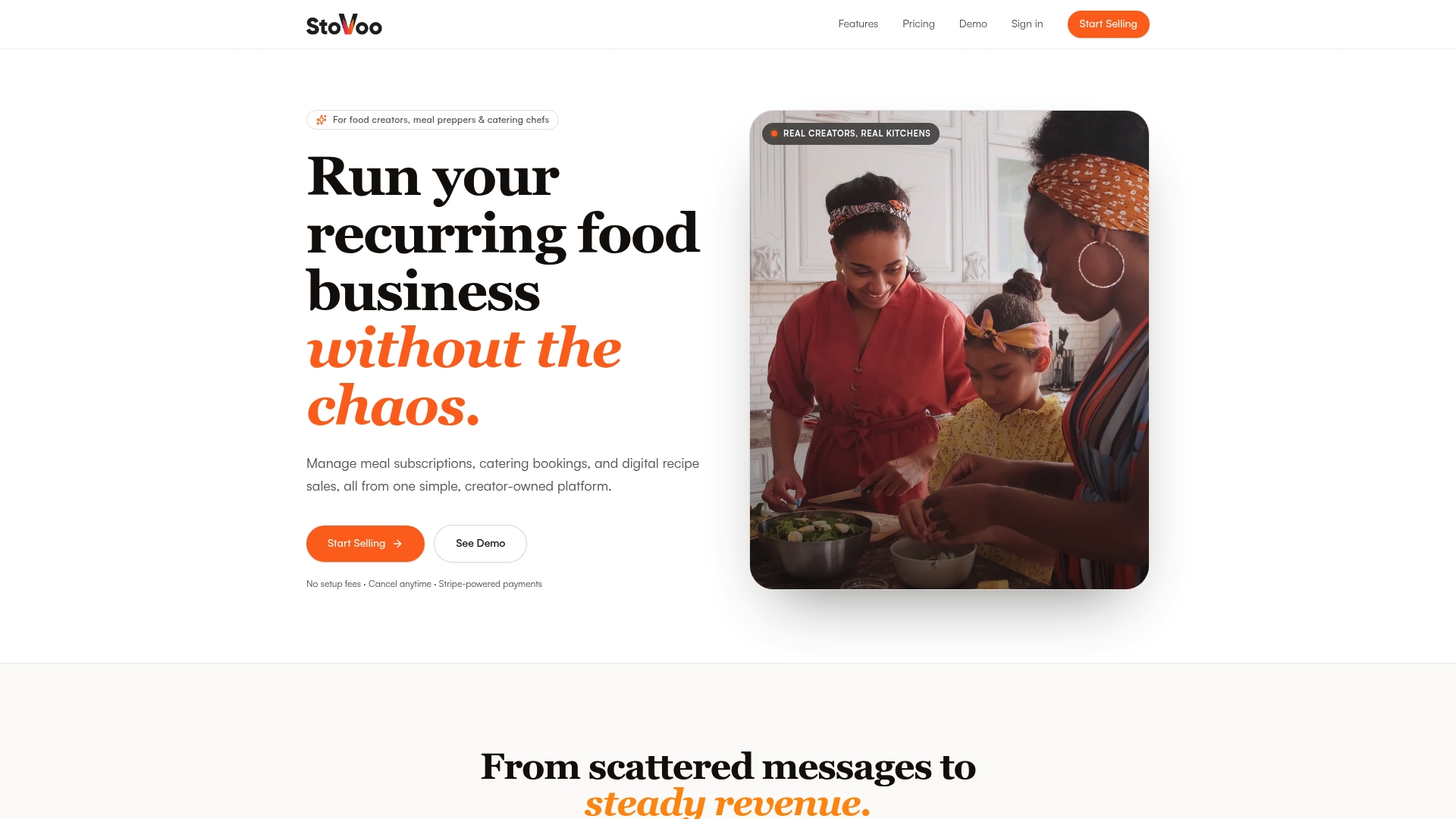
Stovoo is built for exactly this situation. The platform gives food creators and small food businesses a centralized dashboard to manage meal subscription plans, catering inquiries, and digital product sales in one place. Automated billing replaces manual invoicing. A mobile-first shopfront replaces scattered WhatsApp messages and spreadsheet tracking. Whether you run a ghost kitchen, a catering operation, or a home-based meal prep service, Stovoo helps you build recurring revenue without the administrative chaos. Create your account and set up your shopfront in minutes.
FAQ
What are the main types of food businesses?
The main types of food businesses include full-service restaurants, limited-service restaurants, food trucks, catering companies, ghost kitchens, home-based cottage food operations, food manufacturers, and retail food stores. Each type operates under a different regulatory framework and revenue model.
What is the difference between foodservice and food manufacturing?
Foodservice businesses prepare and serve food directly to consumers and are regulated by the FDA Food Code through state health departments. Food manufacturing facilities produce packaged goods for wholesale or retail and must comply with FDA FSMA preventive control requirements, including a written Food Safety Plan.
Are home-based food businesses legal?
Home-based food businesses are legal in most U.S. states under cottage food laws, which permit the sale of certain low-risk products like baked goods and jams without a commercial kitchen license. Revenue caps and permitted sales channels vary by state.
What is a ghost kitchen?
A ghost kitchen is a commercial cooking facility with no dine-in space, operating exclusively through delivery platforms like DoorDash or Uber Eats. It reduces startup costs by eliminating front-of-house operations entirely.
Do I need separate licenses for a mixed-type food facility?
Yes. A facility that both manufactures food for wholesale and serves food at retail must register the manufacturing side separately under FSMA, even if the retail side is exempt from federal registration requirements.