

For small food entrepreneurs who need recurring meal subscriptions, catering bookings, and digital recipe sales under one roof, Stovoo is the most practical all-in-one replacement for ToastTab — purpose-built exactly for this use case, with no hardware lease required.
If Stovoo doesn't fit your situation, here are the three alternative categories worth evaluating:
- POS-first platforms (Square for Restaurants, ChowNow, Toast): best for operators with a physical dining room who need kitchen display and inventory management
- Commerce plugins (WooCommerce + WordPress + Subscriptions): best for technically confident creators who want full customization and BYO payment processing
- Boutique food commerce platforms (BentoBox, GloriaFood): best for restaurant-focused online ordering with moderate subscription support
The single biggest trade-off in this market: POS-first platforms lock you to their payment processor, which raises your effective rate over time. Modular stacks let you bring Stripe or Square as your processor, but they require more setup. Stovoo sits in the middle — no hardware lease, no processing lock-in, and subscriptions built in from day one.
Table of Contents
- How do the main toasttab.com alternatives compare?
- How do you pick the right ToastTab alternative for your business?
- What does each alternative category actually deliver?
- Which platform should small food entrepreneurs actually choose?
- Key Takeaways
- What most food creators get wrong when switching platforms
- Stovoo: the all-in-one alternative built for food creators
- Useful sources and further reading
- FAQ
How do the main toasttab.com alternatives compare?
| Category | Meal subscriptions | Catering bookings | Digital recipe sales | POS & ordering | Pricing & fees | Setup time | Customer data ownership |
|---|---|---|---|---|---|---|---|
| Boutique food commerce (Stovoo) | Yes — built-in recurring plans | Yes — built-in booking workflow | Yes — digital downloads included | Online ordering; no physical POS | Flat monthly SaaS; no per-order fee | Low; no technical skill needed | Full ownership; exportable |
| POS-first all-in-one (Square, ChowNow, Toast) | Limited or add-on | Partial; quote/inquiry forms | No native digital downloads | Full POS + online ordering | Free starter to a higher monthly price, depending on selected features and add-ons; processing lock-in common | Medium; hardware setup required | Varies; some export limits |
| Commerce plugins (WooCommerce + Subscriptions) | Yes — via plugin | Via booking plugin | Yes — via digital-delivery plugin | Online only; no native POS | Free core + paid plugins + Stripe fees | High; developer often needed | Full ownership |
| Restaurant-focused ordering (BentoBox, GloriaFood) | Limited | Basic inquiry forms | No | Online ordering + menu | Free to mid-tier monthly; per-order fees possible | Low–medium | Partial; platform-dependent |
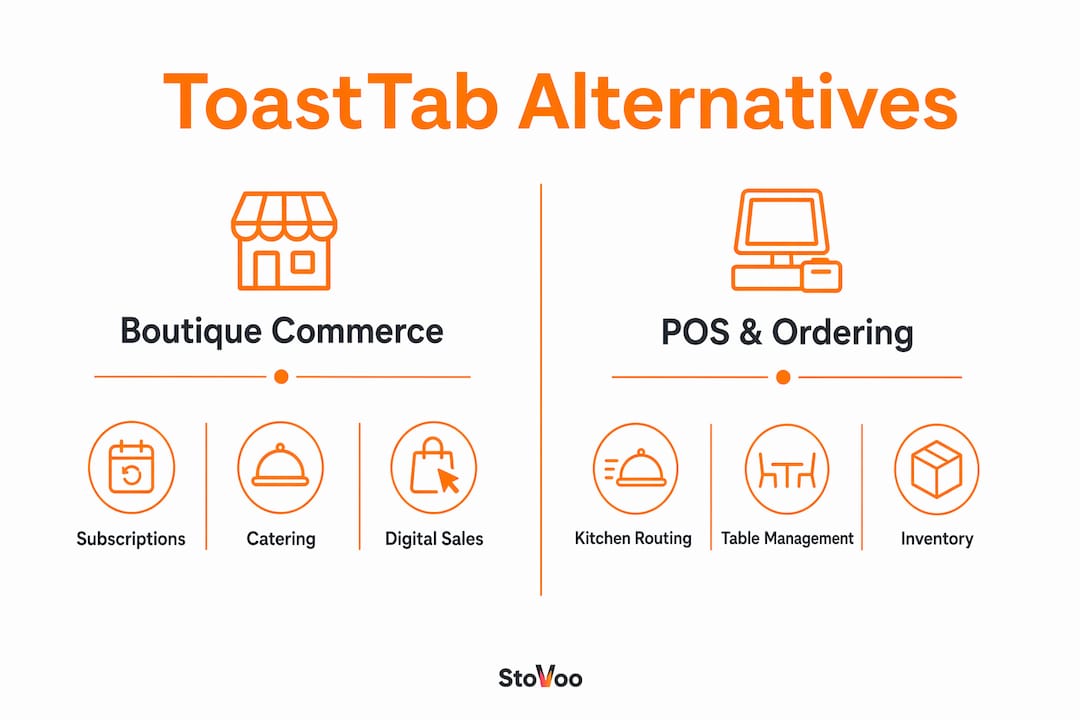
Boutique food commerce (Stovoo): Wins on subscriptions, catering, and digital downloads in one dashboard. No physical POS means it won't replace a full-service restaurant terminal. Best for meal preppers, private chefs, and caterers who sell online.
POS-first all-in-one: Wins on kitchen routing, inventory, and dine-in workflows. Entry-level vs. enterprise fit matters here — single-location cafés and food trucks get the most value; multi-location operators need the pricier tiers. Hidden costs live in processing rates and hardware leases.
Commerce plugins: Maximum flexibility and BYO processing, but you're assembling three to five tools yourself. Published entry prices range from free to $399/month before add-ons, and the real total cost of ownership often surprises operators.
Restaurant-focused ordering: Good for digital menus and online ordering. Weak on subscriptions and non-existent on digital product sales.
How do you pick the right ToastTab alternative for your business?
Start with a diagnostic. Ask yourself: is your core problem service delivery (taking orders, managing a dining room) or revenue operations (recurring billing, subscription churn, catering deposits)? If it's the latter, a finance or accounting layer added to your current setup may solve it without a full platform migration.
- Service problem → POS-first platform or restaurant-focused ordering tool
- Revenue/subscription problem → Boutique food commerce platform or commerce plugin stack
- Both → Stovoo or a modular stack with a booking plugin and Stripe
Questions to ask on every vendor demo
- What is your effective processing rate, including all fees, not just the headline rate?
- Can I export my full customer list at any time, in CSV format?
- Does the subscription cadence (weekly, biweekly, monthly) work without a developer?
- How does catering inquiry-to-invoice work end to end?
- How are digital downloads delivered and protected?
- What are the contract length and early-termination terms?
- Is PCI compliance documented, and where can I verify it?
Red flags to watch for
- Processing lock-in with no published rate — ask for the effective rate in writing
- Hardware lease terms buried in the contract; hardware financing can make leaving expensive
- No customer data export or export gated behind a paid tier
- Subscription cadence requires a developer to change
- Surcharge language that shifts credit card fees to your customers without disclosure
Migration timeline (realistic estimates)
- Export your data from ToastTab: customer list, menu items, order history (1–2 days)
- Map your menu to the new platform's structure (1–3 days)
- Migrate subscription plans and notify active subscribers (3–5 days)
- Send customer communications with new ordering links (1 day)
- Run parallel testing — keep the old system live while you validate the new one (7–14 days)
- Full cutover and cancel old subscription (Day 14–30)
Pro Tip: If you're mid-contract with a hardware lease, negotiate a written exit fee before you sign anything new. Knowing the exact cost of leaving lets you time the switch to minimize overlap costs — and sometimes the new vendor will credit it.
What does each alternative category actually deliver?
Boutique food commerce platforms
Stovoo is the clearest example of this category. The platform handles recurring meal subscriptions, catering booking workflows, and digital recipe downloads from a single dashboard. Customers get a mobile-first shopfront link they can share on Instagram, WhatsApp, or SMS — no app download required. For a meal prepper doing weekly boxes and occasional private-chef catering, this is the fastest path to a professional setup. The trade-off: no physical POS terminal, so it won't replace a full dine-in system.
POS-first all-in-one platforms
Square for Restaurants, ChowNow, and Toast belong here. They excel at kitchen display integration, table management, and high-volume in-person ordering. Subscription support is limited or requires add-ons; digital product sales are generally not supported natively. Industry reviews rate these highest for full-service restaurants with complex front-of-house workflows, but recommend negotiating processing and lease terms before signing. The cost shape: low headline price, higher effective cost once processing and hardware are factored in.
Commerce plugin stacks (WooCommerce)
A WordPress site with WooCommerce, a subscriptions plugin, a booking plugin, and a digital-delivery plugin can replicate most of what ToastTab does — and you own every piece of customer data. The catch is assembly time. Expect a week or more of setup, ongoing plugin maintenance, and a developer on call for conflicts. Best for technically confident creators who want maximum control and are comfortable with Stripe as their processor. Not recommended for anyone who wants to be selling within 48 hours.
Restaurant-focused online ordering (BentoBox, GloriaFood)
These platforms focus on digital menus, online ordering, and basic website presence. GloriaFood has a free tier that works well for simple pickup and delivery ordering. BentoBox targets independent restaurants wanting a polished web presence. Neither handles recurring subscriptions or digital product sales well. Good as a starting point for a restaurant adding online ordering, not as a full replacement for a subscription-and-catering workflow.
| Category | Subscriptions | Catering bookings | Digital downloads | Customer data export | PCI compliant |
|---|---|---|---|---|---|
| Boutique food commerce (Stovoo) | Yes | Yes | Yes | Yes | Yes |
| POS-first all-in-one | Limited or add-on | Partial | No | Varies | Yes |
| Commerce plugins (WooCommerce) | Yes (plugin) | Via plugin | Yes (plugin) | Yes | Yes (via Stripe) |
| Restaurant ordering (BentoBox/GloriaFood) | Limited | Basic | No | Partial | Yes |
Which platform should small food entrepreneurs actually choose?
Stovoo is the recommended pick for food entrepreneurs whose revenue comes from meal subscriptions, catering bookings, and digital recipe sales. It covers all three use cases natively, requires no hardware, and gives you full customer data ownership from day one.
When Stovoo fits: You sell weekly meal plans, take catering inquiries, and want to sell a recipe ebook — all from one shareable link. You don't need a kitchen display system or table management. Setup takes hours, not weeks.
When to look elsewhere: You run a full-service restaurant with dine-in tables and need KDS integration — go POS-first. You want maximum pricing flexibility and have developer resources — build a WooCommerce stack with Stripe.
The digital sales side of food businesses is growing fast, and most POS-first platforms haven't caught up. That gap is exactly where boutique food commerce platforms like Stovoo operate.
Key Takeaways
For small food entrepreneurs, the best ToastTab alternative is the one that handles recurring billing, catering bookings, and digital product delivery without locking you into hardware or a single payment processor.
| Point | Details |
|---|---|
| Diagnose first | Decide if your problem is service delivery or revenue operations before switching platforms. |
| Watch for hidden costs | Processing lock-in and hardware leases raise effective costs well above headline prices. |
| Subscriptions + catering + downloads | Only boutique food commerce platforms and plugin stacks support all three natively. |
| Customer data ownership | Always confirm you can export your full customer list before committing to any platform. |
| Stovoo for all-in-one | Stovoo covers meal subscriptions, catering bookings, and digital recipe sales in one dashboard with no hardware required. |
What most food creators get wrong when switching platforms
The most common mistake is treating a platform switch as a technology problem when it's actually a customer communication problem. Operators spend weeks configuring a new system, then lose subscribers because they never clearly told customers where to reorder.
A meal-prep operator running weekly boxes once migrated from a POS-first platform to a subscription-focused setup. The technical migration took four days. The real pain came from subscribers who kept trying to order through the old link for two weeks after cutover. A single WhatsApp broadcast and an updated Instagram bio link would have prevented most of the confusion — and the refund requests that followed.
For subscription churn specifically: lock in your next billing cycle before you migrate, not after. Subscribers who get a gap in billing often don't restart. For catering deposits, confirm your new platform can collect a deposit at booking before you go live — chasing deposits by invoice after the fact is a cash flow problem waiting to happen.
Pro Tip: Check out migration checklists from food operators who've done this before — real-world stories surface the edge cases that vendor documentation skips.
Stovoo: the all-in-one alternative built for food creators
Most ToastTab alternatives solve one piece of the puzzle. Stovoo solves all three: recurring meal subscriptions, catering booking workflows, and digital recipe sales — from a single mobile-first shopfront you can share anywhere.
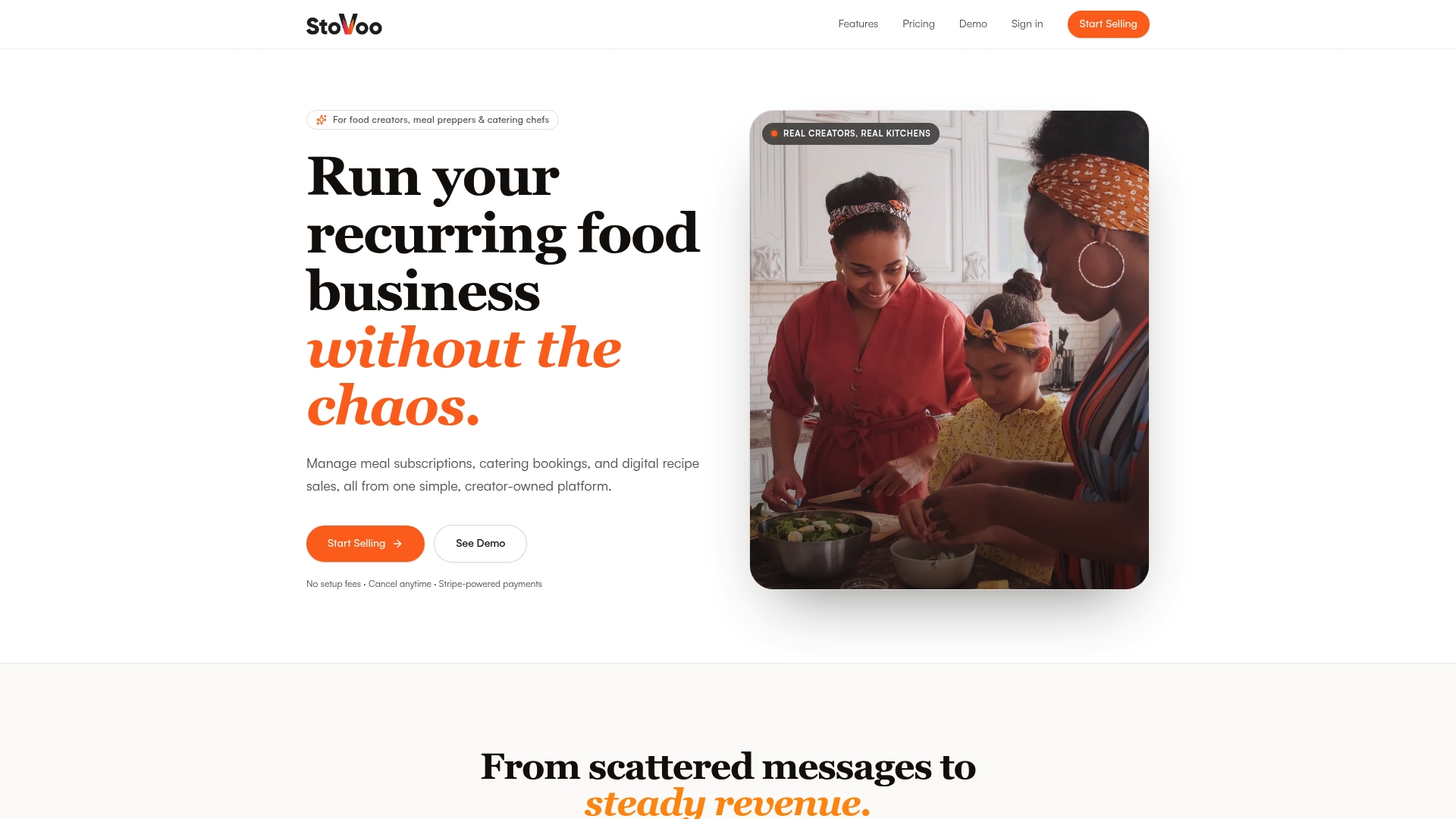
Setup takes hours. You get a branded shopfront link, automated billing, and full ownership of your customer list from day one. No hardware to lease, no developer to hire, no processing lock-in. Caterers use it to take deposits and manage event inquiries; meal preppers use it to run weekly subscription boxes; food creators use it to sell recipe ebooks alongside their meal plans. See how a live storefront looks at Express Kitchen on Stovoo — then visit stovoo.com to set up your own shopfront and start accepting orders today.
Useful sources and further reading
Use these to verify pricing, integrations, PCI compliance, and migration details directly with vendors:
- G2 Restaurant POS Rankings — peer reviews and feature comparisons across POS categories; useful for checking subscription and integration support
- Deelo 2026 Buyer's Guide — detailed breakdown of processing lock-in, hardware lease terms, and total cost of ownership; read before signing any contract
- CostBench Toast Alternatives — published pricing comparisons across leading alternatives; cross-check headline rates against effective rates
- Tech.co POS System Reviews — independent reviews of POS-first platforms for full-service and quick-service restaurants
- Tab Commerce Toast Alternatives Guide — finance-layer diagnostic; useful if your core problem is accounting and cash visibility rather than order entry
- Stovoo homepage — verify current feature set for subscriptions, catering bookings, and digital product delivery; PCI compliance details available in platform documentation
- Sofnade F&B Solutions — reviews POS and food-service solutions; useful for cross-referencing live-station and catering integration options
- Food operator migration stories — community-driven checklists and real migration experiences from independent food operators
PCI compliance: always confirm a vendor's PCI DSS compliance level in their official security documentation or trust center — not just their marketing page. Ask specifically whether compliance covers card-present and card-not-present transactions for your use case.
FAQ
What is the best all-in-one ToastTab alternative for meal subscriptions?
Stovoo is the most direct all-in-one replacement for food entrepreneurs who need recurring meal subscriptions, catering bookings, and digital recipe sales — all without hardware or processing lock-in.
Does Square for Restaurants support meal subscription plans?
Square offers subscription billing through Square Online and add-on tools, but it is not built natively into its restaurant POS workflow — expect additional setup and possible third-party plugins.
Can WooCommerce replace ToastTab for a catering business?
Yes, with the right plugin stack (WooCommerce Subscriptions, a booking plugin, and a digital-delivery plugin), but setup requires technical skill and ongoing maintenance that most solo food operators find time-consuming.
What hidden fees should I watch for when switching POS software?
The biggest hidden costs are payment processing lock-in rates, hardware lease fees, and add-on module charges — buyer guides consistently flag these as the gap between headline pricing and real total cost.
How long does it take to migrate from ToastTab to a new platform?
A realistic migration runs 14–30 days: data export and menu mapping take 1–5 days, subscription migration and customer communications take another week, and a parallel-run testing period of 7–14 days before full cutover minimizes disruption.