
The fastest way to make money from TikTok food content is to send viewers to a shopfront you own, not to depend on TikTok Shop alone. TikTok Shop has a prohibited products policy that lists all homemade food products and certain perishable items, so many home cooks, meal preppers and caterers cannot list there at all. A link-in-bio shopfront with meal plans, catering bookings and recipe downloads, like the one you can build on Stovoo, lets the same video sell to anyone, and the customer stays yours.
TL;DR
- TikTok Shop's own policy prohibits all homemade food products and certain perishable foods, so check it before you plan your business around the Shop tab.
- Packaged, shelf-stable brands can apply for the Food & Beverage category in Seller Center, and an approved shop does not automatically approve every item.
- The FDA says labels must be truthful, and most prepared foods need nutrition and major-allergen labeling. Not every food business has to register with the FDA, even if a platform asks.
- Videos create attention, but repeat revenue comes from meal subscriptions, catering enquiries and recipe sales on a page you control.
- Content drives sales when it ends in one clear action: a single link that takes the viewer to order.
Table of Contents
- What "selling food on TikTok" actually means
- What TikTok Shop allows and what it does not
- The US food rules that apply wherever you sell
- Where TikTok food sales really come from
- Fulfilling the demand a viral video creates
- A simple setup for turning TikTok views into orders
- Turn your TikTok audience into customers with Stovoo
- Perspective: why the link matters more than the like
- FAQ
- Sources
What "selling food on TikTok" actually means
There are two different things people mean by this phrase, and mixing them up is where most food creators lose weeks.
TikTok Shop is the in-app marketplace. Viewers tap a product under your video or in a live stream and check out inside TikTok. The Food Institute describes it as a mix of shoppable videos, livestreams, product ads and a logistics option, built mostly with packaged goods brands in mind.
Selling because of TikTok is the wider route. Your videos build an audience, and viewers click the link in your bio to order a weekly meal plan, book a caterer, buy a recipe ebook or join a live cook-along. TikTok is the storefront window; the shop sits on a page you run.
For a meal prepper cooking out of a licensed kitchen, a cake baker, a dietitian with a recipe pack or a gym coach with a macro-friendly menu, the second route is usually the one that fits. The first is worth understanding because creators keep asking about it, and because its rules explain a lot about how to sell food safely.

What TikTok Shop allows and what it does not
TikTok publishes its rules in the seller university. Under "Various Food Products," the Prohibited Products Policy names several things that cannot be sold, including:
- certain perishable food items
- prepackaged food for children under 3
- baby formula
- food that is not packaged, labeled or intended for retail sale in the U.S.
- all homemade food products
The plain reading for a food entrepreneur: fresh meal prep boxes, cakes from a home kitchen and catering trays are not what the Shop tab is built for. Commercially packaged, shelf-stable products such as sauces, snacks, spice blends and granola are the typical fit, and even then they go through a category approval.
How category approval works
Food is a gated category. Reporting by Eightx from June 2026 says TikTok Shop puts 16 categories behind qualification documents, including shelf-stable Food & Beverage, and that applications go through the Qualification Center in Seller Center. It reports that most are reviewed in about six days. Typical requests include photos of the full packaging showing ingredients, net content and manufacturer address, plus supplier invoices and compliance documents where they apply.
Two practical points follow:
- Verifying your seller account is a separate step from getting an individual food product approved. Do both, and expect the product step to take longer.
- Keep every name consistent: the shop name, the legal business name and the bank account name. A mismatch is a classic reason a verification stalls.
Timelines and document lists change, so use Seller Center for the current requirements rather than relying on any third-party summary, including this one.
The US food rules that apply wherever you sell
Whether the order comes through TikTok Shop or your own link, the legal side of selling food is the same. The FDA's guide to starting a food business is the plain-language starting point.
Labels. The FDA says manufacturers are responsible for truthful, non-misleading labels. Nutrition and major-allergen labeling is required for most prepared foods, and labels on food sold across state lines must be in English or include an English translation.
Facility registration. The same guide says facilities that manufacture, process, pack or hold food generally must register before they start, unless exempt. Farms, retail food establishments, restaurants and private residences are examples of exemptions. This matters because platforms sometimes ask for proof of registration. In a July 20, 2026 update, the FDA said TikTok Shop and other platforms may request registration documents, but not every food business needs to register. It warns against registering unnecessarily and against sharing your registration credentials with anyone.
Meat and eggs. The FDA regulates foods and ingredients in interstate commerce, except meat, poultry and certain processed egg products, which USDA regulates. If your menu is built on those, check with USDA before you ship anything out of state.
State rules. Cottage food and home-kitchen licensing differ by state and change. A new state law can widen what you may sell directly within the state while shipping across state lines stays a separate question. Before you sell, read your state or county health department's page on home food businesses, and speak to the department directly if you are unsure what your kitchen is licensed for. If a product makes a health claim, it needs to be one you can substantiate.
Where TikTok food sales really come from
Look at what tends to work in food videos and you see a pattern: people buy from someone they have watched cook. A smash burger flip, a Sunday meal prep haul, a macro breakdown of five lunches, a cake decorating time-lapse. The video builds trust. The sale needs somewhere to happen.
Pick one offer per video
A viewer who has watched 30 seconds of your chicken bowl prep is ready for one next step. Offer a weekly plan, or a catering enquiry, or a recipe download, and say which in the caption and the video. Three offers in one post means no clear action.
Match the offer to the format
| Video type | Best offer | Why it fits |
|---|---|---|
| Weekly meal prep walkthrough | Recurring meal plan | The viewer sees exactly what arrives each week |
| Event or party spread | Catering enquiry or booking | Shows scale and presentation |
| Recipe or technique clip | Digital recipe ebook | The viewer already wants to make it |
| Live cook-along | Ticketed live class | Real-time interest converts on the spot |
| Behind-the-scenes kitchen | Waitlist for your next menu | Builds anticipation before a drop |
Make the video easy to shoot
You do not need a studio. A short promo that shows the food, the price and the order step can be shot in one afternoon, and a simple walkthrough of how to make a shop promo video covers the shots to plan before you edit.
Use creators and samples as relationships
Brand strategist Kendall Dickieson's account of Graza's social strategy recommends testing creative early, sending samples to creators, engaging with the community and focusing on a few platforms before expanding. The lesson for a small vendor: reply to comments, answer questions in follow-up videos and treat every viewer who orders as the start of a relationship.
Fulfilling the demand a viral video creates
A video that takes off can bring more orders in a weekend than your kitchen can cook in a week. The Food Institute's expert commentary makes the same point for packaged brands: discovery does not guarantee success, and sellers need production capacity and a supply chain that can deliver on time.
For a small food business, the fixes are practical:
- Cap your capacity. Set a limited number of plan slots or catering dates per week, and close the order page when you are full.
- Sell in cycles. Weekly menus with a cutoff day let you buy ingredients once and cook once.
- Track ingredients. Our guide to managing inventory online for your food business shows how to keep stock counts in line with orders.
- Plan for growth. If your product line is growing, listing data in bulk saves hours, and a guide to scalable product uploads explains how larger catalogs are handled.
- Protect food safety in transit. If you deliver or ship, the FDA's best practices for online food delivery stress packaging, temperature control and controls for contamination and allergens.
For more on scaling without burning out, read Food Business Scalability: What Entrepreneurs Need to Know.
A simple setup for turning TikTok views into orders
Here is the routine we recommend for a food creator who wants steady income from TikTok attention.
- Decide what you sell. Pick one core offer: a weekly meal plan, catering, recipes or live classes. Add the others once the first is running.
- Get your legal basics in place. Confirm your kitchen's license or cottage-food status with your state or local health department, and prepare labels with ingredients and allergens.
- Build one shopfront. On Stovoo you set up a customized, mobile-first shopfront and get a link you can share across social media and messaging apps.
- Put the link where viewers look. Use your bio link, pin one comment per video and repeat the call to action on screen.
- Make repeat orders the default. Offer a weekly or monthly plan so one video can produce months of revenue. Stovoo handles automated billing for recurring orders.
- Keep the customer relationship. Collect orders, preferences and contact details in one dashboard rather than across DMs.
- Review weekly. Note which videos led to orders, then make more of those.
If you want more ideas on the marketing side, see Food Business Marketing Tips That Actually Drive Growth and 15 Ways to Boost Food Sales in 2026. To decide what to put in the shopfront first, What to Sell Online: The Best Food Products for 2026 is a good place to start.
Turn your TikTok audience into customers with Stovoo
Stovoo is a platform for food creators, meal preppers, catering chefs and small food businesses. In one dashboard you can manage meal subscription plans, catering enquiries and bookings, digital recipe and course sales, live cooking class ticketing and customer management. Billing is automated, and your shopfront is built to look good on a phone, which is where TikTok viewers will see it.
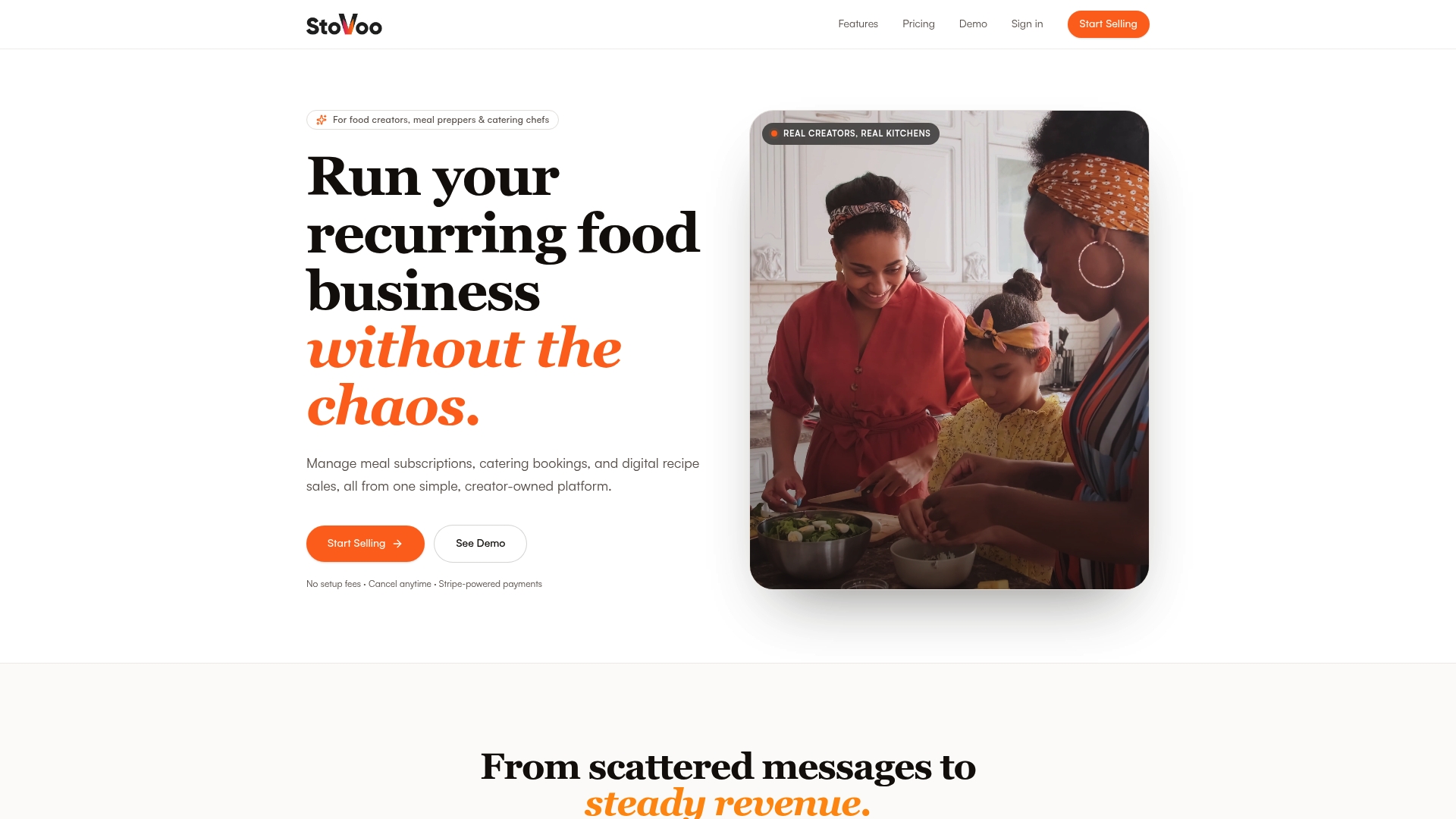
Your customers order from your branded shopfront, so you own the relationship rather than renting it from a crowded marketplace. The Kitchen Pro plan and a card fee apply; see the Stovoo site for current details, or create your account and share your first link.
Perspective: why the link matters more than the like
Every week, a food creator posts a video that gets thousands of views. The next question is always the same: where do those people go?
Our view is that attention is only worth what you can do with it. If the viewer lands in a marketplace full of other vendors, your video has just advertised the category. If the viewer lands on your own shopfront, the video has built your business.
That is why Stovoo puts recurring meal plans, catering bookings, recipe sales and live cooking in one branded storefront. Vendors own their customer relationships and run payments and operations without relying on a crowded food marketplace. Scattered DMs and spreadsheets cost you orders. One link, one dashboard and automated billing give you back your evenings.
Build the audience on TikTok. Build the business on a page that belongs to you.
freeman
FAQ
Can I sell homemade food on TikTok Shop?
No. TikTok's Prohibited Products Policy lists all homemade food products as prohibited. Home cooks can still use TikTok videos to build an audience and send viewers to their own shopfront, where they take orders in line with their state's food rules.
Do I need to register with the FDA to sell food on TikTok?
Not necessarily. The FDA says facilities that make, process, pack or hold food generally must register unless exempt, and private residences and restaurants are among the examples of exemptions. The agency also says platforms may ask for registration documents even when a business does not need to register. Check your own status with the FDA or your local health department.
How long does TikTok Shop food approval take?
Reports from June 2026 say most category applications are reviewed in about six days, though timelines vary and incomplete documents cause delays. Check Seller Center's Qualification Center for the current process.
What should I sell to my TikTok audience first?
Start with the offer your videos already show: a weekly meal plan for meal prep content, catering for event spreads, or a recipe ebook for how-to clips. A recurring plan gives the most predictable income from each new follower.
Sources
- TikTok Shop Prohibited Products Policy
- FDA: How to Start a Food Business
- FDA: Advises Food Facilities to Protect Their Food Facility Registration Information
- FDA: Best Practices on Food Safety for Online Delivery Services
- The Food Institute: TikTok Shop Offers Huge Opportunity for CPG Companies
- Eightx: TikTok Shop Now Gates 16 Categories Behind Qualification
- 13 lessons from working on Graza's social media
- Make a shop promo video
- Scalable product uploads guide