

Choosing a platform to manage local meal sales, catering bookings, and digital cooking content is complicated by tools that carve apart core features or demand commissions that reduce profit. Many popular solutions either restrict vendors to a narrow revenue model, complicate billing with hidden fees, or lack real support for local customer engagement. This comparison breaks down pricing models, automation strengths, and local selling support across three platforms so you can pick a vendor that actually fits your culinary business instead of fighting generic e-commerce tools.
Table of Contents
StoVoo
At a Glance
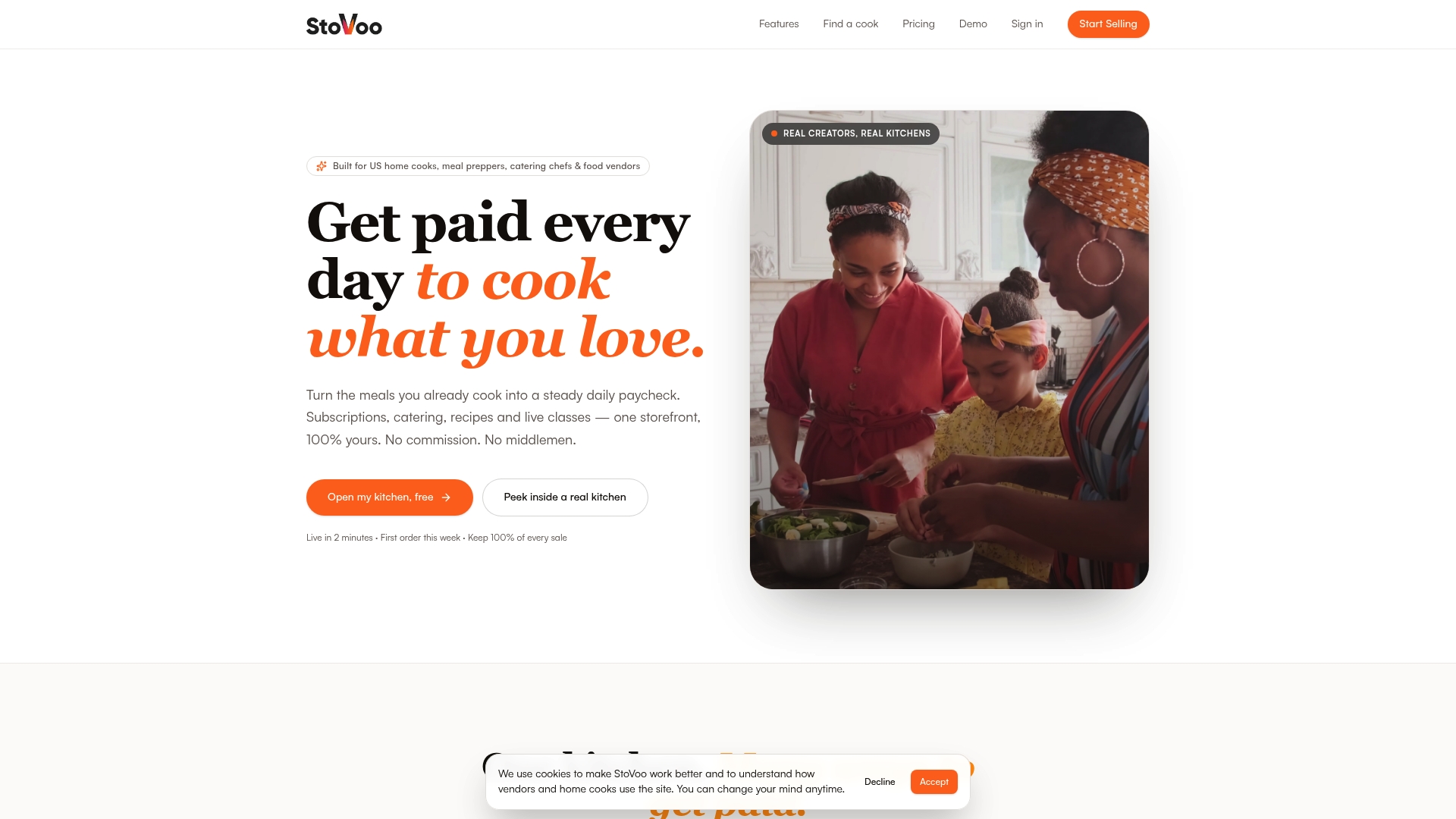
The vendor advertises a flat monthly fee with no commissions, letting creators keep 100% of sales while using a single app for subscriptions, catering bookings, recipe sales, and live classes. Stovoo bundles payments, customer records, and a mobile first shopfront into one dashboard.
Core Features
Stovoo focuses on features cooks actually use to sell locally and online.
- Custom storefront for each vendor so you can share a single shop link across social and messaging apps.
- Automated payment handling and reminders that reduce manual billing and missed payments.
- Weekly meal plans plus support for catering bookings, digital recipe sales, and live cook alongs.
- Quiet helpers for pricing, messaging, and review management built into the dashboard and local customer outreach assistance.
Key Differentiator
What sets Stovoo apart is that fee model above paired with multi-stream selling in one place. The combination means you run subscriptions, one-off catering orders, and digital downloads without chopping each sale for platform fees, and without juggling separate tools for orders and invoicing.
Pros
- All-in-one approach reduces the number of apps you manage so you spend more time cooking and less time copying orders across spreadsheets.
- Flat pricing removes per-sale commissions, which preserves margin on high-volume weeks and during catering runs.
- Setup is quick for nontechnical cooks; the dashboard centralizes customers, billing, and shop links so you control your customer list.
- Local customer targeting helps vendors find nearby buyers instead of relying only on broad marketplaces.
- Supports multiple revenue streams in the same shop so you can sell weekly plans, host live classes, and offer recipe ebooks alongside catering.
Cons
- The interface can feel clunky and would benefit from faster responsiveness and clearer navigation, according to buyer feedback; that friction slows new vendor onboarding.
Who It's For
Solo food entrepreneurs, home cooks, private chefs, and small catering teams who want a simple, low-overhead way to sell recurring meals and one-off services locally. If you need advanced marketing analytics or enterprise level reporting, this product may feel too lightweight.
Unique Value Proposition
Personal storefronts with zero commission let you keep every dollar from a sale while the platform handles billing and customer ownership. Add built-in local outreach and review helpers and you get a single place to sell, collect payments, and grow local repeat business without splitting revenue.
Real World Use Case
A private cook sets up a shop, lists a weekly meal plan and a ticketed live cook along, and links the shop in community groups. Orders and recurring billing arrive in the dashboard, payments clear automatically, and the cook owns the customer list for follow up and repeat offers.
Pricing
The vendor advertises region-specific plans starting at around $20 per month. Pricing varies by region and the fee is flat for all features with no sales commissions, so add-ons are minimal and revenue stays with the vendor.
Website: https://stovoo.com
ShipHero
At a Glance
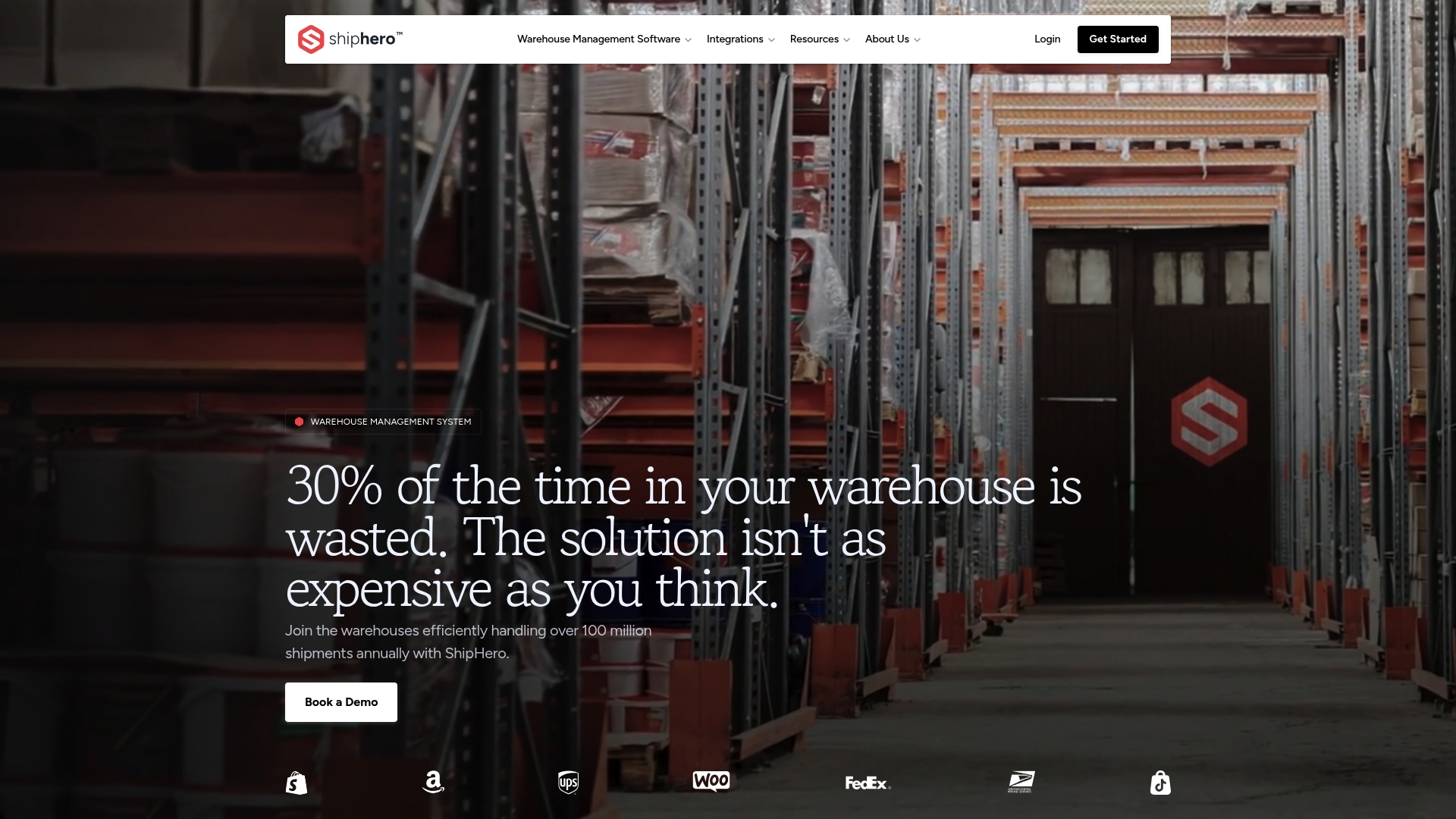
Built for high-volume fulfillment, ShipHero pairs picking and packing automation with live carrier rate shopping and shipping label generation to support rapid order throughput. The platform focuses on accuracy and scale for mid-to-large eCommerce brands and third-party logistics providers.
Core Features
- Order management and returns processing that centralizes orders across channels and handles reverse logistics.
- Inventory control and management with location tracking and cycle counting support to reduce stock variance.
- Picking and packing automation that speeds throughput and reduces human error on the floor.
- Live carrier rate shopping and shipping label generation to compare rates and print labels from the same interface.
Key Differentiator
ShipHero's strength is the breadth of warehouse automation and its integrations aimed at high-volume fulfillment. The platform bundles warehouse controls, picking automation, and carrier connections into a single operational stack built around scale and throughput.
Pros
- Reduces picking and shipping errors, which improves fulfillment accuracy for brands with tight SLAs. This directly lowers re-ships and customer complaints.
- Strong carrier and channel integrations let you compare rates and route orders to the cheapest or fastest option without exporting data.
- Built to support scaling operations; customers report the system holds up as volume grows rather than requiring frequent replatforming.
- Onboarding resources and implementation support are available, helping teams adopt warehouse workflows faster than going it alone.
Cons
- Customer support responsiveness can be inconsistent, which may delay incident resolution during peak periods.
- Shipping rate calculations have occasional inaccuracies reported by users, creating mismatches between quoted and billed freight.
- Onboarding can be complex for some warehouses, especially when custom workflows or legacy systems are involved.
- The platform sits at a higher price point than entry-level competitors, which may push smaller sellers to simpler solutions.
When It May Not Fit
If you run a small, low-volume shop or need an out-of-the-box, low-cost shipping solution, ShipHero's enterprise orientation and price point probably won't match your budget or simplicity needs. Teams that require guaranteed rapid support response should evaluate support SLAs closely.
Notable Integrations
Integrations include major storefronts and carriers such as Shopify, UPS, USPS, Magento 2, Walmart, TikTok, and DHL. The vendor also lists marketplace and ERP connectors like eBay, NetSuite, BigCommerce, and Brightpearl for multi-channel setups.
Who It's For
Mid-to-large eCommerce brands and 3PLs that need a warehouse management system built for volume, automation, and multi-channel fulfillment. Best when you have a dedicated operations team to manage implementation and continuous improvement.
Real World Use Case
A rapidly growing online fashion retailer centralizes inventory and automates picking with ShipHero, then rate-shops carriers at checkout. The retailer reports fewer shipping mistakes and faster dispatch times, helping it meet tighter delivery promises during peak seasons.
Pricing
Pricing is not published; the vendor generally offers custom quotes tailored to warehouse size, volume, and integration needs. Expect enterprise-oriented contracts rather than fixed entry-level plans.
Website: https://shiphero.com
Stowaa

At a Glance
Paid plans start at $10/month, with annual and lifetime options available. Stowaa combines scheduling, bulk posting, RSS auto-posting, and AI-powered content suggestions in a single dashboard aimed at tech-first social teams and agencies.
Core Features
- Social media scheduling and publishing across multiple accounts from one calendar.
- AI-powered content generation and suggestions to speed caption and hashtag drafts.
- Bulk post creation and automation plus RSS feed auto-posting for recurring content.
- Unified content calendar, performance analytics, media library, watermarking, and link tracking tools.
Key Differentiator
Stowaa positions its strength on AI-powered content optimization combined with automated posting across channels from a single workspace. That pairing reduces the manual edit-post-repeat cycle for teams that publish frequent, cross-platform campaigns.
Pros
- The integrated calendar and publishing tools let teams plan a month of posts without switching apps. That reduces context switching for operators juggling multiple clients.
- Bulk posting and RSS auto-posting cut repetitive work for evergreen feeds, freeing time for campaign strategy instead of manual posting.
- AI content suggestions speed copywriting and headline tests, producing usable drafts that editors refine rather than build from scratch.
- Role assignments and approval workflows support clear ownership on campaigns, which helps agencies avoid last-minute creative disputes.
- Analytics dashboards collect engagement metrics in one place, helping you compare post formats and posting windows quickly.
Cons
- No third-party user reviews are publicly available, which makes it hard to verify long-term stability or satisfaction.
- The platform appears to be an early entrant in its niche, so community support and third-party resources may be limited.
- Integrations are not listed in the product data, which could mean extra work to connect with existing tracking or reporting stacks.
When It May Not Fit
If you rely on a mature ecosystem of third-party apps and community-built workflows, the platform’s new-market status may slow integration and troubleshooting. Teams needing deeply proven reliability or extensive marketplace plugins will feel constrained.
Who It's For
Social media managers, digital marketing teams, content creators, and agencies that publish frequently across multiple channels and prefer AI-assisted drafting. Good for teams that prioritize rapid post throughput over a decades-old app ecosystem.
Real World Use Case
A digital marketing agency uses Stowaa to auto-schedule and publish posts across Instagram, Facebook, and Twitter, track engagement in real time, and route drafts through an approval workflow. That setup reduced manual publish time during campaign weeks.
Pricing
Paid plans start at $10/month with annual discounts and lifetime options promoted on the site. The vendor suggests flexible billing tiers; visit the website for full plan details and limits on accounts or users.
Website: https://stowaa.com
Comparative Analysis
Selecting a suitable platform for your needs within the diverse range of options available can be influenced by several key factors, such as usability, pricing structures, and feature sets. Here, we compare StoVoo, ShipHero, and Stowaa to help you make an informed decision.
Versatility Across Use Cases
StoVoo excels in offering a unified solution for various sales streams, including subscriptions, catering bookings, and digital recipe downloads. Its flat pricing model appeals to independent cooks aiming to maximize revenue retention by avoiding per-sale commissions. This contrasts with ShipHero, whose enterprise-oriented services specialize in streamlining logistics and shipping operations rather than local customer targeting. Stowaa, however, caters to a distinct user base with tools for social media automation, making it beneficial for digital agencies prioritizing high-frequency cross-platform publishing.
Cost Structure Transparency
When examining pricing models, StoVoo provides clarity with its flat-rate, commission-free approach, starting at approximately $20 per month. ShipHero's custom pricing emphasizes scalability for large operations, but this can be less predictable for smaller enterprises. On the other hand, Stowaa offers a budget-friendly entry point at $10 per month, appealing to social media teams needing lower initial costs for AI-assisted content creation workflows.
Best Fit Scenarios
- StoVoo: Great for food entrepreneurs, home chefs, and catering service providers needing a streamlined way to sell diverse service types under one operational platform.
- ShipHero: Suited for medium-to-large eCommerce businesses requiring high-volume inventory management and automation while optimizing shipping logistics.
- Stowaa: Beneficial for agencies and digital marketers focused on AI-enhanced social media management and bulk posting across multiple networks.
Our Pick
We recommend StoVoo for solo chefs and small teams who value keeping operations simple while maximizing sale profits across diverse revenue streams. Though ShipHero and Stowaa excel in their specialized contexts, StoVoo uniquely integrates selling formats into one accessible dashboard specifically tailored to local and digital food business models. For users with enterprise-scale requirements or social media-oriented goals, considering other platforms may be prudent.
Platforms for Entrepreneurs Comparison
Evaluate these platforms based on their key use cases, differentiators, and pricing options.
| Platform | Core Use Case | Key Differentiator | Best For | Pricing | Notable Limitation |
|---|---|---|---|---|---|
| Stovoo | Local and online meal sales | Zero commission multi-channel | Solo cooks and private chefs | Starting at $20/month | Clunky interface, needs navigation improvements |
| ShipHero | eCommerce fulfillment | High-volume automation | Mid-to-large eCommerce brands and 3PLs | Not disclosed | Support responsiveness inconsistent |
| Stowaa | Social media content management | AI-powered content suggestions | Social media teams and digital agencies | Starting at $10/month | Limited integrations and external reviews |
Simplify Your Food Business with Stovoo
If you feel overwhelmed juggling meal subscriptions, catering bookings, and digital recipe sales across multiple platforms like Stowvia, consider a solution built just for food creators. Stovoo offers a centralized dashboard to manage customer orders, automated billing, and customer ownership without cutting your revenue with commission fees. Experience complete control over your culinary business by uniting all your sales channels in one place.
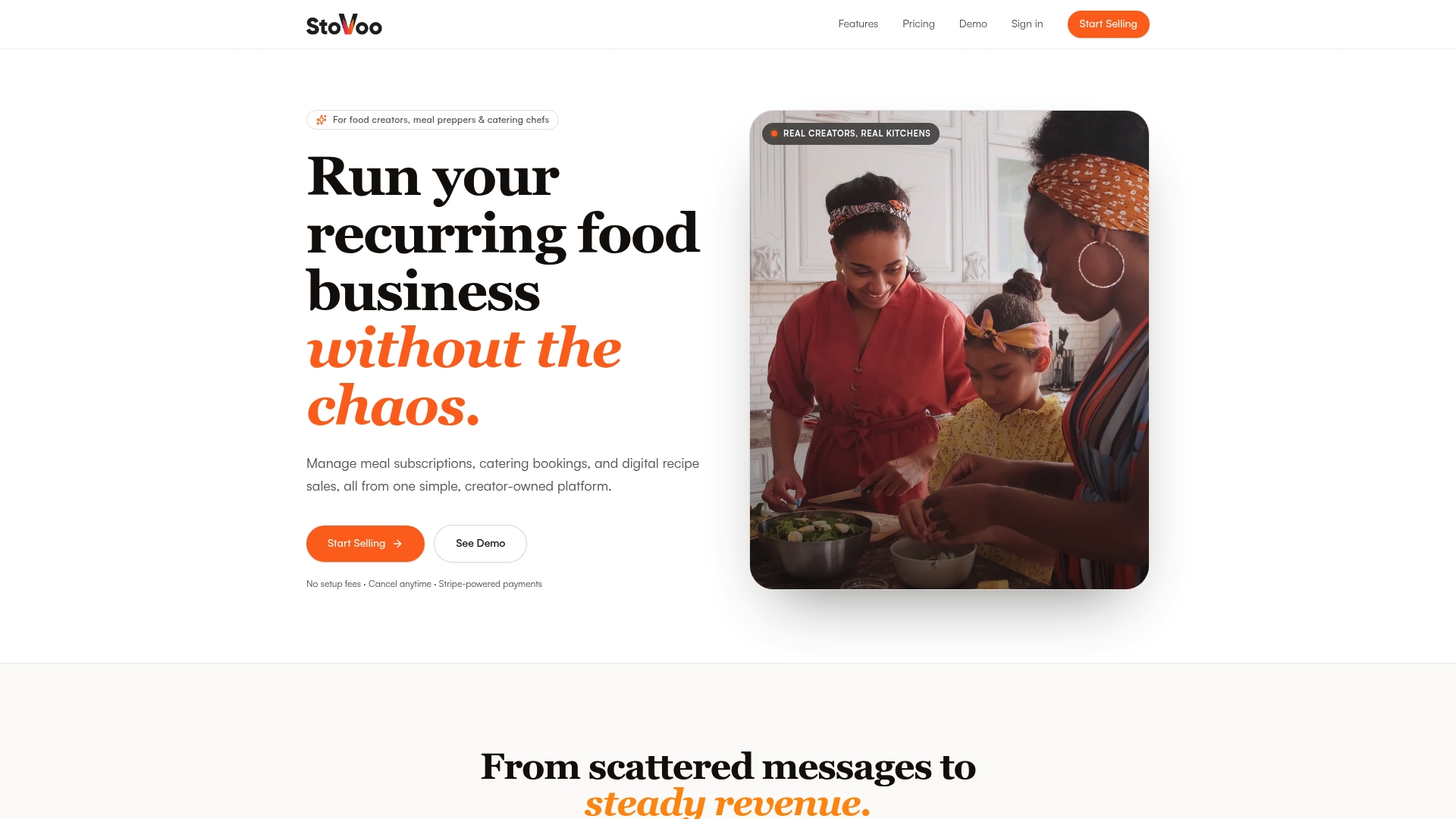
Take action now and set up your personalized shopfront to share with your community. Visit Stovoo and start accepting recurring orders and digital downloads today. Import your customer lists and start collecting payments automatically to grow your local food business with less hassle.
Frequently Asked Questions
What features does Stovoo offer for meal planning and customer management?
Stovoo provides a custom storefront and automated payment handling that simplifies meal planning and customer management. The platform allows vendors to use a single app for subscriptions, catering bookings, and digital recipe sales, which helps streamline their operations. If you're a food entrepreneur looking to reduce manual tasks, Stovoo could be the solution you need.
How does Stovoo compare to ShipHero in terms of fulfillment speed and accuracy?
ShipHero excels in warehouse automation, including picking and packing functionalities that improve accuracy and speed for high-volume fulfillment. While ShipHero focuses on mid-to-large eCommerce brands and logistics, Stovoo is tailored for smaller food entrepreneurs who benefit from its flat pricing and comprehensive features for meal sales. If you require specialized fulfillment options, ShipHero might be a better fit for your needs.
Can Stovoo handle both local meal delivery and digital recipe sales?
Yes, Stovoo allows vendors to offer local meal delivery and digital recipe sales from the same platform. Its multi-stream selling capability lets users manage subscriptions, catering orders, and recipe ebooks without additional fees for each sale. If you have diverse offerings, this makes Stovoo a practical choice for enhancing sales.
Does Stovoo offer any support for local customer outreach?
Yes, Stovoo includes built-in local customer targeting features that help vendors connect with nearby buyers. This focus on local outreach is designed to enhance repeat business without the need for broad marketplace reliance. If a local customer base is important to you, utilizing Stovoo’s outreach tools could be beneficial.
How does Stovoo's pricing structure benefit high-volume weeks?
Stovoo's flat pricing model means there are no sales commissions, allowing vendors to retain 100% of sales during high-volume weeks. This pricing structure helps preserve margins, especially during busy periods like catering runs. If you anticipate fluctuating demand, this could make Stovoo a financially sound choice for your business.