
TL;DR:
- Structured meal planning saves time, reduces waste, and minimizes decision fatigue by building flexible weekly systems.
- Focusing on pantry audits, organized shopping, component prep, and weekly reviews helps sustain consistent, healthy eating habits over time.
Most people decide what to eat about 30 minutes before they're hungry. That leads to takeout, random pantry raids, and a lot of wasted money. A clear step by step meal plan creation process changes all of that. Structured meal planning saves around 8 hours per week, cuts monthly grocery spending by $167 on average, and slashes daily decision fatigue by 73%. This guide walks you through every stage, from pantry audit to weekly review, so you can build a meal plan that actually works for your real life.
Table of Contents
- Key Takeaways
- Before you start: essential preparations
- The step by step meal plan process
- Grocery shopping and meal prep strategies
- Reviewing and refining your plan each week
- My honest take on sustainable meal planning
- Ready to take your meal planning further?
- FAQ
Key Takeaways
| Point | Details |
|---|---|
| Start with a pantry audit | Check what you already have before buying anything to save money and cut waste. |
| Build around your schedule | Map meals to your week so busy nights get the simplest recipes. |
| Prioritize flexibility | Keep fallback meals ready so swaps don't derail your whole plan. |
| Use component prep | Batch cook proteins and grains separately to mix and match meals all week. |
| Review weekly | Spend 10 minutes each Sunday adjusting what worked and what didn't. |
Before you start: essential preparations
The biggest reason meal plans fail in week two has nothing to do with motivation. It comes down to skipping the setup. Before you write a single meal on your calendar, you need three things: a clear picture of what you already have, an honest look at your week, and a simple list of your food goals.
Audit your pantry and fridge first
Spending just 10 to 15 minutes on a pantry and fridge audit before you plan saves money and cuts waste immediately. Pull out proteins that are close to expiring, check which grains and canned goods you already own, and note what needs to be used up. Build at least two meals around those existing ingredients. This one habit alone can save you $20 to $30 on your next grocery run.
Define your goals and constraints
Write down your nutritional priorities, whether that's more protein, fewer processed foods, or lower spending. Then look at your actual weekly schedule. Identify two or three nights when you have less than 30 minutes to cook. Those slots need the simplest meals on your plan, not the ambitious new recipes you found online.
Here is a quick reference for the tools and materials you'll want to have ready:
| Tool | Purpose |
|---|---|
| Weekly calendar or planner | Map meals to specific days and times |
| Notepad or planning app | Track recipes, quantities, and grocery items |
| Pantry inventory list | Avoid buying duplicates and reduce waste |
| Grocery list template by section | Speed up shopping and avoid missed items |
| Meal plan checklist | Confirm every day of the week is covered |
- Check expiration dates on proteins and dairy before planning
- List your go-to recipes (the ones you make without looking anything up)
- Note any dietary restrictions or preferences for everyone eating
- Identify your longest free block of time for meal prep each week
Pro Tip: Organize your grocery list by store section (produce, proteins, dairy, dry goods) before you ever walk through the door. You'll spend less time backtracking and avoid the temptation to browse aisles you don't need.
The step by step meal plan process
This is where most meal planning guides skip the detail. They tell you to "pick your meals" and move on. Here is a more useful framework, built around how a week actually unfolds.
- Start with dinner. Dinner is the anchor meal for most households. Pick five to six dinner recipes for the week, leaving one or two nights open for leftovers or a simple fallback like eggs and toast.
- Match meal complexity to your schedule. Look at your calendar. Put quick 20-minute meals on your two busiest evenings. Save longer recipes for days when you have time to enjoy cooking.
- Select recipes around real food. The most effective meal plans prioritize whole grains, vegetables, and lean proteins while limiting added sugars and refined carbs. Pick at least one plant-based protein per week to add variety without extra cost.
- Plan breakfast and lunch around dinner leftovers. Lunch is almost always easier when it's last night's dinner repurposed. Batch-cooked grains from Monday's dinner become Tuesday's grain bowl for lunch.
- Build in a fallback meal. Every good meal plan has one dead-simple backup: a frozen protein, a reliable pasta dish, or a sheet pan meal that takes 15 minutes of hands-on time. This is your safety net for when the week doesn't go according to plan.
- Write your grocery list by category. Once your meals are mapped, extract every ingredient and sort them by store section. This is the step that turns a meal plan from an idea into a real system.
Here is an example of how a sample week might look when mapped out:
| Day | Dinner | Prep level | Lunch (next day) |
|---|---|---|---|
| Monday | Sheet pan chicken and vegetables | Low | Leftover chicken grain bowl |
| Tuesday | Lentil soup with crusty bread | Medium | Leftover soup with salad |
| Wednesday | Pasta with turkey meat sauce | Low | Pasta salad with veggies |
| Thursday | Stir-fry with tofu and rice | Medium | Fried rice with egg |
| Friday | Homemade tacos | Low | Taco salad |
| Saturday | New recipe or bigger cook | High | Repurpose components |
| Sunday | Fallback meal or leftovers | Minimal | Meal prep for next week |
Pro Tip: Pick two or three "anchor recipes" you know your household loves and rotate them every two to three weeks. Familiarity speeds up prep, reduces waste, and keeps grocery costs predictable.
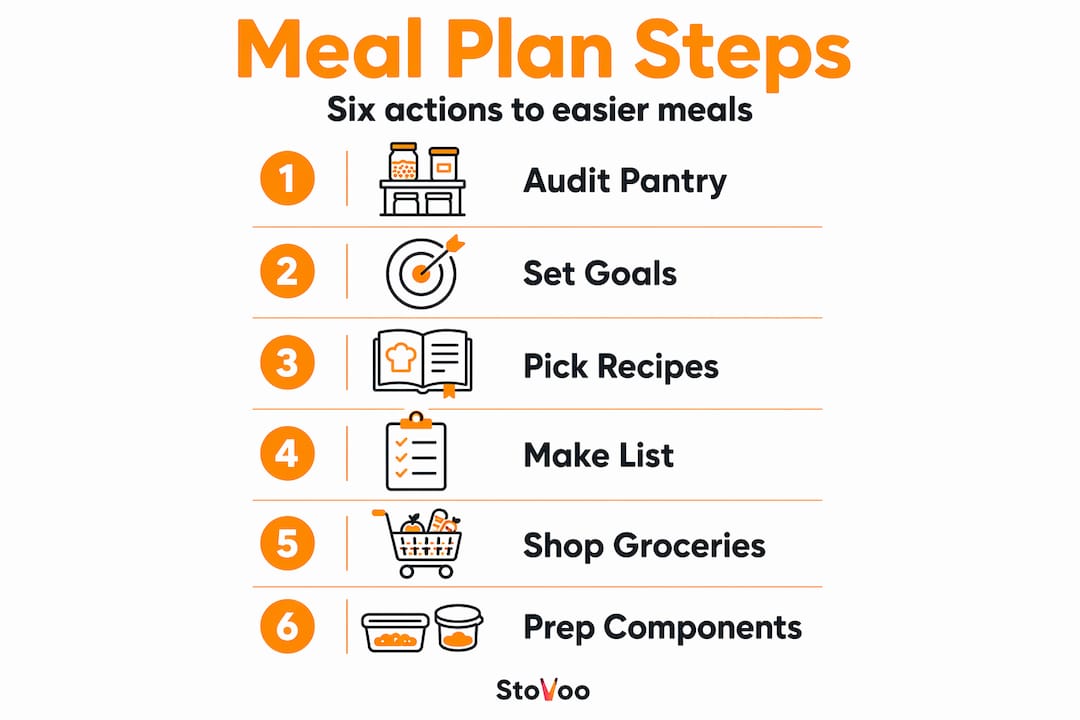
Effective meal planning follows a six-step process that includes a pantry audit, nutritional targets, repeatable recipes, an organized grocery list, a weekly prep block, and a weekly review. Fitting all six into your routine takes about 30 to 60 minutes per week once you've done it a few times.
Grocery shopping and meal prep strategies
Getting the plan on paper is half the work. Executing it without burning out on a Sunday afternoon is the other half. Smart shopping and prep habits are what separate people who meal plan for two weeks from people who do it all year.
Shop with intention
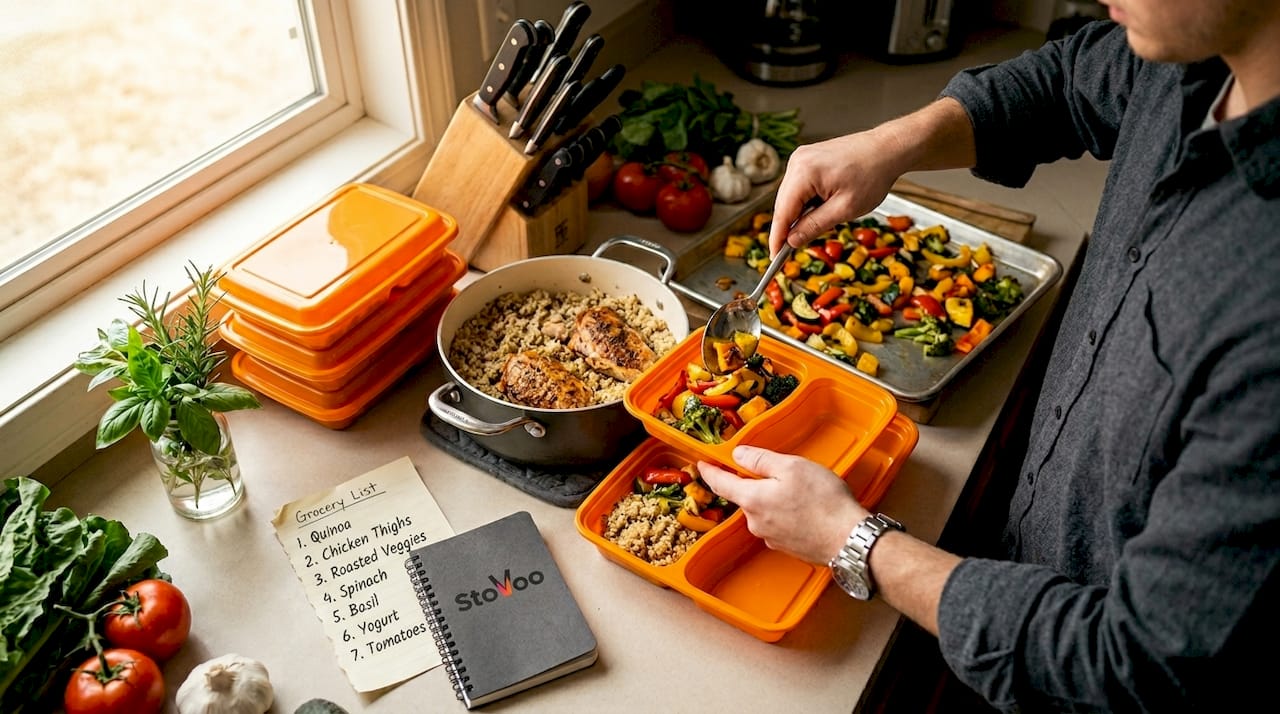
Never shop hungry, and always organize your grocery list by store section before you leave the house. Impulse purchases are the single biggest reason grocery budgets go over. A categorized list keeps you moving through the store with purpose.
- Stick to the perimeter of the store first (produce, proteins, dairy) before hitting center aisles
- Buy proteins in bulk when they're on sale and freeze what you won't use this week
- Check your pantry list before adding anything dry or canned to your cart
- Compare unit prices, not package prices, for grains, legumes, and oils
Use component prep instead of full meal prep
Most people think meal prep means cooking seven complete dinners on Sunday. That's exhausting and leaves you eating the same lukewarm container by Wednesday. Component prep is a smarter approach: cook your proteins, grains, and vegetables separately, then assemble combinations throughout the week.
Batch cook a big pot of brown rice. Roast two sheet pans of mixed vegetables. Cook three pounds of ground turkey and keep it plain. From those three components, you can build tacos, grain bowls, stir-fries, and pasta sauces without cooking from scratch every night. This is what easy meal prep ideas actually look like in practice.
Pro Tip: Wash and chop vegetables the day you bring them home from the store, not the day you plan to cook them. You're more likely to use them when the prep work is already done.
People with once-weekly meal prep habits lose an average of 7.5 pounds over three months because they consume 47% fewer calories from processed food. That's not about willpower. It's about having a fridge full of ready-to-use ingredients that make healthy choices faster than unhealthy ones.
Reviewing and refining your plan each week
A meal plan is not a contract. It's a starting point. The best home cooks treat their weekly review as a 10-minute habit that keeps the whole system alive and actually useful.
"The biggest mistake in meal planning is rigidity. Your plan should work around your life, not the other way around." Meal planning mistakes and flexibility
After each week, ask yourself four questions:
- Which meals did you actually cook versus skip?
- Which recipes felt like too much effort for a weeknight?
- What ingredients got wasted and why?
- What would you keep, cut, or swap next week?
Regular meal planning makes healthy eating less cognitively demanding over time because it removes daily decisions from your plate (literally). The goal of a detailed meal plan strategy is not perfection. It's building a system that defaults to good choices without requiring willpower every single evening.
Common mistakes to watch for as you refine your system:
- Planning too many new recipes at once (stick to one or two new dishes per week)
- Forgetting to account for social dinners, work lunches, or restaurant nights
- Overloading Sunday prep so it feels like a second job
- Not keeping at least one fallback meal stocked at all times
Your plan will improve every single week if you take five minutes to reflect. That's the real power of a stepwise meal organization approach.
My honest take on sustainable meal planning
I've watched a lot of people start meal planning with a full color-coded spreadsheet and give up by week three. The system was perfect. Their life wasn't. And that's where most meal planning guides get it wrong.
In my experience, the meals you repeat are worth more than the meals you discover. If your household loves a specific chicken stir-fry, make it every other week without apology. Repetition isn't boring. It's efficient. It means you can shop faster, prep faster, and cook it almost on autopilot.
What I've found actually saves people is having a fallback meal they don't have to think about. Not a recipe. Just a set of ingredients that always live in your pantry or freezer. Mine is pasta, canned tomatoes, and ground meat. When the week falls apart, that meal is dinner in 20 minutes. It's kept more meal plans alive than any planning app ever has.
The other thing I'd push back on is the idea that healthy eating requires variety. The 2025-2030 Dietary Guidelines for Americans focus on patterns, not individual meals. Eating the same balanced breakfast five days a week is not a failure. It's a system. Treat your weekly meal plans as a living document, not a finished product, and you'll stick with it far longer than anyone who's aiming for the perfect week.
— freeman
Ready to take your meal planning further?
If you've built your meal plan system and you're ready to get professional-quality, personalized meals delivered to your door, Stovoo makes that step simple.

Stovoo connects you with skilled food creators who offer weekly meal plan subscriptions for every dietary need and schedule. Whether you want ready-made meals from a local chef or you're looking to order from a creator whose recipes you already love, Stovoo's platform handles ordering, billing, and delivery coordination in one place. You can also explore options like catering and recipe plans for households that want more variety. No spreadsheets, no chasing vendors over text. Just good food, reliably delivered.
FAQ
How long does step by step meal plan creation take?
A weekly planning session takes 30 to 60 minutes once you have a system in place. First-time planners may need a bit longer while building their recipe rotation.
How many meals should I plan per week?
Start by planning dinners for five to six nights and let leftovers cover most lunches. Add breakfasts only once your dinner planning feels automatic.
What's the easiest way to build a grocery list?
Sort every ingredient from your meal plan by store section (produce, proteins, dairy, dry goods) before you shop. Shopping with an organized list by section saves time and prevents impulse purchases.
Can meal planning actually help with weight loss?
Yes. Structured meal planning increases weight loss success by 62% on average, largely because it reduces processed food consumption and improves portion control.
What if my week changes and I can't follow the plan?
Swap meals around freely and lean on your fallback meal. Flexibility is what keeps a meal plan working long-term. The goal is a system that adapts to you, not one you follow rigidly.