
You start a meal subscription by choosing one clear offer, confirming what your state allows you to sell from your kitchen, pricing every meal from its real cost, and putting recurring billing behind a single branded page you control. Do those four things and your first ten subscribers are a realistic target, not a hope. The rest of this guide walks through each step, including where new operators usually go wrong. Stovoo was built for exactly this: meal plans, catering, digital recipes and customer management in one dashboard, so recurring orders stop living in chat threads and spreadsheets.
TL;DR
- Pick one model first (weekly plan, pickup box, or workplace delivery) and one customer, then expand.
- Check federal, state and local rules before you sell. Cottage-food exemptions are state-specific and often do not cover perishable prepared meals.
- Price from cost: divide your raw food cost by your target food cost percentage, then add delivery and packaging.
- Set renewals, pauses and cancellations before launch, and keep the customer relationship on your own storefront.
- Win your first subscribers from people who already know you, then keep them with a consistent menu and clear communication.
Table of Contents
- Choose your meal subscription model
- Check the rules before you sell
- Set up kitchen, packaging and delivery
- Price your plans from real costs
- Set up recurring orders and payments
- Find your first subscribers and keep them
- A 30-day launch plan
- Our perspective
- Put your subscription on one storefront
- FAQ
- Sources
Choose your meal subscription model
A meal subscription is a recurring order: a customer signs up once and receives meals on a set schedule, paying automatically each cycle. Within that definition there are several models, and the choice shapes your kitchen, your packaging and your price.
- Weekly prepared meals. Fully cooked meals, delivered or picked up on a fixed day. Best for busy professionals, fitness clients and families.
- Customizable plans. The customer picks proteins, sides and portion sizes. A U.S. example of a healthy meals and snacks delivery business describes weekly home or workplace delivery serving families with young children, people recovering from illness or injury, seniors who want to live independently and busy professionals.
- Macro or diet-specific plans. Built around a goal such as high protein or lower carb. A natural fit if you are a gym coach or dietitian with an audience already asking for it.
- Family meal subscriptions. Larger portions, simpler dishes, a predictable weekly rotation.
- Add-ons around the core plan. Catering enquiries, digital recipe ebooks and live cooking classes can sit beside the subscription and bring in income between cycles.
If you are unsure, start with the model closest to what people already ask you for. Our guides on meal plan business models and meal delivery models that build recurring revenue go deeper on how each one earns.
Validate demand before you cook
You do not need a survey firm. You need ten real conversations or a short sign-up form. Post your sample menu where your audience already is (an Instagram story, a TikTok, a gym group chat), name a price and a start day, and count how many people say yes to the price, not just to the idea. A "yes" to a specific meal at a specific price on a specific day is demand. A "sounds great" is not.

Keep the first menu small: four to six dishes that share ingredients, reheat well and hold up for several days. A short menu cuts waste, speeds up prep and makes pricing easier to get right.

Check the rules before you sell
This is the step that protects everything else. Rules differ by state and county, so treat the points below as a map of what to ask, and confirm details with your local health department.
Federal basics
The FDA regulates food offered for sale across state lines, with meat, poultry and certain egg products falling under USDA instead. According to its guidance on starting a food business, federal, state and local requirements may apply, facilities that manufacture, process, pack or hold food generally must register with the FDA unless exempt, and most prepared foods need proper labeling, including major-allergen labeling. Exempt facilities include restaurants, retail food establishments and private residences where the food is made.
Cottage food laws are not a blanket permission
Many states have cottage food laws that let you sell certain low-risk foods made at home. They are written product by product and state by state. States have changed these laws recently, so the version you read in an old blog post may be out of date. Perishable, fully prepared meals such as chicken and rice bowls often fall outside a cottage food category, which means you may need a licensed commercial kitchen, a shared kitchen or a permit for a home-based food business. Your state department of agriculture or health department can tell you which category your menu falls into, and your county health office handles local permits.
The practical sequence:
- Write down your menu and whether each item needs refrigeration.
- Call or email your state and county health departments with that list.
- Ask about permits, inspections, food handler certification, labeling and sales limits.
- Ask whether delivery or shipping across county or state lines changes your obligations.
- Check business registration, sales tax and insurance with your state and a licensed adviser.
If you are weighing kitchen locations, StreetSpring's overview of decisions when starting a food business shows how location choices interact with the rest of your setup.
Set up kitchen, packaging and delivery
Subscription cooking is batch cooking on a schedule. You need reliable refrigeration, enough storage for a full week of orders, food-grade containers that suit reheating, labels and a cooler setup for delivery.
The FDA's best practices for online food delivery cover preventive controls, risk assessment, packaging, temperature control, contamination and allergen control, including for meal-kit subscriptions. They also stress the last mile: plan your packaging and handling for the whole route to the customer's door, not just for the kitchen. In practice that means:
- Chill meals fully before packing.
- Use insulated bags or coolers with cold packs sized to your longest delivery.
- Label every container with the dish name, date and allergens.
- Keep raw and ready-to-eat items separated in prep and in transit.
- Fix delivery windows so food is not sitting on a porch.
Decide early whether you deliver, offer pickup, or do both. Pickup at your kitchen, a gym or a set drop point is a low-cost way to start, because it removes driver time and the riskiest stretch of the journey.
Price your plans from real costs
Under-pricing is the most common reason a good meal prep business stalls. Work out the cost of every meal, then set the price.
The standard method, laid out in an Illinois State Board of Education food cost guide, is to divide the raw food cost by your target food cost percentage to get the minimum menu price. Here is an illustration with made-up numbers:
| Item | Example |
|---|---|
| Ingredients per meal | $4.20 |
| Target food cost percentage | 35% |
| Minimum price (4.20 ÷ 0.35) | $12.00 |
That $12.00 only covers the target ratio. Before you publish a price, check that it also leaves room for:
- Packaging. Container, lid, label and cold pack, per meal.
- Labor. Shopping, prep, cooking, packing and delivery. Time your first batch with a clock.
- Overhead. Kitchen rent or shared-kitchen fees, permits, insurance, software and payment fees.
- Delivery. Fuel and driver time, or a delivery charge passed to the customer.
- Waste. Spoilage and portioning errors.
A few pricing habits help. Set a minimum order or a plan size (for example, a five-meal or ten-meal plan) so each delivery run is worth making. Offer a small discount for a larger plan rather than for the first order only. And review your costs every month, because ingredient prices move.
Set up recurring orders and payments
A subscription lives or dies on its admin. Before you take the first sign-up, decide:
- Billing cycle. Weekly is common for fresh meals; monthly suits digital products and coaching bundles.
- Cutoff time. When does a customer have to change their menu choices before you shop and cook?
- Pauses and skips. Let customers skip a week without cancelling. It keeps them subscribed through holidays and travel.
- Cancellations. State the rule in plain words on the sign-up page.
- Allergies and preferences. Collect them at checkout and store them with the customer record.
- Communication. One channel for order updates, one for questions.
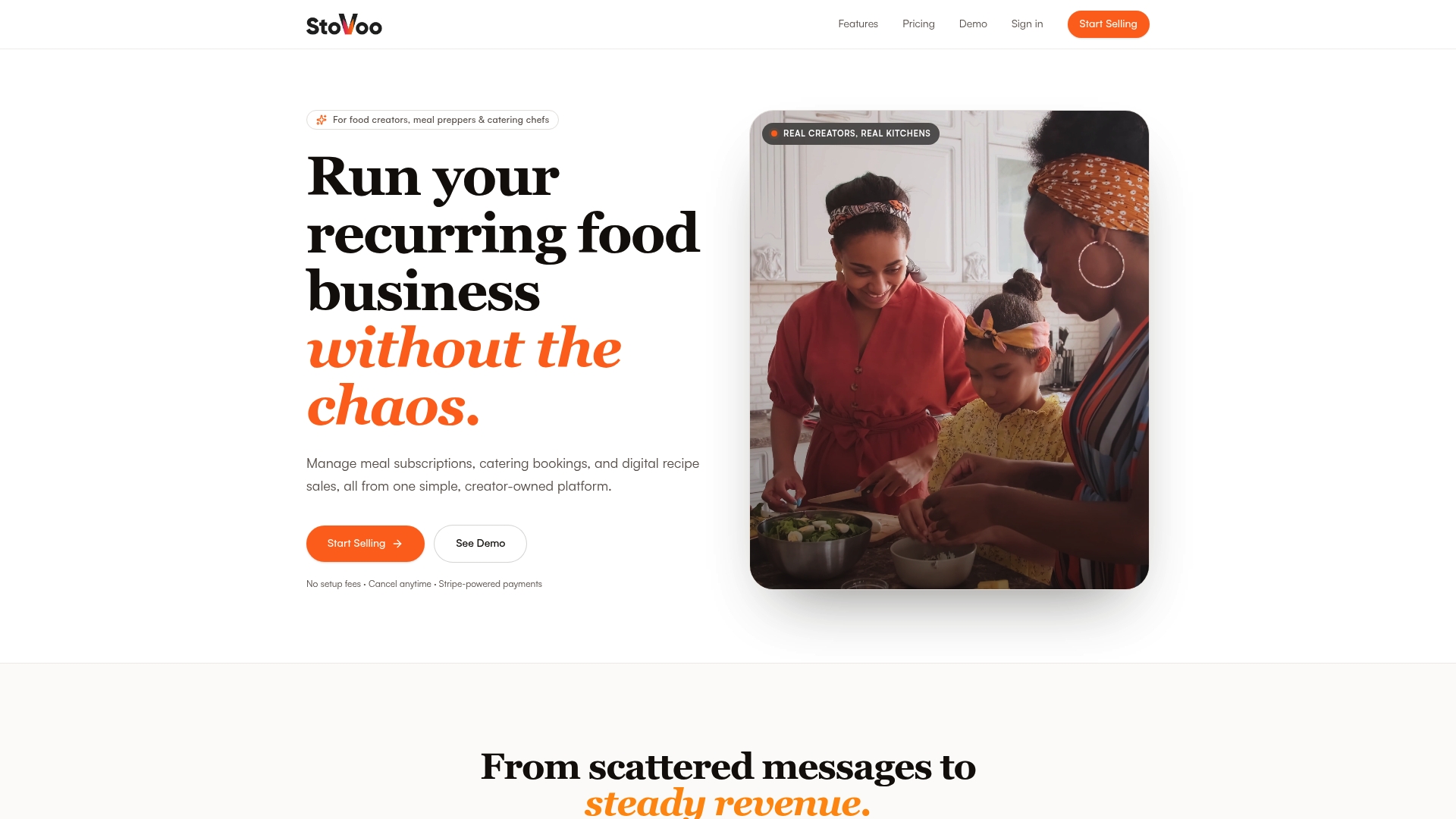
Managing this in WhatsApp threads and spreadsheets works for a handful of customers and breaks quickly after that: a missed payment here, a forgotten allergy note there. Stovoo gives you a centralized dashboard for meal subscription plans, catering enquiries and bookings, digital recipe sales and customer management, with automated billing and a mobile-first shopfront you can share by link on social media and messaging apps. Customers subscribe and pay on your page, and you keep ownership of the relationship rather than handing it to a crowded food marketplace.
For a longer walkthrough of the setup, see our guide to launching and managing a meal subscription.
Find your first subscribers and keep them
Your first customers are almost always people who already trust you: followers, gym clients, coworkers, neighbors, parents at your kids' school. Start there.
- Announce a launch week with a cap. "Twelve spots for the first menu" gives people a reason to decide now and keeps your first batches manageable.
- Share one link. A single storefront link in your bio, stories and group chats is easier to act on than a conversation that ends with "DM me."
- Show the food. Short videos of prep, portioning and the finished container do more than a menu list.
- Ask for referrals at week two. Once a customer has eaten a few meals, ask them to pass your link to one friend.
- Rotate the menu on a schedule. Keep favorites, swap one or two dishes each month, and tell subscribers what is coming.
Retention is built on small things: arriving on the promised day, consistent portions, quick answers and a simple way to pause. Chefs who build this loop often add extras such as recipe ebooks or live cook-alongs for subscribers. Our articles on how chefs use subscriptions for growth and loyalty and meal subscription ideas offer more to try, and food subscription trends shows where the market is heading.
A 30-day launch plan
| Week | Focus | Output |
|---|---|---|
| 1 | Model, menu and demand check | Four to six dishes, a named price, a list of interested people |
| 2 | Rules and kitchen | Answers from your health department, a permitted kitchen, packaging bought |
| 3 | Costing and storefront | Cost per meal, plan prices, a live storefront link with recurring billing |
| 4 | Soft launch | First capped batch, delivery or pickup tested, feedback collected |
Our perspective
Most food creators we talk with have the cooking figured out. What slows them down is the business around it: who has paid, who skipped this week, who needs the nut-free version.
We built Stovoo so that a meal prepper, caterer or recipe author can run subscriptions, catering bookings and digital products from one dashboard and one branded shopfront. You own your customers, you set your own plans, and the paperwork of recurring billing stops competing with your time in the kitchen.
Our advice to anyone starting out: launch small, keep the menu tight, and make it easy for people to say yes. A simple subscription that runs smoothly beats an ambitious one that lives in scattered messages.
freeman
Put your subscription on one storefront
When your menu, price and rules are settled, Stovoo's Kitchen Pro plan lets you set up a customized shopfront link, take recurring orders with automated billing and manage customers in one place. You can share the link anywhere your audience already is.
See how it works at Stovoo.
FAQ
Do I need a license to start a meal subscription from home?
Often you need some form of permit, but it depends on your state, county and what you cook. The FDA notes that federal, state and local rules may apply, and cottage food exemptions usually cover specific low-risk foods rather than all prepared meals. Contact your state and county health departments with your menu before you sell.
How many meals should my first menu include?
Four to six dishes is a workable start. A short menu keeps ingredient lists small, makes costing easier and lets you perfect portions and packaging before you add variety.
Should I offer delivery or pickup first?
Pickup is the simpler start because it removes driver time and the delivery stretch of the food safety chain. Add delivery once your batches are steady, and plan packaging and cold storage for the whole route, as the FDA's delivery guidance advises.
How do I price a meal subscription?
Divide the raw food cost of each meal by your target food cost percentage to find a minimum price, then check that it also covers packaging, labor, overhead, delivery and waste. Review the numbers monthly as ingredient costs change.
Can I sell more than meals?
Yes. Many food creators add catering bookings, digital recipe ebooks or live cooking classes beside their plans, which gives customers more ways to buy from you and gives you income between delivery cycles.
Sources
- How to Start a Food Business | FDA
- FDA Highlights Best Practices on Food Safety for Online Delivery Services
- Calculate Food Cost and Menu Prices | Illinois State Board of Education
- How I Started A $14K/Month Healthy Meals & Snacks Delivery Business
- How to Start a Bakery: The Decisions, in the Order They Bind