

TL;DR:
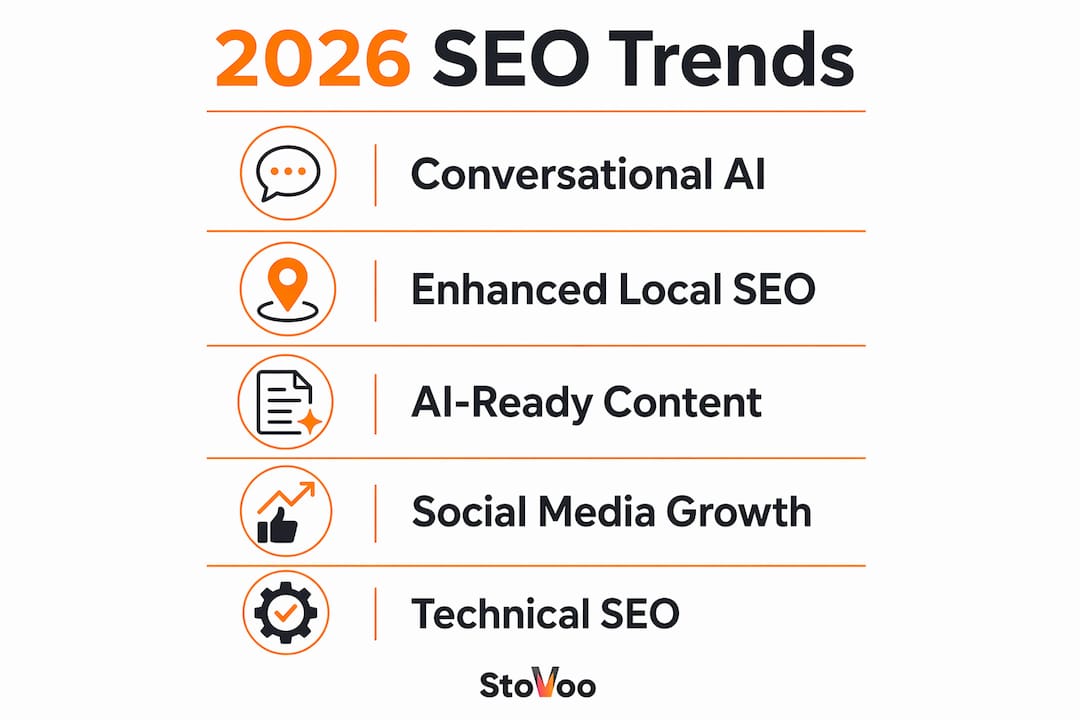
- AI-driven discovery and conversational content now dominate how customers find small food businesses in 2026.
- Local SEO relies heavily on a complete Google Business Profile, recent reviews, and structured data for AI ranking success.
The most effective SEO strategies for small food businesses in 2026 center on four shifts that are already reshaping how customers find places to eat and order from: AI-driven discovery through tools like ChatGPT and Google Gemini, local SEO anchored by a fully built-out Google Business Profile, content written the way real people talk about food, and technical fundamentals like mobile speed and structured data. Get these right, and you show up where decisions are made. Miss them, and even a great product stays invisible.
Here is what is driving the biggest changes this year:
- AI and Answer Engine Optimization (AEO): 22% of US diners now use AI tools like ChatGPT or Google Gemini to choose where to eat, and 55% trust AI-generated review summaries when deciding on a restaurant.
- Google Business Profile: Google holds a dominant share of the US mobile search market, making your GBP the single most important local ranking tool you have.
- Review velocity: Recent reviews now outrank sheer review volume as a local ranking signal. Recency and detail matter more than a large but stale count.
- Conversational content: AI engines match restaurants to occasion and vibe queries, not just cuisine keywords. Your website needs to describe atmosphere, occasions, and neighborhood context.
- Technical SEO: Mobile-first design, page speed under 2.5 seconds, and HTML menus with schema markup are table stakes for AI indexing.
- Social SEO: Authentic social content amplifies AI recommendation signals and builds the brand trust that converts browsers into buyers.
How AI and conversational search reshape SEO for food businesses
The way people search for food has fundamentally changed. A diner planning Saturday night no longer types "Italian restaurant Brooklyn" into Google. They ask ChatGPT for "a cozy spot for a date with good pasta and a quiet vibe." That shift from keyword browsing to conversational intent is the biggest structural change in food business SEO right now.
AI engines do not just match keywords. They synthesize data from your Google Business Profile, your reviews, your menu schema, and your website copy to determine whether your restaurant fits the occasion a user described. A place that explicitly mentions "quiet booths for date night" or "family-friendly Sunday brunch" gets surfaced for those queries. One that only lists its cuisine type does not.
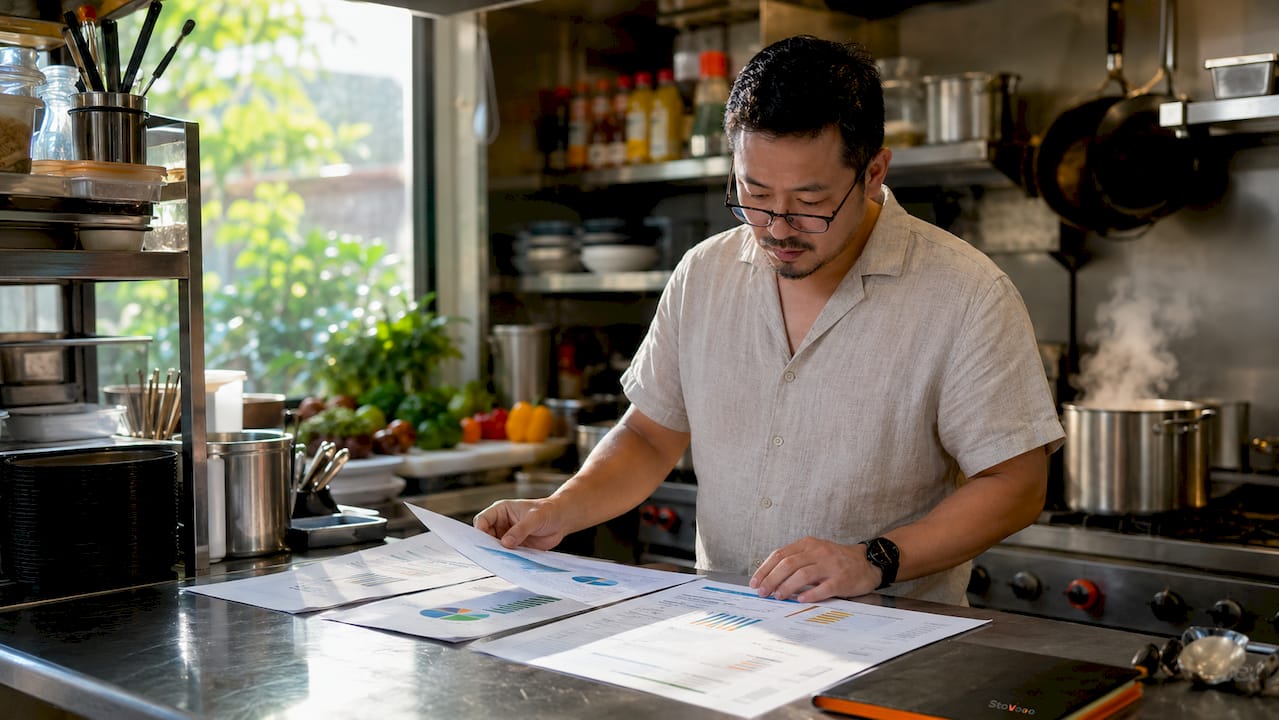
Voice search follows the same logic. Queries like "Hey Google, find me a late-night vegan spot near downtown" are full sentences with intent baked in. Your website needs to answer those questions directly, in plain language, not in keyword-stuffed headers.
Pro Tip: Write one page on your site that describes exactly what kind of evening your restaurant is built for. Date night, business lunch, post-game celebration, family brunch. AI engines extract this content and match it to occasion queries that drive real bookings.
How Google Business Profile and local SEO have evolved in 2026
Local SEO is still the highest-return marketing channel for small food businesses, and Google Business Profile sits at the center of it. With Google controlling 93% of US mobile search, a half-finished GBP profile is one of the most expensive mistakes you can make.
| GBP Component | Local SEO Impact |
|---|---|
| Primary category (specific cuisine) | Largest single ranking lever; "Neapolitan Pizza Restaurant" beats "Restaurant" |
| Photos (updated monthly) | Regular uploads correlate with map-pack impression increases within 30 days |
| Weekly posts | Posting cadence now ranks in the top signal tier for 2026 local rankings |
| Review responses | Feeds Google's AI (Ask Maps) with structured answers to common diner questions |
| Menu upload (HTML or GBP menu tool) | Enables dish-level queries like "restaurants with gluten-free pasta near me" |
| Hours accuracy | Wrong hours create negative user signals that directly hurt ranking |
Review velocity has overtaken total review count as a primary local ranking factor. A restaurant with 50 reviews from the last three months consistently outranks one with 200 reviews from three years ago. Reviews that mention specific dishes, describe atmosphere, or call out service details feed AI extraction signals far better than generic five-star comments.
Best practices for local listing consistency and review growth:
- Match your name, address, and phone number exactly across GBP, Yelp, TripAdvisor, OpenTable, and your website.
- Respond to every review within 48 hours, using the guest's name and referencing a specific detail.
- Ask for reviews at the moment of highest satisfaction, right after a great meal or delivery.
- Seed your GBP Q&A with the questions diners actually ask ("Do you have parking?" "Is there a gluten-free menu?").
- Upload 4–10 new photos per month, mixing food close-ups, interior shots, and behind-the-scenes moments.
- Maintain a 4.0+ star rating floor. Below that, review generation becomes your top priority before any other optimization.
A Harvard Business School study found that a one-star Yelp increase correlates with 5–9% revenue growth for independent restaurants. That principle extends across every review platform you manage.
How to craft AI-ready content that actually gets found
Content in 2026 needs to do two jobs at once: serve the human reader and be parseable by AI engines. The good news is those goals align more than they conflict. AI rewards the same things a real customer wants: clear answers, specific details, and a sense of what the experience actually feels like.
Start with your menu. PDF menus are invisible to search engines and AI models alike. An HTML menu with Schema.org markup lets Google read every dish name, price, allergen tag, and dietary attribute, making you eligible for queries like "where can I get gluten-free pasta near me" that a PDF-based competitor will never rank for.
Content types that build AI visibility and customer trust:
- Signature dish pages: A short paragraph per dish covering the story, key ingredients, and what makes it worth ordering.
- Occasion and atmosphere pages: Explicit descriptions of what kind of visit your space is built for.
- Neighborhood context: What is nearby, who comes here, what the area feels like. AI engines answering "where to eat after a show at [venue]" pull from this content.
- FAQ blocks: Direct answers to common questions using FAQPage schema so AI can quote them cleanly.
- Seasonal and event content: Updated regularly to signal freshness to Google's crawlers.
Schema types worth implementing: Restaurant, Menu, MenuItem with dietary tags (GlutenFreeDiet, VeganDiet, VegetarianDiet, HalalDiet), FAQPage, and Event if you host live music or special dinners.
Pro Tip: User-generated content, specifically reviews that mention dish names, vibe, and occasion, acts as free AI-optimized content. Build a system that encourages detailed reviews, and those words do SEO work you never have to write yourself.
How social media builds brand trust and amplifies your search visibility
Social media is no longer just a promotional channel for food businesses. It functions as a search amplifier that feeds AI recommendation algorithms and shapes how potential customers perceive your brand before they ever visit your website. Platforms like Instagram and TikTok are increasingly where people discover food businesses, especially among younger audiences.
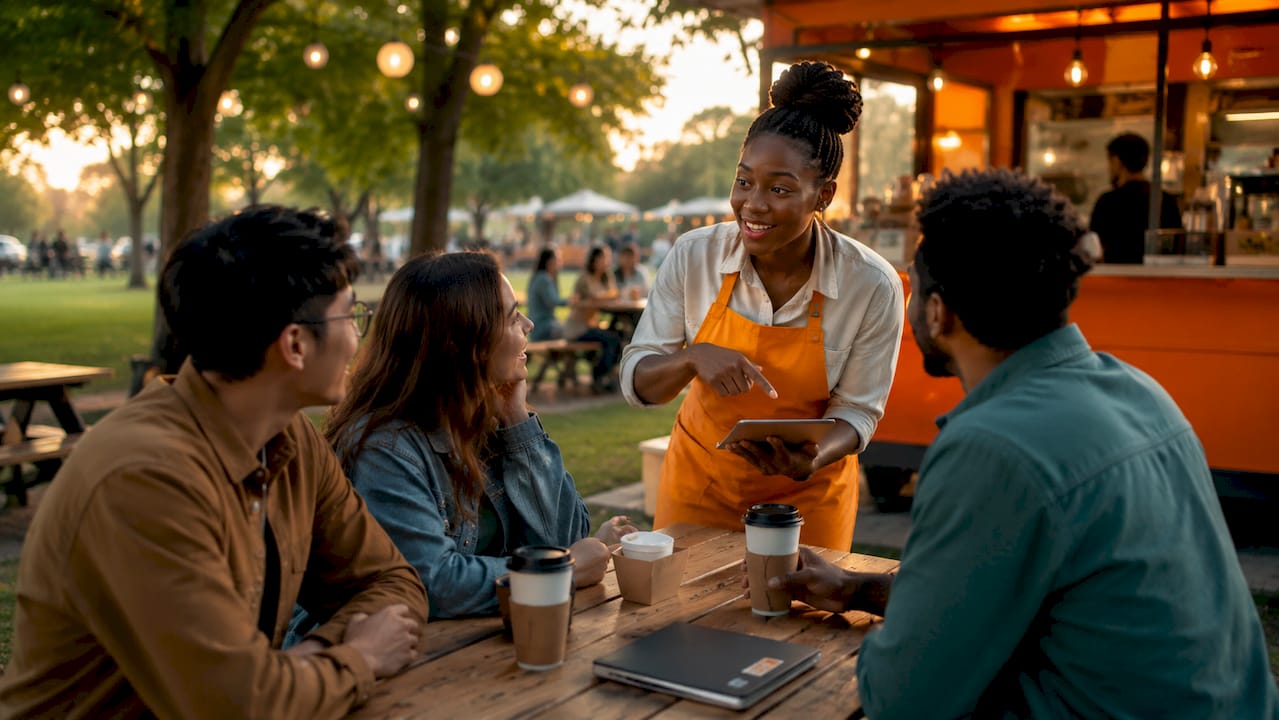
The content that performs best is authentic, not polished. Behind-the-scenes prep videos, founder stories, and real customer moments consistently outperform glossy ad-style posts for both engagement and AI trust signals. Micro-influencers with local followings bring higher engagement and more relevant reach than large accounts with diffuse audiences.
Social SEO best practices for small food businesses:
- Post user-generated content regularly. Reposting a customer's photo of your food is social proof and free content.
- Use location tags and neighborhood hashtags consistently so platform algorithms connect your content to local searches.
- Share behind-the-scenes content: prep, sourcing, team moments. These build the authenticity that AI systems increasingly weight.
- Engage with comments and messages quickly. Response speed is a trust signal on social platforms.
- Cross-post short-form video to Instagram Reels, TikTok, and YouTube Shorts for maximum reach from a single piece of content.
For a deeper look at how social platforms are reshaping visibility for food professionals, the role of social media for chefs in 2026 covers the channel-by-channel breakdown worth reading alongside this.
Technical SEO essentials your food business website needs in 2026
Technical SEO is the foundation everything else sits on. You can have great content and a perfect GBP, but if your site loads slowly on mobile or buries your menu in a PDF, AI engines and Google both penalize you for it.
| Technical Element | What to Do | Why It Matters |
|---|---|---|
| Mobile-first design | Responsive layout that works on any screen size | — |
| Largest Contentful Paint (LCP) | Under 2.5 seconds | Google Core Web Vitals requirement; slow sites lose visitors before the menu loads |
| HTML menu | Replace PDFs with HTML pages | PDFs are invisible to search engines and AI crawlers |
| Restaurant schema | JSON-LD with cuisine, hours, price range, reservations | Enables rich results and AI parsing of your business details |
| MenuItem schema | Dish-level data with allergens and dietary tags | Powers dietary-restriction queries that drive high-intent traffic |
| Image format | Convert food photos to WebP | Reduces load time significantly on mobile without quality loss |
| NAP consistency | Exact match across site, GBP, and directories | Inconsistencies confuse Google and suppress local rankings |
Only around 30% of restaurant websites currently use schema markup, while 72% of first-page results do. That gap is one of the most accessible technical advantages still available to independent operators. Validate your implementation using Google's Rich Results Test after any schema changes.
What recent research says about SEO for small food businesses
The data on how AI is changing food discovery is striking. 22% of US consumers now use AI tools like ChatGPT or Google Gemini to help choose where to eat, and that number is growing fast among younger diners.
55% of US diners trust AI-generated review summaries when deciding where to eat, according to a 2025 Nielsen survey commissioned by Reputation.
Review velocity and recency have moved to the top of local ranking factors. Businesses that stop receiving reviews for even a few weeks see measurable ranking drops. AI engines also cross-reference platforms like Google, Yelp, and TripAdvisor simultaneously. A 4.8 on Google paired with a 3.1 on Yelp signals inconsistency that AI systems flag as a reliability problem.
Emerging risks food businesses need to watch:
- Data fragmentation: Inconsistent business info across platforms confuses AI engines and suppresses recommendations.
- Vibe blindness: Restaurants that only describe cuisine type and price range miss the occasion-based queries that now drive bookings.
- Review stagnation: A large but old review count no longer protects your ranking. Recency is the active ingredient.
- PDF menus: Still one of the most common technical errors, and one of the most damaging for AI visibility.
- Neglected secondary platforms: AI engines pull from Yelp, TripAdvisor, and OpenTable. Incomplete profiles on any of these create gaps in your AI recommendation footprint.
How voice search works for local food businesses
Voice search queries are longer and more conversational than typed searches, and they almost always carry local intent. "Hey Siri, where's a good spot for tacos near me tonight?" is a complete sentence with occasion, cuisine, and location built in. Your website needs to answer that kind of question directly.
The practical fix is building FAQ content that mirrors how people actually speak. Short, direct answers to questions like "Do you have outdoor seating?" or "What are your hours on Sunday?" give voice assistants clean material to quote. FAQPage schema makes those answers machine-readable so Google and AI assistants can surface them without requiring a click.
Occasion-based content also drives voice search performance. A page that says "We're the go-to spot for post-game celebrations in the neighborhood" will surface for voice queries that no keyword tool would ever suggest. That kind of contextual fit content is what separates restaurants that get cited in AI answers from those that do not.
Why video and visual content are now part of your SEO strategy
Video content has become a direct SEO input, not just a social media tactic. Short-form videos on Instagram Reels, TikTok, and YouTube Shorts generate backlinks, mentions, and engagement signals that feed into your overall search prominence. Google increasingly surfaces video results for food-related queries, especially "how to make" and "best [dish] in [city]" searches.
For small food businesses, the most effective video formats are behind-the-scenes prep clips, signature dish reveals, and short recipe demonstrations. These perform well organically and generate the kind of authentic user engagement that AI recommendation systems treat as a trust signal. Visual content also supports your food business marketing by giving customers a reason to share your content, which creates natural backlinks and social mentions.
Optimize every video with descriptive titles, location tags, and relevant keywords in captions. YouTube videos with proper titles and descriptions appear in Google Search results directly, giving you a second ranking surface beyond your website.
How influencer collaborations build SEO authority for food businesses
Micro-influencers with local followings are one of the most cost-effective SEO tools available to small food businesses. A food blogger with 8,000 local followers who writes a genuine review of your restaurant creates a backlink from a locally relevant source, generates social signals, and puts your name in front of an audience that is already interested in food in your area.
The SEO value comes from the mentions and links those collaborations generate. When a local food writer covers your new menu, or a neighborhood Instagram account tags your location, those citations feed into Google's prominence score for your business. For a pizza restaurant opening guide or any new food concept, early influencer coverage can accelerate the citation-building that normally takes months of organic growth.
Focus on relevance over reach. A gluten-free blogger covering your allergen-friendly menu is worth more for your SEO than a general lifestyle account with ten times the followers. The specificity of the mention matters to both Google and the AI engines reading those citations.
Which emerging platforms and apps matter for food business SEO
Google Search and Google Maps remain the dominant discovery channels, but several other platforms now feed directly into how AI engines build their restaurant recommendations. Yelp, TripAdvisor, and OpenTable are the three that AI assistants like ChatGPT and Perplexity cite most often alongside Google. Keeping those profiles complete and active is not optional if you want to appear in AI-generated recommendations.
TikTok has become a genuine search engine for younger diners. Searches for "best [cuisine] in [city]" on TikTok return video results, and a strong presence there creates discovery that eventually flows back to your Google rankings through increased branded searches and website traffic. Instagram functions similarly, with location-tagged posts appearing in local discovery feeds.
For food businesses with delivery operations, DoorDash, Uber Eats, and Grubhub each have their own search algorithms. Strong performance on those platforms, including photo quality, menu descriptions, and review management, creates a parallel visibility layer that complements your organic SEO work.
How to stay ahead of 2026 SEO algorithm updates
Google's algorithm updates in 2026 have pushed AI Overviews deeper into local search results, raising the stakes on structured data and review quality. The march 2026 core update specifically affected how local results are ranked, with 46% of all Google searches now carrying local intent.
The best defense against algorithm volatility is a strong foundation. Businesses with complete schema markup, consistent NAP data, active review velocity, and content that genuinely describes their offering tend to weather updates better than those chasing tactical shortcuts. Google's stated direction is toward more helpful, accurate, and trustworthy results, which aligns with the practices that build lasting local visibility.
Monitor your Google Search Console weekly for impression and click changes on your key local queries. Set up Google Alerts for your business name to catch new mentions and reviews across the web. Track your Map Pack ranking for your five most important queries using a tool like Local Falcon or BrightLocal. When an update drops, check your GBP completeness and schema validity first before assuming the problem is more complex.
Stovoo helps you build the foundation that SEO rewards
Getting your SEO right is only half the equation. Once customers find you, you need a professional, mobile-first presence that converts that visibility into orders and recurring revenue. Stovoo gives food creators and small food businesses a centralized platform to manage meal subscription plans, catering bookings, and digital recipe sales, all from one dashboard that works as your shopfront, your billing system, and your customer management tool.
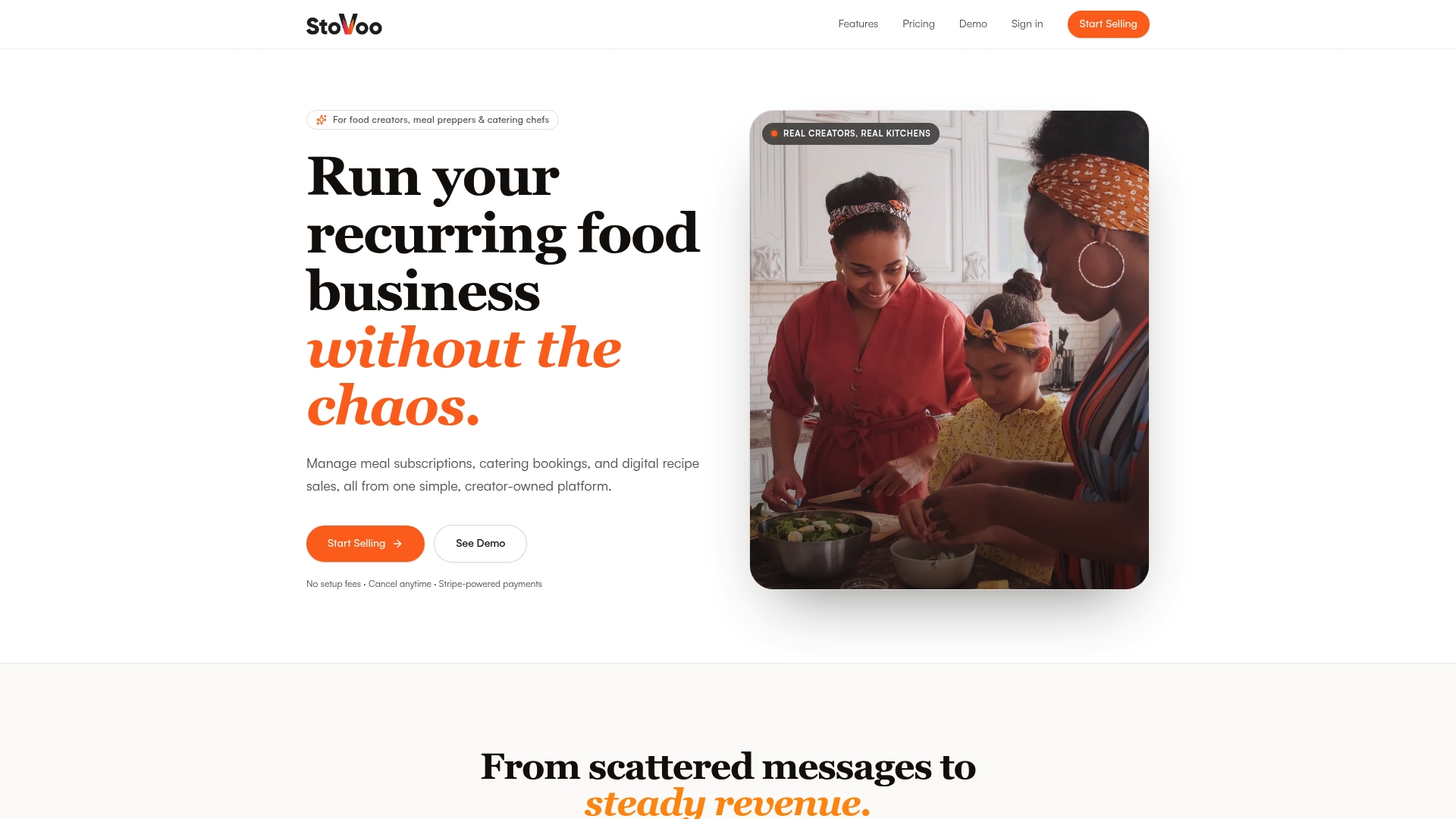
Food businesses on Stovoo share a single link across social media and messaging apps, turning every SEO win into a direct path to purchase. See how it works with a live example at Stovoo's ordering platform and explore how the platform supports the kind of owned customer relationships that make your SEO investment compound over time.
Key Takeaways
In 2026, small food businesses that combine AI-ready content, active review velocity, and complete structured data will consistently outperform those relying on keyword tactics alone.
| Point | Details |
|---|---|
| AI discovery is already here | 22% of US diners use ChatGPT or Google Gemini to choose restaurants; optimize for conversational intent now. |
| Review recency beats volume | A restaurant with 50 recent reviews outranks one with 200 old ones; build a consistent review request system. |
| HTML menus are non-negotiable | PDF menus are invisible to AI engines; convert to HTML with MenuItem schema to capture dietary-restriction queries. |
| GBP is your top ranking lever | Google holds 93% of US mobile search; a complete, active Google Business Profile is your most valuable SEO asset. |
| Authentic content drives AI trust | Behind-the-scenes and occasion-based content signals credibility to AI systems and converts browsers into customers. |
FAQ
Is SEO still relevant for food businesses in 2026?
SEO is more relevant than ever. The rise of AI answer engines changes some tactics, but the fundamentals, accurate information, useful content, and real authority, matter more now because AI engines pull from the same signals Google always has.
What is the biggest SEO trend for food businesses in 2026?
The shift to Answer Engine Optimization (AEO) is the defining trend. AI tools like ChatGPT and Google Gemini now influence restaurant discovery for 22% of US diners, requiring food businesses to optimize for conversational, occasion-based queries rather than traditional keywords.
What is the biggest threat to restaurant SEO in 2026?
The biggest threat is failing to describe your restaurant's vibe, occasion fit, and atmosphere in natural language. AI engines prioritize contextual fit over keyword matching, so businesses that only list cuisine type and price range become invisible to the queries that actually drive bookings.
What food trends are shaping SEO in 2026?
Dietary-specific searches (gluten-free, vegan, halal) are driving high-intent traffic that rewards businesses with detailed MenuItem schema. Occasion-based discovery ("date night," "family brunch," "business dinner") is growing as AI search replaces traditional category browsing.
How do reviews affect local SEO rankings in 2026?
Review velocity and recency now outrank total review count as local ranking factors. A restaurant with consistent recent reviews, especially ones mentioning specific dishes and atmosphere, ranks higher and gets cited more often in AI-generated recommendations.