
TL;DR:
- Search engine optimization helps food businesses become easily discoverable online by matching content and technical setup to customer search intent. Success depends on local SEO, structured data, and patience, with results typically visible after 90 to 150 days. Integrating SEO into your strategy ensures long-term growth and improved visibility across search engines, AI, and marketplaces.
Search engine optimization (SEO) is the practice of making your food business discoverable online by matching your content, technical setup, and local presence to what customers are already searching for. The role of SEO in food business goes far beyond ranking on Google. It determines whether a hungry customer finds your meal prep service, catering brand, or recipe shop before they find a competitor. Over 70% of consumers discover new food products online, with 34% driven by traditional search engines and 22% influenced by AI-generated answers. That means your website, Google Business Profile, and content structure are active sales tools, whether you treat them that way or not. Platforms like Schema.org and Google AI Overviews have raised the bar for what "good content" means in the food space.
How does SEO for food businesses differ from general SEO?
Food business SEO is purchase-intent driven. Customers search for "gluten-free meal prep near me" or "best jerk chicken catering in Atlanta," not broad informational queries. That specificity changes everything about how you build your content and technical foundation.
Here is what makes food SEO distinct from general SEO practice:
- Purchase-intent keywords dominate. Queries center on ingredients, dietary needs, preparation methods, and location. Ranking for "high-protein lunch delivery" converts faster than ranking for "what is meal prep."
- Local search is non-negotiable. Food businesses with physical locations or delivery zones live and die by local SEO. Google Business Profile accuracy directly affects whether you appear in map results.
- AI discovery is growing fast. 22% of food product discovery now comes from AI-generated answers. That number will only climb. Structured, answer-shaped content is what gets cited.
- Marketplace algorithms matter too. Platforms like Uber Eats and DoorDash have their own ranking systems. Your SEO content strategy can inform how you write product descriptions across all channels.
- Timelines are longer than most expect. Organic traffic for food brands typically takes 90–150 days to shift meaningfully after SEO changes. Patience is part of the strategy.
Pro Tip: Start your SEO work with keyword research focused on your specific cuisine, dietary niche, or service type. A catering chef in Houston ranks faster for "corporate lunch catering Houston" than for "catering services."
The contrast with generic service SEO is sharp. A law firm targets broad professional queries. A food business targets sensory, location-based, and dietary-specific queries. That difference shapes every tactic below.

What on-page and technical SEO tactics work best for food entrepreneurs?
Technical SEO for food businesses is not optional. It is the infrastructure that lets your content actually get found, read, and cited by both search engines and AI tools.
Here are the six most impactful tactics, ranked by leverage:
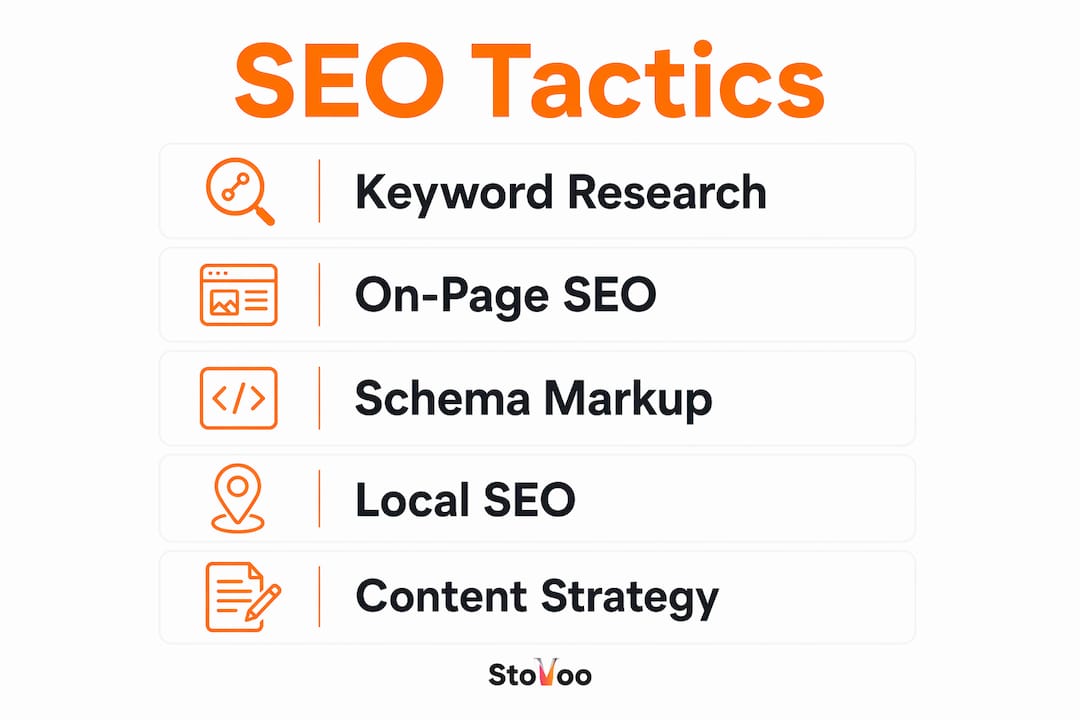
- Implement JSON-LD structured data. Using Restaurant, Menu, and FAQPage schema increases your chances of appearing in Google's rich results and AI answer features. This is the single highest-impact technical move for food businesses.
- Optimize nutritional tables and ingredient lists. Search engines index this content as factual data. Detailed ingredient and allergen information helps you rank for long-tail queries like "nut-free catering options."
- Prioritize mobile-first page speed. Most food searches happen on mobile, often while someone is hungry and deciding fast. A slow page loses the customer before they read a word.
- Manage faceted navigation carefully. If your site uses dietary filters (vegan, keto, halal), those filter pages can create duplicate content and crawl waste. Use canonical tags or noindex directives to keep your crawl budget clean.
- Build internal links from category hubs to specific dishes. Link your "Meal Plans" page to individual plan pages like "5-Day Keto Meal Plan." This passes authority and helps Google understand your site structure.
- Write answer-shaped content for common queries. Food product pages that answer specific customer questions about ingredients, allergens, certifications, and availability win AI search citations. Structure your content with a question as the heading and a direct answer in the first sentence.
Here is a quick reference for schema types and their benefits:
| Schema type | What it does | Best for |
|---|---|---|
| Restaurant | Marks up business name, address, hours | Restaurants, catering businesses |
| Menu | Structures dish names, descriptions, prices | Any food business with a menu |
| FAQPage | Surfaces Q&A in Google rich results | Recipe blogs, catering FAQ pages |
| Recipe | Enables rich snippets with cook time, ratings | Food blogs, recipe sellers |
Pro Tip: Foundational SEO setup, including auditing your Google Business Profile and adding schema markup, takes roughly 2 hours and creates compounding returns for years. Do it once, do it right.
For food business marketing tips that go beyond SEO, combining technical precision with content strategy is where real growth happens.
How does local SEO drive real customers to food businesses?
Local SEO is the most direct path from a search query to a paying customer for any food business with a physical location, delivery zone, or catering territory. Google's local pack (the map results at the top of search) captures the majority of clicks for location-based food queries.
Here is what moves the needle most for local food SEO:
- Choose the most specific Google Business Profile category available. Selecting a precise cuisine-based category like "Neapolitan Pizza Restaurant" dramatically outperforms generic labels like "Restaurant." Specificity signals relevance to Google's local algorithm.
- Keep NAP data consistent everywhere. Your Name, Address, and Phone number must match exactly across Google, Yelp, Facebook, and any food directories. Inconsistencies confuse search engines and suppress your local ranking.
- Use localized schema markup. Adding your city and neighborhood into your structured data helps Google connect your business to regional searches like "meal prep Nairobi" or "catering chef Lagos."
- Actively manage reviews and Q&A. Customer reviews are a local ranking signal. Responding to every review, positive or critical, shows Google your business is active and trustworthy.
- Optimize for voice search and near-me queries. Phrases like "food delivery near me open now" are conversational. Write your Google Business Profile description and website copy in natural language that mirrors how people speak.
Search engines also index menu content as raw text. Incorporating regional origin and preparation details into your menu descriptions helps you rank for valuable long-tail queries like "best jollof rice in Lagos" or "authentic Ethiopian injera catering." That specificity is free marketing.
Pro Tip: For catering businesses, create a dedicated service-area page for each city or region you serve. A page titled "Corporate Catering in Nairobi" ranks far better than a generic "We serve all areas" statement.
Businesses like Finesse Dishes in Nairobi demonstrate how a clear, location-specific digital presence connects search intent to real orders.
SEO vs. social media vs. marketplaces: which channel wins for food brands?
No single channel wins alone. The real question is how each channel serves a different stage of the customer journey, and how SEO anchors the whole system.
| Channel | Primary function | Strength | Limitation |
|---|---|---|---|
| SEO | Captures purchase intent | Long-term organic traffic | Takes 90–150 days to show results |
| Social media | Builds emotional connection | Fast reach, viral potential | Low purchase intent at point of discovery |
| Marketplaces | Drives transactional sales | Built-in customer base | Platform controls customer relationship |
| AI search | Answers specific queries | Growing discovery channel | Requires structured, authoritative content |
Creator content builds familiarity while SEO captures purchase intent. A customer might discover your brand through an Instagram reel, but they search Google before placing a catering order. If your website does not appear in that search, you lose the sale to a competitor who invested in SEO.
Marketplace algorithms on platforms like Uber Eats or Etsy (for food products) reward the same signals SEO does: clear product titles, detailed descriptions, and strong review volume. Your SEO content strategy directly informs how you write across all platforms.
AI-generated answers depend on structured, authoritative content built through SEO. A food blog or catering website with well-structured FAQs and schema markup is far more likely to be cited by ChatGPT or Perplexity than a social media profile. Social media alone cannot earn those citations.
The data makes the stakes clear. 78% of food and beverage startups fail to achieve positive return on ad spend within 18 months unless SEO is integrated as a foundational system. Paid social and marketplace ads burn budget. SEO compounds. The digital marketing in food industry playbook that works in 2026 treats SEO as the foundation and every other channel as amplification.
Key takeaways
SEO is the foundational system that makes food businesses discoverable, trusted, and competitive across search engines, AI tools, and local results.
| Point | Details |
|---|---|
| SEO drives food discovery | Over 70% of consumers find food products online; 34% through search engines. |
| Technical setup compounds | Schema markup and Google Business Profile audits take 2 hours but pay off for years. |
| Local specificity wins | Choosing precise Google Business Profile categories outperforms generic labels every time. |
| Results take time | Expect 90–150 days before organic traffic shifts after SEO changes. |
| SEO anchors all channels | Social and marketplace efforts convert better when SEO captures the purchase-intent search. |
Why most food businesses get SEO backwards
I have reviewed dozens of food business websites over the years, and the pattern is almost always the same. Beautiful photography. A compelling brand story. Zero structured data. No schema. A Google Business Profile sitting on the default "Restaurant" category with three photos and no Q&A responses.
Many food businesses rely on packaging photos and brand stories while neglecting the structured factual content that search engines need to rank them. That is not a creative failure. It is a strategic one. Search engines cannot taste your food or feel your brand. They read text, parse structure, and follow signals.
The businesses I have seen grow consistently are the ones that treat their website like a database of answers. Every dish has a description that includes preparation method, key ingredients, and dietary flags. Every FAQ page is marked up with FAQPage schema. Every city they serve has its own landing page. It is not glamorous work, but it is the work that compounds.
My honest advice: do not wait until your paid ads stop working to invest in SEO. Build the foundation now. Audit your Google Business Profile this week. Add schema to your top five pages. Write one answer-shaped blog post per month targeting a specific customer question. If you are running a home cooking business or a catering operation, those small consistent actions build authority that no ad budget can replicate.
The 90–150 day timeline feels frustrating when you want results now. But the food entrepreneurs who plant those seeds today are the ones with steady organic traffic and inbound catering inquiries six months from now.
— freeman
Build your food business on a foundation that grows
SEO brings customers to your door. Stovoo makes sure you are ready to serve them when they arrive. Stovoo is built specifically for food creators, meal preppers, and catering chefs who want to manage recurring orders, subscriptions, and digital recipe sales without the chaos of spreadsheets and WhatsApp threads.
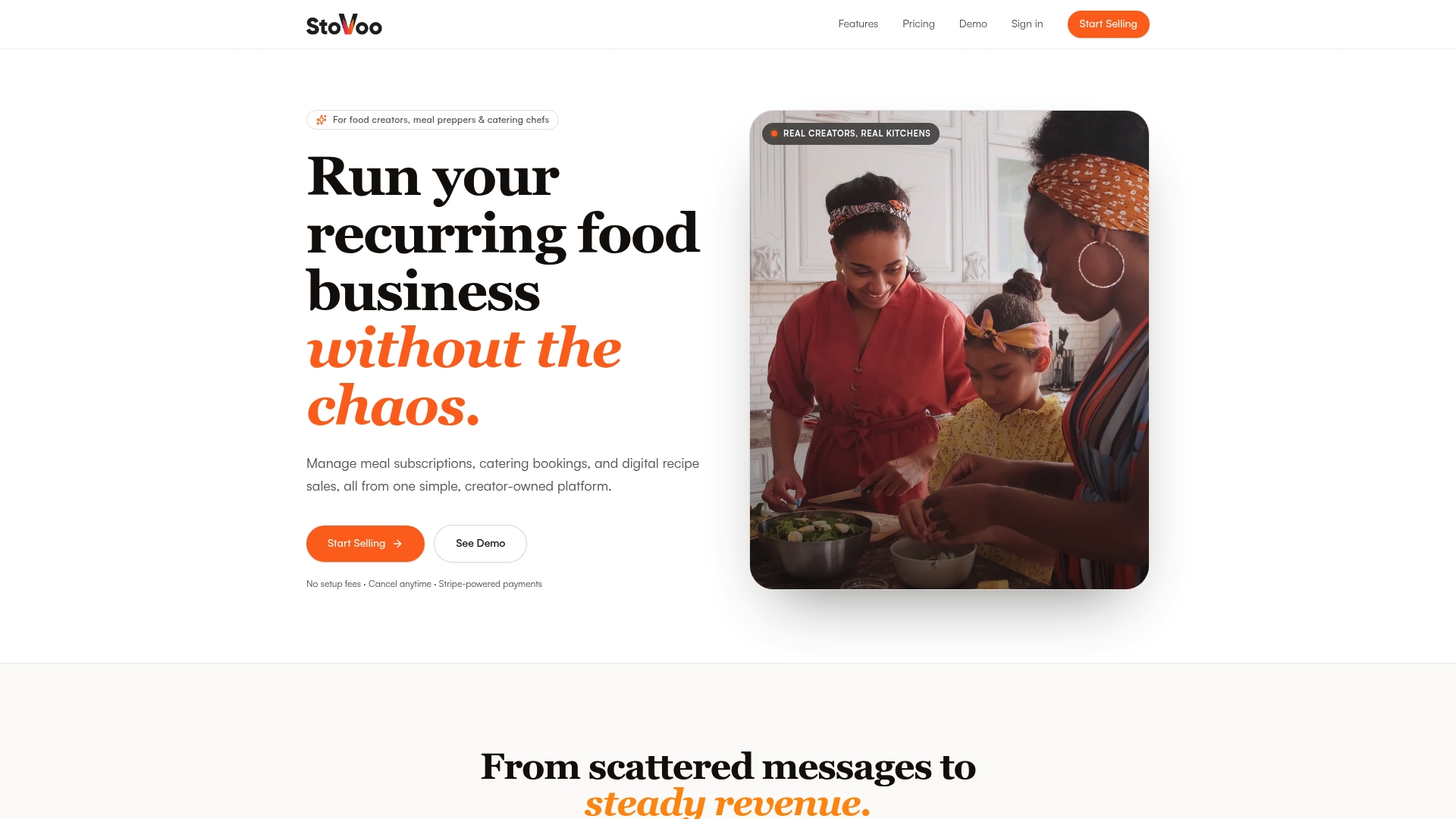
When your SEO starts driving consistent traffic, you need a professional shopfront that converts visitors into paying customers and keeps them coming back. Stovoo gives you automated billing, customer management, and a mobile-first storefront you can share anywhere. Start building your food business on Stovoo today and turn your online visibility into real, recurring revenue.
FAQ
What is the role of SEO in a food business?
SEO makes your food business discoverable online by matching your content and technical setup to what customers search for. It drives organic traffic, builds trust, and captures purchase intent at the moment customers are ready to order.
How long does SEO take to work for food businesses?
Organic traffic for food brands typically takes 90–150 days to shift after SEO changes are implemented. Foundational work like schema and Google Business Profile optimization shows results faster than content alone.
What is the most important local SEO tactic for restaurants and catering?
Selecting the most specific cuisine-based category on Google Business Profile is the highest-impact local SEO move. "Neapolitan Pizza Restaurant" outperforms "Restaurant" because it signals precise relevance to Google's local algorithm.
Does SEO help food businesses compete with social media marketing?
SEO and social media serve different purposes. Social media builds awareness and emotional connection, while SEO captures customers at the moment they are ready to buy. The two channels work best together, not as alternatives.
What schema markup should food businesses use?
Food businesses should implement Restaurant, Menu, FAQPage, and Recipe schema using JSON-LD format. These schema types increase the chances of appearing in Google rich results and AI-generated answer features.