
TL;DR:
- Digital payments help food businesses increase revenue, improve operational efficiency, and build verifiable transaction records. Implementing mobile-first checkouts, recurring billing, and centralized management can deliver rapid growth and better customer loyalty. Using secure, processor-agnostic platforms like Stovoo offers an integrated solution for scaling digital payment capabilities.
Digital payments are a strategic growth engine for food businesses: they raise revenue, speed up service, and generate the transaction data you need to scale. Integrated ordering and automated billing can lift top-line revenue significantly within a few months and produce many more 5-star reviews compared to manual methods.
TL;DR:
- Enable mobile-first payments and a hosted shopfront immediately.
- Centralize all payment data into one dashboard.
- Add recurring billing for meal plans or subscriptions to build predictable revenue.
Table of Contents
- Why digital payments matter for food creators and small food businesses
- What payment features your food business actually needs
- How digital payments change your day-to-day operations
- What to measure and realistic ROI expectations
- How fees and processor models affect your margins
- A practical roadmap to add digital payments to your food business
- Security, PCI basics, chargebacks, and bookkeeping
- How to preserve hospitality while automating payments
- How Stovoo ties payments, subscriptions, and shopfronts together
- Key Takeaways
- Payments deserve a seat at your strategy table
- Stovoo makes it easier to get paid and grow
- Useful sources
- FAQ
Why digital payments matter for food creators and small food businesses
The role of digital payments in food business goes well beyond a faster checkout. They affect your revenue ceiling, your customer experience, and your ability to access capital. Top-performing food businesses treat payments as a growth pillar rather than a back-office utility — and the gap between those operators and the rest is measurable.
Higher average order values, more repeat purchases, and a verified transaction history for lenders are three direct outcomes of going cashless. Processor-agnostic, mobile-first platforms report improved operational efficiency, stronger customer loyalty, and more margin control compared with locked-in processors. For meal preppers and catering chefs, subscriptions and online shopfronts add a recurring revenue layer that cash-only or fragmented setups simply cannot support.
Stat: Integrated ordering and automated billing can increase revenue by up to 10% in three months and generate 8–10× more 5-star reviews versus manual methods.
Digital transaction records also matter for financing. Consistent payment histories make your revenue patterns verifiable to lenders, which is often the missing link when a small food business applies for a growth loan. For online ordering and digital recipe sales, this visibility compounds over time.
What payment features your food business actually needs
The single most important priority is a processor-agnostic, mobile-first stack. Everything else builds on that foundation. Here is the feature checklist that moves the needle:
- Mobile wallets (Apple Pay, Google Pay): fastest checkout path for in-person and online orders.
- QR / pay-at-table: reduces wait time and enables digital tip prompts.
- Subscription and recurring billing: non-negotiable for meal plans, weekly prep boxes, and catering retainers.
- Hosted shopfront checkout: keeps card data off your servers and reduces your PCI scope.
- Tokenization: stores a secure token instead of raw card numbers, protecting repeat customers.
- Refund and chargeback tools: built-in dispute workflows save hours of manual back-and-forth.
- Reporting and analytics: transaction-level data feeds inventory, staffing, and pricing decisions.
For meal plan sellers, recurring billing and subscription management are the top priority. For caterers, deposit collection and invoice-based payments matter most. For digital recipe or course sales, a hosted checkout with instant download delivery is the core requirement.
How digital payments change your day-to-day operations
The primary operational win is speed combined with fewer errors. Digital payments eliminate the cash-counting step, remove change-making delays, and log every transaction automatically. That means less manual reconciliation at the end of the day and a cleaner paper trail.
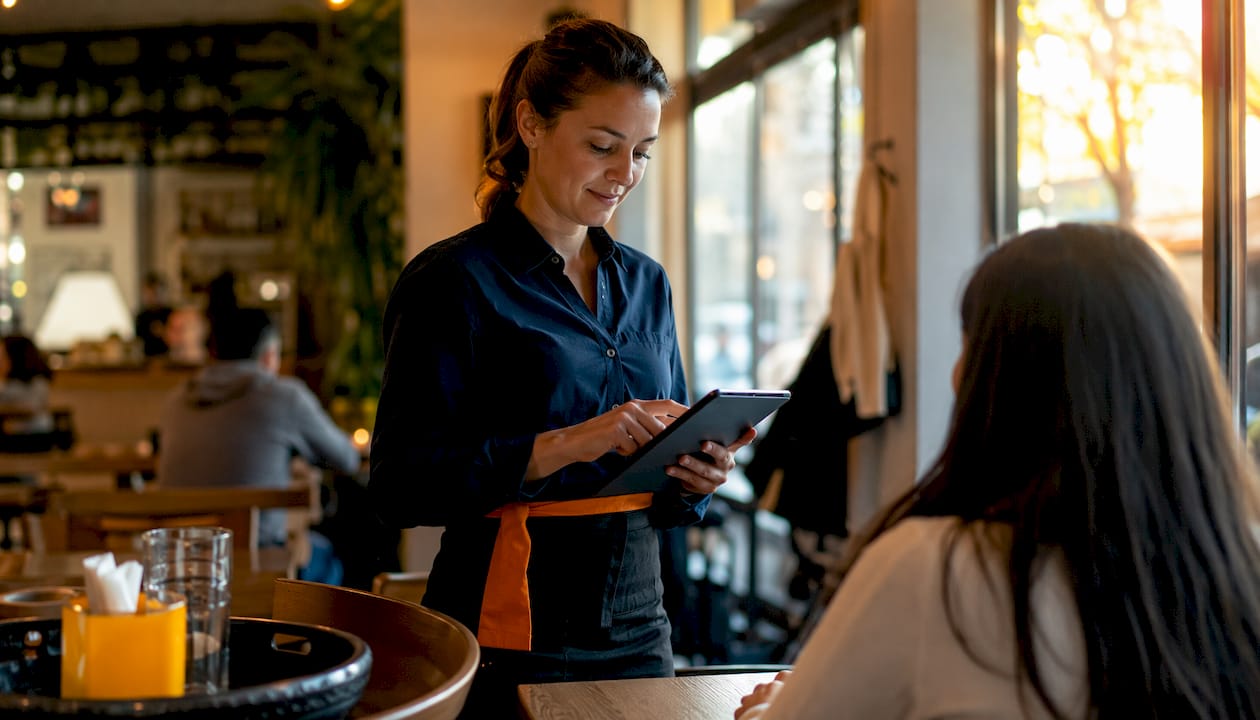
Stat: QR code and smartphone-based pay-at-table systems save 6–10 minutes per table turn and lift tip rates into the 20–22% range via digital tip prompts.
Those minutes compound. Six extra minutes per table across a busy Friday service translates directly into more covers and more revenue. Research also confirms that allowing guests to pay individually via smartphone reduces billing negotiation and is broadly accepted by both guests and staff when implemented thoughtfully.
The staffing benefit is real too. When servers stop running checks and making change, they redirect that time toward upsells, guest engagement, and the hospitality moments that drive loyalty. Unified transaction data also powers smarter inventory and staffing decisions when payments integrate with ordering and procurement.
What to measure and realistic ROI expectations
The single most important KPI depends on your model: for dine-in operators, it is net revenue per available seat-hour; for meal plan and subscription sellers, it is monthly recurring revenue growth.
| Metric | Benchmark | Timeline |
|---|---|---|
| Revenue lift | Up to 10% | 3 months |
| Table-turn savings | 6–10 minutes per turn | Immediate |
| Tip rate | 20–22% via digital prompts | Immediate |
| 5-star review volume | 8–10× increase | 1–3 months |
| Payment adoption rate | Track weekly | Ongoing |
| Processing cost as % of sales | Target below 3% | Ongoing |
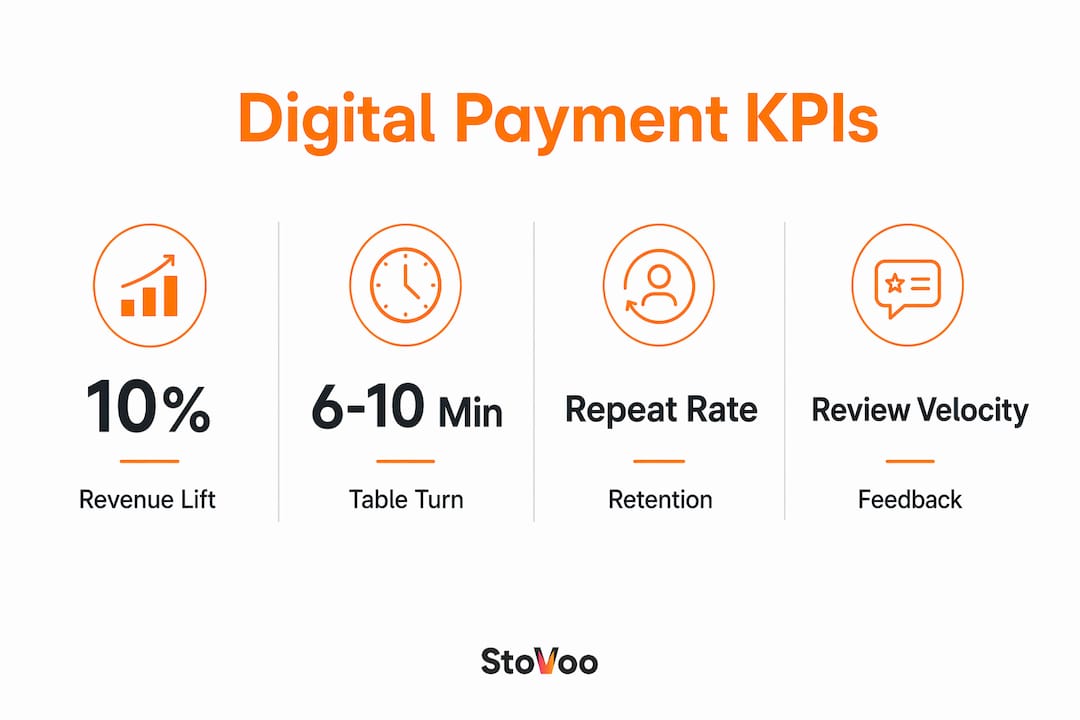
Track average order value, repeat-purchase rate, subscription retention, and online review velocity alongside processing costs. These six metrics give you a complete picture of whether your payment setup is working as a growth lever or just a checkout tool. For digital sales in culinary ventures, recurring revenue growth rate is the number to watch most closely.
How fees and processor models affect your margins
Fees matter because U.S. restaurant profit margins are typically low. The average card processing fee is around two percent per transaction. A half-point markup from a locked-in processor can erase a meaningful slice of already-thin margins.
Three pricing models dominate the market. Interchange-plus pricing passes the actual card network cost through to you with a transparent markup, making it the most auditable option. Flat-rate pricing is predictable but often costs more at volume. Tiered or bundled pricing, common in proprietary POS bundles, frequently hides markups that only surface during reconciliation.
| Pricing Model | Transparency | Best For |
|---|---|---|
| Interchange-plus | High | Volume operators, caterers |
| Flat-rate | Medium | Low-volume or digital-only sellers |
| Tiered / bundled | Low | Avoid unless fees are fully disclosed |
Pro Tip: Before committing to any bundled solution, pull three months of sample statements and calculate your effective rate. If the provider cannot show you interchange pass-through line by line, treat that as a red flag.
Fragmented stacks — separate in-store and online processors — compound fees and create reconciliation headaches. Moving to a processor-agnostic platform earlier rather than later is the architectural choice most operators wish they had made sooner.
A practical roadmap to add digital payments to your food business
Phase 1: Quick wins (Days 1–7)
- Enable Apple Pay and Google Pay on your existing checkout or POS.
- Launch a hosted shopfront link you can share via social media and messaging apps.
- Add a QR code at your pickup counter or table for pay-at-table where applicable.
Phase 2: Medium-term integrations (Weeks 4–12)
- Set up subscription or recurring billing for meal plans or weekly prep boxes.
- Connect your payment platform to your inventory and order management tools.
- Activate automated digital receipts and review prompts post-payment.
Phase 3: Long-term consolidation (Months 3–6)
- Migrate to a processor-agnostic, unified platform if you are currently running split stacks.
- Use transaction data to inform menu pricing, staffing schedules, and promotional timing.
- Review your effective processing rate quarterly and renegotiate or switch if it exceeds your target.
Measurable ROI typically appears within three months of completing Phase 1 and Phase 2. The food business digitalization guide covers additional integration steps for operators moving from spreadsheets to a unified platform.
Security, PCI basics, chargebacks, and bookkeeping
Secure payments are table stakes. Choose platforms that tokenize card data and operate under PCI-DSS standards. Hosted checkouts and tokenization reduce your PCI scope significantly because card data never touches your servers.
Chargebacks require a documented response: keep digital receipts, order confirmations, and delivery records for every transaction. Most payment platforms provide a dispute dashboard; use it consistently rather than handling disputes ad hoc.
For bookkeeping, map each payment processor's settlement to a dedicated general ledger account. Reconcile settlements weekly, not monthly. This discipline pays off when you apply for a business loan, since auditable revenue patterns are often what tips a lender's decision in your favor.
Pro Tip: Open a separate merchant settlement account. Route all processor payouts there before transferring to your operating account. This makes reconciliation clean and gives lenders a single, unambiguous revenue stream to evaluate.
How to preserve hospitality while automating payments
Automation should free your staff for hospitality, not remove human contact from the experience. The goal is to eliminate repetitive tasks — check-running, change-making, manual receipt printing — so your team can focus on the moments that actually build loyalty.
- Keep at least one non-digital payment fallback (cash or manual card entry) for guests who prefer it.
- Script a low-pressure, one-sentence mention for servers: "You can pay whenever you're ready using the QR on the table, or I'm happy to bring your check."
- Use digital tip prompts thoughtfully: preset amounts at 18%, 20%, and 22% perform better than open-entry fields.
- Build a fallback workflow for guests who want in-person handling — never make them feel like an inconvenience.
Research confirms that smartphone-based individual payment is broadly accepted when staff are trained to present it as a convenience, not a replacement for service.
Pro Tip: Train your team to treat the payment moment as a final hospitality touchpoint. A warm "Thanks for coming in — see you next week" lands better than a silent QR hand-off.
How Stovoo ties payments, subscriptions, and shopfronts together
A food-focused SaaS can centralize payments, subscriptions, shopfronts, and customer data in one place, cutting fragmentation and reducing the fee compounding that comes from running split stacks. Stovoo is built specifically for this.
Here is how Stovoo maps to the feature checklist covered earlier:
- Automated billing and recurring orders: handles weekly meal plan subscriptions and catering retainers without manual invoicing.
- Mobile-first shopfront: a shareable link you set up once and distribute across social media, WhatsApp, and email.
- Customer ownership: your customer data stays with you, not locked inside a third-party marketplace.
- Digital product sales: recipe ebooks, cooking courses, and live class tickets all sell through the same dashboard.
- Centralized reporting: one settlement view across all revenue streams simplifies reconciliation and lender-ready reporting.
Stat: Operators using integrated ordering and automated billing report notable revenue growth within a few months — the kind of lift that compounds when subscriptions and digital product sales run alongside in-person orders.
Stovoo reduces PCI scope through hosted checkout flows, supports recurring meal orders for caterers and meal preppers, and gives you a single dashboard to manage the full payment lifecycle.
Key Takeaways
Digital payments are a measurable growth lever for food businesses: operators who centralize payments, enable recurring billing, and adopt mobile-first checkouts consistently outperform those running fragmented, cash-heavy setups.
| Point | Details |
|---|---|
| Revenue lift is real | Integrated billing can raise top-line revenue by up to 10% within three months. |
| Table turns and tips improve fast | QR pay-at-table saves 6–10 minutes per turn and lifts tip rates into the 20–22% range. |
| Fees erode thin margins | Average processing fees run approximately 2.24%; prefer interchange-plus pricing for transparency. |
| Transaction records unlock capital | Consistent digital payment histories make revenue auditable for lenders and credit applications. |
| Stovoo centralizes it all | Stovoo combines automated billing, a mobile-first shopfront, subscriptions, and reporting in one food-focused platform. |
Payments deserve a seat at your strategy table
Most food operators think about payments last — after the menu, the branding, the marketing. That ordering is backwards. The payment moment is where every other investment either converts or leaks. A great dish sold through a clunky checkout, a missed subscription renewal, or a chargeback with no documentation: these are revenue problems disguised as operational inconveniences.
The operators who grow fastest are not necessarily the ones with the best food. They are the ones who close the loop between the customer experience and the financial record. Payments, done right, do exactly that. The hesitation is usually about complexity or cost of switching. The honest answer: the cost of staying fragmented is higher, and the switch is faster than most operators expect. Test one phase, measure it, and build from there.
Stovoo makes it easier to get paid and grow
Running a food business through scattered spreadsheets and WhatsApp threads costs you time and revenue every single week. Stovoo gives food creators and small food businesses a single platform to accept payments, manage subscriptions, sell digital products, and own their customer relationships.
- Automated billing: no more chasing invoices or manually renewing meal plan subscribers.
- Mobile-first shopfront: share your link anywhere and start accepting orders in minutes.
- Subscription support: build predictable recurring revenue from meal plans, catering retainers, and digital courses.
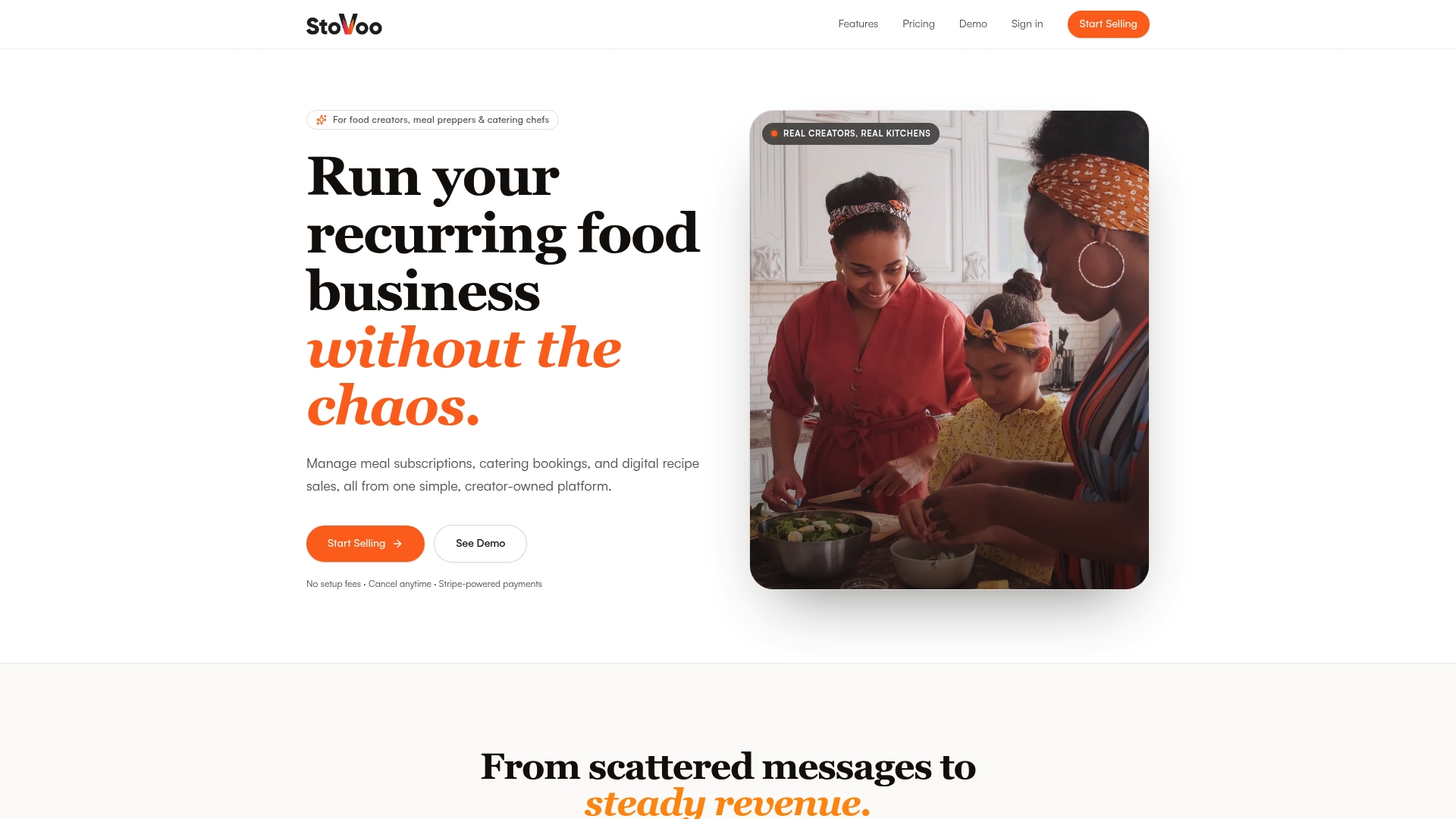
See how a live vendor shopfront works in practice, then create your account and start selling today.
Useful sources
The following sources informed the research, benchmarks, and guidance in this guide:
- QR Code Payments for Restaurants: The Real ROI Data — Source for the 6–10 minute table-turn savings, 20–22% tip rate benchmarks, up to 10% revenue lift, and 8–10× review increase figures.
- The State of Restaurant Digital Payments in 2025 — Industry analysis on processor-agnostic platforms, the 2.24% average processing fee, and fragmented stack risks.
- Don't Let the Payment Ruin the Dining Experience — Academic research on smartphone-based individual payment acceptance among guests and staff.
- Digital Payments Drive Nigeria's $11bn Food Industry Growth — Evidence on digital transaction histories as a lever for lender access and capital formation.
- Stovoo — centralized SaaS for food creators — Platform capabilities referenced in the implementation and platform sections.
FAQ
What is the role of digital payments in a food business?
Digital payments raise revenue, speed up service, and create verifiable transaction records that support lending. Operators using integrated billing report up to 10% revenue growth within three months.
How much do payment processing fees cost food businesses?
The industry average sits at approximately 2.24% per transaction. Given U.S. restaurant margins of 3–5%, choosing interchange-plus pricing and avoiding locked-in processors protects the most margin.
How quickly can a food business see ROI from digital payments?
Most operators see measurable results within three months of enabling mobile-first checkout and QR pay-at-table, including faster table turns, higher tip rates, and more online reviews.
How does Stovoo help food businesses manage digital payments?
Stovoo centralizes automated billing, recurring subscriptions, a mobile-first shopfront, and customer management in one dashboard, reducing fragmentation and simplifying reconciliation for food creators and small food businesses.
Are digital payments secure for small food businesses?
Yes, when you use platforms with PCI-DSS compliance and tokenization. Hosted checkouts keep card data off your servers entirely, reducing your compliance scope and chargeback exposure.