
Yes. A recipe membership site can produce steady recurring revenue if you pick one content model, price it clearly, and run it on software built for food creators, not a generic blog plugin. The fastest path is launching your shopfront on Stovoo, setting up recurring billing, and inviting your first cohort before you build out everything else.
Creators with a repeatable format, whether that's weekly meal plans, a recipe archive, or live cook-alongs, tend to see the fastest traction because members know exactly what they're paying for. A realistic starting point looks like this:
- Entry pricing: a low monthly fee for a basic recipe library
- First-month target: a small founding group of members from your existing audience
Create your storefront, invite your list, and adjust pricing once real members start paying.
Key Takeaways
A recipe membership site works when it pairs one clear content model with tiered pricing, tight organization, and at least one recurring live touchpoint that keeps members renewing.
| Point | Details |
|---|---|
| Pick one model first | Choose between recipe library, meal plans, live classes, or hybrid based on your bandwidth and audience size. |
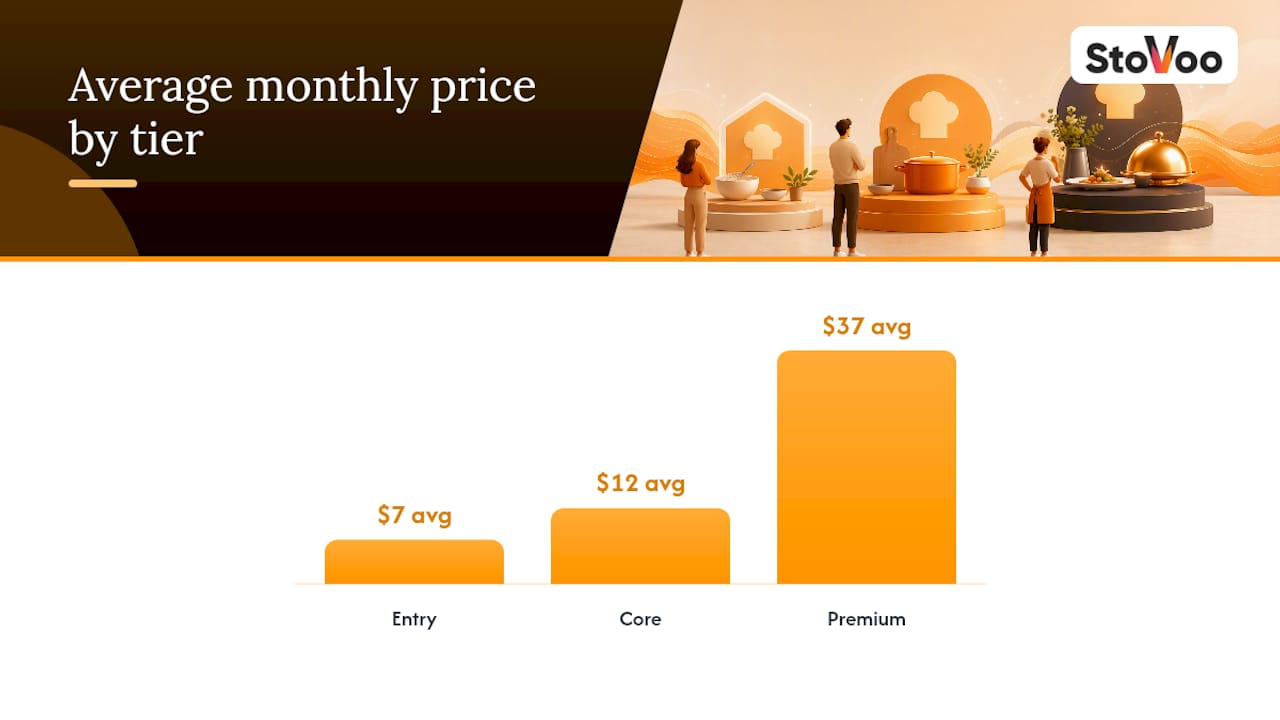
| Price in three tiers | Structure Entry ($5–9), Core ($9–15), and Premium ($25–49) with clear feature differences at each level. |
| Organize before you scale | Strong categories, tags, and search keep members finding content, which directly reduces cancellations. |
| Add live touchpoints | Monthly cook-alongs and community access retain members longer than a static recipe paywall alone. |
| Launch on Stovoo | Use Stovoo's shopfront, billing, and digital sales tools to get a founding cohort live within days. |
Table of Contents
- Which Recipe Membership Model Fits Your Audience?
- What Makes a Recipe Worth Paying For?
- How Should You Organize Content So Members Can Find It?
- What Should You Charge for a Recipe Membership?
- What Do You Need to Set Up in Week One?
- How Do You Keep Members From Canceling?
- How Do You Launch a Recipe Membership in the First 90 Days?
- The Part of This Business Model Most Creators Get Wrong
- Getting Your Recipe Membership Live on Stovoo
- Sources
- FAQ
Which Recipe Membership Model Fits Your Audience?
Four models dominate this space, and picking the wrong one is the fastest way to burn out before month three.
- Recipe library membership — a growing archive of tested recipes with search and filters. Best for creators with 500+ engaged followers and a backlog of content already written.
- Meal plan membership — weekly plans with grocery lists, ideal for busy home cooks. Works well for creators who already post consistent weekly content.
- Live cooking class membership — scheduled cook-alongs and Q&A sessions. Needs a smaller but highly engaged audience willing to show up live.
- Hybrid membership — library plus occasional live sessions. The highest revenue ceiling, but it demands the most production time.
Match the model to your bandwidth:
- Low weekly time investment: recipe library
- Medium cadence, high practical value: meal plans
- High engagement, lower volume: live classes
- Established audience with resources to spare: hybrid
If your following is under 1,000, start narrow. Expand into hybrid once retention data tells you members want more.
What Makes a Recipe Worth Paying For?
Free recipes are everywhere. Members pay for the parts a search engine can't give them: tested reliability, media that shows technique, and tools that save them time in their own kitchen. MemberPress recommends splitting free and premium content clearly, with premium libraries typically priced from $5 to $25 a month depending on depth.
What actually earns that price:
- Reproducible recipes with technique notes explaining why a step matters, not just what to do
- Short how-to videos for tricky steps, paired with longer instructional videos inside the member area
- Downloadable PDFs members can print or save offline
- Grocery lists, portion scaling, and dietary filters built into meal plans
- Member-only cook-alongs and live Q&A sessions with you
ChefSteps built its entire Studio Pass around this idea, bundling recipes with calculators, guides, and classes rather than selling recipes alone. That bundling is why members treat it as a toolkit instead of a stack of printouts, and it's the clearest lesson for anyone building a smaller version of the same idea.
How Should You Organize Content So Members Can Find It?
A recipe archive that members can't search fast becomes a recipe archive they cancel. Structure beats volume here.
- Use broad categories (breakfast, dinner, baking) and granular tags (30-minute, gluten-free, one-pan) so the same recipe surfaces in multiple searches
- Capture core metadata on every recipe: prep time, difficulty, dietary flags, and yield
- Build filters by ingredient, cook time, and skill level rather than relying on a single search box
- Cross-link individual recipes into meal plans and themed bundles so members discover more with each visit
- Standardize PDF and video file naming so nothing gets lost as your library grows
New York Times Cooking built its entire premium value proposition around saved collections and fast search, proof that organization itself is a feature members will pay for.
Pro Tip: Tag every recipe by cook time before you publish it. Members filtering for "under 20 minutes" on a weeknight are your highest-retention segment, and they'll leave fast if that filter doesn't exist.

What Should You Charge for a Recipe Membership?
Copy this three-tier structure and adjust the numbers once you have real usage data.
- Entry ($5–9/month): full recipe access, PDF downloads, basic search
- Core ($9–15/month): everything in Entry plus meal plans, grocery lists, and scaling tools
- Premium ($25–49/month): everything in Core plus live cook-alongs, direct Q&A access, and seasonal bonus content
Offer a 7-day trial on Core to reduce signup friction, and give annual subscribers a discount equivalent to roughly one to two free months. Upgrade prompts work best right after a member uses a feature gated to a higher tier, like trying to access a live session from Entry.
The math is simple: 100 members at an average of $12 a month generates $1,200 in monthly recurring revenue before accounting for churn. Even a small founding cohort as a paid beta rather than a free trial gives sharper feedback on what to charge and what to build next.
What Do You Need to Set Up in Week One?
Get the essentials live before you worry about anything else.
- Recurring billing connected through a processor like Stripe
- Member account creation with gated access to paid content
- Content protection so PDFs and videos can't be freely shared or scraped
- Video hosting that supports private, member-only links
- Basic analytics to track signups, cancellations, and content engagement
Once billing works, layer in the operational pieces:
- Email marketing integration for onboarding sequences and renewal reminders
- Automated billing-failure emails with a short grace period, typically around three days, before canceling a lapsed member
- A content calendar cadence so members know when new recipes or plans post
- Zapier or similar automation to connect your storefront to your existing tools
If you're on WordPress, WPBeginner's plugin comparison is a solid reference for gating and payment options. Creators who want this handled in one dashboard instead of stitching plugins together typically move to a purpose-built platform instead.
How Do You Keep Members From Canceling?
Retention is where most recipe memberships fail, and the fix is rarely more recipes. LeCooking Studio's approach treats membership like an actual cooking school: live classes, structured learning paths, and real community, not a static paywall. That structure is why members stick around after the novelty of a new recipe library wears off.
The tactics that move the needle:
- Private forums or member chats where cooks can post results and ask questions
- Monthly cook-alongs or office hours that give members a reason to show up live
- Seasonal plans, VIP sessions, or guest classes that feel like limited-time events
- A drip onboarding sequence that spaces out your best content over the first two weeks instead of dumping everything at signup
Members who find content fast and use it regularly are the ones who renew. A well-run live cook-along does double duty here: it teaches a skill and builds the community that makes canceling feel like leaving a group, not just unsubscribing from a feed.
Pro Tip: Send your best recipe on day one, then hold your second-best for day four. A strong second touch during the first week is often what determines whether someone opens month two's content at all.

How Do You Launch a Recipe Membership in the First 90 Days?
Treat launch as a sequence, not a single event.
- Build a waitlist with a lead magnet, like one free premium-style recipe with full video and PDF
- Soft-launch to a limited number of seats, gather feedback and testimonials, and fix onboarding friction fast
- Promote through short-form video, your email list, and collaborations with other food creators
- Watch signups, first-week engagement, and cancellation reasons closely during month one
What to track and adjust:
- If trial-to-paid conversion is weak, the price or the trial length is usually the problem, not the content
- If engagement drops after week two, your drip sequence needs another touchpoint
- If members ask for features you don't have yet, that's your next tier, not a distraction
Collaborations with other food bloggers and affiliate arrangements tend to outperform paid ads for early-stage recipe memberships, since trust transfers faster between food creators than from a cold ad click.
The Part of This Business Model Most Creators Get Wrong
Most advice about recipe memberships treats them like a content problem: post enough recipes, gate the good ones, and revenue follows. That's backwards. The creators who actually retain members are running something closer to a cooking school with a subscription attached, where the recipe is the entry point and the skill-building, community, and live access are what people renew for.
The overrated move is stacking your library higher before launch. A hundred recipes behind a paywall with no structure and no live touchpoint performs worse than twenty recipes with tight taxonomy, a working meal plan, and one monthly cook-along. Depth of experience beats volume of content almost every time.
What the reader should prioritize first isn't more recipes. It's picking one model, pricing it honestly using a tier structure like the ones above, and getting a small paid cohort live fast enough to learn what they'll actually renew for. Perfecting your archive before you have a single paying member is the most common way this business never gets off the ground.
Getting Your Recipe Membership Live on Stovoo
Everything covered above, tiered pricing, gated content, meal plans, live cook-alongs, maps directly onto a single dashboard rather than a stack of separate tools you have to wire together yourself. Stovoo gives food creators recurring billing, a mobile-first shopfront, digital recipe sales, and live class ticketing in one place, so you're not duct-taping a payment processor to a video host to an email tool.
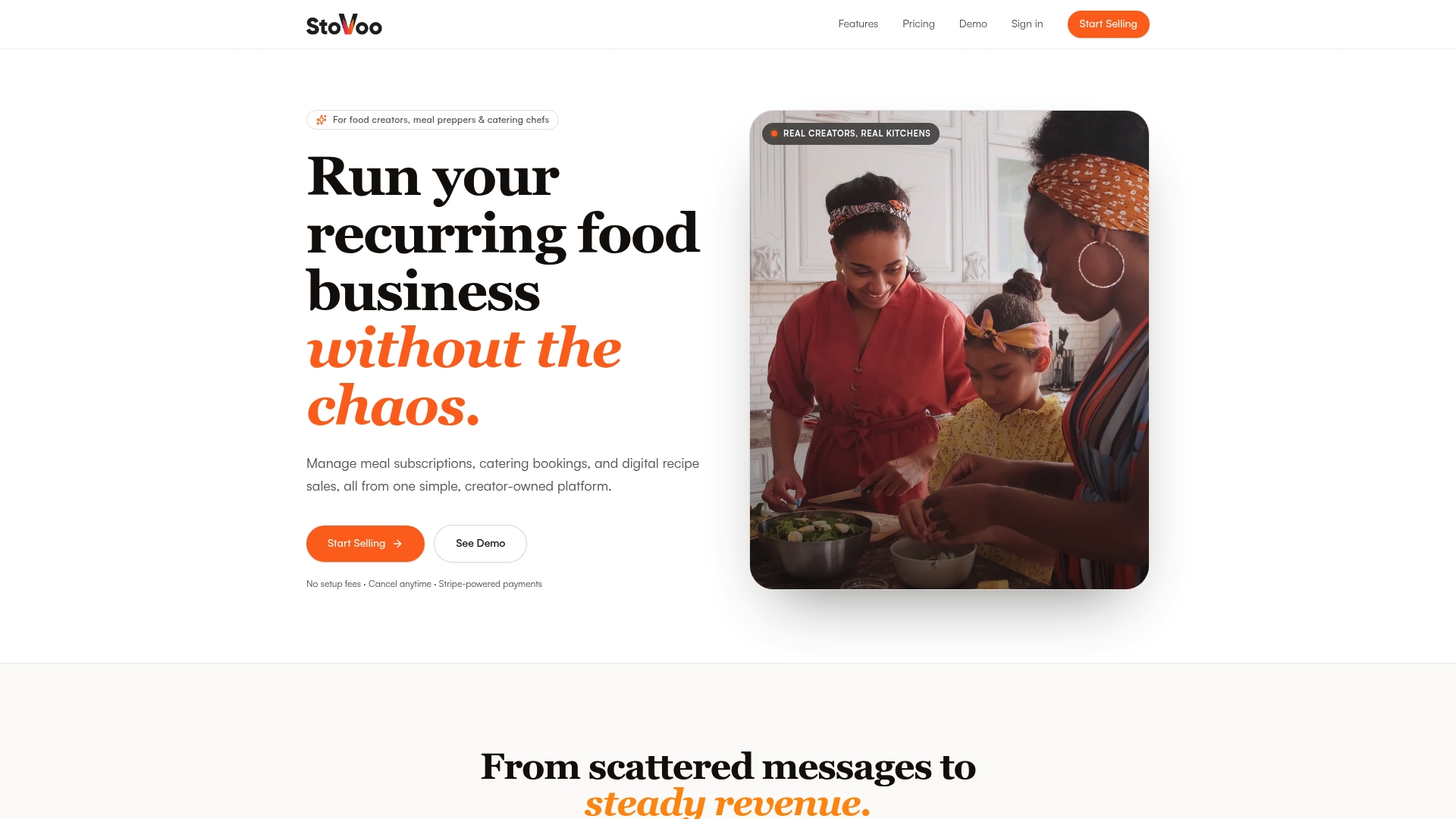
Creators already run meal plans and recipe sales this way. Felzicious by Chef Felz shows how a single shopfront link can carry meal plans and digital recipe products side by side, and the same setup works for a members-only recipe library or a hybrid model with live sessions layered in. If you want to see how subscriptions drive loyalty for working chefs before you commit to a tier structure, this breakdown of how chefs use subscriptions for growth is worth fifteen minutes. Creators who want outside guidance on the business side before launching can also look at food business coaching resources for structuring pricing and operations.
Set up your shopfront, connect billing, and open your first founding cohort this week: create your Stovoo account and start selling.
Sources
- Creating a Premium Recipe Library That People Will Pay For
- The Best Online Cooking Classes for Home Cooks - The Cooking Studio
- Subscribe to Cooking from The New York Times
- 5 Best WordPress Membership Plugins Compared
- ChefSteps Studio Pass | ChefSteps
FAQ
Where can I find a recipe magazine subscription?
Traditional recipe magazine subscriptions are sold directly through publishers, but most food creators now build their own recipe membership instead, keeping the subscription revenue and the customer relationship in-house.
What is the highest-rated recipe website?
Ratings vary by category, but New York Times Cooking is widely cited for its member tools like saved collections and search, which is exactly the kind of organization a smaller creator should copy at their own scale.
What is the best free online recipe site?
Free recipe sites are typically ad-supported and built for volume traffic rather than depth, which is why creators move loyal readers into a paid membership offering tested recipes, videos, and meal plans instead.
How much does a recipe membership typically cost?
Most recipe memberships price between $5 and $49 a month depending on depth, with basic libraries starting around $5 to $9 and premium tiers with live classes reaching $25 to $49.