
TL;DR:
- Flexible meal subscription models with easy skip, pause, and edit options significantly improve customer retention and satisfaction.
- Data-driven engagement strategies that segment customers by behavior and personalize outreach boost loyalty and reduce churn rates.
Running a meal subscription is one of the most exciting opportunities in food entrepreneurship today. But here is the hard truth: most meal subscription businesses lose customers faster than they gain them, not because the food is bad, but because the experience feels rigid, impersonal, or exhausting. Retention is the engine of recurring revenue, and without it, even the most delicious menus fail to build lasting income. This article walks you through the most actionable meal subscription ideas, from flexible plan structures to data-driven engagement loops, so you can keep customers coming back week after week.
Table of Contents
- Flexible meal subscription models: Ideas that keep customers engaged
- Data-driven customer engagement: Segment, personalize, and activate
- Smart meal planning and CSA-style subscription innovations
- À la carte and hybrid options: Lowering barriers and reducing "lock-in" fatigue
- Key subscription KPIs: Measure what drives growth and retention
- Our take: Solving meal subscription friction with radical transparency and smart feedback loops
- Explore next-level meal subscription tools and chef plans
- Frequently asked questions
Key Takeaways
| Point | Details |
|---|---|
| Flexibility boosts retention | Allowing customers to skip, pause, or edit plans quickly is proven to reduce churn and build loyalty. |
| Data-driven engagement wins | Segmenting customer actions and closing the loop with feedback transforms retention outcomes. |
| CSA strategies add value | Meal-planning guides and chef-led content directly improve weekly experience and perceived support. |
| Hybrid options reduce fatigue | À la carte and hybrid plans lower subscription barriers and match modern consumer preferences. |
| Measure success with KPIs | Tracking churn, LTV, and margin enables systematic business growth and innovation. |
Flexible meal subscription models: Ideas that keep customers engaged
Rigidity is the silent killer of meal subscriptions. When customers feel locked in, skipping a week feels like a punishment rather than a simple option. That friction builds resentment fast, and resentment leads to cancellation. The good news is that subscription fatigue has forced the industry to rethink what "subscriber loyalty" actually means, and flexibility is now the front-runner answer.
The core insight is simple: customers who can easily pause, skip, or adjust their plan without calling anyone or submitting a form are far more likely to stay. They stay because the low-effort exit paradoxically removes the urgency to quit. When leaving feels easy, people often choose to stay. Offering flexible meal subscriptions that put control in the customer's hands is no longer a nice-to-have feature. It is the baseline for competitive meal services in 2026.
Here are practical ways to build flexibility directly into your subscription model:
- Skip weeks without penalty. Let customers skip delivery for any week from their account dashboard, no questions asked.
- Pause for a set period. Offer 1, 2, or 4 week pause options for travel, vacations, or budget adjustments.
- Edit meal selections up to a cutoff time. Give customers a clear weekly window to swap proteins, add sides, or upgrade portions.
- Offer portion size adjustments. Let subscribers scale up or down between 2 and 4 person portions week to week.
- Transparent modification status. Show a confirmation screen immediately after any change, so customers never wonder if their update was saved.
You can browse examples of how chefs are structuring shop flexible plans to see what resonates with today's subscribers.
Pro Tip: Place your skip and pause buttons on the most visible part of your account portal. If customers have to search for how to pause, they will cancel instead. Visibility of modification options is a direct retention tool.
The business upside of flexibility extends beyond retention. When you understand why customers skip or pause (data you should be collecting), you gain insights that sharpen your menu and marketing. Exploring monetizing flexibility further reveals how add-on options and premium upgrades during modification flows can actually increase average order value.
Data-driven customer engagement: Segment, personalize, and activate
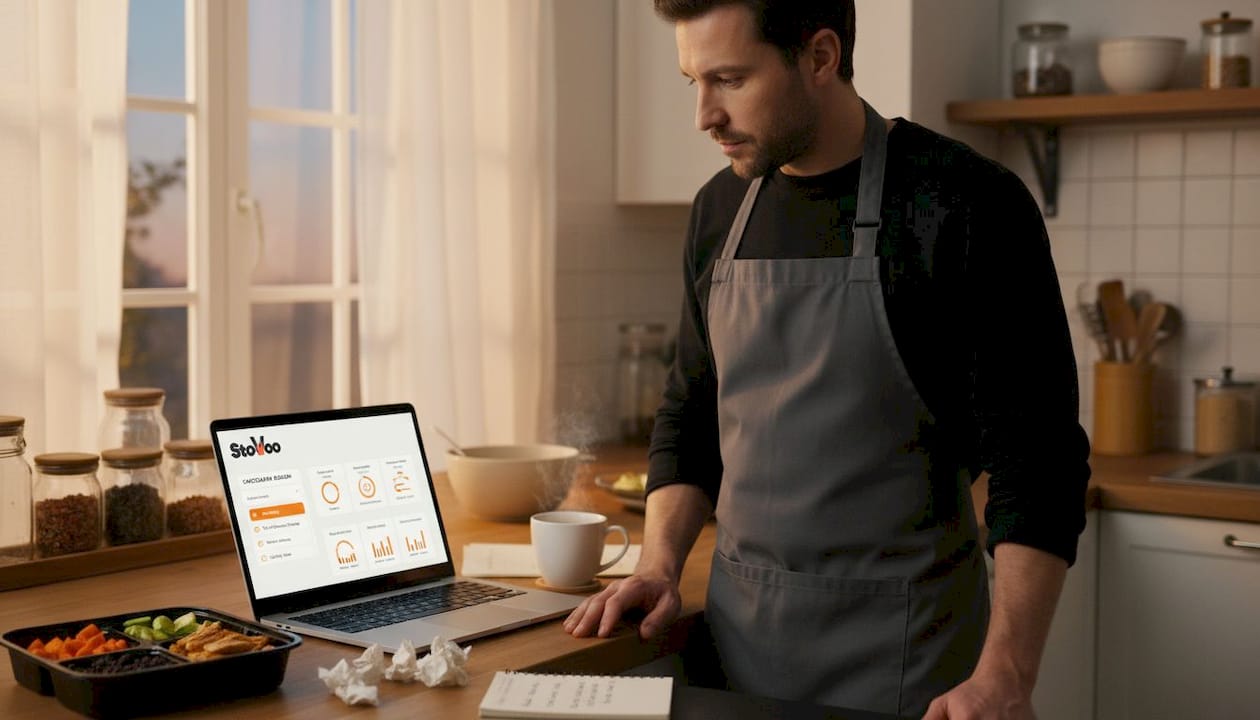
Flexibility without feedback is just guesswork at scale. The next layer of a strong meal subscription strategy is building engagement loops that respond to real customer behavior. This means tracking what customers do, not just what they say, and using those signals to trigger the right message at the right moment.
The most successful operators segment their subscribers by behavior patterns. Here is a proven framework to apply to your own customer base:
- Active subscribers. Customers who order every week without skipping. Engage them with early access to new menu items, loyalty rewards, or referral incentives.
- Occasional skippers. Customers who skip one or two weeks per month. Send personalized re-engagement messages before their next delivery window, highlighting what is new on the menu.
- Pause-risk customers. Customers who have paused more than once. Reach out proactively with a check-in message and offer a one-time discount or a free add-on to restart.
- Pre-cancel signals. Customers who have visited the cancel page or reduced their plan size. Trigger an immediate outreach from your team with a personal touch.
- Recently churned. Customers who have cancelled in the last 30 days. Send a win-back sequence at 7, 21, and 45 days with value-first messaging, not just discounts.
"Customer engagement loops should be proactive and data-driven: segment by behaviors like skipped weeks, track cancellation reasons, and close the loop via targeted lifecycle messaging." This is the exact approach that helped Mindful Chef boost their NPS scores by systematically acting on customer feedback rather than reacting to it after subscribers had already left.
Tracking Net Promoter Score (NPS) and Customer Satisfaction (CSAT) consistently gives you a pulse on how your service is being experienced in real time. The goal is not just to collect scores but to follow up quickly when a score drops. A customer who gives you a 6 out of 10 and receives a personal response within 24 hours is far more likely to upgrade their rating and their loyalty than one who is ignored.
Good efficient subscription management practices make this kind of segmented outreach manageable even for small food businesses. You do not need enterprise software. You need a system that stores customer actions and lets you act on them quickly.
Pro Tip: Tag every cancellation reason in your system (too expensive, too much food, going on vacation, not enough variety). Over 90 days, patterns will emerge that tell you exactly what to fix next in your offering or communications.
One powerful tool is personalized meal subscriptions that adapt based on customer preferences logged over time. When a customer sees that their account "remembers" that they dislike cilantro or prefer gluten-free options, that personalization creates a sense of care that generic subscriptions cannot replicate.
Smart meal planning and CSA-style subscription innovations
Community Supported Agriculture (CSA) models have been building loyal customer bases for decades, and meal subscription operators have a lot to learn from them. A CSA delivers fresh, seasonal produce directly from a farm to subscribers each week. The loyalty in that model comes not just from the food but from the story, the education, and the sense of community built around each delivery.
Applying CSA principles to a chef-led meal subscription creates a deeply engaging weekly experience. Here is how to translate those ideas into your business:
- Weekly meal-planning prompts. Include a short card or email with each delivery suggesting how to use every component, what pairs well together, and which meals to prep first for freshness.
- Storage and prep guidance. Customers who waste less food feel better about their subscription. Include simple tips on storing proteins, grains, and produce to maximize shelf life.
- Behind-the-scenes newsletters. Share where ingredients were sourced, why you chose a particular cut of meat this week, or what inspired the featured recipe. This content transforms a transaction into a relationship.
- Virtual events and cook-alongs. Host a monthly live cook session for subscribers only. This creates community, reduces churn, and gives you a natural platform to introduce new menu additions.
- Seasonal menu reveals. Build anticipation by announcing seasonal menu changes ahead of time, giving subscribers something to look forward to.
"CSA-style subscription meal-planning prompts, storage guidance, and direct farmer engagement improve the 'customer gets value every week' experience in ways that pure meal kit convenience cannot match."
Building a reliable weekly rhythm around your subscription, anchored by smart CSA meal planning approaches, gives customers reasons to stay that go beyond convenience or price.
Pro Tip: Make chef sourcing decisions visible and personal. Customers who know the story of their food, even just one ingredient per week, develop an emotional connection to your brand that is far more durable than any discount.
À la carte and hybrid options: Lowering barriers and reducing "lock-in" fatigue
Lock-in fatigue is real. When customers feel trapped by a recurring commitment they cannot easily modify, the subscription starts to feel like a burden rather than a benefit. The meal kit industry has responded with a clear trend. Established meal kit brands are increasingly offering no-subscription or à la carte options that let customers order without committing to a recurring plan.
For independent chefs and food entrepreneurs, this is actually great news. You can move faster and more creatively than large brands. Hybrid models that blend subscription benefits with one-off ordering flexibility are within reach for any food business, regardless of size.
Here is a comparison of locked-in versus flexible hybrid models:
| Feature | Traditional locked-in plan | Flexible hybrid model |
|---|---|---|
| Cancellation process | Multi-step, often confusing | One-click, instant |
| Modification window | Fixed or very limited | Weekly, self-service |
| À la carte ordering | Not available | Available alongside subscription |
| Trial options | Rarely offered | Common, low barrier entry |
| Customer perception | Commitment risk | Low risk, high value |
| Churn rate tendency | Higher | Lower |
The benefits of offering hybrid meal plans are especially strong for customer acquisition. A potential subscriber who is unsure about committing is much more likely to try a one-off order first. Once they experience your food and service, converting them to a recurring plan becomes a natural next step rather than a hard sell.
Consider these practical à la carte and hybrid strategies:
- Offer a "first box free" or discounted trial with no automatic subscription.
- Create a seasonal one-off menu alongside your recurring plans.
- Let subscribers add extra meals or sides to any delivery week without plan changes.
- Allow one-time gifting of a meal box, which brings in new customers organically.
Deeper analysis of business model comparisons for food entrepreneurs shows that the operators who grow fastest are those who remove friction at every customer decision point, not just at the sign-up stage.
Key subscription KPIs: Measure what drives growth and retention
Every strategy in this article connects back to numbers. Without tracking the right metrics, you are running your business on intuition alone, and intuition does not scale. A practical KPI set for meal kit operations includes churn rate, lifetime value (LTV), monthly recurring revenue (MRR) trend, and gross margin per serving. Each of these tells a different part of your business story.
Here is a reference table for benchmarking your meal subscription performance:
| KPI | What it measures | Target benchmark |
|---|---|---|
| Monthly churn rate | Percentage of subscribers cancelling each month | Below 5% |
| Customer LTV | Total revenue per customer over their subscription life | 6x monthly plan value |
| MRR trend | Month-over-month change in recurring revenue | Positive growth each quarter |
| Gross margin per serving | Profit left after ingredient and packaging costs | 40% or higher |
| Order accuracy rate | Correct deliveries as a percentage of total orders | Above 98% |
Track these metrics in a segmented way, not just as totals. For example, churn rates broken down by plan type (weekly vs. bi-weekly) or by acquisition channel (Instagram vs. referral) reveal patterns that aggregate numbers hide.
Follow this process to build a useful KPI rhythm:
- Set your baseline numbers for all five metrics in the table above.
- Review them weekly, not monthly. Subscription businesses move fast.
- Set a single priority metric each quarter to improve. Focus beats breadth.
- Connect each metric to a specific operational change and measure the impact.
- Share progress with your team or accountability partner to stay consistent.
You can find detailed KPI breakdowns tailored specifically to food business models to help you build your dashboard.
Pro Tip: Build a segmented dashboard where you can filter metrics by customer cohort (when they joined), plan type, and behavior tag. This turns raw numbers into decisions you can act on immediately.
Our take: Solving meal subscription friction with radical transparency and smart feedback loops
Here is an opinion that often surprises food entrepreneurs: flexibility is now the loyalty driver, not rewards points or free delivery. The old model of locking customers in through contract friction worked when there were fewer options. Today, the more control you give customers, the more likely they are to stay voluntarily.
The biggest mistake we see is operators hiding modification options. Some meal subscription businesses bury the pause button, make cancellation a multi-step phone call process, or set modification cutoffs so early that customers never bother to customize. This approach does not reduce churn. It delays it and creates angry churners instead of quiet ones.
Treat every feedback signal, whether a skip, a pause, a lower NPS score, or a cancel, as a product insight rather than a failure. The meal subscription businesses that win long-term are not the ones with the fanciest menus. They are the ones that segment feedback fast, show change is easy, and treat their weekly content (stories, sourcing, prep tips) as a genuine part of the product experience.
Efficient meal subscription setup is the foundation, but the growth comes from building trust through transparency. Show customers exactly how to modify their plan. Respond to feedback visibly. Let subscribers see that their input shapes your menu. That level of openness builds the kind of loyalty that no discount can buy.
Explore next-level meal subscription tools and chef plans
The strategies in this article work best when you have the right infrastructure behind them. Managing flexible plans, tracking customer behavior, and delivering a polished subscriber experience is much harder when you are juggling spreadsheets and group chats.
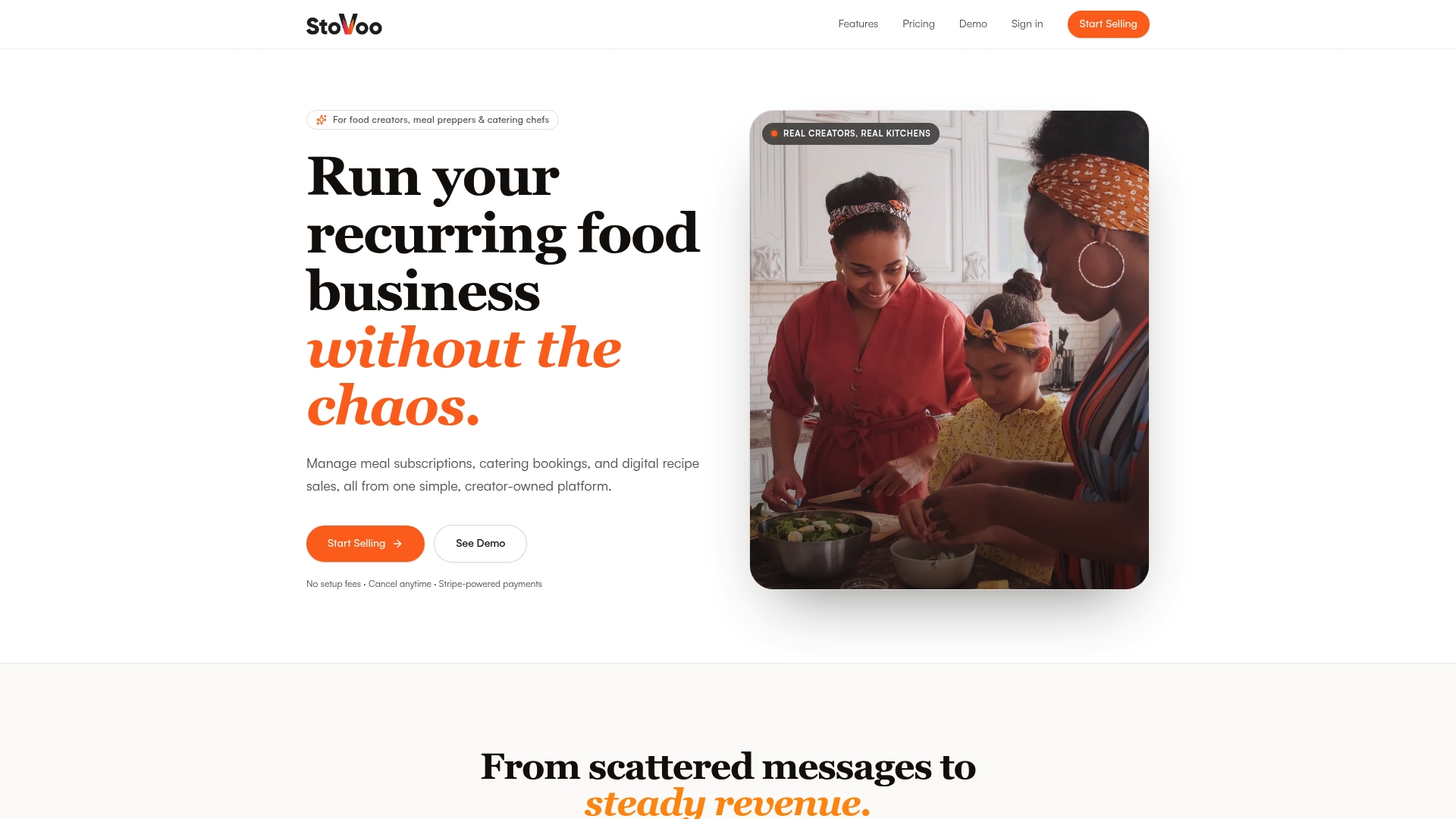
Stovoo is built specifically for food entrepreneurs who are ready to run a professional meal subscription without the admin chaos. From chef-curated meal plans that showcase your brand to a centralized dashboard that handles billing, customer management, and plan modifications in one place, Stovoo gives you the tools to execute every idea in this article. Explore StoVoo business solutions to see how food creators are building steady, recurring revenue with less friction and more control. Ready to take action? Launch your subscription today and start turning your culinary skills into a scalable food business.
Frequently asked questions
What features help reduce meal subscription churn?
Flexibility options like skip, pause, and edit, along with quick modification flows, directly reduce churn because offering flexibility removes the pressure that pushes subscribers toward cancellation.
How can chefs personalize meal subscriptions for customers?
Segmentation by behavior and targeted lifecycle messaging with post-delivery nudges enable fast personalization that makes each subscriber feel seen and valued.
Are hybrid or à la carte meal options better for reducing subscription fatigue?
Hybrid and à la carte models lower barriers to entry and are a proven retention tool, as established brands increasingly adopt no-commitment ordering alongside recurring plans.
What KPIs matter most in meal subscription business performance?
The most critical metrics are churn rate, LTV, MRR trend, and gross margin per serving, as this practical KPI set covers every dimension of subscription health.
How can CSA or chef-led subscriptions enhance customer value each week?
Meal-planning prompts, storage guidance, and behind-the-scenes engagement boost the perceived weekly value of a subscription while reducing food waste and building community loyalty.