
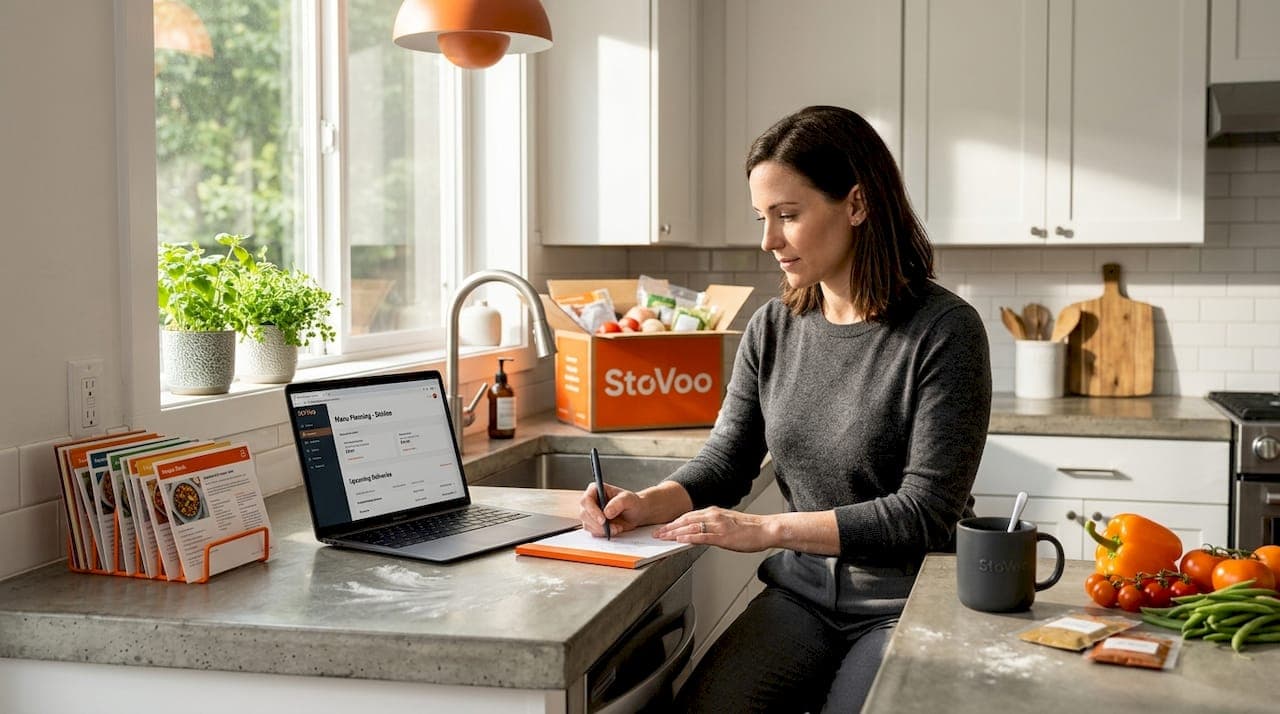
Running a meal subscription business isn't reserved for billion-dollar brands with massive logistics teams. The reality is that independent food entrepreneurs are carving out profitable, loyal audiences in this space every single day. The US meal kit industry hit $9.1 billion in revenue in 2025, growing at a 9.6% CAGR since 2020, and the global market is projected to reach $43 to $83 billion by 2034. If you've been thinking about launching a meal subscription or want to manage your existing one more efficiently, this guide breaks down everything you need to know, from defining the model to scaling it with smart operations.
Table of Contents
- What is a meal subscription service?
- The business case: Market size, pricing, and profitability
- Retention and customer experience: Managing churn and boosting loyalty
- Operational excellence: Efficient management solutions for scaling
- Balancing convenience, pricing, and acquisition
- Why most meal subscription businesses grow faster and fail sooner
- Take the next step: Manage your meal subscription business seamlessly
- Frequently asked questions
Key Takeaways
| Point | Details |
|---|---|
| Meal subscription fundamentals | Meal subscriptions deliver recurring, customizable meal kits or prepared meals, presenting new opportunities for food entrepreneurs. |
| Profitability insights | Industry margins and cost structure mean breakeven typically comes in three years, with careful local validation. |
| Customer retention strategies | Flexible subscriptions and skip/pause features help retain clients and lower churn rates. |
| Operational best practices | Utilize tech solutions, secure cold-chain logistics, and focus on niche targeting to scale efficiently. |
| Avoiding common pitfalls | Heavy discounting may boost signups but increases churn and reduces long-term value. |
What is a meal subscription service?
A meal subscription service is a recurring delivery model where customers receive pre-portioned ingredients with recipes (meal kits) or fully prepared meals on a weekly or monthly basis, often customizable for specific diets. It's a business model built on predictability. Customers subscribe, you plan production around confirmed orders, and revenue flows in without the guesswork of one-off sales.
There are two primary formats, and understanding the difference matters when you're building your offer:
- Meal kits: Pre-portioned raw ingredients with step-by-step recipe cards. Customers cook the meals themselves. Think HelloFresh or Green Chef.
- Fully prepared meals: Ready-to-eat or heat-and-eat meals delivered fresh or frozen. Popular with busy professionals, seniors, and fitness-focused customers.
- Hybrid models: A combination of both, where customers can choose between cooking and convenience depending on the week.
- Niche diet plans: Keto, vegan, paleo, allergen-free, or sports nutrition focused plans that target specific communities with high loyalty potential.
- Digital recipe subscriptions: Monthly access to new recipes, meal plans, or cooking guides, often paired with physical delivery options.
A meal subscription service is, at its core, a promise of convenience delivered on a schedule. Customers aren't just buying food. They're buying time, simplicity, and the confidence that dinner is handled.
For food entrepreneurs, this model is powerful because it shifts your revenue from unpredictable to recurring. Instead of relying on walk-in traffic or one-time orders, you build a customer base that pays you consistently. Pairing that with solid meal subscription management tools means you can focus on cooking and customer experience rather than chasing payments or juggling spreadsheets.
The business case: Market size, pricing, and profitability
The numbers driving this industry are hard to ignore. The global meal kit market sits at $21 to $22 billion in 2025 and is on track to hit between $43 and $83 billion by 2034, depending on the growth trajectory. That's not a niche trend. That's a structural shift in how people think about food.
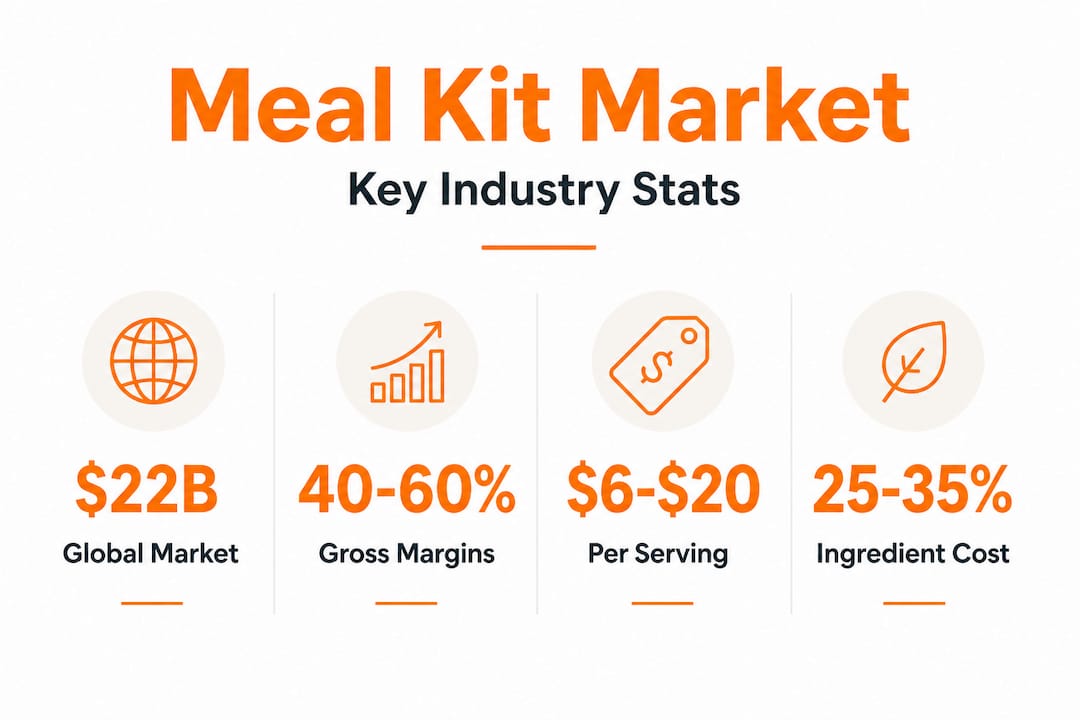
For independent food entrepreneurs, the pricing sweet spot sits between $6 and $20 per serving. Where you land in that range depends on your ingredients, your niche, and your positioning. Premium organic meal kits can command $18 to $20 per serving, while budget-friendly prepared meal plans often price closer to $8 to $12. The key is understanding your full cost structure before setting a price.
Here's a realistic breakdown of what the numbers look like at scale:
| Cost category | Typical percentage of revenue |
|---|---|
| Ingredients | 25 to 35% |
| Packaging and shipping | 8 to 13% |
| Customer acquisition cost (CAC) | $80 to $150 per customer |
| Gross margin | 40 to 60% |
| Net margin | 5 to 10% |
| Breakeven point | Year 3 (typically) |
The gross margins of 40 to 60% look attractive, but net margins of 5 to 10% tell the real story. Profitability in this business is a long game. Most operators don't break even until year three, which means cash flow management in the early stages is critical. You need enough subscribers to cover fixed costs before you start seeing meaningful profit.
Customer acquisition cost is one of the most misunderstood numbers in this space. Spending $80 to $150 to acquire a subscriber only makes sense if that customer stays long enough to generate lifetime value (LTV) that exceeds the acquisition cost by a healthy multiple. A customer who churns after two months at $50 per month is a net loss. A customer who stays for 18 months is your business model working as intended.
Pro Tip: Before you invest in paid ads or influencer partnerships, validate your unit economics locally. Sell to 20 to 30 customers in your area, track your actual ingredient costs, and measure how long they stay subscribed. Real data beats projections every time. Optimizing meal subscription operations early saves you from scaling a broken model.
Retention and customer experience: Managing churn and boosting loyalty
Once you've nailed profitability, the next frontier is keeping customers loyal. Churn is the silent killer of meal subscription businesses. Monthly churn rates in this industry run between 8 and 18%, which translates to 65 to 80% annual churn if left unchecked. First-month churn is especially brutal, sitting at 20 to 30% for most operators.
The retention benchmarks you want to aim for are 40 to 55% retention at six months and 30 to 42% at twelve months. Those numbers might sound low, but in a subscription business, even small improvements in retention have an outsized impact on revenue. Keeping 5% more customers for an extra three months can meaningfully shift your LTV calculations.
The core retention challenges food entrepreneurs face include:
- Menu fatigue: Customers get bored eating the same rotating options every few weeks.
- Price sensitivity: Subscribers who joined on a discount feel the sting when full pricing kicks in.
- Lifestyle changes: Vacation, illness, or schedule shifts cause customers to cancel rather than pause.
- Perceived value drop: When the novelty wears off, customers question whether the subscription is worth it.
- Poor communication: Customers who feel ignored or underserved are far more likely to cancel quietly.
Here are the strategies that actually move the retention needle:
- Offer flexible skip and pause options. This is not optional. Flexible skips and pauses can double your retention rate. Customers who can pause for a vacation don't cancel. Customers who can skip a week during a busy period stay subscribed longer.
- Personalize the experience. Use order history and dietary preferences to recommend meals, send personalized check-ins, and tailor communications. Customers who feel seen stay longer.
- Add value through add-ons. Offer extras like specialty sauces, dessert kits, or cooking tips that increase perceived value without dramatically raising your costs.
- Build a community. A private group, a newsletter with behind-the-scenes content, or a loyalty rewards program creates emotional investment beyond the food itself.
- Proactively reach out before churn signals appear. Don't wait for a cancellation request. If a customer skips two weeks in a row, send a check-in message with a personalized offer.
Pro Tip: Track your churn by cohort, meaning group customers by the month they joined and monitor their retention over time. This reveals whether a specific promotion, menu change, or operational issue caused a spike in cancellations. Analytics-driven decisions consistently outperform gut-feel ones. Use platforms that let you streamline subscription management and surface these insights without manual spreadsheet work.
Operational excellence: Efficient management solutions for scaling
Strong retention and customer experience are only possible with efficient management. Here's how you can scale smoothly without burning out or losing quality.
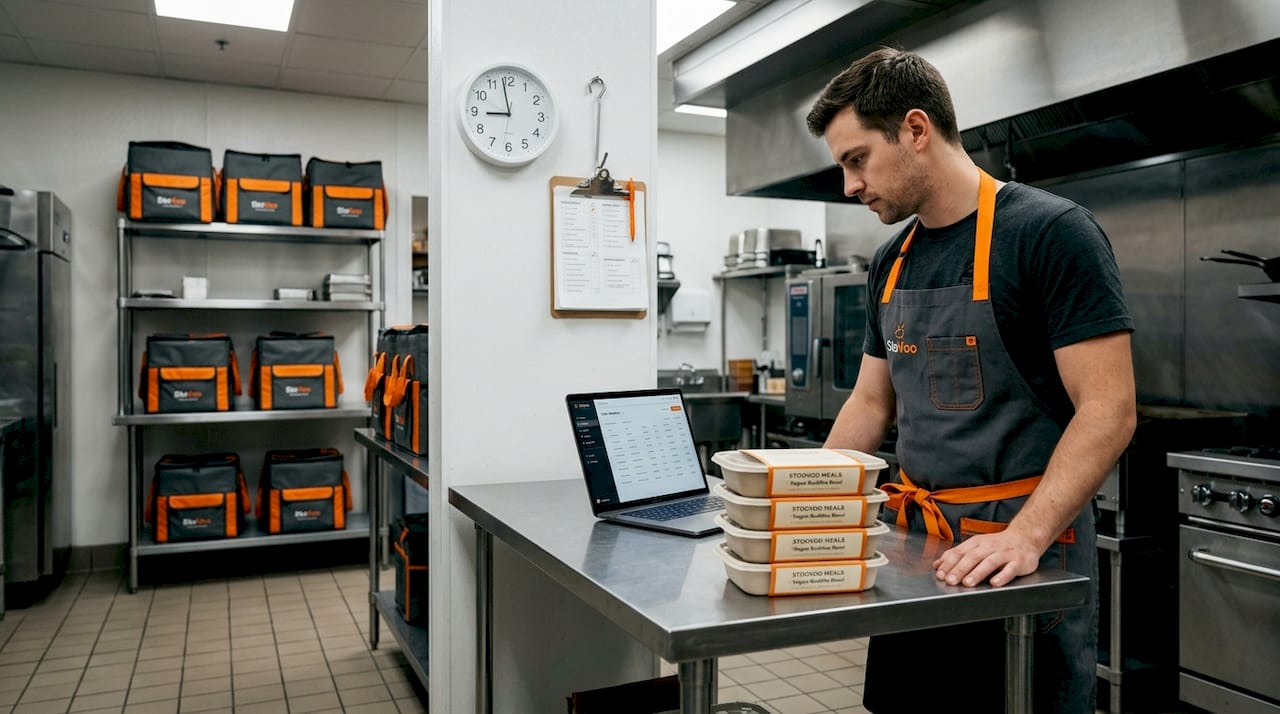
Technology is the foundation of scalable meal subscription operations. For food entrepreneurs starting out, prioritizing tools like Shopify Selling Plans combined with subscription apps for weekly operations gives you a solid technical base. As you grow, unified routing tools for internal and third-party logistics (3PL) fleets, along with AI-powered dispatch systems, help you manage delivery complexity without proportionally increasing your team size.
Cold-chain logistics is another area where early investment pays off. If you're delivering fresh or refrigerated meals, your packaging, ice pack strategy, and delivery windows need to be locked in before you scale. A single summer delivery failure that results in spoiled food can cost you a dozen subscribers and a wave of negative reviews.
Here's a comparison of two subscription model approaches that food entrepreneurs commonly choose between:
| Feature | Flexible subscription model | Rigid subscription model |
|---|---|---|
| Skip and pause options | Yes, customer controlled | No or limited |
| Menu customization | High | Low |
| Churn rate | Lower | Higher |
| Operational complexity | Higher | Lower |
| Customer satisfaction | Higher | Variable |
| Best for | Growth-focused businesses | Simplified early-stage ops |
The flexible model wins on retention. The rigid model is easier to manage when you're just starting. Most successful operators begin with a simplified structure and add flexibility as their systems mature.
Niche targeting is one of the most underrated growth levers in this industry. A meal subscription built for postpartum mothers, competitive athletes, or people managing type 2 diabetes will always outperform a generic "healthy meals" offer in terms of retention and word-of-mouth. Niche customers are more loyal, more vocal, and more willing to pay a premium.
Pro Tip: Audit your fulfillment process every 90 days. Track ingredient waste percentages, packaging costs per box, and delivery error rates. Even a 2% reduction in food waste on a 200-subscriber operation can save hundreds of dollars monthly. Efficient meal delivery management tools that centralize your orders, customer data, and billing make these audits dramatically faster.
Balancing convenience, pricing, and acquisition
With operations optimized, it's critical to balance your pricing, offer genuine convenience, and avoid the traps that sink acquisition strategies.
Customers who subscribe to meal services are fundamentally paying for convenience. They're not comparing your price per serving to a grocery store trip in isolation. They're comparing it to the total cost of planning, shopping, prepping, and cooking. When you frame your offer that way, premium pricing over groceries becomes easier to justify, and customers who understand that value proposition stay subscribed longer.
The discount trap is real. Heavy discounting drives signups, but it attracts customers who are deal-hunting rather than genuinely committed to the convenience and quality you offer. Those customers churn the moment the promotional price ends, which inflates your CAC and deflates your LTV simultaneously. HelloFresh's own growth story illustrates this tension: aggressive discounting accelerated subscriber counts but created a churn cycle that required constant new acquisition spending to maintain revenue.
The most dangerous number in a meal subscription business isn't your churn rate. It's the gap between what a discounted customer pays and what they're actually worth over their lifetime. Closing that gap is the real growth lever.
Here are positioning strategies that attract high-LTV customers without relying on deep discounts:
- Lead with story and mission. Customers who connect with your "why" stay longer than those who joined for a promo code.
- Offer a free trial meal instead of a discount. This lets customers experience quality without anchoring them to a lower price point.
- Highlight flexibility prominently. Skip, pause, and customize messaging in your acquisition copy signals that you respect customer autonomy.
- Showcase social proof from long-term subscribers. Testimonials from customers who've been subscribed for six or twelve months are far more persuasive than first-week reviews.
- Build referral programs. A satisfied subscriber who refers a friend has a dramatically lower CAC and typically higher LTV than a cold-traffic acquisition. Focus on improving customer experience to make referrals a natural outcome.
Why most meal subscription businesses grow faster and fail sooner
Having explored foundational strategies, let's take a frank look at what most entrepreneurs miss when launching meal subscriptions.
The most common failure pattern we see is this: a food entrepreneur launches, gets strong early traction, scales up production and marketing, and then watches churn quietly erode everything they built. The growth felt real. The failure felt sudden. But it wasn't sudden at all.
The "growth at any cost" mindset is the culprit. When you prioritize new subscriber counts over retention metrics, you're essentially filling a leaky bucket. Every dollar you spend acquiring a new customer who churns in 60 days is a dollar that didn't go toward improving your menu, your packaging, or your customer relationships. The unit economics never recover.
The entrepreneurs who build durable meal subscription businesses share a few traits. They validate locally before scaling. They pick a niche and go deep rather than trying to appeal to everyone. They invest in flexible operations early, even when it feels like overkill for their current subscriber count. And they treat retention as a product problem, not just a marketing problem.
Here's the uncomfortable truth: most meal subscription failures aren't caused by bad food. They're caused by operational chaos, poor customer communication, and pricing structures that were never stress-tested against real costs. Learning from common mistakes before they become expensive is the fastest path to building a subscription business that actually lasts.
The food entrepreneurs who succeed long-term also understand that their real product isn't the meal. It's the experience of receiving it, the reliability of the schedule, and the feeling that someone genuinely thought about their dietary needs this week. Build that, and retention takes care of itself.
Take the next step: Manage your meal subscription business seamlessly
Everything covered in this guide, from pricing your offer correctly to reducing churn and auditing fulfillment, comes down to one thing: having the right systems in place to manage it all without burning out.
Stovoo is built specifically for food entrepreneurs who want to run a professional, scalable meal subscription platform without the chaos of WhatsApp threads and manual spreadsheets. The platform gives you a centralized dashboard to manage subscription plans, customer relationships, automated billing, and your own mobile-first shopfront, all in one place. You can set up your customized shopfront link, share it across social media, and start accepting recurring orders in minutes. Whether you're running weekly meal plans, catering bookings, or digital recipe sales, Stovoo helps you build steady, recurring income with minimal technical hassle. It's the operational backbone your food business needs to grow with confidence.
Frequently asked questions
What types of meal subscription services can I offer?
You can offer meal kits with recipes or fully prepared meals customizable for specific diets, as well as hybrid models, niche diet plans, and digital recipe subscriptions.
How does pricing for meal subscription services usually work?
Pricing ranges from $6 to $20 per serving, with ingredient costs making up 25 to 35% and packaging and shipping accounting for 8 to 13% of total expenses.
What is a typical retention rate for meal subscription businesses?
Retention sits at 40 to 55% at six months and 30 to 42% at twelve months, and offering flexible skip and pause options can double those retention rates.
How fast can meal subscription businesses break even?
Most meal subscription businesses reach breakeven around year three, which makes early cash flow management and strong retention strategies essential from day one.
Are discounts effective for acquiring new meal subscription customers?
Heavy discounting can drive initial signups but tends to attract low-commitment customers who churn quickly, ultimately reducing lifetime value and increasing long-term acquisition costs.