
TL;DR:
- Meal prepping is a systematic workflow that reduces daily decisions, food waste, and benefits all cooks.
- Different methods, like full-meal prep or ingredient prep, suit varying schedules and goals, requiring experimentation.
- Food safety practices, including proper storage temperatures and labeling, are essential for health and quality.
Meal prepping has a reputation problem. Many people picture it as something reserved for bodybuilders, calorie counters, or hyper-organized fitness influencers. But that framing misses the bigger picture entirely. At its core, meal prepping is a workflow strategy, one that reduces daily decision fatigue, cuts food waste, and creates repeatable systems that benefit everyone from a busy parent cooking Sunday dinners to a food entrepreneur scaling a weekly meal plan business. This article breaks down the real mechanics of meal prepping, the methods that work best in different situations, the safety rules you cannot skip, and how to avoid the mistakes that derail even the best intentions.
Table of Contents
- What is meal prepping? The core concept clarified
- Meal prepping methods: Models for every kitchen and business
- Food safety and meal prepping: Critical rules for home and business
- Common meal prep pitfalls (and how to avoid them)
- Our take: What most meal prepping guides overlook
- Next steps: Streamline meal prepping with Stovoo
- Frequently asked questions
Key Takeaways
| Point | Details |
|---|---|
| Meal prepping defined | Meal prepping means planning and preparing meals or ingredients in advance to save time during the week. |
| Choose the right method | Different prepping methods suit home cooks and businesses—mix and match to maximize freshness and efficiency. |
| Prioritize food safety | Always store, label, and reheat meals using proper temperature controls to prevent foodborne illness. |
| Avoid common mistakes | Select meal-friendly recipes and realistic prep schedules to ensure quality and consistency. |
| Think systems, not just meals | For long-term success, implement systematic workflows for sourcing, prepping, and scaling your kitchen operation. |
What is meal prepping? The core concept clarified
Meal prepping is often lumped together with diet culture, but its origins are far more practical than that. Understanding the meal prepping basics starts with a clear definition. According to Wikipedia, meal prepping is "the practice of planning and preparing meals in advance, then portioning and storing them so they can be eaten later (often over the coming week)." That single sentence captures something powerful: it is not about what you eat, it is about when and how you prepare it.
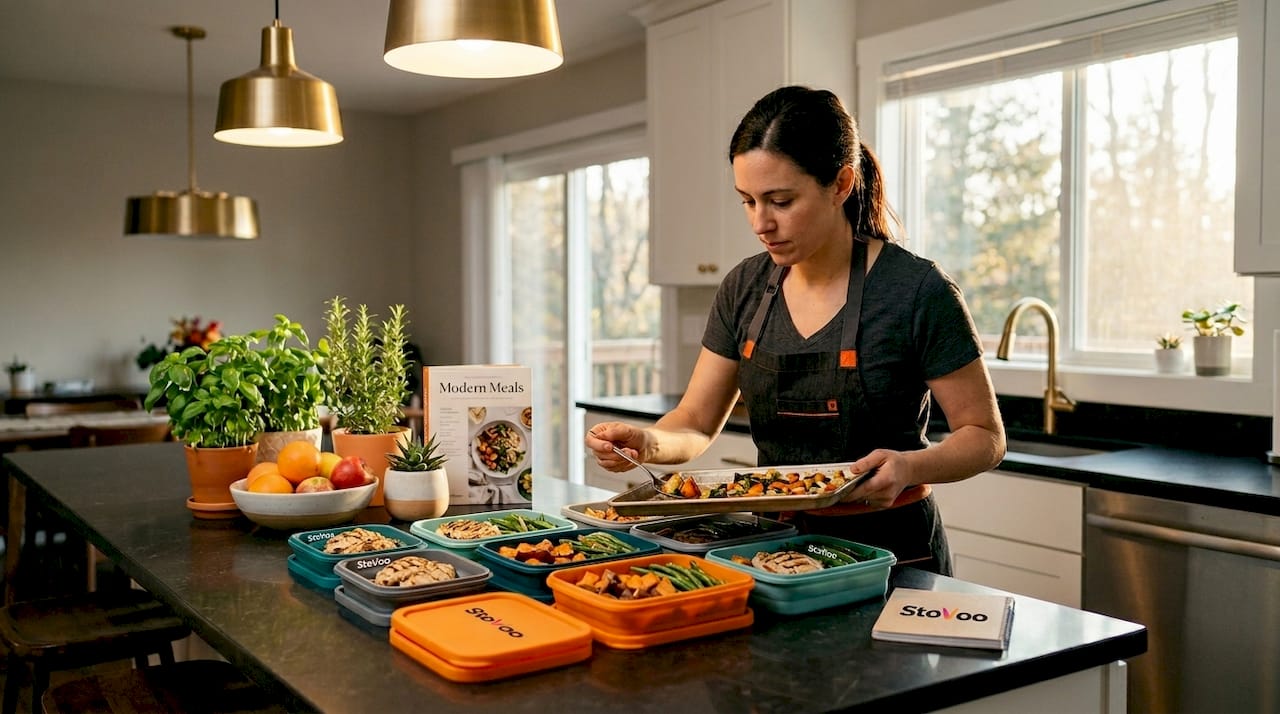
The practical implication is significant. When you front-load the planning and cooking effort into one or two dedicated prep sessions per week, you reclaim time on every other day. You eliminate the daily question of "what's for dinner?" You reduce impulse grocery purchases. And you create a consistent output, whether that output is dinner for your family or 50 individual meal containers for paying subscribers.
Here are the core steps that define any effective meal prep workflow:
- Plan your meals for the week (or prep period) based on schedule, budget, and nutritional goals
- Shop strategically using a consolidated list that eliminates multiple store visits
- Cook and package in a single dedicated session, grouping similar tasks together for efficiency
- Store safely using appropriate containers, temperatures, and labeling practices
- Reheat and serve using consistent methods that preserve texture and flavor
This is not rocket science, but it is systems thinking applied to the kitchen. And systems thinking is exactly what separates a stressful, reactive cooking routine from one that runs smoothly and predictably.
"Meal prepping transforms the kitchen from a reactive space into a proactive one, shifting daily decisions into a single planning session that pays dividends all week long."
Meal prepping methods: Models for every kitchen and business
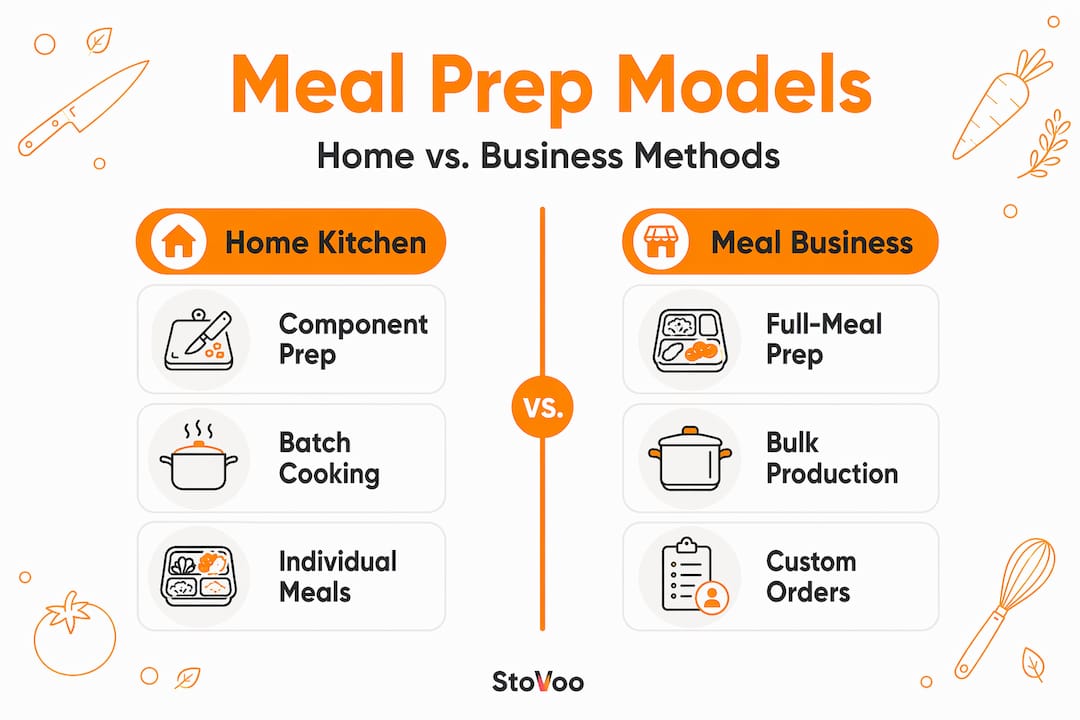
With the definition set, the next step is to explore the diverse ways people implement meal prepping, because no single model works for all kitchens or business setups. Knowing the differences helps you choose the approach that matches your time, skill level, and goals.
What is meal prep and how does it work? outlines the five most common variants. Here is how they compare:
| Method | Best for | Common pitfalls | Example |
|---|---|---|---|
| Full-meal prep | Busy households, meal plan businesses | Texture degradation over days | Pre-cooked chicken and rice bowls |
| Batch cooking | Freezer stocking, large-order catering | Monotony if variety is low | Large batches of soups or chili |
| Ingredient prep | Flexible weeknight cooking | Requires extra assembly time | Washed greens, chopped veg, cooked grains |
| Partial prep | Time-saving without full commitment | Can still feel rushed at mealtime | Pre-marinated proteins, made sauces |
| Freezer prep | Long-term planning, bulk production | Freezer burn, quality loss if sealed poorly | Casseroles, burritos, curry bases |
Each method suits a different pace and production volume. A solo home cook might combine ingredient prep and partial prep to keep meals feeling fresh. A food entrepreneur running weekly meal plan strategies might lean on full-meal prep or batch cooking to hit volume targets consistently.
Finding your ideal approach takes a bit of experimentation. Here is a simple numbered process to identify what fits your situation:
- Audit your week. How many meals do you need covered? For how many people?
- Assess your kitchen capacity. Storage space, container count, and appliances all affect what methods are practical.
- Rate your tolerance for repetition. Full-meal prep saves the most time but can feel monotonous. Ingredient prep preserves variety but requires more daily effort.
- Start with one method for two weeks. Measure the time saved and your satisfaction with the results.
- Adjust and layer. Once one method feels solid, combine it with another to increase flexibility.
Understanding the range of meal plan business frameworks also helps you see how these methods map to commercial models, from subscription-based weekly meal deliveries to one-time catering jobs.
Pro Tip: Mix component prep (cooked grains, roasted proteins, prepped vegetables) with one or two fully assembled meals per week. You get the time-saving benefits of full-meal prep while keeping daily meals feeling varied and intentional, rather than eating the same box lunch four days in a row.
Food safety and meal prepping: Critical rules for home and business
Understanding prep methods is one thing, but making sure meals are safe and high quality is another. Whether you are cooking for your household or for paying customers, food safety is not optional, and the margin for error is even smaller when you are scaling up.
The USDA provides clear benchmarks that every meal prepper needs to internalize. USDA food safety guidance emphasizes: keep perishable foods below 40°F, refrigerate leftovers within two hours (or one hour if the ambient temperature is above 90°F), reheat all leftovers to an internal temperature of 165°F, and never leave perishable foods sitting at room temperature beyond that two-hour window.
Here is a quick reference table for key temperature and time benchmarks:
| Safety rule | Threshold | Why it matters |
|---|---|---|
| Refrigerator storage | Below 40°F (4°C) | Slows bacterial growth |
| Danger zone | 40°F to 140°F | Rapid bacterial multiplication occurs |
| Reheating temperature | 165°F (74°C) internal | Kills pathogens in stored meals |
| Refrigeration window | Within 2 hours of cooking | Prevents bacterial contamination |
| Hot environment rule | Within 1 hour above 90°F | Heat accelerates spoilage risk |
| Refrigerator shelf life | 3 to 5 days for most meals | Beyond this, discard regardless of appearance |
These numbers are not suggestions. They are boundaries built from decades of food science research, and they apply equally in a home kitchen and a commercial prep facility. Good food safety strategies are what separate a trustworthy food business from a liability risk.
Here are the storage and labeling practices that matter most:
- Use airtight containers rated for food storage; avoid containers that can leach chemicals when heated
- Cool meals rapidly by spreading food in shallow containers before refrigerating
- Label every container with the prep date and use-by date (not just the contents)
- First in, first out (FIFO): rotate older containers to the front so nothing gets missed
- Separate raw proteins from ready-to-eat foods at every stage of prep and storage
- Reheat only once: do not repeatedly reheat and cool the same portion
Pro Tip: Always cool meals quickly and label each batch with prep and use-by dates for traceability. If you run a meal prep business, this is also your paper trail. Customers trust you with their health, and batch labeling makes it easy to identify and address any issues fast.
Common meal prep pitfalls (and how to avoid them)
Whether cooking for one or many, mistakes can quickly derail meal prep efforts. The good news is that most pitfalls are predictable and easy to address once you know what to look for.
The biggest mistake is choosing the wrong recipes. Not every dish holds up well after storage and reheating. As meal prep mistakes research shows, meal prep fails most often when recipes are not compatible with storage or reheating, particularly foods that get soggy, lose crispness, or deteriorate in texture. Anything with a crispy coating, delicate leafy greens dressed in vinaigrette, or pasta that continues absorbing sauce will disappoint by day three.
Here are the most common pitfalls and how to sidestep them:
- Choosing texture-sensitive recipes: Fried foods, dressed salads, and delicate fish deteriorate quickly. Instead, opt for grain bowls, braised meats, roasted vegetables, and soups.
- Using the wrong containers: Not all food-safe containers are created equal. Containers that are too large lead to excess air exposure. Mismatched lids create leaks and accelerated spoilage.
- Over-prepping for your actual schedule: Prepping seven full days of meals when your week is unpredictable leads to wasted food and frustration. Start with three to four days and adjust from there.
- Skipping variety planning: Eating identical meals every day creates fatigue. Even small variations, like swapping the sauce or the grain base, can keep things interesting.
- Ignoring flavor development: Some dishes improve after a day in the fridge (curries, stews, marinated proteins). Build your menu around this and let the prep work in your favor.
For food entrepreneurs, these mistakes carry heavier consequences. A customer who receives a soggy or unappetizing meal will not renew their subscription. Good meal plan management tips include building quality-control checkpoints into your prep workflow, not just hoping things turn out right. Pairing that with smart meal subscription management tools means you can track what customers are ordering, gather feedback, and adjust your menu before small issues become bigger problems.
Pro Tip: Start your meal prep journey with recipes known to reheat and store well. Win small before you go big. Incremental successes build confidence and help you identify which dishes should form the backbone of your rotation before you start experimenting with more complex preparations.
Our take: What most meal prepping guides overlook
Most meal prepping guides give you a list of containers to buy and a sample weekly menu. That is helpful for getting started, but it misses the deeper principle that separates people who sustain a meal prep habit from those who abandon it after two weeks.
Real, lasting meal prep success, especially as a food entrepreneur, comes from treating your kitchen like a production system. That means thinking in terms of throughput (how many meals can you produce per prep session?), consistency (can you replicate the same quality batch after batch?), and traceability (can you identify exactly what went into every container and when?).
As starting a meal prep business makes clear, for entrepreneurs the meal prep definition typically extends beyond home cooking. It includes operating a system that repeatedly produces, portions, packages, labels, and delivers meals while maintaining food safety and consistency across every single batch. That is a fundamentally different challenge than cooking for your household, and it requires a fundamentally different mindset.
Here is what that mindset shift looks like in practice. A home cook optimizes for their own convenience. A food entrepreneur optimizes for the customer experience, margins, and repeatability. Every recipe choice becomes a question of: Can we produce this reliably at scale? Does it hold up through packaging and delivery? Does it protect our margins given ingredient costs?
The uncomfortable truth is that many food entrepreneurs underestimate this operational complexity early on, and overestimate how much can be managed through memory, WhatsApp threads, and handwritten notes. Building a sustainable home cooking business means investing in systems before you feel like you need them, not after you are already overwhelmed.
Workflow mastery is the real competitive advantage in this space. Two kitchens using the same recipes can produce wildly different outcomes based purely on how well each one manages the sequence of prep tasks, ingredient sourcing, labeling, and delivery logistics.
Next steps: Streamline meal prepping with Stovoo
If efficient meal prepping and business growth go hand in hand, the next logical step is making sure your tools are working as hard as you are.
Stovoo is built specifically for food creators, meal preppers, and small food businesses who want to run operations without the chaos of scattered messaging apps and manual tracking. You can manage meal subscription plans, catering bookings, and digital recipe sales all from one dashboard, with automated billing and a professional mobile-first shopfront that you can share anywhere. Whether you want to order meal plans from Amara, explore Ami meal plans as a customer, or start your own food business on the platform, Stovoo gives you the infrastructure to move from cooking to growing, without the admin headaches.
Frequently asked questions
How far in advance can you meal prep safely?
Most meals can be prepped and safely stored for up to 3 to 5 days in the refrigerator, as long as you follow correct temperature guidelines. USDA guidance recommends keeping perishables below 40°F and reheating to 165°F before eating.
What's the difference between meal prepping and using meal kits?
Meal prepping means making meals or ingredients yourself in advance; meal kits deliver pre-portioned ingredients and recipes, but you still cook the meal yourself at home. Research on meal-kit use patterns confirms these two practices differ meaningfully from traditional home meal preparation habits.
Is meal prepping cost-effective for food businesses?
Yes. Efficient meal prepping reduces food waste, maximizes labor use, and enables scalable meal offerings. For food entrepreneurs, a well-run prep system that produces consistent, portioned meals is the foundation of a profitable and repeatable food business model.
What type of meals are best for prepping?
Meals with stable textures and flavors after storage, such as grain bowls, soups, stir-fries, and baked casseroles, are the best candidates for meal prepping. Meals that fail to hold up through storage and reheating, like fried foods or dressed salads, will disappoint regardless of how well they are made fresh.