
TL;DR:
- Most meal prep businesses lose over 70% of customers annually due to ineffective management rather than food quality. Implementing structured retention strategies like segmentation, personalization, feedback loops, and referral programs can significantly boost profitability and long-term loyalty. Balancing automation with personal service is essential, ensuring consistency and trust-building to sustain growth.
Most meal prep businesses quietly bleed customers every month, not because their food is bad, but because their customer management is invisible. Monthly churn rates in the meal kit and food subscription space run between 8% and 12%, which translates to losing more than 70% of your customer base every single year. That's a startling number. The operators who beat that average aren't necessarily serving better food. They've built tighter, smarter systems for managing the people who buy from them. This guide breaks down exactly how to do that.
Table of Contents
- Why customer management matters in meal prep
- Key components of effective customer management
- Tactics to reduce churn and retain meal prep customers
- Balancing automation and the human touch
- What most meal prep businesses get wrong about customer management
- Ready to upgrade your customer management?
- Frequently asked questions
Key Takeaways
| Point | Details |
|---|---|
| Retention drives profits | A 5 percent increase in retention can grow profits by up to 95 percent for meal prep companies. |
| Personalization reduces churn | Customizing menus and touchpoints lowers customer loss rates by up to 20 percent. |
| Loyalty and referrals matter | Structured loyalty and referral programs boost purchase frequency and lifetime value. |
| Balance tech with human touch | Automation can scale, but tangible relationships build early loyalty and trust. |
Why customer management matters in meal prep
Now that we've addressed the real cause of stalled growth, let's drill into why retention is the hidden engine of meal prep success.
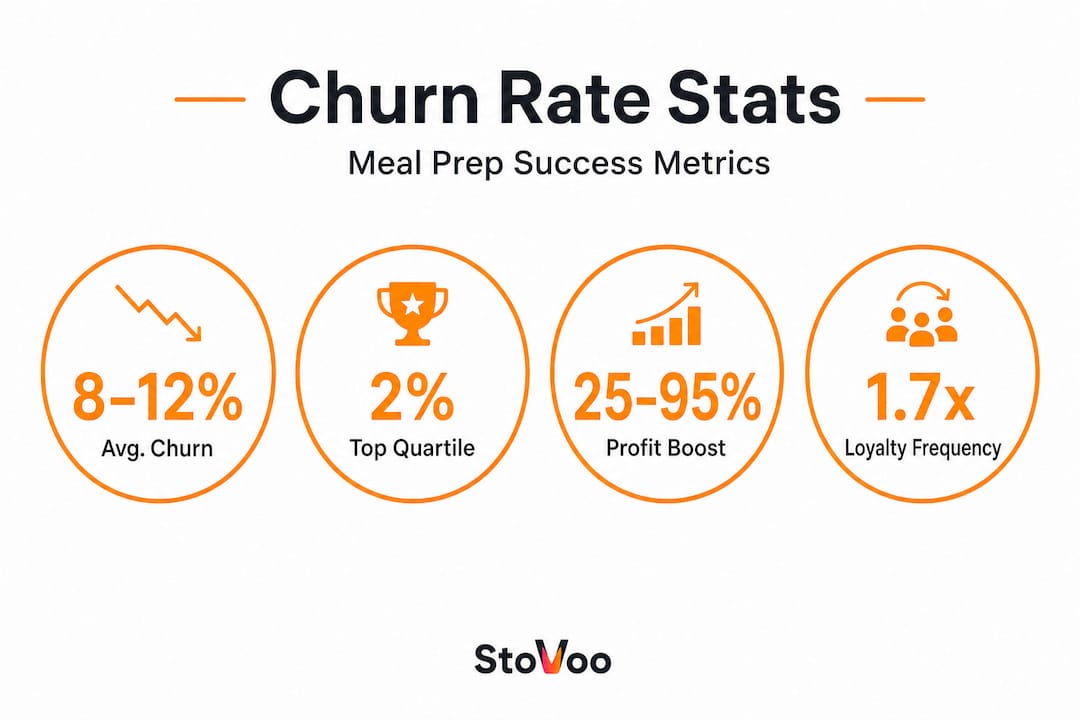
The numbers tell a clear story. The average meal prep or food subscription business loses the majority of its customers annually, yet top-quartile operators hold churn to just 2% per month. That gap isn't luck. It reflects intentional, structured customer management at every touchpoint. The difference between losing 10% of your customers monthly versus 2% compounded over a year is almost impossible to overcome through new acquisition alone.
What makes retention so powerful economically? A 5% increase in retention can boost profits anywhere from 25% to 95%. Read that again. You don't need to double your customer base. You need to keep more of the customers you already have. That's a fundamentally different strategy, and a far more achievable one for small food businesses operating with lean teams and tight budgets.
Loyalty programs and referral systems amplify that effect. Points-based loyalty systems increase purchase frequency by 10 to 15% and lift lifetime value by more than 25%. For a meal prep operator running weekly or biweekly deliveries, those numbers stack fast. Pair that with a referral program and you're compounding growth through your happiest customers.
Here's a quick overview of what separates high-retention operators from average ones:
| Metric | Average operator | Top-quartile operator |
|---|---|---|
| Monthly churn rate | 8 to 12% | Around 2% |
| Annual customer loss | 70%+ | Under 25% |
| Loyalty program use | Occasional | Systematic |
| Feedback collection | Reactive | Proactive |
| Personalization level | Low | High |
The bottom line is that customer management is not a back-office function. It's a core growth lever. If you want to build a sustainable meal prep business, check out this meal plan management guide for more on structuring your operations around retention from day one.
Key benefits of investing in customer management:
- Reduces your cost to serve existing customers over time
- Creates organic word-of-mouth growth through satisfied clients
- Improves menu planning accuracy through better demand forecasting
- Builds a defensible business that's harder for competitors to poach
Key components of effective customer management
Having seen why management matters, what are the tangible building blocks for meal prep customer success?
The most effective meal prep customer management systems share four core components: segmentation, personalization, feedback loops, and referral programs. Each one reinforces the others. Skip one, and the whole system underperforms.
1. Customer segmentation
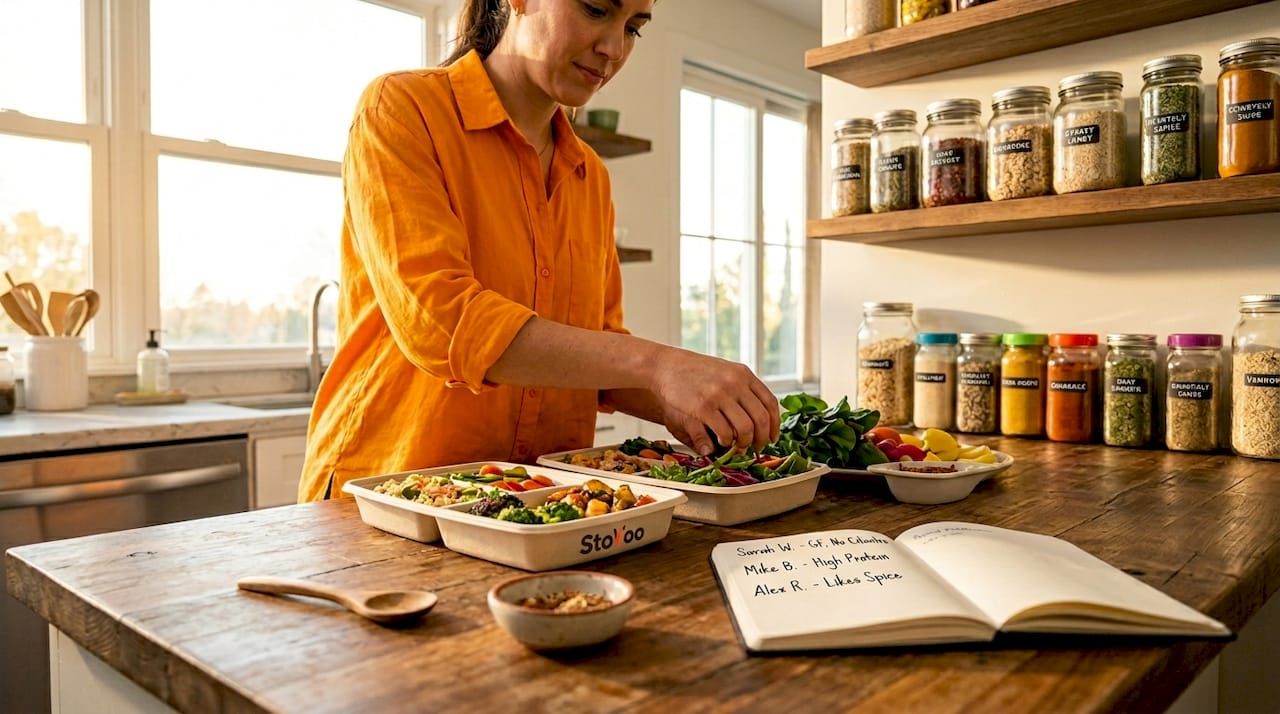
Segmentation means grouping your customers by meaningful characteristics so you can serve each group better. In meal prep, the most useful segments tend to be dietary preference (keto, vegan, halal, allergen-free), delivery schedule (weekly, biweekly, on-demand), household size, and price sensitivity. Customer segmentation by dietary niche is an expert-endorsed best practice because it allows you to speak directly to what each customer actually needs, rather than sending everyone the same generic message.
For example, a customer who orders keto meal plans doesn't want to receive promotions for pasta dishes. A family of five has different concerns than a solo professional. When your communications match the customer's context, engagement and retention both rise.
2. Personalization at scale
Personalization goes beyond using someone's first name in an email. It means remembering their preferences, surfacing menu options that match their past orders, and proactively suggesting plan changes before they get bored. This is exactly where boosting profits with segmentation becomes practical. Personalized experiences feel more like a service and less like a transaction.
3. Feedback loops
Most meal prep businesses collect feedback only when customers are already leaving. That's too late. Build structured feedback loops using short post-delivery surveys, monthly polls, and social media monitoring. These signals tell you where your product or service is slipping before it shows up in your churn rate. Surveys, polls, and social media monitoring are among the most practical tools for ongoing service improvement.
4. Loyalty and referral programs
Dual-sided referral programs (where both the referrer and new customer receive a benefit, such as $25 in credit each) can reduce customer acquisition cost by 40 to 60%. That's a dramatic shift in unit economics. Combined with a points-based loyalty system, you create a flywheel where customers are rewarded for staying and for bringing others in.
Compare a basic versus optimized approach to these four pillars:
| Component | Basic approach | Optimized approach |
|---|---|---|
| Segmentation | One-size-fits-all messaging | Dietary, schedule, and budget-based groups |
| Personalization | Name in subject line | Menu recs based on order history |
| Feedback | Annual survey | Weekly micro-feedback loops |
| Referral program | Passive word-of-mouth | Structured dual-sided incentive program |
Building customer management systems that integrate all four components doesn't have to be complex when you start with the right framework.
Pro Tip: Start your segmentation with just two or three groups. Overcomplicating segmentation early leads to analysis paralysis. Even splitting customers into "health-focused" versus "convenience-focused" can dramatically improve how you communicate and what you offer.
Tactics to reduce churn and retain meal prep customers
With core components in place, let's turn to actionable moves proven to keep your customers coming back.
Churn rarely happens in one dramatic moment. It builds up quietly through minor frustrations, boredom, or feeling like just another order number. Here are the most effective tactics for addressing those root causes.
Offer flexible subscription plans. Rigid plans are churn accelerators. If a customer can only pause or cancel (with no in-between), they'll often cancel outright when life gets busy. Offering skip-a-week, reduced frequency, or portion-size adjustments gives customers a reason to stay. Streamlined meal planning that builds flexibility into the default experience is far more retention-friendly than forcing customers to call or message to make changes.
Rotate your menu with intention. One of the most underappreciated churn drivers is menu fatigue. Customers who subscribed for variety stop renewing when they feel like they've "seen it all." A hybrid menu model, where a core set of trusted favorites is supplemented by rotating seasonal or limited-time options, solves this elegantly. Personalization reduces churn by 15 to 20% and hybrid menu models specifically prevent the boredom that kills long-term subscriptions. A well-curated diverse and flexible menu shows customers you're listening.
Develop strategic partnerships. This one surprises a lot of meal prep operators. Partnering with local gyms, personal trainers, wellness studios, or nutritionists creates credibility and a warm referral pipeline. Customers who arrive through a trusted health professional tend to have stronger intent and higher engagement. Partnerships with gyms and trainers produce a 23% higher average order value compared to cold acquisition channels. That's not a small number.
Monitor churn signals proactively. Don't wait for cancellations. Track early warning signs: a drop in order frequency, a sudden decrease in email open rates, unanswered survey invitations, or multiple skipped weeks. When you notice these signals, reach out personally. A simple "Hey, we noticed you skipped last week, is everything okay with your plan?" can prevent a cancellation that would have otherwise been invisible until it happened.
"The best time to address churn is before your customer even thinks about leaving. Build a system that spots the warning signs early, and you'll solve problems customers didn't even know they had."
Key churn-reduction tactics at a glance:
- Allow customers to pause, reduce, or modify plans with zero friction
- Send personalized "you might like this" meal suggestions based on past orders
- Proactively follow up when engagement patterns dip
- Create seasonal or theme-based menu drops to re-ignite excitement
- Build referral incentives that reward your most loyal customers to advocate
Balancing automation and the human touch
Tactics only take root when the right tools and approach are chosen. Technology or human delivery? Let's weigh your options.
There's a real tension in meal prep customer management between scaling with automation and keeping the personal feel that makes small food businesses special. The right balance depends heavily on your stage of growth.
For early-stage businesses, lean toward the human side. Word-of-mouth, personal check-ins, and genuine service quality are your primary competitive advantages over larger, more impersonal operators. As one industry guide on operating a meal prep business puts it, tech-heavy automation scales operations well for growth, but small businesses starting lean benefit most from word-of-mouth and quality service as their foundation. You can't automate trust.
That said, there are specific tasks where automation saves significant time without sacrificing the human feel. Automated billing, subscription renewals, order confirmation emails, and feedback survey triggers are all low-risk areas to systematize early. These are behind-the-scenes operations that customers don't experience emotionally, but they do notice if something goes wrong with them.
"Flexible self-service tools and proactive interventions are key to surviving high baseline churn in subscription meal services." Churn Benchmarks for Meal Kit Subscriptions
Self-service tools deserve special mention. Customers increasingly want to manage their own accounts on their schedule, at midnight if that's when they're meal planning. Being able to skip a week, update preferences, or swap a meal without sending a WhatsApp message to a human is a big quality-of-life improvement. It reduces friction, reduces support burden, and actually increases customer satisfaction. Efficient meal subscription management explores how to set this up in ways that scale without losing that personal connection.
Here's a practical framework:
- Automate: Billing, receipts, order confirmations, scheduled feedback surveys, renewal reminders
- Keep human: Onboarding new customers, handling complaints, celebrating milestones like a first anniversary order, responding to feedback personally
- Offer self-service: Account management, plan changes, meal swaps, pause/skip options
- Avoid automating: Your voice. Your brand personality. The response to an unhappy customer.
What most meal prep businesses get wrong about customer management
With the journey mapped out, it's time to cut through the noise and share what truly moves the needle in meal prep customer management.
Here's an uncomfortable truth: most new meal prep operators obsess over growth hacks, social media ads, and acquiring new customers, while completely neglecting the unglamorous, repetitive work of keeping the ones they already have. The marketing funnel gets all the attention. The retention loop barely gets a line item in the budget.
The irony is that the most powerful customer management move isn't a fancy CRM or an AI recommendation engine. It's consistency. It's replying to that feedback survey within 24 hours. It's noticing when a customer skips two weeks and reaching out. It's updating the menu on the day you promised to. These "boring" processes are what build trust over months, and trust is what drives lifetime value.
There's also a trap in premature sophistication. Some operators invest in complex automation tools before they've figured out what they're actually automating. If your feedback loop is broken, a CRM won't fix it. If your menu never changes, personalization software won't save you. The technology should serve a process that already works. Build the process first.
The businesses that grow steadily over years are not always the flashiest ones. They're the operators who have 100 fiercely loyal customers who tell everyone they know. That is a more durable foundation than 1,000 barely-engaged signups from a one-time promotion. If you want to build toward that kind of loyalty, exploring different meal plan business models is a great place to identify which structure best supports long-term retention for your specific audience.
The biggest shift is mental. Stop measuring success primarily by new sign-ups and start measuring it by how long customers stay, how often they order, and how many people they refer. When those become your north star metrics, your decisions naturally align with building a business that lasts.
Ready to upgrade your customer management?
Managing customer relationships across WhatsApp threads, spreadsheets, and scattered notes is a recipe for missed opportunities and burnout. Stovoo is built specifically to solve this problem for food entrepreneurs and meal preppers who want a cleaner, more professional way to operate.
With Stovoo, you get a centralized dashboard to manage subscriptions, track customers, and handle billing automatically, all from one place. Operators like those featured in meal planning tools on Stovoo are building real recurring revenue without the admin chaos. The Stovoo platform is designed for food creators at every stage, from their first 10 customers to their first 1,000. If you're ready to put these customer management strategies into practice, start selling on Stovoo and see how much smoother operations can feel.
Frequently asked questions
What is the main driver of high customer churn in meal prep businesses?
The main driver is not food quality, but ineffective customer management, lack of personalization, and missed engagement opportunities. Monthly churn benchmarks show that personalization alone can reduce churn by 15 to 20%.
How much can loyalty and referral programs impact profits for meal prep companies?
Loyalty and referral programs can be transformative for profitability. Points-based systems increase purchase frequency by 10 to 15% and lift customer lifetime value by over 25%.
Are automation tools or personal service more important for early-stage meal prep businesses?
Personal service and quality engagement matter most initially. Tech-heavy automation scales operations effectively for growth, but small businesses benefit more from word-of-mouth and quality service when starting lean.
What feedback mechanisms work best for improving meal prep services?
Surveys, polls, and social media monitoring are among the most effective tools for gathering actionable customer feedback. Expert best practices recommend building these feedback loops into your regular operating rhythm rather than treating them as occasional exercises.