

TL;DR:
- Effective meal plan monetization extends beyond pricing to include strategic retention and operational discipline. Focusing on unit economics, tiered pricing, and flexible subscriptions helps reduce churn and increase profitability. Tracking key metrics such as gross margin, LTV, and CAC ensures sustained growth and business stability.
Running a meal plan business looks straightforward from the outside: cook, package, deliver, repeat. But many food entrepreneurs discover quickly that having customers doesn't automatically mean having profit. True meal plan monetization goes far beyond setting a price and hoping for the best. It demands strategic pricing rooted in real unit economics, deliberate retention tactics, and operational discipline that keeps costs under control as you grow. This guide breaks down exactly how to build each of those pillars so your food business generates steady, scalable revenue rather than just steady work.
Table of Contents
- Understanding meal plan monetization: What it really means
- Building profitable meal plan pricing: Frameworks and real-world examples
- Retention and churn: Your monetization make-or-break
- Metrics and operations: Tracking what matters for meal plan monetization
- Advanced monetization tactics: Tackling subscription fatigue and maximizing customer satisfaction
- Why most meal plan monetization advice misses the mark
- Take your meal plan monetization to the next level with Stovoo
- Frequently asked questions
Key Takeaways
| Point | Details |
|---|---|
| Unit economics drive pricing | Profitable meal plans start by calculating true food, labor, and delivery costs before setting price tiers. |
| Retention is monetization’s backbone | High churn rates can destroy profitability, so focus early efforts on quality and flexibility for customers. |
| Track KPIs for sustainable growth | Monitor gross margin, lifetime value, churn, and weekly revenue to manage and scale your meal plan business. |
| Variety and satisfaction prevent fatigue | Diversify meal options and make pause/skip controls easy to keep subscribers happy and paying. |
Understanding meal plan monetization: What it really means
Monetization is one of those words that gets used loosely, but for food business owners it has a precise meaning. It's the process of turning your cooking skills and customer relationships into a sustainable income stream. That requires more than charging enough to cover ingredients.
Think of monetization as a three-layer system:
- Value creation: What your customers actually receive, including freshness, nutrition, convenience, and time savings
- Pricing structure: How you translate that value into recurring revenue that covers every cost and leaves margin
- Operational efficiency: How well you execute delivery, packaging, and customer management without losing money on labor and logistics
The third layer is where most new food businesses fall short. They price for ingredients but forget labor. They win customers but lose them within 60 days. According to unit economics principles, monetization for food delivery starts from unit economics including food cost, packaging, labor, delivery, and overhead, then translates into subscription prices with value-based messaging and bundles.
"Monetization isn't just about what you charge. It's about what you keep after every delivery is made and every customer is managed."
Understanding the different meal plan business models available to you is the essential first step before building any pricing or retention strategy. Whether you run weekly plans, family bundles, or specialty diet programs, your monetization approach needs to match your operational model.
Now that we've framed meal plan monetization, let's break down how pricing frameworks drive profitability.
Building profitable meal plan pricing: Frameworks and real-world examples
Pricing is the most visible lever in your monetization strategy. Get it wrong and you'll either scare away customers or work yourself into a loss. Get it right and every new subscriber adds real margin to your business.
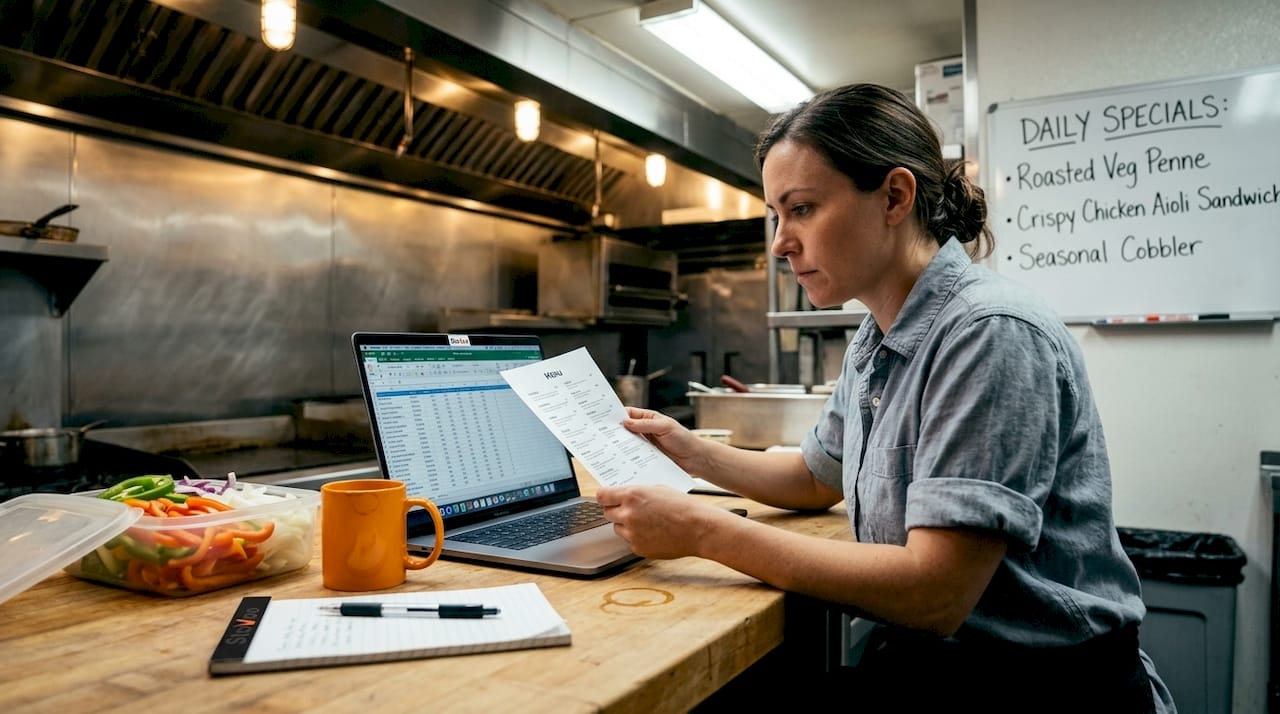
The most reliable method is working backwards from your costs. A common pricing framework targets food cost at around 28 to 35% of the meal price, then layers on packaging, labor, delivery, overhead, and marketing to reach a full unit cost. Here's what that looks like in practice:
| Cost component | Percentage of meal price |
|---|---|
| Food cost | 28–35% |
| Packaging | 5–8% |
| Labor | 15–20% |
| Delivery | 10–15% |
| Overhead and marketing | 10–12% |
| Target gross margin | 15–25% |
Once you know your unit cost, tiered pricing becomes your most powerful tool for growing revenue without alienating budget-conscious customers. Consider a three-tier structure:
- Basic plan: 5 meals per week, standard menu rotation, no customization
- Standard plan: 10 meals per week, dietary preference selection, flexible delivery days
- Premium plan: 14 meals per week, fully personalized menu, priority delivery and customer support
Each tier serves a different customer segment while protecting your margin across the board. The premium tier earns more revenue per customer and boosts overall customer lifetime value (LTV). The basic tier gives price-sensitive customers a low-risk entry point that you can upsell over time.
Running weekly meal plans with tiered structures also gives you natural upselling moments. When a basic-tier customer reaches out about variety, that's your cue to introduce the standard plan.
Pro Tip: Run a simple A/B test on your pricing page. Show one group a basic/standard/premium layout and another group a standard/premium-only layout. Many food businesses find that removing the lowest option increases average order value because customers anchor on the middle tier.
Introductory offers work well at the top of your funnel but must be time-limited and cost-aware. A "first week at 20% off" offer drives signups, but make sure your margins can absorb the discount without putting you underwater before the customer even reaches their second order.
Retention and churn: Your monetization make-or-break
Here's the uncomfortable reality that pricing guides rarely address: you can have perfect pricing and still fail if customers leave after two or three weeks. Churn, the rate at which subscribers cancel or don't renew, is the single biggest threat to meal plan profitability.
Food subscriptions can churn heavily, and early delivery quality, convenience, and flexible pause and skip controls are especially important for keeping customers engaged. The average monthly churn for meal kit subscriptions sits at around 10.8%, which translates to roughly 73.6% of customers leaving within a year if nothing is done to retain them.
Let that number sink in. If you start January with 100 subscribers and do nothing specific to retain them, you could end the year with fewer than 27 still active. That means you're constantly running just to stay in place.
"Retention isn't a customer service issue. It's a monetization issue. Every customer you keep is revenue you don't have to replace."
Compare the economics of two approaches:
| Scenario | Monthly subscribers | Monthly churn | New customers needed to maintain | Annual revenue (at $250/month) |
|---|---|---|---|---|
| No retention strategy | 100 | 10.8% | ~11 per month | $300,000 |
| Active retention (5% churn) | 100 | 5% | ~5 per month | $300,000+ growth |
With active retention, you spend less on acquisition and more on serving loyal customers who are already profitable. Here's how to build that retention engine:
- Nail the first delivery. The first box sets the expectation for everything that follows. Temperature, presentation, portion size, and accuracy all matter more in week one than at any other point.
- Send a day-three check-in. A simple message asking how the first meals went shows you care and catches problems before they turn into cancellations.
- Offer flexible pause and skip options. Customers who can pause without canceling stay in your ecosystem. Customers forced to cancel often never return.
- Create a loyalty milestone. Reward subscribers who reach 90 days with a bonus meal, a discount on the next month, or access to a new menu item. The first 90 days are where most churn occurs.
- Personalize as you learn. Use order history to suggest menu upgrades or add-ons that match each customer's preferences.
Pro Tip: Build meal plan flexibility into your subscription from day one. Customers who feel locked in are customers looking for the exit.
Understanding meal subscription management in depth helps you implement these retention tactics systematically rather than reactively. The businesses that thrive treat retention as a scheduled, recurring operational task, not something they think about only when a customer threatens to cancel.
Metrics and operations: Tracking what matters for meal plan monetization
You cannot improve what you don't measure. For meal plan businesses, a handful of key performance indicators (KPIs) separate the operations that scale from those that stall.
KPI discipline for meal kit monetization means tracking gross margin per order or serving, churn, LTV, customer acquisition cost (CAC), and weekly recurring revenue to control profitability and cash flow. Here's what each metric tells you and why it matters:
- Gross margin per serving: Tells you if your pricing covers all costs at the unit level. If this is negative or too thin, no volume of customers will save you.
- Monthly churn rate: Shows the health of your retention strategy. Target below 5% to grow consistently.
- Customer lifetime value (LTV): The total revenue you expect from one customer over their subscription period. Higher tiers and longer retention both increase LTV.
- Customer acquisition cost (CAC): How much you spend in marketing and promotions to win one new subscriber. Your LTV must always exceed your CAC for the business to be viable.
- Weekly recurring revenue (WRR): A real-time view of business momentum. Track this week over week to catch problems early.
The ratio that deserves the most attention is LTV to CAC. A healthy food subscription business typically targets an LTV:CAC ratio of 3:1 or better. If you're spending $60 to acquire a customer but they only generate $90 before churning, your margin is too thin to support growth.
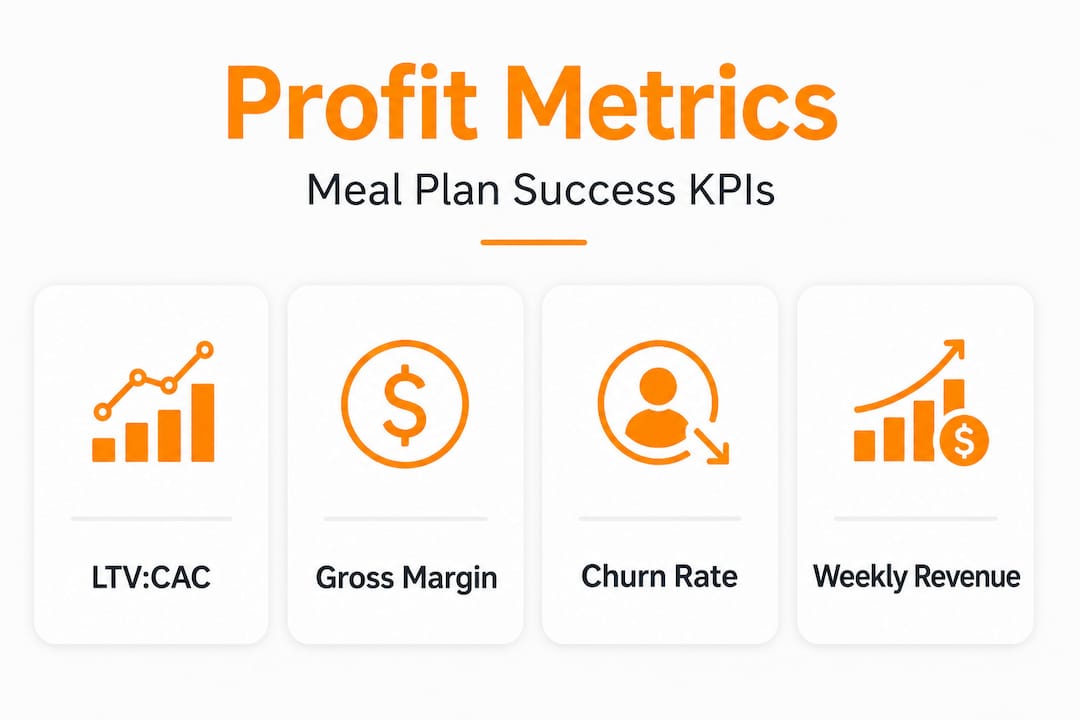
Pro Tip: Build a simple weekly dashboard in a spreadsheet tracking all five KPIs. Review it every Monday morning before you plan the week's operations. Patterns become visible in days, not months.
Reviewing catering business tips alongside your meal plan metrics can also reveal seasonal revenue opportunities that stabilize your cash flow during slower subscription periods.
Advanced monetization tactics: Tackling subscription fatigue and maximizing customer satisfaction
Even loyal customers hit a wall eventually. Subscription fatigue happens when the novelty wears off and the plan feels like a chore rather than a benefit. It's one of the most underestimated threats to long-term meal plan monetization.
Subscription fatigue can occur when customers pay for convenience but still need extra food, dislike portion sizes or variety, or forget to pause shipments. The antidote is to monetize through easy pause and skip controls, genuine variety, and clear satisfaction outcomes rather than leaning entirely on the convenience pitch.
Here's a practical toolkit for fighting subscription fatigue:
- Rotate your menu every 4 to 6 weeks. Returning to the same five meals month after month is the fastest way to lose customers.
- Add seasonal or limited-time options. These create anticipation and give customers a reason to stay just to try the new item.
- Let customers customize within tiers. A simple preference survey at signup, with quarterly updates, keeps meals feeling personal.
- Offer add-on products. Snack packs, sauces, or single-serving extras increase average order value without requiring new subscribers.
- Create a referral reward. Turn your most satisfied customers into your most cost-effective marketing channel.
"Variety isn't just a menu decision. It's a retention decision that directly affects how long a customer keeps paying."
Pro Tip: Survey churned customers with a single question: "What one change would have kept you subscribed?" Collect 20 to 30 responses and look for patterns. The answers often reveal operational or menu issues that are quick and inexpensive to fix.
Meal plan satisfaction is ultimately what drives long-term monetization. Customers who are genuinely happy share with friends, upgrade to premium tiers, and stay subscribed through price increases. Connecting your streamlined meal plan operations to real customer outcomes is what separates a temporary side hustle from a genuine business.
Why most meal plan monetization advice misses the mark
Most guides on meal plan monetization stop at pricing. They'll give you a formula for calculating your food cost percentage, maybe suggest a three-tier plan structure, and call it done. But pricing is just the entry ticket. The real game is played in retention and operations, and those topics rarely get the attention they deserve.
The uncomfortable truth is that high churn is the default state for food subscriptions. Without an intentional first-90-day retention program, flexible subscription controls, and consistent metric tracking, even a brilliantly priced meal plan will generate the same revenue cycle month after month: win new customers, lose old ones, work harder just to break even.
What actually differentiates successful meal plan businesses isn't a clever promotional price or a beautifully designed menu. It's operational discipline. It's knowing your gross margin per serving to the cent. It's checking your meal plan retention tips and treating churn as a business-critical metric rather than a natural byproduct of the industry.
Flexibility is the other underrated driver. Businesses that allow subscribers to pause, skip, and customize see measurably lower churn. That's not a coincidence. It reflects a deeper truth: customers don't leave because they dislike your food. They leave because the subscription stopped fitting their life. Give them the tools to adapt it and they stay.
True monetization is a system, not a price tag. It's built from pricing that covers every cost, retention programs that reduce acquisition pressure, and metrics that guide every decision. The food businesses that grow steadily are the ones running that full system, not just the ones cooking the best meals.
Take your meal plan monetization to the next level with Stovoo
Building a sustainable meal plan business means combining great food with smart operations. The strategies in this guide give you the foundation but implementation requires the right tools.
Stovoo is built specifically for food creators and meal plan businesses like yours. The platform makes it easy to explore meal plan solutions that fit your business model, manage subscriptions without spreadsheets, and own your customer relationships directly. Whether you're just getting started or looking to scale what's already working, you can start selling meal plans with an automated, professional shopfront in minutes. The recurring food business tools built into Stovoo give you billing automation, customer management, and a mobile-first storefront so you can focus on the food and let the platform handle the admin.
Frequently asked questions
How do I calculate meal plan pricing for maximum profit?
Start with unit economics and aim for food cost at 28 to 35% of the meal price, then add packaging, labor, delivery, overhead, and marketing before testing tiered price points with your customers.
What is a typical churn rate for meal plan subscriptions?
Meal kit subscriptions see average monthly churn of about 10.8%, which translates to roughly 73.6% of customers leaving within a year unless active retention strategies are in place.
Which metrics are most important for tracking meal plan profitability?
Monitor gross margin, churn, LTV, CAC, and weekly recurring revenue to control profit margins and maintain healthy cash flow as you grow.
How can I reduce subscription fatigue in my meal plan business?
Offer flexible pause and skip controls, diversify your menu rotation regularly, and focus your messaging on clear satisfaction outcomes rather than just convenience.
What is the best way to scale my meal plan business?
Confirm your contribution margin is positive and churn validates your unit economics before increasing marketing spend, then use your KPI dashboard to guide every scaling decision with real data.