
TL;DR:
- Effective meal plan management organizes, schedules, and delivers offerings to maximize operational efficiency and customer satisfaction.
- Using frameworks like static, dynamic, or hybrid plans helps balance consistency, flexibility, and workload, supporting growth and retention.
Running a food business without a structured meal plan management system is like trying to cook without a recipe. You know roughly what the end result should look like, but every step is a scramble. Ingredients run out mid-week, customer orders conflict with your prep schedule, and last-minute menu changes eat into your margins. Organizing meals in advance is widely recognized as a core strategy for streamlining food operations, reducing waste, and stabilizing revenue. This guide breaks down what meal plan management actually means, which frameworks deliver real results, and how to build a system that grows with your business.
Table of Contents
- Defining meal plan management
- Core frameworks and systems
- Flexibility versus consistency: The big debate
- Personalization, automation, and the future of meal plan management
- The real advantage: What most meal plan managers miss
- Streamline your meal plan management with Stovoo
- Frequently asked questions
Key Takeaways
| Point | Details |
|---|---|
| Operational efficiency | Structured meal plan management reduces chaos, ingredient waste, and last-minute changes. |
| Balancing structure and flexibility | A blend of menu consistency and adaptability is key for customer retention and satisfaction. |
| The tech advantage | Modern tools like AI-powered planning accelerate onboarding and allow for deep personalization at scale. |
| Education matters | Teaching clients how to adapt their plans builds long-term loyalty and enthusiasm. |
Defining meal plan management
Now that you see why structure is needed, let's get clear on what meal plan management actually means in a real-world kitchen.
Meal plan management is the process of organizing, scheduling, and delivering meal offerings in a systematic way that supports both operational efficiency and customer satisfaction. For food entrepreneurs, it goes beyond deciding what to cook next week. It involves creating repeatable systems that control costs, reduce decision fatigue, and deliver a consistent experience to customers week after week.
Organizing meals in advance streamlines food operations by reducing last-minute decisions and ensuring ingredients are available when they are needed. That translates directly into lower waste and more stable pricing for your customers. When you plan in advance, you buy smarter, cook smarter, and serve with more confidence.
Core components of a solid meal plan management system include:
- Menu scheduling: Mapping out meals across a defined cycle, usually one to four weeks, using repeatable rotations or seasonal variations
- Ingredient planning: Aligning your shopping and prep lists to your menu schedule to minimize over-purchasing and spoilage
- Customer communication: Proactively sharing menus, delivery schedules, and any changes with subscribers or clients
- Feedback loops: Collecting customer preferences and ratings to refine your offerings over time
- Revenue tracking: Monitoring subscription revenue, order volume, and cancellation rates in one place
For entrepreneurs building weekly meal plans, having all of these elements working together is what separates a sustainable business from a side hustle that burns you out by month three.
Core frameworks and systems
With a clear definition, the next step is understanding the concrete frameworks food entrepreneurs rely on to implement meal plan management at scale.
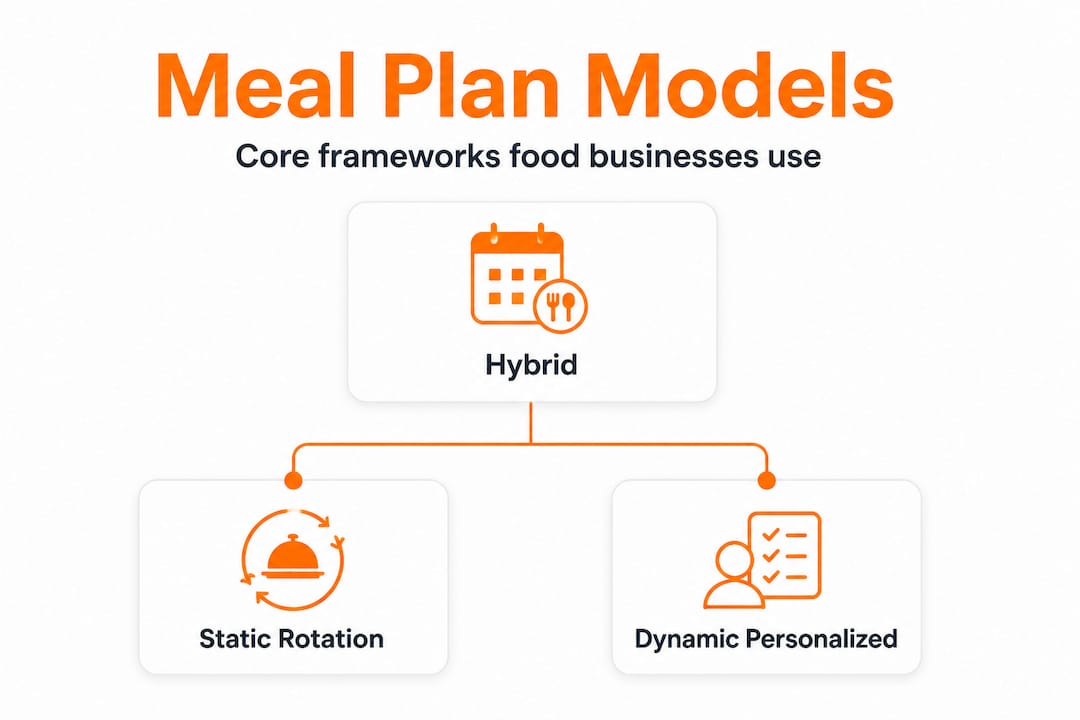
There are three primary models that food businesses use, each with distinct trade-offs for operators and customers alike.
Static rotation plans are the most operationally efficient. You build a fixed menu cycle, say four weeks of meals, and rotate through it consistently. Customers know what to expect, your purchasing is predictable, and prep becomes faster as your team masters the same recipes repeatedly. The downside is that returning customers can experience menu fatigue over time if the rotation is too short or lacks seasonal variety.
Dynamic personalized plans flip the model entirely. Each customer receives a tailored menu based on their dietary needs, macro goals, or taste preferences. This approach wins loyalty and supports premium pricing, but it demands significantly more operational effort, technology support, and client onboarding time. It works best for nutrition-focused meal delivery businesses and personal chef services.
Hybrid approaches blend structured rotations with flexible customization windows, often called "flex nights" or choice add-ons. This is the sweet spot for most food entrepreneurs because it balances kitchen efficiency with client satisfaction. Repeatable rotations combined with flex nights reduce decision fatigue for both the chef and the customer, while still accommodating real-life schedule variability.
| Framework | Rigidity | Customization | Operational effort | Tech support needed |
|---|---|---|---|---|
| Static rotation | High | Low | Low | Minimal |
| Dynamic personalized | Low | High | High | Essential |
| Hybrid approach | Medium | Medium | Medium | Recommended |
How to build your own meal plan management framework
- Define your menu cycle length. Start with a two or four week rotation. Shorter cycles are easier to manage but increase the risk of customer fatigue.
- Map your signature dishes. Identify eight to sixteen core meals you can prepare consistently at scale, then build your rotation around them.
- Set your flex options. Decide which one or two meals per week customers can swap out based on their preferences or dietary needs.
- Build your ingredient master list. Group ingredients across your full rotation to identify bulk purchasing opportunities and reduce waste.
- Choose your management tool. Whether it is a spreadsheet, a dedicated app, or a full meal subscription management platform, your system needs to track orders, preferences, and delivery schedules in one place.
- Establish a feedback rhythm. Schedule a monthly review of customer ratings and cancellations to refine your menu rotation.
Pro Tip: Applying a hybrid of structured rotation with customizable flex nights consistently yields the best balance of kitchen efficiency and client satisfaction. Start rigid to build operational confidence, then introduce flexibility as your customer base grows.
Flexibility versus consistency: The big debate
Understanding frameworks is only part of the equation. The debate between consistency and adaptability shapes how you serve and retain your customers.
Rigid meal plans are operationally appealing. When every customer receives the same menu, your prep time drops, ingredient waste shrinks, and training new kitchen staff becomes straightforward. Many food businesses launch with this model because it is simply easier to execute at the start.
But rigid meal planning can become monotonous and hard to adapt, especially for customers with evolving dietary needs or variable schedules. Without flexibility and ongoing client education, even the most well-designed static plan can see churn spike after the first few months.
On the other side, fully flexible and educational models build genuine customer loyalty. When clients feel that their plan adapts to their lifestyle rather than forcing their lifestyle to adapt to the plan, they stay longer and refer more. The cost is operational complexity and higher time investment per customer.
"The goal isn't to build a meal plan. The goal is to build a relationship with a customer that keeps them coming back. Flexibility is the bridge between a good meal and a loyal subscriber."
Here is a quick breakdown of the trade-offs:
Rigid plans: Pros
- Lower operational cost per customer
- Easier to train staff and scale kitchen operations
- Predictable ingredient purchasing and less waste
- Faster weekly prep cycles
Rigid plans: Cons
- Higher risk of menu fatigue and customer churn
- Difficult to accommodate dietary restrictions at scale
- Limited ability to respond to seasonal preferences
Flexible plans: Pros
- Stronger customer retention and referral rates
- Supports premium pricing tiers
- Builds deeper client relationships and trust
Flexible plans: Cons
- More complex logistics and order management
- Higher time investment per client
- Requires better technology and communication systems
| Approach | Avg. retention potential | Operational complexity | Revenue ceiling |
|---|---|---|---|
| Rigid plans | Moderate | Low | Limited |
| Flexible plans | High | High | High |
| Hybrid approach | High | Moderate | High |
For food entrepreneurs focused on scaling home cooking businesses, the hybrid model is consistently the most sustainable path. It lets you preserve your sanity while giving customers enough choice to feel valued.
Personalization, automation, and the future of meal plan management
After weighing the customization debate, it is crucial to see how technology is rewriting the rules for efficiency and customer relationships in meal plan management.
The biggest shift happening right now is the rise of AI-assisted meal planning tools. AI-powered plan generation now allows nutrition coaches and food businesses to build personalized meal plans in minutes, accounting for macros, allergies, and recipe variations at a level of detail that used to take hours of manual work. For food entrepreneurs managing dozens or hundreds of subscribers, this is a genuine game changer.
Automation is not just about speed. It changes how you onboard clients, how you communicate changes, and how you collect the preference data that makes personalization possible. A well-automated system can send a weekly menu preview, collect meal swaps, confirm orders, and trigger your ingredient purchasing workflow, all without you touching a keyboard.
How to onboard clients for personalized meal planning
- Send a preference questionnaire. Before a client's first week, collect information on dietary restrictions, allergies, favorite ingredients, portion preferences, and delivery schedule. Keep it under ten questions to avoid drop-off.
- Set clear plan parameters. Define how many meals per week are included, what flex options are available, and how much notice is needed for changes.
- Deliver a welcome menu preview. Send their first week's plan at least five days in advance so they can review and request any swaps before you begin purchasing ingredients.
- Schedule a two-week check-in. A short follow-up message after the first two weeks dramatically improves early retention by catching dissatisfaction before it becomes a cancellation.
- Build a preference profile over time. Log every swap request, positive comment, and dietary update. This data powers smarter personalization as the client relationship grows.
- Automate recurring billing and reminders. Clients who feel informed and in control of their subscription are far less likely to cancel. Automated renewal reminders and easy pause options reduce churn significantly.
For food entrepreneurs exploring meal plan business models, pairing a clear business model with a strong onboarding process is one of the fastest ways to build a loyal subscriber base from day one.
Pro Tip: Always blend automation with a human touch. Automated messages are efficient, but a personal check-in at key moments, like after the first delivery or after a menu swap, builds the kind of trust that turns a subscriber into a long-term customer.
The real advantage: What most meal plan managers miss
As you move from theory to practice, it is worth considering what separates top-performing meal plan businesses from everyone else.
Here is an uncomfortable observation: most food entrepreneurs who struggle with meal plan management are not failing because their menus are bad or their systems are weak. They are failing because they treat meal planning as a logistics problem when it is actually a relationship problem.
The operators who invest heavily in scheduling software, menu rotation tools, and automated billing, but neglect to educate and empower their clients, tend to plateau. Their churn rate stays stubbornly high because customers feel like passive recipients of a service rather than active participants in a system designed for them. That is a critical distinction.
The food entrepreneurs who grow fastest, and who retain customers the longest, are the ones who treat every meal plan interaction as an opportunity to build literacy. They explain why they chose certain ingredients that week. They share quick prep tips with deliveries. They encourage clients to communicate preferences rather than just cancel when something does not suit them. Education transforms a transactional subscription into a genuine partnership.
This matters especially for those managing catering operation strategies alongside meal plans, where client relationships often span months or years. The businesses that last are not just good at cooking. They are good at communicating.
Long-term retention does not come from having the most sophisticated menu rotation system. It comes from making customers feel capable, informed, and genuinely cared for. Build that into your process from day one, and the operational side becomes much easier to manage.
Streamline your meal plan management with Stovoo
If you are ready to apply what you have learned and simplify your own operations, see how Stovoo can help.
Managing meal plans across WhatsApp threads, scattered spreadsheets, and disconnected payment systems is exhausting. Stovoo was built specifically to solve that problem for food creators, meal preppers, and catering chefs who want to run a professional operation without drowning in admin.
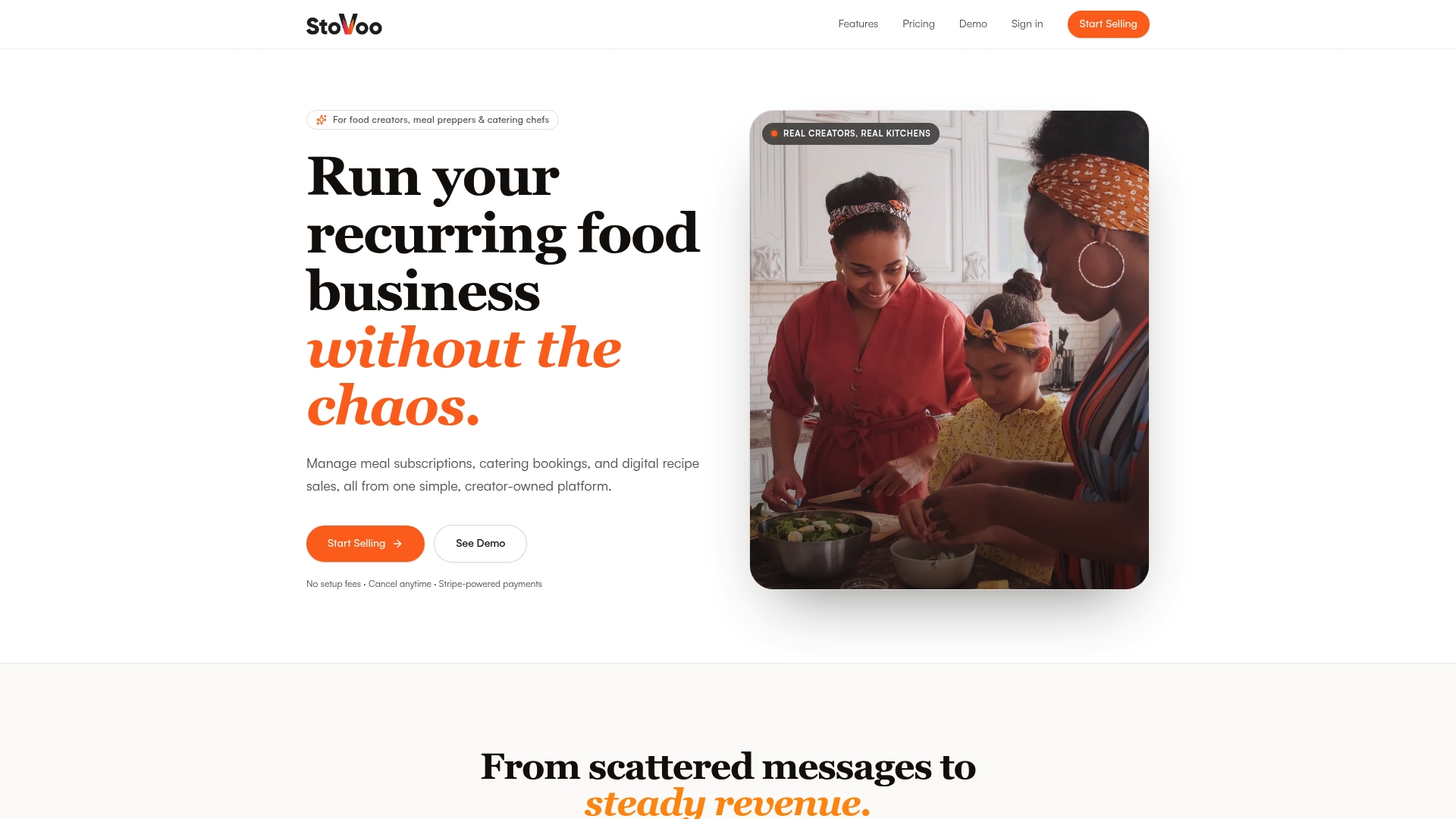
With the Stovoo platform, you get a centralized dashboard to manage subscription plans, customer preferences, automated billing, and your mobile-first shopfront, all in one place. You can set up your business link in minutes and start accepting recurring orders immediately. Explore a live example by browsing Amara's meal plan storefront to see what a professional Stovoo setup looks like in practice. Ready to build your own? Create your Stovoo account and start turning your meal planning expertise into steady, recurring revenue.
Frequently asked questions
What are the main benefits of meal plan management for food businesses?
Meal plan management cuts waste and improves consistency by reducing last-minute decisions and stabilizing ingredient purchasing, which also helps attract and retain more customers over time.
Are meal plans always rigid, or can they be personalized?
Meal plans can be fully personalized using AI tools and flexible frameworks, with personalization mechanics that account for macros, allergies, and individual client preferences at scale.
What is the biggest challenge with meal plan management?
The main challenge is balancing menu consistency with enough flexibility to satisfy diverse customer needs, since rigid meal planning can become monotonous and lead to higher churn without ongoing client education and adaptability.
How can technology transform meal plan management?
AI tools allow food entrepreneurs to generate personalized plans in minutes, accounting for dietary needs and preferences at a level of detail that would otherwise take hours of manual work per client.