

TL;DR:
- Effective catering meal plans focus on structured packages with curated core items to simplify client choices. Recurring meal prep formats generate steady revenue, while standardizing recipes and seasonal updates boost profitability and client satisfaction. Clear menu transparency with pricing, labels, and minimums accelerates bookings and reduces errors.
Effective meal plan ideas for caterers are built around structured packages featuring curated proteins, versatile sides, and clear dietary labeling. The industry standard calls for 8–15 core items organized into 3–5 package tiers, which balances client variety with kitchen manageability. That structure reduces decision fatigue for clients while keeping your production workflow predictable. The term caterers use for this approach is "tiered menu planning," and it applies whether you serve corporate lunches, weddings, or weekly meal prep clients. Getting this foundation right is what separates a profitable catering operation from one that constantly scrambles.
1. What are the best core menu components for catering meal plans?
Strong catering menus start with protein selection. Offer 4–6 proteins covering poultry, beef or pork, seafood, and at least one plant-based option. This range covers the majority of dietary preferences without overloading your prep team.
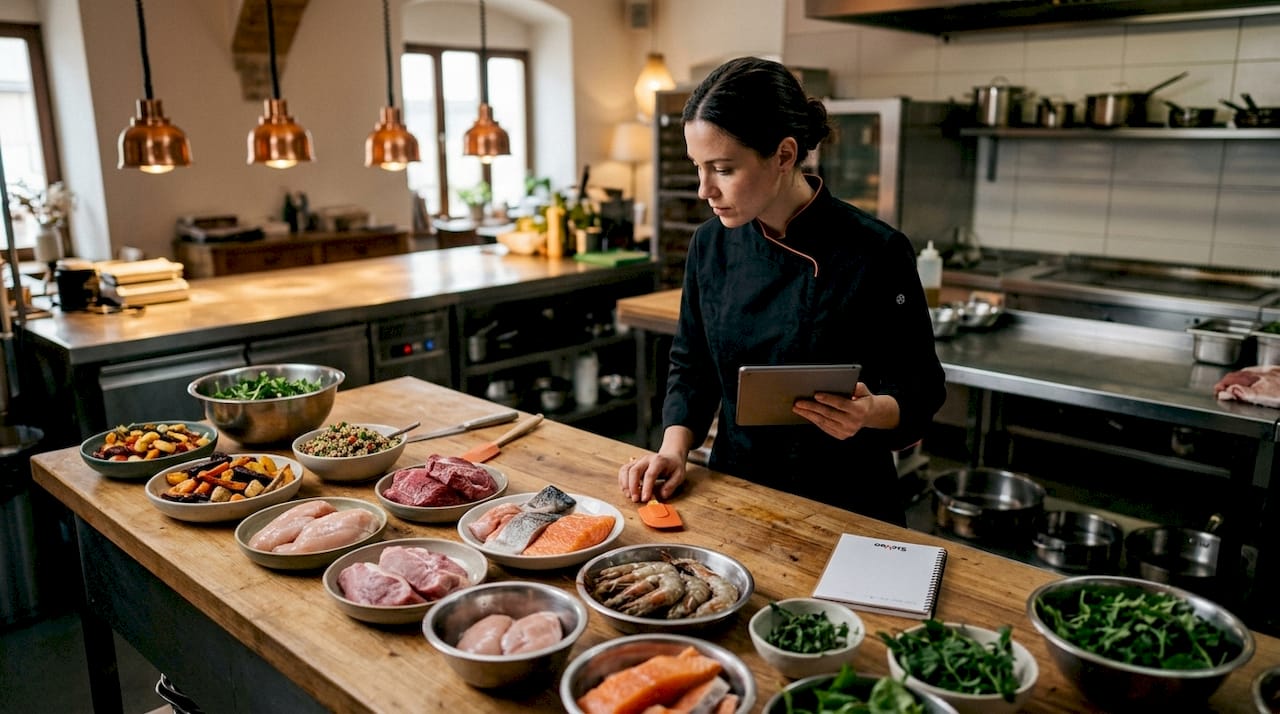
Pair those proteins with 6–8 versatile sides. Think roasted vegetables, grain salads, mashed potatoes, and rice pilaf. These sides should work across multiple proteins so you can mix and match without creating separate prep lines.
Include 2–4 salads, with at least one hearty vegetarian entree salad. A roasted beet and farro salad, for example, works as a side for meat eaters and a main for vegetarians. That dual function saves menu space and reduces waste.
Round out the menu with 3–5 dessert options. Desserts drive perceived value and guest satisfaction, so do not treat them as an afterthought. Brownies, seasonal fruit tarts, and mini cheesecakes travel well and hold quality during service.
Label everything clearly. Use standardized codes like GF (gluten-free), V (vegetarian), and VE (vegan) on every menu item. Clear allergen labeling builds client trust and reduces liability.
Pro Tip: Build your sides list first, then select proteins that pair with at least three of them. This approach cuts your prep complexity without shrinking your menu.
2. Which catering meal plan formats drive the most client engagement?
Packages outperform individual item selections every time. When clients choose from a curated tier rather than building from scratch, they decide faster and order more confidently. Package tiers reduce decision fatigue and improve your conversion rate on inquiries.
Build-your-own stations are the highest-engagement format for in-person events. Taco bars run $10–$13 per person and pasta stations run $12–$16 per person, both delivering strong perceived value relative to their cost. Guests interact with the food, which makes the experience memorable and the client more likely to rebook.
Boxed lunches serve corporate and meeting catering well. They are portion-controlled, easy to distribute, and require no service staff. A well-designed box with a protein, two sides, a salad, and a dessert covers all the bases in a single SKU.
Recurring meal prep plans are the most profitable format for long-term growth. Recurring models generate $15,000 to $80,000 in monthly revenue for catering businesses with 50–100 clients at $14–$16 per serving. That predictable cash flow changes how you plan purchasing, staffing, and growth.
Skip breakfast offerings. Breakfast delivery sees lower client retention and more logistical complexity than lunch or dinner. Focus your energy on the formats that clients actually reorder.
Pro Tip: Launch your recurring meal prep plan with a fixed menu and no substitutions. Clients adapt quickly, and your kitchen runs cleaner.
3. How to operationalize catering meal plans for profitability
Standardized recipes are the single most important operational tool you have. Production errors in catering carry higher costs than in restaurants because you cannot fix a mistake once the food leaves your kitchen. Write every recipe to the gram, train your team to follow it exactly, and audit compliance regularly.
Schedule your production workflow backward from the event delivery time. This practice keeps you aligned with FDA Food Code TCS (Time/Temperature Control for Safety) guidelines for hot and cold food transport. Scheduling backward from event time reduces food safety errors and prevents last-minute rushes that compromise quality.
Limit client customization. Restricting substitutions protects your unit economics and keeps production scheduling stable. Offer two or three fixed packages instead of an open-ended build-your-own model for recurring clients.
Outsource high-volume, standardized components to co-packers when volume grows. Co-packing saves 10–20 labor hours weekly and increases booking capacity by 20%. That freed labor goes toward high-value tasks like final plating, client communication, and quality control.
Schedule recurring meal prep production during your kitchen's lowest-usage periods. You maximize equipment use without adding capital costs, and your team works at a steadier pace rather than in bursts around event days.
4. What themed and seasonal catering menus help you stand out?
Themed menus give clients a reason to choose you over a generic caterer. The most popular formats in 2026 include taco bars, Mediterranean mezze spreads, BBQ buffets, and pasta stations. Each theme creates a cohesive experience that photographs well and generates word-of-mouth referrals.
Seasonal menus do two things at once. They reflect fresh ingredient availability, which lowers your food cost, and they signal to clients that your offerings are current. Update your menu at least twice yearly to capture seasonal produce and maintain client interest.
Match your menu temperature to the event season. Cold proteins, grain bowls, and chilled salads work well for warm-weather outdoor events. Braised meats, soups, and roasted root vegetables suit cold-weather gatherings and hold better during transport.
Dietary-focused themes open new client segments. A plant-based menu, a gluten-free spread, or a high-protein athlete meal plan each targets a specific audience that generic caterers often ignore. These themes also work well for corporate wellness programs and fitness-focused clients.
Presentation style matters as much as the food itself. Clients increasingly request family-style service, food stations, and passed appetizers over traditional buffets. Offering these formats as named options in your packages positions you as a full-service operation.
| Theme | Best for | Key items |
|---|---|---|
| Taco bar | Casual events, corporate lunches | Seasoned beef, chicken, black beans, toppings bar |
| Mediterranean mezze | Weddings, upscale corporate | Hummus, falafel, tabbouleh, grilled flatbread |
| BBQ buffet | Outdoor events, team gatherings | Pulled pork, smoked brisket, coleslaw, cornbread |
| Plant-based spread | Wellness events, mixed dietary groups | Lentil stew, roasted cauliflower, grain salads |
| High-protein athlete | Fitness events, sports teams | Grilled chicken, salmon, quinoa, steamed greens |
5. How to price and present catering meal plans to win bookings
Per-person pricing is the clearest format for clients and the easiest for you to manage. State the price, the minimum guest count, and the required lead time on every menu. Transparent per-person pricing reduces back-and-forth emails and improves your booking conversion rate.
Include pricing notes for add-ons and substitutions upfront. If a protein upgrade costs $3 more per person, say so on the menu. Clients appreciate knowing the full cost before they commit, and you avoid awkward conversations after the quote.
Treat your menu as a marketing document. Professional formatting, high-quality food photos, and consistent branding make your menu work for you between client conversations. A well-designed menu signals that your operation is organized and your food is worth the price. You can see how caterers on Stovoo present their catering menus professionally to attract and convert clients.
Highlight sustainable packaging and dietary transparency. Clients at corporate events and weddings increasingly ask about compostable containers and allergen information. Addressing both in your menu copy removes a common objection before it comes up.
Plan for buffet overage and build a repurposing strategy for leftovers. Overage is a real cost, but it is also a quality signal to clients that you do not run short. Repurposing leftover proteins into staff meals or next-day prep reduces waste without affecting your margin.
Pro Tip: Add a "most popular" label to your mid-tier package. Clients gravitate toward the option that others have already validated, which increases your average order value.
Key takeaways
Successful catering meal plans combine structured package tiers, standardized recipes, and seasonal menu updates to maximize both client satisfaction and kitchen profitability.
| Point | Details |
|---|---|
| Use tiered packages | Offer 3–5 package tiers with 8–15 core items to reduce client decision fatigue. |
| Prioritize recurring formats | Recurring meal prep plans generate predictable monthly revenue and improve client retention. |
| Standardize every recipe | Written, audited recipes prevent costly production errors that cannot be fixed after delivery. |
| Update menus seasonally | Refresh your menu at least twice yearly to reflect fresh ingredients and maintain client interest. |
| Price with full transparency | Per-person pricing with stated minimums, lead times, and add-on costs converts more inquiries to bookings. |
Why most caterers overcomplicate their menus
The caterers I have watched struggle most are not the ones with bad food. They are the ones with menus that try to be everything to everyone. A 40-item menu sounds impressive until you realize it means 40 different prep workflows, 40 potential points of failure, and a kitchen team that never fully masters anything.
The caterers who build real revenue do the opposite. They pick 10 to 12 items they execute perfectly, build two or three packages around those items, and say no to everything outside that scope. That discipline is hard to maintain when a client asks for something special, but it is the only way to protect your margins and your team's sanity.
Recurring meal prep plans changed how I think about catering revenue entirely. The predictability of knowing your revenue three weeks out lets you buy smarter, staff smarter, and grow without the feast-or-famine cycle that burns most caterers out. The key is keeping the menu fixed and resisting the urge to customize for every client. Clients who want flexibility are not your recurring meal prep clients. That is fine. Serve them through your event catering packages instead.
Menu transparency is the other thing I would push harder on. Clients who get a clear menu with prices, lead times, and dietary labels upfront are easier to work with, faster to book, and more likely to refer you. Hiding your pricing or making clients ask for it signals uncertainty. Put everything on the page and let the quality of your offer do the work.
— freeman
How Stovoo helps caterers build and scale meal plans
Caterers who want to move beyond WhatsApp orders and spreadsheet chaos have a real alternative in Stovoo. The platform gives catering professionals a mobile-first shopfront where clients can browse packages, place orders, and pay without a single back-and-forth message.
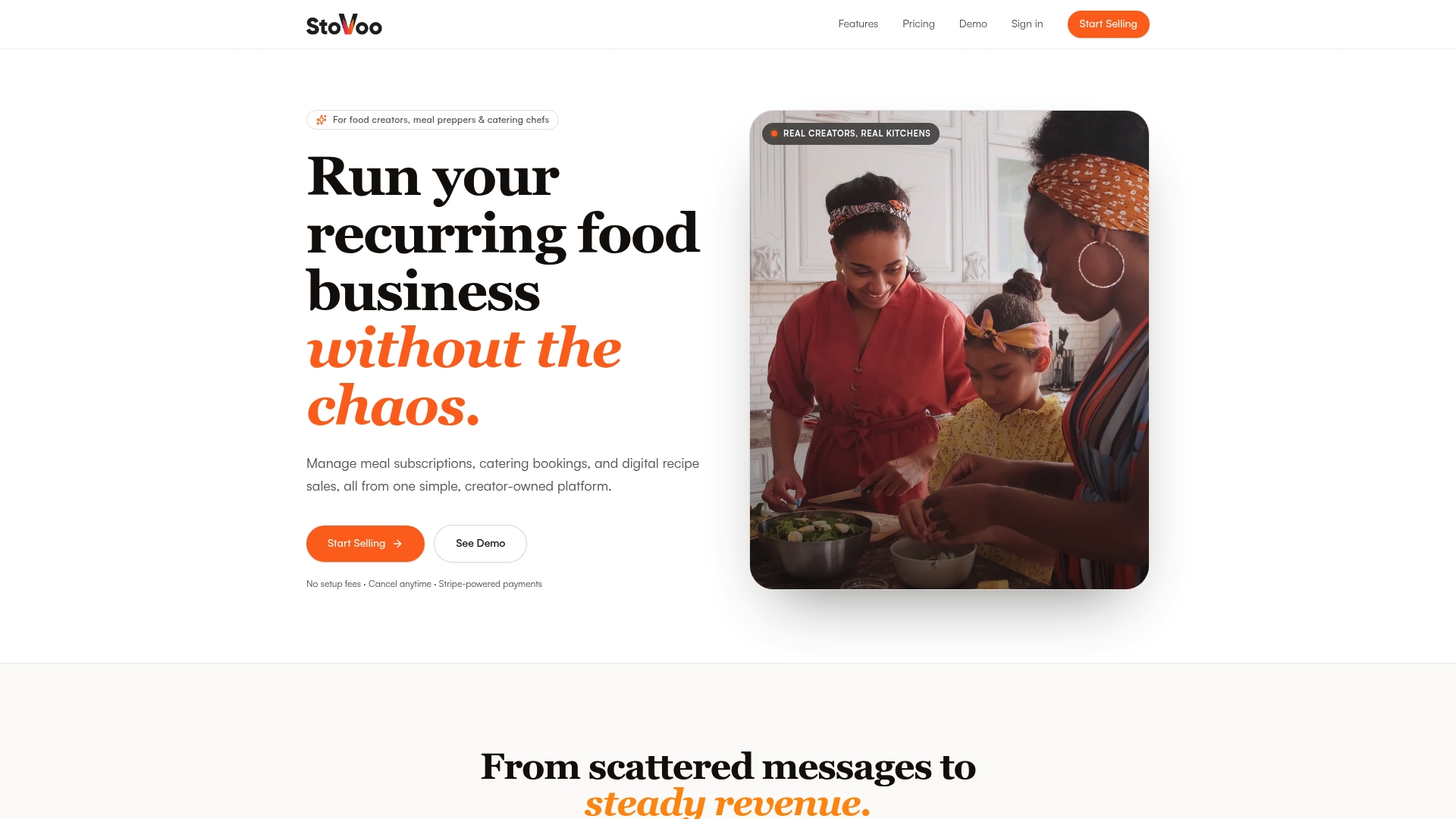
Stovoo handles recurring meal plan subscriptions, catering bookings, and digital recipe sales from one dashboard. You set your packages, your pricing, and your lead times once, and the platform manages the rest. Caterers like Express Kitchen in Lagos and Courtside Kitchen in Nairobi already use Stovoo to run their meal plan operations at scale. If you are ready to build a more organized, more profitable catering business, create your Stovoo account and set up your shopfront today.
FAQ
How many items should a catering meal plan include?
Effective catering menus feature 8–15 core items organized into 3–5 package tiers. That range balances variety for clients with manageable complexity for your kitchen.
What is the most profitable catering meal plan format?
Recurring weekly meal prep plans are the most profitable format, generating predictable monthly revenue for catering businesses with a stable client base. Pricing at $14–$16 per serving with fixed menus and no substitutions protects your margins.
Should caterers offer breakfast meal plans?
Breakfast delivery is generally not recommended for catering businesses. It sees lower client retention and higher logistical complexity compared to lunch and dinner formats.
How often should caterers update their menus?
Update your catering menu at least twice yearly to reflect seasonal ingredients and maintain client engagement. Seasonal updates also give you a natural reason to reach out to past clients with new offerings.
How does menu transparency affect catering bookings?
Transparent menus with per-person pricing, dietary labels, and stated minimums reduce back-and-forth communication and improve booking conversion rates. Clients book faster when they have all the information upfront.