
TL;DR:
- Profitable catering pricing begins with calculating all costs, including food, labor, overhead, and delivery.
- It embeds a net margin of 15-25% into the final price before quoting clients, ensuring sustainable profit.
Profitable catering pricing is defined as calculating your full cost stack, including food, labor, and overhead, then adding a protected net margin before you set a single client-facing number. Most caterers who struggle financially skip this step. They pick a per-head rate based on what competitors charge, then hope costs stay low enough to make money. That approach fails because bottom-up pricing is the only method that guarantees margin. This guide walks you through how to price catering services the right way, from cost calculation to final quote.
What costs to include when pricing catering services
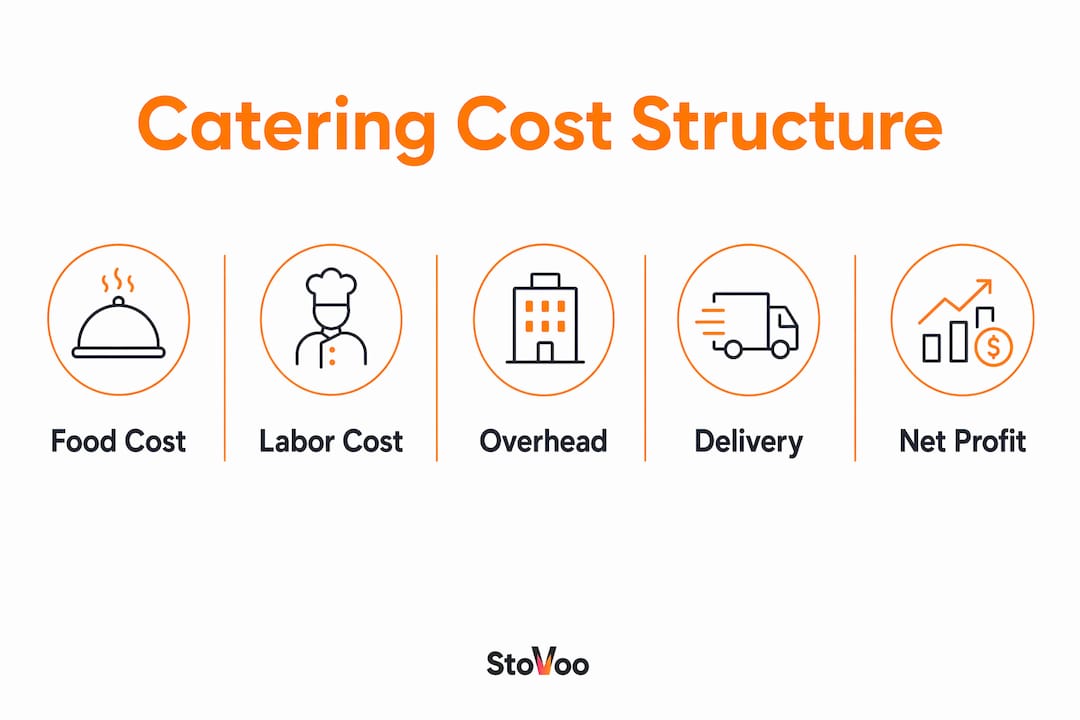
Every accurate catering price starts with four cost buckets: food, labor, overhead, and delivery. Miss any one of them and your margin disappears before the event ends.

Food cost
Food cost is your ingredient spend divided by your total revenue, expressed as a percentage. The 2026 industry standard targets food cost at 28–35% of the final price. CPA guidance for volatile markets actually recommends tightening that target to 24–28% to build a stronger profit cushion. Calculate food cost per dish by costing every ingredient at its purchase price, then factor in a 10–15% waste and trim allowance. A chicken dish that costs $4.20 in raw ingredients becomes roughly $4.80 after waste is accounted for.
Labor cost
Labor is the cost most caterers underestimate. The industry target is 20–30% of revenue for labor. The critical mistake is applying a flat hourly rate without building a real staffing plan. Staffing plans must reflect actual event complexity, including prep time, setup, service hours, and breakdown. A 50-person plated dinner needs a different crew than a 50-person buffet. Count every labor hour, multiply by your actual wage rates including payroll taxes, and that number goes directly into your price.
Overhead and fixed costs
Overhead covers every expense that is not food or direct labor. This includes van payments, commercial kitchen rent, insurance, software subscriptions, and coordination time. Amateur caterers often neglect these costs entirely, which is why their pricing looks competitive but their bank accounts disagree. The target range for overhead is 10–15% of revenue. Divide your total monthly fixed costs by the number of events you run per month. That per-event overhead figure gets added to every quote.
Pro Tip: Build a simple monthly overhead tracker. List every fixed expense, divide by your average monthly event count, and you have your overhead cost per event. Revisit this number every quarter as your business grows.
Delivery and rentals
Delivery costs include fuel, driver time, and vehicle wear. Rentals typically add $2–$6 per person for equipment and setup, depending on service style. These line items are easy to forget when quoting, but they add up fast on large events. Always itemize them separately in your cost sheet before rolling them into a final price.
How to build your pricing structure with markups and net margin
Once you have your full cost base, you apply markups and embed your target net margin. This is where your catering service rates become a real business tool rather than a guess.
The standard process works in four steps:
- Calculate your total cost per person. Add food cost, labor cost, overhead allocation, and delivery or rental costs per guest.
- Apply a service charge. Service charges run 18–22% of the food and beverage total. This covers coordination, administration, and on-site labor management.
- Add your markup. Final invoices typically carry a 25–80% markup above the base food-only price to cover all non-food costs. A $3,000 food cost for a 100-person buffet often finalizes at $3,750–$4,350 after full markups are applied.
- Embed your net margin. Target a net margin of 15–25% of the final price. Do not add margin as an afterthought. Build it into step one as a required cost line.
| Cost component | Target % of final price |
|---|---|
| Food cost | 24–35% |
| Labor cost | 20–30% |
| Overhead | 10–15% |
| Net margin | 15–25% |
The table above shows why pricing from the top down fails. If you set a per-head price first, you have no guarantee these percentages will align. Build from the bottom up and they always will.
Pro Tip: Create a catering pricing calculator in a spreadsheet. Input your cost per person for each bucket, set your margin target as a fixed percentage, and let the sheet calculate your minimum price per head automatically. Update ingredient costs monthly.
How to adjust pricing for event size and service style
Event size is not just a revenue multiplier. It is a pricing risk factor. Underpricing labor by just $2 per guest on a 300-person event creates a $600 loss before a single plate is served. Pricing errors scale directly with guest count, which means your cost calculations need to be accurate at the per-person level.
Small event surcharges
Fixed costs do not shrink when your guest count drops. A 20-person corporate lunch still requires a driver, a full setup crew, and the same insurance coverage as a 100-person event. For events under roughly 30 guests, add a surcharge of $10–$15 per person to offset the inefficiency. Communicate this clearly in your quote as a small-event service fee. Clients generally accept it when it is explained honestly.
Service style comparison
Different service formats carry different labor and equipment costs. Here is how they compare:
| Service style | Labor intensity | Rental needs | Pricing approach |
|---|---|---|---|
| Buffet | Moderate | Low to moderate | Lower per-head, higher volume |
| Plated dinner | High | High | Higher per-head, detailed staffing plan |
| Family style | Moderate | Moderate | Mid-range per-head |
| Food stations | High | High | Per-station pricing plus per-head base |
Plated dinners require more servers per guest than buffets. Food stations need dedicated staff per station plus setup and breakdown time. Factor these differences into your staffing plan before you quote, not after.
Staffing contingency clauses
Guest counts change. A client who confirms 80 guests may arrive with 95. If guest count increases by more than 5–10%, your contract should include a clause to bill for additional servers at $25–$45 per hour. This protects your margin without surprising the client. Include the clause in plain language in every contract you send. For more on controlling labor and indirect costs, the catering business tips from Stovoo cover this in practical detail.
Creating precise professional catering quotes that win clients
A detailed quote does two things at once. It protects you legally and it builds client confidence. Clear, detailed contractual quotes prevent costly misunderstandings around labor expectations and guest counts. Clients who receive vague quotes shop on price alone. Clients who receive thorough quotes buy on trust.
Every professional catering quote should include:
- Contact information for both parties and the event date
- Full menu with per-item or per-person pricing
- Service style and staffing plan summary
- Delivery fee, setup fee, and breakdown fee as separate line items
- Rental costs per person or as a flat fee
- Service charge percentage applied to food and beverage total
- Applicable taxes listed separately
- Gratuity policy, whether included or at client discretion
- Cancellation and deposit policy with specific deadlines
- Guest count change clause referencing your contingency billing rate
Build your quote as a numbered breakdown, not a single lump sum. When clients can see exactly what they are paying for, price objections drop significantly. Transparency is a sales tool, not just a legal protection.
The quote process itself follows a clear sequence:
- Confirm the event brief: guest count, service style, venue, and date.
- Build your cost sheet using your pricing calculator.
- Apply your service charge and markups.
- Add taxes, rentals, and delivery as separate line items.
- Embed your net margin and confirm the final per-head price.
- Generate the quote document and send it with a clear acceptance deadline.
For deeper guidance on managing the operational side of quoting and bookings, Stovoo's catering management insights cover the full workflow from inquiry to invoice.
Key takeaways
Profitable catering pricing requires building your price from the bottom up, starting with food, labor, and overhead costs, then embedding a 15–25% net margin before any client-facing number is set.
| Point | Details |
|---|---|
| Use bottom-up pricing | Calculate food, labor, overhead, and delivery costs before setting any per-head price. |
| Target four cost buckets | Food at 24–35%, labor at 20–30%, overhead at 10–15%, and net margin at 15–25%. |
| Apply markups correctly | Add an 18–22% service charge plus a 25–80% markup above base food cost to cover all non-food expenses. |
| Adjust for event size | Add a $10–$15 per-person surcharge for events under 30 guests to offset fixed cost inefficiency. |
| Protect margins contractually | Include guest count contingency clauses billing additional servers at $25–$45 per hour when counts rise above 5–10%. |
Why most caterers price themselves into trouble
The most common pricing mistake I see is not greed or laziness. It is optimism. A caterer looks at what a competitor charges per head, prices slightly below it to win the booking, and assumes their costs will work out. They rarely do.
The uncomfortable truth is that competitive pricing and profitable pricing are not the same thing. They only overlap when your cost structure is genuinely more efficient than your competitors. For most small and mid-size catering operations, that is not the case. You have similar food costs, similar labor rates, and similar overhead. Pricing below the market does not mean you are efficient. It means you are subsidizing your clients with your own margin.
What actually works is building a catering pricing calculator that forces you to confront your real numbers before you quote anything. When you see that a 50-person event costs you $2,800 to execute before margin, it becomes very hard to quote $2,900 and feel good about it. The math makes the decision for you. I also think caterers should revisit their overhead allocation every quarter. Food and labor costs get attention because they are visible. Overhead creeps up quietly. A new insurance policy, a software subscription, a second vehicle payment. Those costs belong in every quote, and they often are not.
The caterers who build lasting businesses are the ones who treat pricing as a financial discipline, not a sales tactic. They quote with confidence because they know exactly what every event costs them. That confidence comes through in client conversations, and it wins better clients.
— freeman
Stovoo makes catering pricing and bookings easier
Running a catering business means managing quotes, bookings, and client communication at the same time. Stovoo is built specifically for food entrepreneurs who want to handle all of that from one place, without spreadsheets scattered across three apps.

Stovoo gives caterers a professional shopfront where clients can submit inquiries, review pricing, and confirm bookings directly. Automated billing removes the back-and-forth of chasing payments, and the centralized dashboard keeps every order and client detail in one view. Caterers on Stovoo, like Culater Catering's in Lagos, use the platform to present their services clearly and convert inquiries into confirmed bookings faster. If you are ready to put your pricing to work with a professional setup behind it, Stovoo's catering platform is worth a look.
FAQ
What is the standard food cost percentage for catering?
The standard food cost target for catering is 28–35% of the final price. In volatile ingredient markets, tightening that target to 24–28% provides a stronger profit cushion.
How do I calculate a per-person catering price?
Add your food cost, labor cost, overhead allocation, and delivery or rental costs per guest, then apply your service charge and markup. Embed a 15–25% net margin before finalizing the number.
What is a catering service charge?
A service charge is an additional fee of 18–22% applied to the food and beverage total. It covers labor management, administration, and on-site coordination costs.
Should I charge more for small events?
Yes. Fixed costs like transportation and crew do not scale down with guest count. For events under roughly 30 guests, add a surcharge of $10–$15 per person to protect your margin.
How do I protect my margin if guest count changes?
Include a contingency clause in your contract that allows you to bill for additional servers at $25–$45 per hour if the confirmed guest count increases by more than 5–10%.