
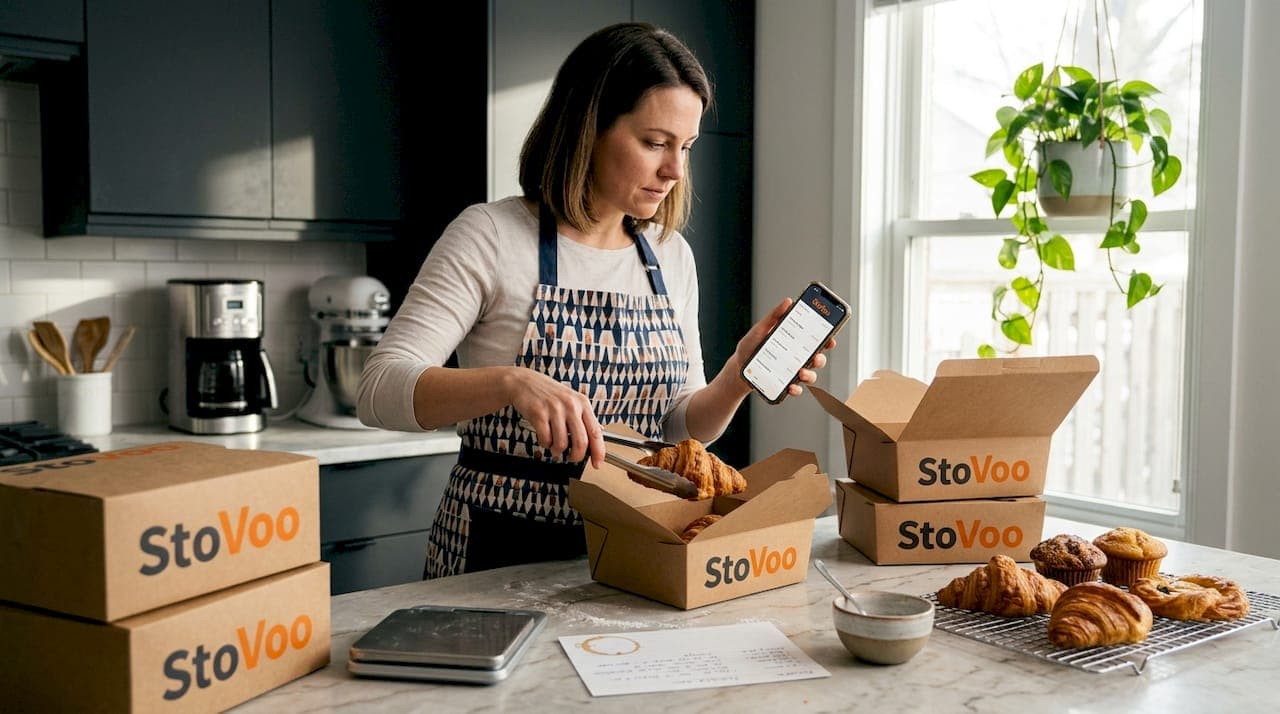
Running a home cooking business sounds like a dream until the reality sets in. Orders arrive through scattered WhatsApp messages, income swings wildly from week to week, and the admin work starts eating into your actual cooking time. Many talented home cooks hit a ceiling not because their food is lacking, but because their systems are. This guide walks you through everything you need to build a stable, profitable home cooking business, from assessing your readiness and choosing high-margin products to streamlining operations and driving recurring revenue that keeps growing month after month.
Table of Contents
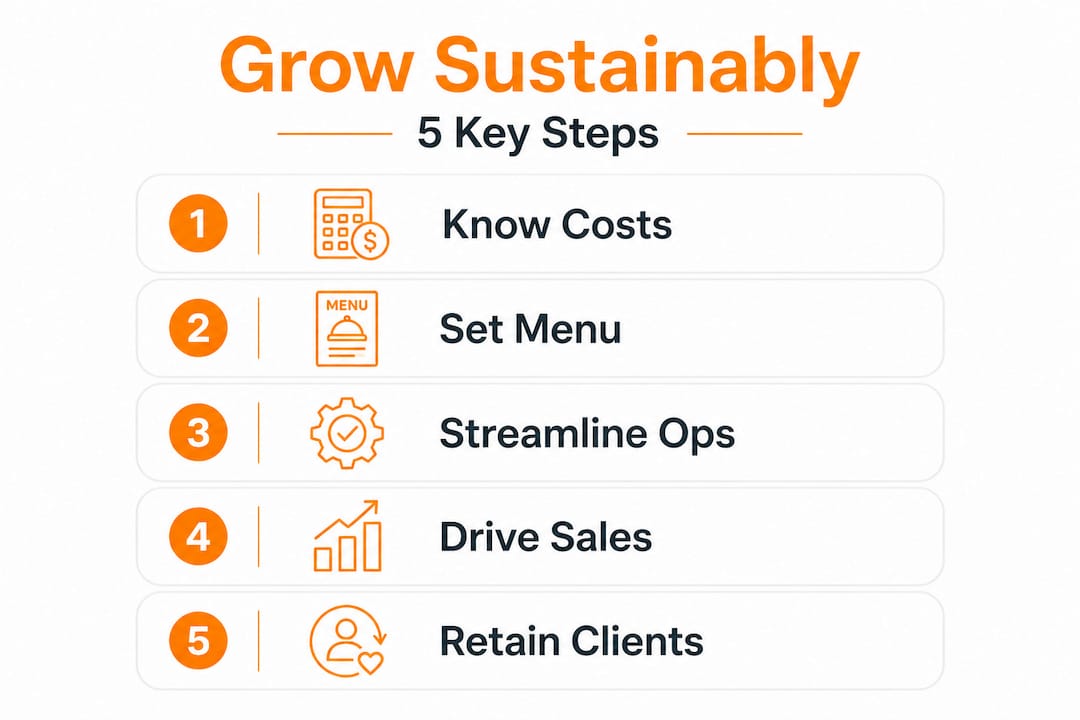
- Evaluating your readiness and requirements
- Building reliable, high-margin offerings
- Streamlining operations for growth
- Marketing, sales, and sustaining recurring revenue
- A fresh perspective: What most guides miss about scaling home cooking businesses
- Ready to streamline your home cooking business?
- Frequently asked questions
Key Takeaways
| Point | Details |
|---|---|
| Know your operating costs | Home cooking business startup and monthly costs can vary widely; plan minimum orders to cover expenses. |
| Focus on high-margin products | Cookies and brownies consistently deliver strong margins and fast returns—prioritize repeatable favorites. |
| Streamline for growth | Systematize workflows and batch cooking to minimize chaos and set the stage for scaling up. |
| Master recurring marketing | Use proven channels like social media and email to nurture repeat customers and maximize recurring revenue. |
| Upgrade when you hit revenue milestones | Transition to a commercial kitchen at $8,000-$12,000 a month to unlock bigger sales and compliance. |
Evaluating your readiness and requirements
Before you start taking orders, you need an honest look at where you stand. Skipping this step is one of the most common reasons home cooking businesses stall out early. Knowing your costs, legal requirements, and operational limits upfront saves you from scrambling later.
Understanding your startup and operating costs
Home-based catering startups typically face startup costs of $5,700 to $22,900 and monthly operating expenses of $500 to $2,000. That range is wide because it depends heavily on your equipment, local permits, packaging, and whether you need to rent a commercial kitchen. The good news is that starting lean is absolutely possible, especially if you already own solid kitchen equipment.
To protect your margins from day one, set a minimum order value of $500 to $1,000. This threshold ensures each order covers your ingredient costs, packaging, and time without leaving you working for less than minimum wage. As your business grows, the benchmark to watch is monthly revenue. Once you hit $8,000 to $12,000 per month, it's time to seriously consider transitioning to a commercial kitchen for both compliance and capacity reasons.
Key requirements checklist
Before accepting your first paid order, make sure you have these covered:
- Cottage food or home kitchen permit: Requirements vary by state, so check your local health department rules carefully.
- Business license: Most cities require one even for home-based operations.
- Food handler's certification: Many states mandate this for anyone selling food commercially.
- Liability insurance: Protects you if a customer has an allergic reaction or food safety issue.
- Dedicated equipment: Separate prep surfaces, storage, and ideally a second refrigerator for business inventory.
- Clear pricing and order policies: Written policies prevent misunderstandings and protect your time.
| Startup cost category | Estimated range |
|---|---|
| Equipment and tools | $1,500 to $8,000 |
| Permits and licenses | $200 to $1,500 |
| Packaging and branding | $300 to $2,000 |
| Initial ingredients | $500 to $1,500 |
| Marketing and website | $200 to $1,500 |
| Total estimated startup | $5,700 to $22,900 |
Once you understand your baseline numbers, you can start building a business model that actually works for expanding and scaling a home food business without burning through savings or burning yourself out.
Building reliable, high-margin offerings
Once you know your requirements, it's time to choose the products and business model that drive steady profits. Not all menu items are created equal. Some products take hours of custom work for thin margins. Others can be batched in large quantities with very little variation, generating consistent income every week.
Focus on high-margin, repeatable products
Home bakeries generating $500 to $2,000 per month as a side hustle (working 10 to 20 hours per week) and $3,000 to $6,000 per month full-time typically achieve 65 to 85% profit margins on items like cookies and brownies. That kind of margin is rare in most food categories. The reason these items perform so well is simple: the ingredients are inexpensive, production is fast once you have a system, and customers buy them repeatedly. ROI on a low-investment home bakery can come in as quickly as one to two months.
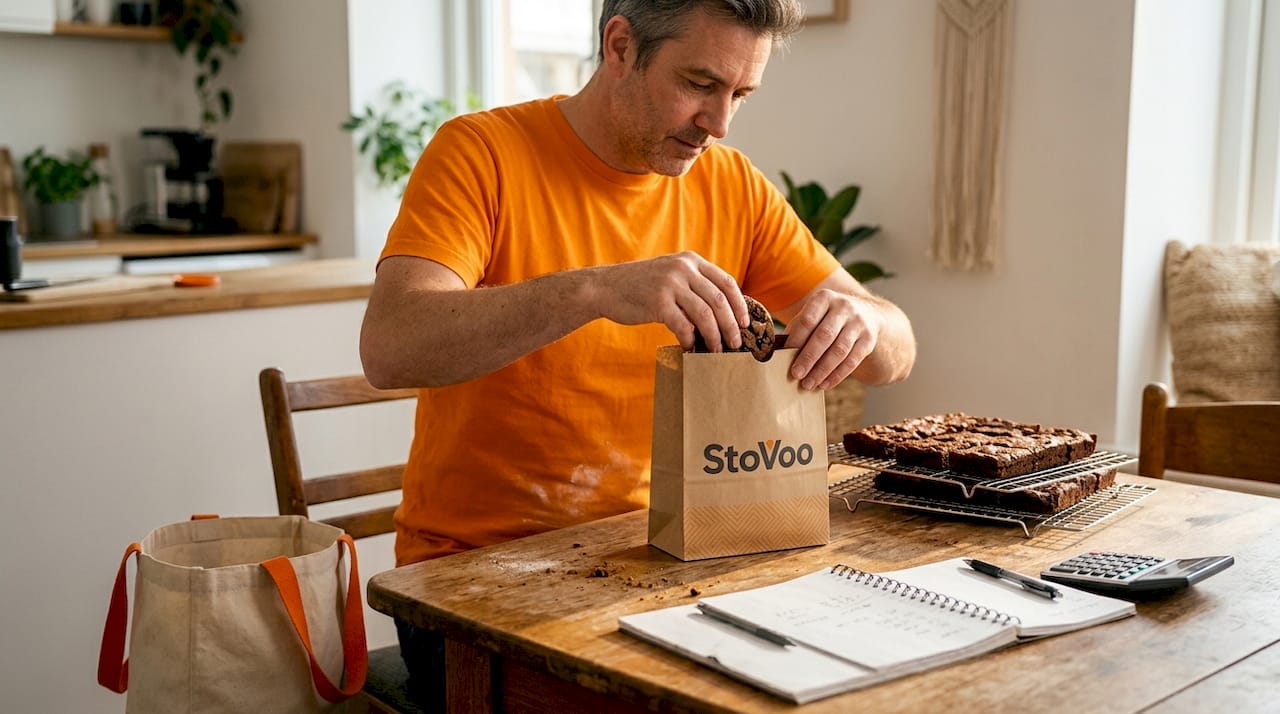
Contrast that with elaborate custom cakes or multi-course catering menus. Those orders often require hours of one-on-one communication, specialized ingredients, and unpredictable prep time. They can be profitable, but they are difficult to scale.
| Product type | Profit margin | Scalability | Repeat purchase rate |
|---|---|---|---|
| Cookies and brownies | 65 to 85% | Very high | High |
| Custom cakes | 30 to 50% | Low | Medium |
| Meal prep containers | 40 to 60% | High | Very high |
| Catering packages | 25 to 45% | Medium | Low to medium |
| Digital recipe ebooks | 80 to 95% | Very high | Medium |
Build your menu around recurring demand
The smartest home food businesses build their core menu around items customers want every week, not just for special occasions. Think weekly meal prep boxes, monthly cookie subscriptions, or rotating seasonal baked goods. These recurring food business tips translate directly into predictable revenue, which makes planning your inventory, time, and finances dramatically easier.
Here are the product categories worth prioritizing:
- Weekly meal prep: High repeat rate, builds loyal customers quickly
- Subscription baked goods: Predictable production schedule, easy to batch
- Signature sauces or condiments: Low ingredient cost, long shelf life
- Digital recipe bundles: Zero ingredient cost, unlimited scalability
Pro Tip: Limit your core menu to three to five items you can make in your sleep. Mastery and speed in a small product range will always outperform variety when it comes to profitability and sanity.
Streamlining operations for growth
With your menu in place, let's focus on running your business efficiently and preparing for scale. The difference between a home cook who burns out at six months and one who builds a thriving business often comes down to workflow, not talent.
A step-by-step order management workflow
- Capture orders in one place. Stop taking orders through multiple channels. A single order intake system prevents missed orders and double bookings.
- Confirm and invoice immediately. Send a confirmation and payment request within 24 hours of receiving an order to lock in commitment.
- Batch your production days. Designate two or three production days per week rather than cooking on demand every day.
- Prep ingredients in advance. Pre-measure dry ingredients, portion proteins, and prep sauces the day before production to cut active cooking time by 30 to 40%.
- Package and label systematically. Create a packaging station so you move through this step quickly and consistently.
- Follow up after delivery. A simple message asking if the customer enjoyed their order opens the door to repeat business and referrals.
Batch production is genuinely transformative. Instead of baking 12 cookies on Tuesday and 24 on Thursday, you bake 200 on Saturday morning. The setup time is the same, but the output is dramatically higher. This is how home bakers move from a side hustle income to a full-time operation without adding more hours to their week.
"The businesses that scale fastest are not the ones with the most products. They are the ones with the most repeatable processes."
When to consider scaling up
Watch for these signals that you are ready to move to the next level:
- You are consistently turning down orders because you lack capacity
- Monthly revenue has crossed the $8,000 to $12,000 threshold
- Production is taking more than 30 hours per week
- You are fielding more customer inquiries than you can respond to
At that point, hiring a part-time helper or moving to a shared commercial kitchen becomes a smart investment rather than an unnecessary expense. Tracking these numbers through efficient business operations tools makes it much easier to spot those transition moments before they become crises.
Pro Tip: Keep a simple weekly log of your production hours, order volume, and revenue. Patterns become obvious fast, and you will know exactly when growth is outpacing your current setup.
Marketing, sales, and sustaining recurring revenue
With a streamlined operation, let's explore how to drive sales and keep customers coming back. Great food alone will not build a business. You need visibility, and you need systems that turn first-time buyers into regulars.
The marketing channels that actually work
Social media, Google Business Profile, email newsletters, farmers markets, and referrals are the proven growth drivers for home food businesses. One caterer generated a 19X return on investment from just $901 in Facebook advertising. That is not a fluke. It reflects the fact that food content performs exceptionally well on visual platforms, and local targeting on Facebook and Instagram is both affordable and precise.
Here is how to approach each channel strategically:
- Instagram and TikTok: Post process videos, before-and-after shots, and customer reactions. Consistency matters more than production quality. Posting three times per week beats posting once with a perfect video.
- Google Business Profile: Claim and optimize your free listing. Customers searching "meal prep near me" or "home baker [city]" will find you. Collect reviews actively.
- Email newsletters: Build your list from day one. Even 200 engaged subscribers can generate significant monthly revenue when you announce new products or seasonal specials.
- Farmers markets and pop-ups: Face-to-face selling builds trust faster than any digital channel. Bring samples, collect emails, and hand out cards with your order link.
- Referral programs: Offer existing customers a discount or free item for every new customer they send your way. Word of mouth is still the most cost-effective marketing channel available.
Nurturing repeat customers and upselling
Acquiring a new customer costs five to seven times more than retaining an existing one. That math alone should make customer retention your top priority. Here are the tactics that work best for home food businesses:
- Send a personal thank-you message after every first order
- Offer a loyalty reward after five or ten purchases
- Announce new menu items to existing customers before posting publicly
- Create seasonal bundles that encourage larger order values
- Ask for feedback and actually act on it
Statistic callout: One caterer achieved a 19X ROI on Facebook ads with less than $1,000 in spend, proving that targeted local advertising can deliver outsized returns for home food businesses.
The goal is to build a recurring food business systems mindset where every customer interaction is designed to generate the next order, not just complete the current one. When you combine strong marketing with a subscription or repeat-order model, your monthly revenue becomes far more predictable and far less stressful to maintain.
A fresh perspective: What most guides miss about scaling home cooking businesses
Most scaling guides tell you to add more products, reach more platforms, and hustle harder. That advice leads to burnout, not growth. The real insight from businesses that successfully scale is almost always the opposite: they did less, but did it better.
Custom orders are seductive because they feel premium. A customer wants a three-tier wedding cake or a fully customized catering menu, and the price tag looks impressive. But when you calculate the hours spent on back-and-forth communication, sourcing specialty ingredients, and executing something you have never made before, the effective hourly rate often falls below what you would earn on a straightforward batch of cookies. Custom work has its place, but it should never be the foundation of a scalable business.
The home food businesses generating the most consistent income, whether in the US or internationally, share one common trait: they have systematized their best sellers and built recurring purchase habits around them. Singapore home food businesses gross SGD 8,000 to 25,000 per month by focusing intensely on repeat high-margin items rather than chasing every custom request. US part-time operators earning $200 to $3,000 per month almost universally report that their income stabilized once they stopped saying yes to everything and started building a tight, repeatable menu.
Automation and pricing discipline are the two levers most home cooks underuse. Pricing too low is an almost universal mistake, driven by the fear that customers will not pay more. But customers who value quality food will pay fair prices. The ones who push back on pricing are rarely the loyal repeat customers who sustain your business long term. Set prices that reflect your actual costs and time, and you will attract the right customers.
Customer relationships are your most valuable asset. Owning your customer list, rather than relying on a third-party platform to connect you with buyers, gives you the ability to communicate directly, offer exclusive deals, and build genuine loyalty. That is the foundation of a scaling home food business guide that does not collapse the moment a platform changes its algorithm or fee structure.
Ready to streamline your home cooking business?
Building a profitable home cooking business is absolutely achievable, but it requires the right systems behind your talent. Managing orders through WhatsApp threads and tracking customers in spreadsheets will only take you so far before the chaos starts limiting your growth.
Stovoo is built specifically for food creators, meal preppers, and home catering chefs who want to grow without the admin overwhelm. With Stovoo, you can set up a professional shopfront in minutes, manage recurring business solutions like meal subscriptions and catering bookings from one dashboard, automate billing, and own your customer relationships completely. Whether you are selling weekly meal plans, baked goods subscriptions, or digital recipe ebooks, Stovoo gives you the infrastructure to scale with confidence. Start building the business your cooking deserves.
Frequently asked questions
What are the average startup costs for a home cooking business?
Startup expenses typically range from $5,700 to $22,900, depending on equipment, permits, and scale. Starting lean with equipment you already own can bring you toward the lower end of that range.
How quickly can I see a return on investment?
Low-investment home bakeries often achieve ROI in 1 to 2 months, especially when focusing on high-margin items like cookies and brownies. The faster you systematize production, the faster you recoup your initial investment.
Which home-cooked products have the highest profit margins?
Cookies and brownies offer 65 to 85% profit margins, making them top picks for building a recurring sales model. Their low ingredient cost and fast production time make them ideal for scaling.
What marketing channels drive the best results for home food businesses?
Social media, Google Business Profile, email newsletters, farmers markets, and referrals are all proven to drive consistent growth. Combining at least three of these channels gives you the best chance of building a steady customer pipeline.
How do I know when to transition to a commercial kitchen?
When monthly revenue reaches $8,000 to $12,000, it is time to consider moving operations to a commercial kitchen for scale and compliance. That revenue level typically justifies the added rental cost while giving you the capacity to grow further.