
TL;DR:
- Running food businesses on one-off orders creates unpredictable cash flow and low repeat sales, increasing stress.
- Subscriptions offer recurring revenue, strengthen customer relationships, and enable upselling opportunities for chefs.
- Effective subscription models include meal delivery, digital recipes, and hybrid offerings, each suited to different business types.
Running a food business on one-off orders is like filling a bucket with a hole in it. You pour energy into every sale, only to start from zero the next week. For catering chefs and food entrepreneurs, that cycle creates real stress: unpredictable cash flow, low repeat business, and the constant pressure to find new customers. Subscriptions flip that model entirely. They lock in recurring revenue, build genuine customer relationships, and open doors to upsell opportunities most one-off sales never reach. This guide breaks down exactly why subscriptions work, which models fit different food businesses, and the concrete steps you can take to build one that actually sticks.
Table of Contents
- Why subscriptions matter for chefs today
- Core types of subscriptions for food entrepreneurs
- The economics of chef subscriptions: Churn, retention, and pricing
- Beating churn: Menu variety, add-ons, and smart retention tactics
- What most guides miss: Subscriptions succeed in the details
- Ready to launch or scale your chef subscription?
- Frequently asked questions
Key Takeaways
| Point | Details |
|---|---|
| Stable income stream | Subscription models help chefs replace unpredictable sales with reliable recurring revenue. |
| Retention tactics matter | Menu variety, add-ons, and personalization are vital to reducing cancellations. |
| Smart pricing maximizes profit | Testing unit economics and avoiding deep discounts preserves long-term growth. |
| Digital recipes work for starters | Chefs new to subscriptions should consider digital offers before complex meal kit fulfillment. |
Why subscriptions matter for chefs today
With the urgent need for stability and growth in food businesses, let's look at how subscriptions offer chefs a clear edge.
Modern consumers are not just hungry for good food. They want convenience, consistency, and a brand they can trust to show up every week without fail. That shift in customer expectations is one reason subscriptions have moved from a novelty to a standard operating model across the food industry. For chefs, this is genuinely good news.
The core benefits are hard to argue with:
- Predictable cash flow: You know how much revenue is coming in each month, which makes buying ingredients and planning labor far easier.
- Higher customer lifetime value: A subscriber who pays monthly is worth significantly more than a customer who buys once and disappears.
- Built-in upsell opportunities: Once a subscriber trusts you, selling add-ons like specialty sauces, prep kits, or premium recipe content becomes natural.
- Word-of-mouth growth: Satisfied subscribers talk. They share their meal photos, tag you, and recommend you to friends in ways that one-time buyers rarely do.
The numbers back this up. The digital recipe market hit $626M in 2023 and is growing at 15% annually. For personal chefs running weekly subscriber plans, revenue per client sits between $350 and $550 per week. That is a meaningful income stream from a relatively small subscriber base.
Optimizing your meal plan operations becomes easier when you have a predictable customer base to plan around. Instead of guessing demand, you cook to order and reduce waste. That operational efficiency alone can improve margins significantly for a small food business.
Core types of subscriptions for food entrepreneurs
Understanding why subscriptions work is just the first step. Now let's break down the main ways chefs can implement them.
There are three primary subscription models worth knowing:
- Meal prep and delivery subscriptions: Customers pay weekly or monthly for recurring food delivery. This is the most hands-on model but also the highest revenue per subscriber. Think personalized weekly meals, macro-balanced containers, or family-sized batch cooking delivered to doorsteps.
- Digital recipe subscriptions: Subscribers pay for ongoing access to a library of recipes, meal plans, or cooking tutorials. Lower overhead, no logistics, and fully scalable. The tradeoff is a lower price point, though pairing recipes with interactive content pushes value higher.
- Hybrid models: A combination of both. Subscribers get physical meal kits plus digital recipe guides, shopping lists, or cooking videos. This model increases perceived value and justifies premium pricing.
Here is how the three models compare:
| Model | Revenue potential | Startup cost | Logistics complexity | Best for |
|---|---|---|---|---|
| Meal prep delivery | High ($350-550/wk per client) | Medium to high | High | Personal chefs, caterers |
| Digital recipes | Low to medium ($10/month avg) | Low | Very low | Recipe creators, coaches |
| Hybrid | High | Medium | Medium | Established food brands |
The freemium vs. premium question is one every chef building a digital recipe product will face. Freemium gets eyeballs. Freemium models hold a 64% share of digital recipe consumption, meaning most users start with free content. But free does not pay bills. A $10 per month premium tier is the sweet spot for chefs looking to convert casual browsers into paying subscribers, and it scales well once your content library grows.
Pro Tip: Bundle your recipe subscriptions with a digital meal planner or weekly shopping list template. Subscribers perceive planners as highly practical tools, which justifies a price increase and makes it harder for them to cancel. A recipe library alone is easy to walk away from. A recipe library plus a custom planner they have been filling out for three months? Much stickier.
Explore how real food entrepreneurs structure meal plan and recipe bundles or how digital planning for chefs can elevate your subscription offering from basic to premium.
The economics of chef subscriptions: Churn, retention, and pricing
Once you know the models, it's crucial to master the numbers that determine whether your subscription will thrive.
Four metrics define your subscription's health:
- Churn rate: The percentage of subscribers who cancel in a given period.
- ARPU (average revenue per user): Total revenue divided by number of active subscribers.
- CAC (customer acquisition cost): How much you spend, in ads, time, or discounts, to gain each new subscriber.
- LTV (lifetime value): The total revenue you expect from a subscriber before they cancel.
Here is a snapshot of where meal kit subscription economics typically land:
| Metric | Benchmark |
|---|---|
| Monthly churn rate | 8-12% |
| Annual churn rate | 65-80% |
| Average ARPU | $65/month |
| Revenue with skip/pause options | Doubles retention |
| Personal chef weekly sub revenue | $350-550 per client |
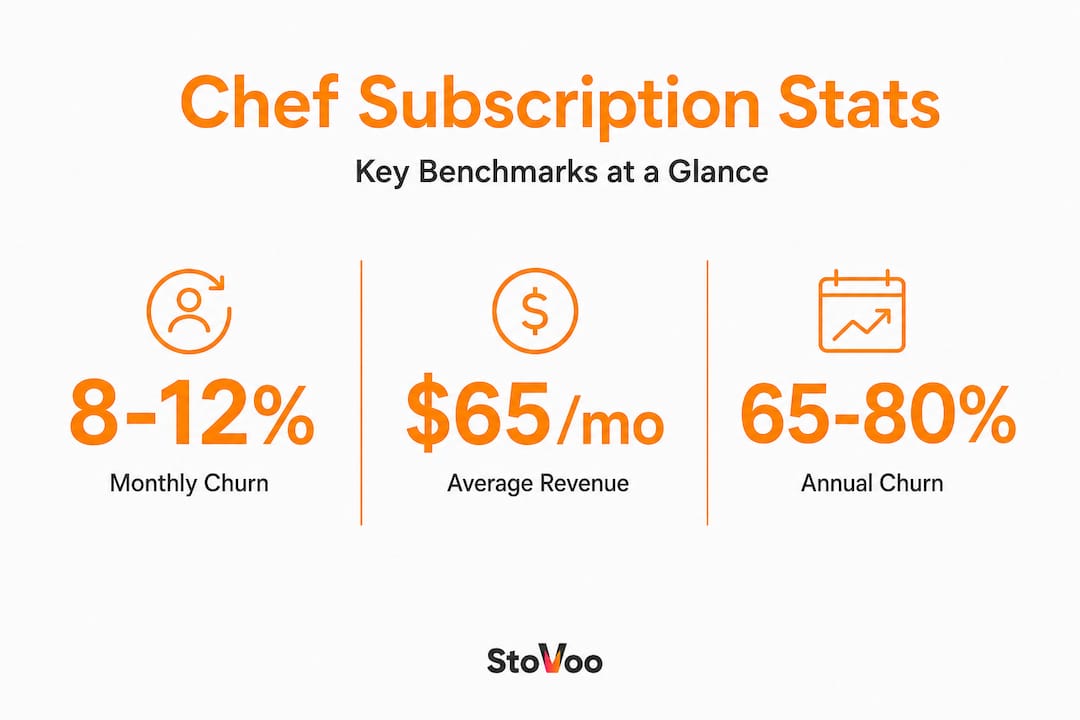
Those churn benchmarks for meal kit subscriptions are sobering. An 8 to 12% monthly churn means that if you start January with 100 subscribers, you could have fewer than 25 by December without active retention strategies. That is the math driving why retention is not optional. It is survival.
The main churn triggers chefs face are menu fatigue (eating the same types of meals week after week), lifestyle disruptions like travel or schedule changes, and price sensitivity, especially among subscribers who joined through a discount and feel the jump to full price is jarring.
"Heavy discounting can fill your subscriber list fast, but if your retention systems are not in place, all you're doing is paying to acquire customers you'll lose at full price. Fix the product and the experience first, then discount strategically." Subscription pricing and scaling guidance reinforces this: validating unit economics at $16 to $20 per serving before scaling protects you from growing into a loss.
On pricing, smart chefs run small pilots first. A four-week test with 10 to 20 subscribers at your target price point reveals far more than months of spreadsheet planning. You learn what customers actually value, which meals sell out, and what price resistance looks like in real time. That data shapes your long-term pricing far more reliably than guessing.
For deeper insight into how to structure and manage meal subscriptions profitably from day one, building those systems early saves a lot of painful corrections later.
Beating churn: Menu variety, add-ons, and smart retention tactics
Even great pricing and models won't protect you from losing subscribers unless you tackle the single biggest subscription threat: churn.
Retention is where subscriptions live or die. Here are the tactics that consistently move the needle:
- Rotate your menu every week: At a minimum, offer 8 or more meal options per week. Variety kills menu fatigue, which is the number one driver of cancellations. Customers do not cancel because your food is bad. They cancel because they got bored.
- Offer skip and pause options: This sounds counterintuitive, but skip/pause features double retention rates. A subscriber who can pause for two weeks while traveling does not need to cancel. A subscriber with no pause option will.
- Add-on products: Offer optional add-ons each week like specialty sauces, spice blends, snack packs, or dessert kits. These increase ARPU and give subscribers a reason to stay engaged with your menu.
- Segment your subscribers: Not all subscribers are the same. Families want different meals than singles. Athletes want different macros than seniors. Use purchase data to personalize meal recommendations and you'll see dramatically lower churn among segments that feel seen.
- Re-engagement campaigns: When a subscriber's activity drops, a targeted offer, a personal message, or a preview of next week's menu can pull them back before they cancel.
The cautionary tale worth knowing here is Chef'd. Once a well-funded meal kit company, Chef'd collapsed due to high customer acquisition costs and a failure to differentiate its offering from competitors. The lesson is not that meal kits do not work. It is that CAC without strong retention destroys the unit economics that make any subscription viable. If you are spending $50 to acquire a subscriber who churns after six weeks at $65 ARPU, you have barely broken even before accounting for food and delivery costs.
Pro Tip: Differentiation is your best defense against churn. If your subscribers can get a similar experience from three other meal services, they will always leave for a cheaper option. Build a culinary identity around your specific skills, cuisine style, or health philosophy. Subscribers do not just buy meals. They buy your perspective and personality. That is much harder to replicate or undercut on price.
Explore how leading food entrepreneurs keep subscribers engaged through innovative menu approaches, or revisit churn risk and retention strategies for a full breakdown of what keeps subscribers loyal.
What most guides miss: Subscriptions succeed in the details
After exploring the practical side of retention, let's address what too few experts are willing to admit.
Most subscription articles for food businesses spend enormous time on marketing: social media funnels, referral programs, Instagram aesthetics. That stuff matters, but it is downstream of what actually determines success. The unsexy truth is that chef subscriptions succeed or fail in the operational details.
Menu evolution is the clearest example. Many chefs treat their menu as a core identity document, something stable and branded. But subscribers experience that stability as boredom. The chefs who retain customers longest treat their menu like a living product, constantly testing new dishes, retiring underperformers, and building seasonal excitement. That requires discipline, not creativity alone.
Pilot testing is another area where the advice often falls short. The standard guidance is "start small," but it rarely gets specific. A meaningful pilot means 10 to 20 paying subscribers, a fixed duration of four to six weeks, and clear metrics you measure before expanding. Revenue per order, ingredient cost percentage, time per delivery, and cancellation reason all need tracking from week one. Growing without that data is how chefs end up scaling a broken model.
The other issue worth naming directly is the obsession with copying big-brand subscription strategies. What works for a national meal kit company with venture capital backing and a logistics network does not translate to a personal chef or a catering entrepreneur. Their customer acquisition budgets dwarf your margin. Their operational scale creates efficiencies you simply cannot replicate. The chefs who build sustainable subscriptions do so by leaning into what the big players cannot offer: personal relationships, hyper-local sourcing, and deeply personalized service.
Focus on building chef-driven subscription strategies that reflect your actual strengths, not a diluted version of someone else's model. Small scale, executed with precision and personal touch, consistently beats large-scale imitation in the food creator economy.
Ready to launch or scale your chef subscription?
With all this in mind, here's how you can put chef subscriptions into practice with the right tech partner.
Building a subscription business from scratch is hard enough without juggling WhatsApp messages, spreadsheets, and manual payment follow-ups. Stovoo was built specifically for food creators and catering chefs who want to run subscriptions, digital recipe sales, and catering bookings from one professional platform. No scattered tools. No chasing payments. Just a clean, mobile-first shopfront that you can share anywhere and start taking recurring orders from day one.
Whether you are just starting out or looking to streamline an existing operation, seeing how other chefs have structured their offerings is a great first step. Explore Amara's subscription setup to see what a professional chef shopfront looks like in practice. When you are ready to build your own, create your Stovoo account and launch your subscription in minutes, not months.
Frequently asked questions
What is a typical churn rate for chef meal subscriptions?
Meal kit subscriptions see monthly churn rates between 8-12%, meaning 65 to 80% of customers may cancel within a year without active retention strategies in place.
How much can chefs earn per subscriber?
Personal chefs can earn $350 to $550 per week from each subscription client, making even a modest subscriber base a reliable primary income stream.
What retention tactics reduce subscription cancellations?
Offering menu rotation, flexible skip and pause features, and weekly add-on products can effectively double retention, keeping subscribers engaged long after the initial excitement of signing up fades.
Are digital subscriptions or meal kits better for beginners?
Digital recipe subscriptions have a lower barrier and no logistics complexity, making them the smarter starting point, while meal kits require more setup but support significantly higher revenue per subscriber.