

TL;DR:
- Food business analytics uses data from sales, inventory, and customer behavior to optimize operations and increase profits. Connecting key systems like POS and inventory reduces waste, forecasts demand, and speeds up decision-making, leading to faster ROI. Consistent data review by dedicated personnel transforms insights into tangible improvements and business growth.
Food business analytics is the practice of applying data-driven decision making to every layer of a food operation, from inventory and production to customer behavior and revenue forecasting. The importance of food business analytics has never been clearer: food entrepreneurs who use tools like point-of-sale (POS) systems, predictive analytics platforms, and AI-powered business intelligence software are cutting waste, recovering lost profits, and growing faster than those still running on gut instinct and spreadsheets. This guide breaks down exactly how analytics works in the food sector, what it delivers, and how you can start using it to build a stronger business.
Why does food business analytics matter for entrepreneurs?
Food business analytics is the difference between reacting to problems and preventing them. When you connect your sales data, inventory records, and production metrics, you stop guessing and start making decisions backed by real numbers. AI-driven analytics can optimize supply chain efficiency by up to 95% and increase sales by 15% through better demand forecasting. That is not a marginal gain. That is the kind of shift that separates a struggling food business from a profitable one.

The food industry runs on thin margins. A single week of overproduction, a spoiled batch, or a misaligned staffing schedule can erase a month of profit. Business intelligence in the food sector gives you visibility into these risks before they become losses. Platforms like iFactory and Microsoft Fabric are already helping food manufacturers and producers consolidate data and act on it faster. The same principles apply whether you run a catering operation, a meal prep service, or a food product business.
Named entities matter here. POS systems like Square and Toast generate transaction-level data every day. Predictive analytics tools process that data to surface patterns you would never spot manually. The importance of data in the food industry is not theoretical. It is operational, financial, and competitive.
How does analytics reduce waste and improve efficiency?
Operational efficiency is where analytics delivers its fastest, most measurable wins. The mechanism is straightforward: you connect your POS system to your inventory tracking, and the combined data tells you exactly what sells, when it sells, and how much you need to produce. Integrating POS systems with inventory tracking reduces food waste by 12–18%, recovering $50,000–$70,000 in profits annually for facilities with $400,000 in food costs. For a small food business, that recovery can be transformational.
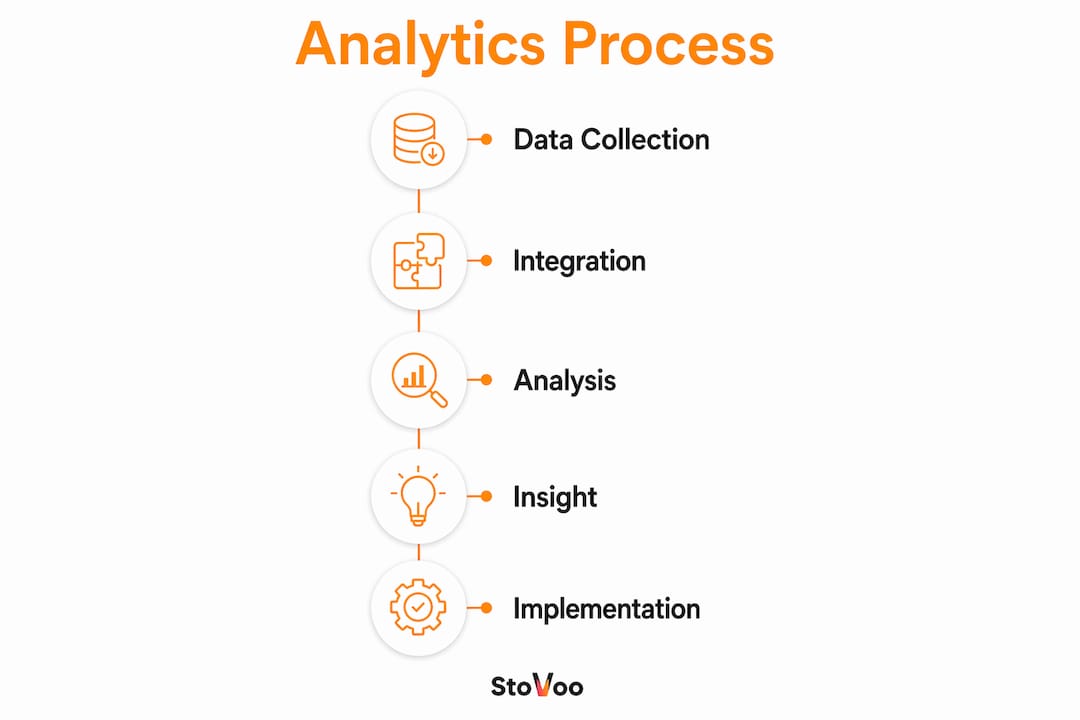
Predictive analytics goes further by forecasting demand before you commit to purchasing or production. If your data shows that chicken dishes spike 40% on Fridays and drop on Tuesdays, you adjust your prep schedule accordingly. You stop overbuying perishables. You stop throwing away food that cost you real money to source and prepare. This is how meal prepping saves time and reduces waste at scale.
Equipment maintenance is another area where analytics pays off fast. Predictive maintenance reduces labor costs by 18–22% and extends equipment life between failures by 30–40%. A broken walk-in cooler or a failed commercial oven during peak service is not just an inconvenience. It is a direct financial hit. Analytics tools that monitor equipment performance flag issues hours before a breakdown, giving you time to act.
- Connect your POS system to inventory tracking as your first integration step
- Use demand forecasting to align purchasing with actual sales patterns
- Monitor equipment performance data to schedule maintenance proactively
- Track labor hours against sales volume to identify overstaffing patterns
- Review waste logs weekly and cross-reference with production data
Pro Tip: Aim for 80% data integration across your key systems rather than waiting for perfect data. Integrating at least 80% of data sources yields more practical benefit than perfect but isolated data sets. Start connecting, then refine.
What customer insights can food sales data reveal?
Customer data is one of the most underused assets in small food businesses. Your sales records already contain a detailed picture of who buys from you, what they order, how often they return, and what promotions actually move the needle. The analytics impact on food business growth comes directly from acting on this picture.
Here is a practical sequence for using customer data effectively:
- Segment your customers by purchase frequency. Identify your top 20% of buyers by order volume. These are your highest-value customers, and they deserve targeted retention efforts like loyalty rewards or early access to new menu items.
- Analyze order patterns by day, time, and item. This tells you which menu items drive repeat visits and which ones sit untouched. Data-driven menu engineering focuses your production on high-margin, high-demand items.
- Track promotion response rates. If a discount on a specific meal plan drives a 30% spike in orders, that is a repeatable tactic. If another promotion generates no lift, stop running it.
- Use retention data to time your outreach. If customers typically reorder every two weeks, a reminder message on day 12 can recover orders that would otherwise lapse.
Food businesses gain a 10–15% improvement in customer retention by using analytics to target promotions effectively and understand customer segments. Retention is cheaper than acquisition. Keeping an existing customer costs a fraction of what it takes to win a new one. Analytics makes retention a system, not a guessing game. For meal prep operators specifically, customer management strategies built on data consistently outperform those built on intuition.
Why does data integration make or break food analytics?
Fragmented data is the single biggest obstacle to getting value from analytics. Most food businesses collect data in multiple places: a POS system here, a spreadsheet there, a separate inventory tool, and financial records in an accounting platform. When these systems do not talk to each other, you get incomplete pictures and slow decisions.
The solution is a unified data environment. When production, maintenance, inventory, and financial data all feed into one platform, your reporting becomes faster and your decisions become sharper. FoodPharma, a European food manufacturer, used Microsoft Fabric to consolidate its data sources. The result: manual reporting time dropped from days to under 2 hours. That is not a minor efficiency gain. It means leadership can make decisions based on current data, not week-old reports.
"A unified history of consolidated data empowers leadership and plant managers to get answers quickly without relying entirely on data analysts." — Microsoft Fabric case study, FoodPharma
The FoodPharma example also highlights a deeper truth: many AI projects fail due to a poor data foundation rather than weak modeling. If your data is scattered and ungoverned, no analytics tool will save you. The platform matters less than the data discipline behind it.
Pro Tip: Assign a specific person in your business to review analytics dashboards weekly and translate findings into operational changes. Analytics does not self-execute. Businesses that assign dedicated resources to interpret data and drive changes consistently outperform those that treat analytics as a passive reporting tool.
Traditional management vs. analytics-driven food businesses
The contrast between intuition-driven and data-driven food operations is stark. Traditional management relies on experience, observation, and best guesses. Analytics-driven management relies on patterns, forecasts, and measured outcomes. Both approaches can work in the short term. Over time, the gap widens significantly.
| Factor | Traditional Management | Analytics-Driven Management |
|---|---|---|
| Demand forecasting | Based on experience and seasonal guesses | Based on historical sales data and predictive models |
| Food waste | 15–25% of food costs lost to spoilage and overproduction | Waste reduced by 12–18% through POS and inventory integration |
| Labor scheduling | Fixed schedules regardless of demand patterns | Schedules aligned to demand, reducing labor costs by 5–8% |
| Equipment maintenance | Reactive repairs after breakdowns | Predictive alerts reduce downtime and extend equipment life by 30–40% |
| ROI timeline | Unclear, often measured in years | ROI compresses to under 5 months when full value stream is counted |
The ROI point deserves emphasis. Many food manufacturers underestimate the ROI of analytics by focusing only on software costs instead of the full value stream, including downtime prevention, recall avoidance, and yield optimization. A single line downtime event can cost $50,000 per hour. Analytics that detects an issue hours earlier pays for itself in one incident.
Analytics is not magic, though. It requires operational change. The data tells you what is happening. You still have to act on it. Businesses that install dashboards and never review them get no benefit. The ones that build a culture of weekly data review and rapid adjustment are the ones that compound gains over time.
How can food entrepreneurs start using analytics today?
Starting with analytics does not require a large budget or a data science team. It requires connecting the right data sources and building a habit of reviewing what they tell you. Here is where to focus first:
- Start with your POS system. If you use Square, Toast, or a similar platform, you already have transaction data. Pull weekly sales reports and look for patterns by item, day, and time.
- Connect inventory to sales. Match what you sell against what you purchase. The gap between those two numbers is your waste figure. Tracking it weekly creates accountability.
- Set up basic production metrics. Record how long each menu item takes to prepare and what it costs in ingredients and labor. This is the foundation of margin analysis.
- Use demand forecasting tools. Platforms like iFactory offer predictive analytics built for food manufacturing. Even simpler tools like Google Sheets with trend formulas can surface basic demand patterns.
- Invest in predictive maintenance monitoring. IoT sensors on key equipment can flag temperature anomalies, motor stress, and performance drops before they cause failures.
- Review your data on a fixed schedule. Weekly is the minimum. Monthly is too slow to catch operational problems before they cost you money.
Digital technologies including blockchain, IoT, and AI positively impact food safety and waste reduction, but only when businesses actively connect technical efficiency to their specific business goals. The tools are available. The discipline to use them consistently is what separates businesses that grow from those that plateau. For catering operators, boosting profit through better operations starts with knowing your numbers at this level of detail.
Key takeaways
Food businesses that integrate data across POS, inventory, and production systems consistently outperform those that rely on intuition, with measurable gains in waste reduction, customer retention, and profit recovery.
| Point | Details |
|---|---|
| Integration beats perfection | Connect 80% of your data sources now rather than waiting for a perfect system. |
| Waste reduction is immediate | POS and inventory integration cuts food waste by 12–18%, recovering real profit dollars. |
| Customer data drives retention | Analytics-based targeting improves customer retention by 10–15% in food businesses. |
| Assign ownership of data review | Designate someone to act on dashboard findings weekly or the investment delivers nothing. |
| ROI is faster than expected | Full-value ROI on analytics compresses to under 5 months when downtime and waste savings are counted. |
The part most food entrepreneurs get wrong about analytics
I have seen food business owners invest in solid analytics tools and then wonder why nothing changed six months later. The answer is almost always the same: the data sat in a dashboard that nobody reviewed consistently. The tool was not the problem. The habit was.
The conventional wisdom says to start with the best software you can afford. My experience says to start with the simplest data you can actually act on. A weekly review of your top five selling items, your waste percentage, and your labor cost against revenue will teach you more in a month than a sophisticated platform you check twice a year.
The other mistake I see is treating analytics as an IT responsibility. When the data lives only with a tech-savvy team member or an outside consultant, it never reaches the people making daily operational decisions. The chef, the catering manager, the meal prep coordinator: these are the people who need to see the numbers and feel empowered to change what they do based on them.
Quick wins matter more than people realize. When a food entrepreneur sees that connecting their POS to inventory tracking recovered $8,000 in a single quarter, they become believers. That first win creates the organizational momentum to go deeper, to add predictive maintenance, to build customer segmentation, to forecast demand by season. The analytics culture grows from that first concrete result. Start there.
— freeman
How Stovoo helps you turn data into a stronger food business
Running a food business without centralized data is like cooking without a recipe. You might get lucky, but you cannot replicate success. Stovoo gives food entrepreneurs a single platform to manage meal subscription plans, catering bookings, customer relationships, and order history, all in one place.
When your orders, customer data, and revenue all live in one dashboard, you stop losing information across WhatsApp threads and spreadsheets. You start seeing patterns. You start making decisions based on what your customers actually buy, not what you think they want. Stovoo's mobile-first shopfront lets you share your business link across social media and messaging apps, so every order feeds back into your central data picture. Whether you run a cloud kitchen in London or a meal prep service like Nessa's Kitchen, Stovoo gives you the operational foundation that makes analytics possible. Start building your food business on Stovoo and turn your daily orders into the data that drives your next level of growth.
FAQ
What is food business analytics?
Food business analytics is the use of data from sales, inventory, production, and customer records to make better operational and financial decisions. It replaces guesswork with measurable insights that reduce waste and increase profit.
How does analytics reduce food waste?
Integrating POS systems with inventory tracking reduces food waste by 12–18% by aligning purchasing and production with actual sales patterns, preventing overproduction and spoilage.
How quickly do food businesses see ROI from analytics?
The ROI timeline compresses to under 5 months when businesses account for the full value stream, including downtime prevention, waste reduction, and labor savings, rather than just software costs.
Do small food businesses need expensive tools to use analytics?
No. Starting with your existing POS sales reports and a basic inventory log gives you enough data to identify waste, adjust purchasing, and improve margins before investing in advanced platforms.
What is the biggest mistake food entrepreneurs make with analytics?
The most common mistake is installing analytics tools without assigning anyone to review and act on the data regularly. Analytics requires dedicated human review to deliver operational change.