
TL;DR:
- Choosing a culinary venture depends on your available capital, skills, and risk appetite. Starting with a cottage food operation minimizes costs and regulatory hurdles while testing your recipes. Progressively scaling into catering, ghost kitchens, or mobile food businesses allows for growth with manageable risk.
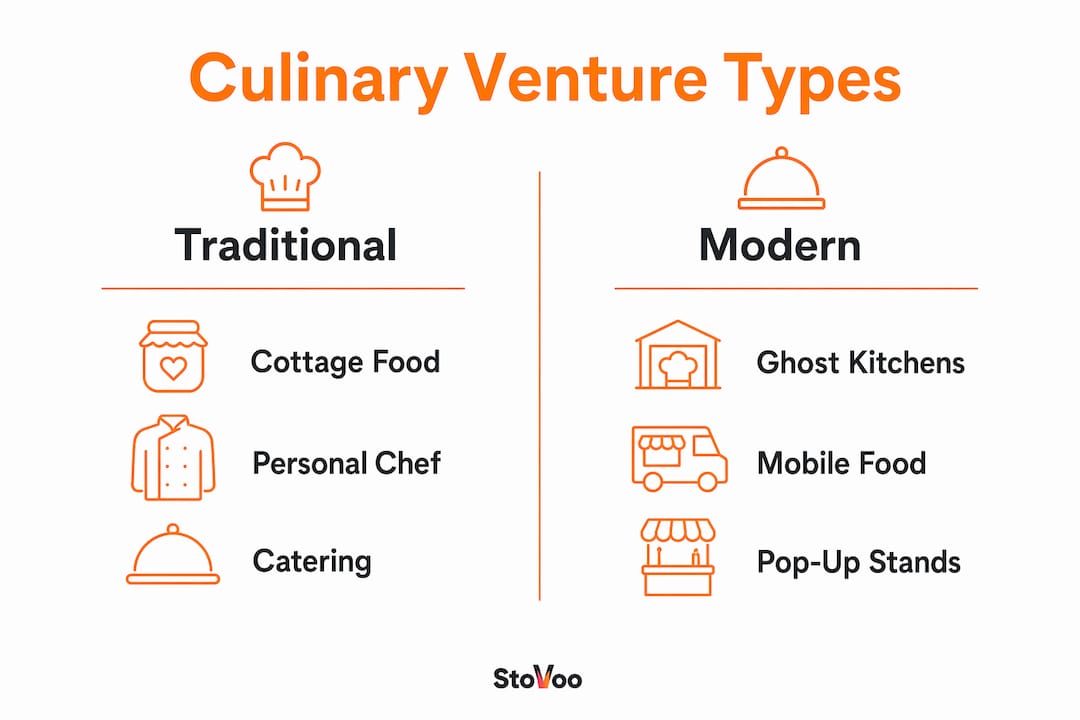
Explaining culinary venture options means identifying the distinct business models food entrepreneurs use to build sustainable income from their cooking skills. The food industry organizes these models into four core platforms: cottage food, personal chef and catering, ghost and commissary kitchens, and mobile food operations. Startup costs range from as little as $0 to over $200,000 depending on the model you choose. That range matters because 80% of new food businesses fail within three years due to planning gaps, regulatory issues, and cash flow mismanagement. Choosing the right platform from the start is the single most important decision you will make.
What are the four core culinary venture options?
The four culinary platforms are not just business types. They are evolutionary stages that entrepreneurs move through as demand and capital grow. Each platform has a distinct cost profile, legal footprint, and operational complexity.
Cottage food
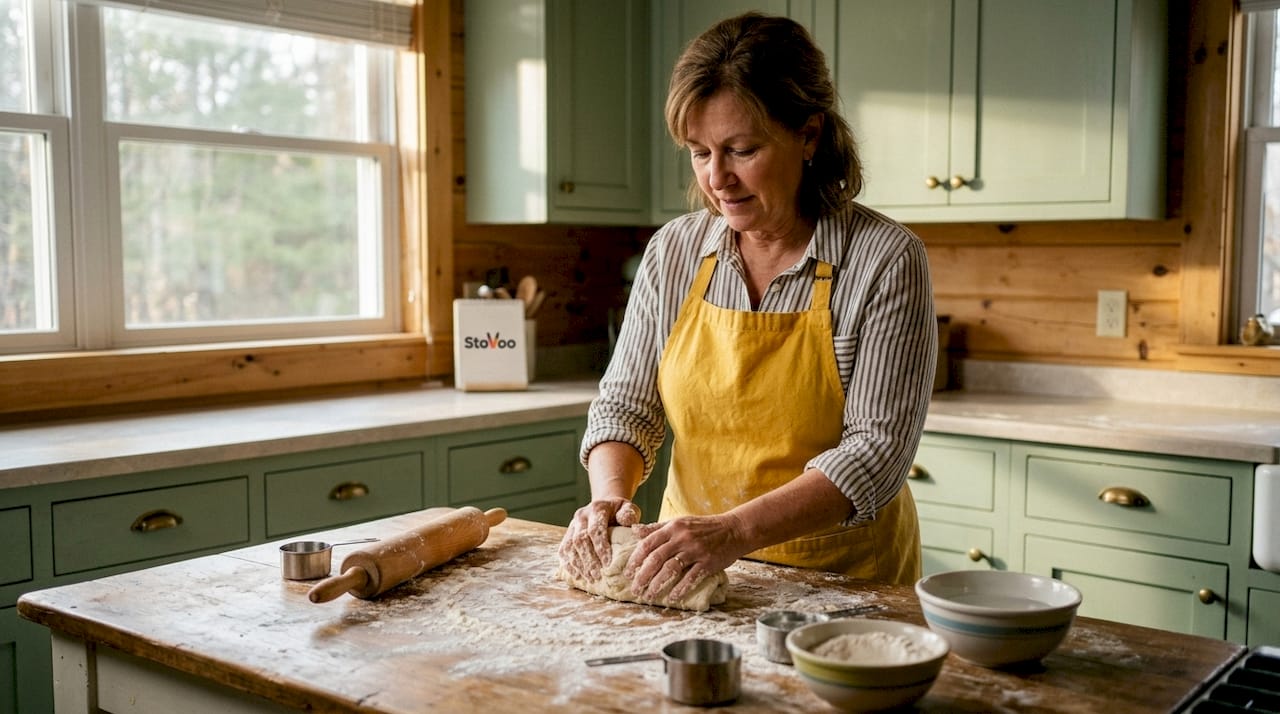
Cottage food businesses let you produce and sell certain foods made in your home kitchen. Allowed products typically include baked goods, jams, candies, and other non-potentially-hazardous items. Startup costs run as low as $0–$200, making this the most accessible entry point in food entrepreneurship. Most states cap annual cottage food revenue between $25,000 and $75,000, so this model works best as a proof-of-concept stage rather than a long-term ceiling.
Personal chef and catering services
Personal chef and catering models sell your culinary skill directly to clients, either in their homes or at events. This path requires a food handler's license, liability insurance, and often a certified commercial kitchen for prep work. The model generates strong word-of-mouth and repeat business, especially in niches like meal prep for busy professionals and gym-goers. Catering also lets you test menu concepts with real paying customers before committing to a fixed location.
Ghost and commissary kitchens
Ghost kitchens, also called dark kitchens or cloud kitchens, are commercial kitchen spaces rented by the hour or month. They exist solely to fulfill delivery orders, with no dine-in component. Commissary kitchen costs run $1,500–$5,000 per month, while a full dark kitchen buildout can reach $30,000–$100,000. Multi-brand cloud kitchens earn 15–25% higher EBITDA margins than single-brand kitchens because shared infrastructure spreads fixed costs across multiple revenue streams.
Mobile food businesses
Food trucks, carts, and pop-up stands make up the mobile food category. They offer geographic flexibility and lower overhead than a brick-and-mortar restaurant. Food truck startup budgets typically land between $45,000 and $140,000 for the first year, covering the vehicle, equipment, permits, and initial inventory. Licensing requirements vary significantly by city and county, so research local health department rules before purchasing any equipment.
Here is a quick comparison of the four platforms by key criteria:
| Platform | Startup Cost | Regulatory Complexity | Best For |
|---|---|---|---|
| Cottage food | $0–$200 | Low | Testing recipes and building a local customer base |
| Personal chef/catering | $500–$5,000 | Medium | Skill-based income with flexible scheduling |
| Ghost/commissary kitchen | $20,000–$100,000 | High | Delivery-focused brands and multi-menu operations |
| Mobile food (truck/cart) | $45,000–$140,000 | High | Event-driven sales and neighborhood brand building |
How do startup costs, licensing, and regulations differ?
Every culinary startup option carries a different financial and legal burden. Understanding those differences before you spend a dollar prevents costly restructuring later.
Cottage food operations require the least capital and the fewest permits. Most states require only a basic food handler's certification and product labeling that meets state guidelines. Home kitchen inspections are rare at this level, though some states do require them. The trade-off is a revenue cap that limits how far you can grow without moving to a commercial space.
Catering and personal chef businesses sit in the middle of the cost and complexity spectrum. You will need a food service license, a business license, and in many jurisdictions, proof that you prep food in a licensed commercial kitchen. Renting commissary space for prep work typically costs $500–$2,000 per month depending on your city. That cost is manageable when you factor it against catering event revenue.
Ghost kitchens and dedicated buildouts carry the highest regulatory burden. Health department inspections, fire safety compliance, and zoning approvals all apply. Dedicated kitchen buildouts can exceed $200,000, which is why most early-stage entrepreneurs start with a shared commissary lease instead.
Pro Tip: Form an LLC before your first sale to protect your personal assets. Restructuring a business after it has customers and contracts costs far more in legal fees than setting it up correctly from day one.
Licensing timelines also vary. A cottage food permit can arrive in days. A full commercial kitchen license in a major city can take 60–90 days. Build that timeline into your launch plan so you are not sitting on purchased inventory while waiting for approvals.
What are the typical growth pathways in culinary startups?
Successful culinary startups follow a staged platform approach: start with cottage food, add personal chef or catering services, then scale into a commissary or ghost kitchen. This path keeps early risk low while building the customer base and cash flow needed to fund the next stage. Treating each platform as a stepping stone rather than a permanent destination is the mindset that separates growing food businesses from stagnant ones.
The most common growth sequence looks like this:
- Validate your concept at the cottage food level. Sell at farmers markets, to neighbors, and through social media. Collect feedback and refine your recipes before spending on commercial infrastructure.
- Add catering or personal chef work to increase revenue and test your ability to produce at volume. This stage reveals operational gaps, like whether your prep process holds up under pressure, before those gaps cost you a commercial lease.
- Move into a commissary kitchen once weekly orders justify the monthly rental cost. A commissary gives you legal access to commercial equipment and lets you scale production without a full buildout.
- Consider a ghost kitchen or dedicated space when delivery order volume is consistent and your brand has a proven following. This is the stage where multi-brand operations become worth exploring.
Launching a structured food brand takes 28–32 weeks from concept to first production run, with formulation and testing alone consuming up to 20 weeks. That timeline surprises most first-time entrepreneurs. Plan for it rather than fight it.
Pro Tip: Create a business plan with best- and worst-case financial scenarios before you spend on equipment or ingredients. The most common culinary startup failure is operating without financial projections, which leaves founders unable to respond when cash runs low.
Brand identity and quality control matter as much as the food itself. Customers return because the experience is consistent, not just because the meal tasted good once. Build standard recipes, portion guides, and packaging standards early. Those systems are what make your business transferable and scalable. You can read more about scaling food ventures sustainably to understand what operational discipline looks like at each growth stage.
How to choose the best culinary venture for your goals
Choosing a culinary path comes down to matching your available capital, skills, and risk tolerance to the right platform. No single model is universally best. The right one is the one that fits where you are right now, not where you hope to be in five years.
Ask yourself these questions before committing to a model:
- How much capital can you deploy without financial stress? If the answer is under $1,000, cottage food or a home-based meal prep service is your starting point.
- Do you have a proven recipe or concept? If not, test your food concept as a market research project before buying equipment. Sell a small batch, collect feedback, and adjust.
- What is your target customer's buying behavior? Gym-goers and busy professionals buy weekly meal subscriptions. Event planners hire caterers months in advance. Knowing your customer's purchase cycle shapes which model generates the most predictable income.
- How much operational complexity can you manage alone? Ghost kitchens and food trucks require managing equipment, permits, staff, and logistics simultaneously. Cottage food and personal chef work are far simpler to run solo.
- Are you building toward a brand or a lifestyle business? A lifestyle business optimizes for personal income and flexibility. A brand optimizes for scale and eventual sale or licensing. Both are valid, but they require different platform choices and investment levels.
Exploring food entrepreneurship through multiple platforms in stages reduces financial risk and builds operational knowledge progressively. You can also look into private label product development as a complementary revenue stream once your core food brand has traction.
Key Takeaways
The most effective approach to choosing a culinary venture is matching your startup capital and skills to the right platform, then growing through each stage as demand and cash flow allow.
| Point | Details |
|---|---|
| Four core platforms | Cottage food, catering, ghost kitchens, and mobile food each carry distinct costs and legal requirements. |
| Staged growth works | Starting with cottage food and advancing to commissary kitchens reduces early financial risk significantly. |
| Failure is preventable | 80% of food businesses fail within three years, mostly from cash flow and planning failures, not bad recipes. |
| Licensing timelines vary | Commercial kitchen permits can take 60–90 days; build that into your launch schedule before buying inventory. |
| Match model to goals | Lifestyle businesses and brand-building ventures require different platforms, investment levels, and operational structures. |
What I've learned watching food entrepreneurs choose the wrong platform first
The most expensive mistake I see aspiring food entrepreneurs make is skipping the cottage food stage entirely. They have a great recipe, a strong Instagram following, and a conviction that they are ready for a commercial kitchen. So they sign a commissary lease, buy equipment, and spend $15,000 before they have confirmed that customers will pay their target price point consistently. Three months later, the orders are not there, and the lease is still running.
The staged platform approach is not just a cost-saving tactic. It is a market research method. Every stage tells you something about your customer, your operations, and your own capacity as a business owner. Skipping stages does not accelerate success. It just accelerates the discovery of problems you were not prepared to solve.
The other pattern I have noticed is that food entrepreneurs underestimate how much of the work is administrative. Order tracking, customer follow-up, billing, and scheduling consume hours that should go toward cooking and marketing. The entrepreneurs who grow fastest are the ones who get their admin systems in place early, whether that means a dedicated platform, a clear booking process, or automated billing. Passion for food is the entry ticket. Operational discipline is what keeps the doors open.
— freeman
How Stovoo helps culinary entrepreneurs build recurring revenue
Running a food venture means managing orders, customers, and payments all at once. Stovoo is built specifically for food creators, meal preppers, and catering chefs who want to replace scattered WhatsApp messages and spreadsheets with one organized platform.
With Stovoo, you get a mobile-first shopfront you can share across social media and messaging apps in minutes. Customers can book catering, subscribe to weekly meal plans, or purchase digital recipe downloads, all from one link. Automated billing and customer management run in the background so you spend more time cooking and less time chasing payments. If you are ready to build a food business that generates consistent income, create your Stovoo account and set up your shopfront today.
FAQ
What are the four main culinary venture types?
The four core culinary platforms are cottage food, personal chef and catering, ghost and commissary kitchens, and mobile food businesses like food trucks and pop-ups. Each carries different startup costs, licensing requirements, and growth potential.
How much does it cost to start a food business?
Startup costs range from $0–$200 for cottage food to $45,000–$140,000 for a food truck and over $200,000 for a dedicated kitchen buildout. The right starting point depends on your available capital and chosen model.
Why do most food businesses fail?
80% of new food businesses fail within three years due to cash flow mismanagement, regulatory compliance gaps, and insufficient business planning. A detailed financial plan with best- and worst-case scenarios is the most effective preventive measure.
What is a ghost kitchen and how does it work?
A ghost kitchen is a commercial kitchen space used exclusively to prepare food for delivery orders, with no dine-in service. Entrepreneurs rent the space by the hour or month and operate one or more delivery-only food brands from it.
How do I know which culinary business model is right for me?
Match your available capital, operational capacity, and target customer to the platform that fits your current stage. Start with a low-cost model to test your concept before committing to a commercial lease or major equipment purchase.