

TL;DR:
- Effective food business models focus on scalability, flexibility, and recurring revenue. Most successful brands in 2026 build around proven structures like DTC, central kitchens, or ghost kitchens. These models help reduce costs, increase loyalty, and enable rapid growth by matching the stage of the business.
Effective food business models are defined by three qualities: scalability, flexibility, and a clear path to recurring revenue. The most successful food entrepreneurs in 2026 are not chasing every trend. They are building focused operations around proven structures, whether that is a direct-to-consumer (DTC) brand like Chomps, a central kitchen operation like Samosa Party, or a multi-brand ghost kitchen. Choosing the right model early determines how fast you grow, how much capital you burn, and how loyal your customers become.
1. What is the DTC-first model and why it works
The DTC-first model is the practice of selling directly to consumers online before pursuing retail or wholesale. It is the most common entry point for food brands that want to validate demand without committing to expensive distribution deals or retail shelf fees.
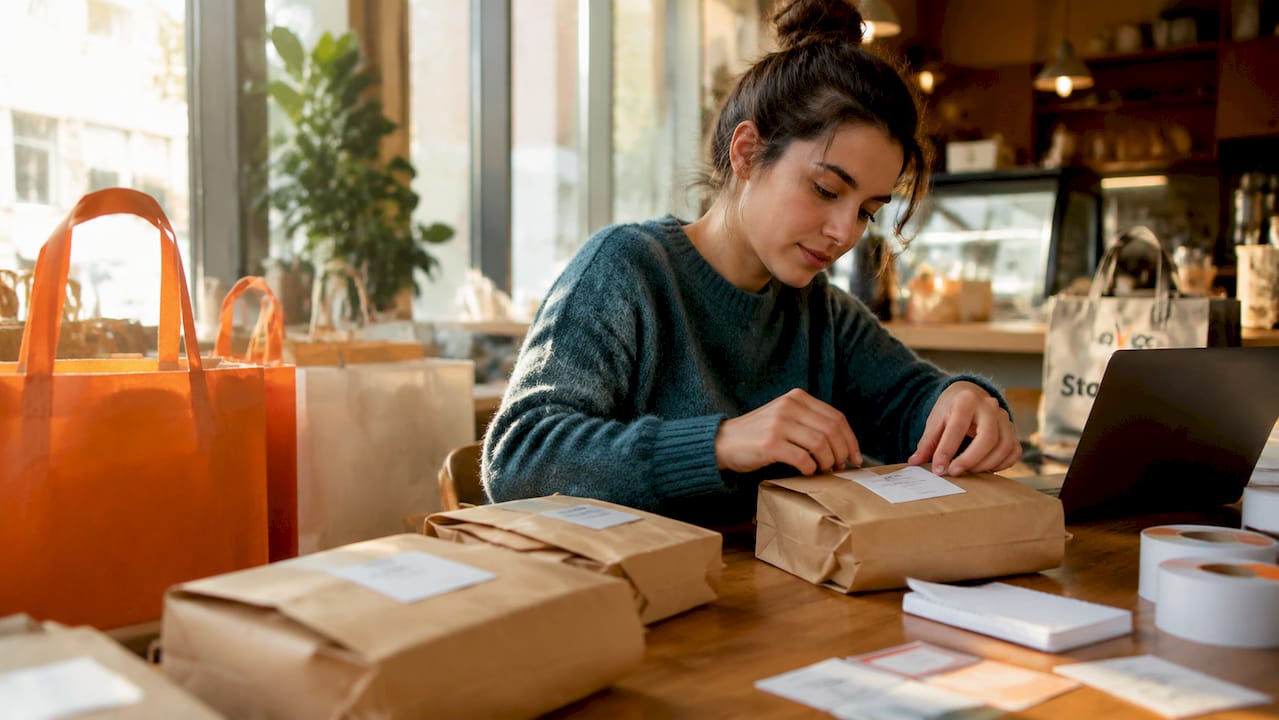
Chomps, the meat snack brand, is the clearest proof of this approach. The brand generated 90% of its revenue from just three core SKUs before expanding into retail. That discipline meant every marketing dollar went toward products that customers already wanted. It also meant the team had real purchase data before pitching to any retailer.
The DTC path also builds customer loyalty organically. You own the relationship, the email list, and the purchase history. When you do expand to retail, you bring proof of demand with you. That is a negotiating advantage most startups never have.
Pro Tip: Start with one hero product and one sales channel. Prove it works before adding complexity. Chomps did not build a product catalog. It built a customer base.
2. How central kitchen models improve efficiency and growth
A central kitchen is a single, high-capacity production facility that supplies multiple sales points, whether those are retail packs, delivery orders, or physical outlets. The model separates production from service, which is where most food businesses lose money and consistency.
Samosa Party, founded by a former Intel engineer, built its entire operation around this principle. The brand achieved up to 75% automation in its prep processes. That level of automation means fewer staff per outlet, faster output, and a product that tastes the same every time. It also creates a barrier that competitors without similar infrastructure cannot easily cross.
The financial case for central kitchens compounds over time. The first outlet carries the full infrastructure cost. Each additional outlet adds revenue with far lower incremental labor and equipment costs. Learning to grow your food business sustainably means building that kind of compounding advantage early.
| Factor | Traditional Kitchen | Central Kitchen |
|---|---|---|
| Staff per outlet | High | Low |
| Consistency | Variable | Standardized |
| Expansion cost | High per unit | Lower per unit |
| Automation potential | Limited | High |
| Competitive barrier | Weak | Strong |
Pro Tip: Invest in your central kitchen before you open your second location, not after. The infrastructure pays for itself faster than you expect once volume increases.
3. The rise of multi-brand ghost kitchens
Ghost kitchens, also called cloud kitchens or virtual restaurants, operate without a dining room. Orders come in through delivery apps, and food goes out the back door. The model strips away the overhead of front-of-house staff, prime real estate, and interior design costs.
The real power comes from running multiple virtual brands from one kitchen. A single kitchen team can manage 3 to 5 brands simultaneously. Each brand targets a different customer segment or cuisine preference, but they share the same equipment, staff, and lease. That means revenue per square foot climbs without a proportional rise in costs.
Ghost kitchens also give you flexibility that physical restaurants cannot match. If one brand underperforms, you retire it and test a new concept without signing a new lease or hiring a new team. Modular kitchen design makes that switching fast and low-cost. You can explore how cloud kitchen operations work in practice to understand the model at ground level.
Key advantages of the multi-brand ghost kitchen model:
- Lower capital requirements compared to brick-and-mortar stores
- Ability to test new cuisines or concepts without major reinvestment
- Revenue diversification across multiple virtual brands
- Fast response to delivery platform trends and consumer demand shifts
- Reduced exposure to any single brand's performance
4. Comparing the top food business models
No single model fits every food entrepreneur. The right choice depends on your budget, product type, target market, and appetite for operational complexity. The table below maps the three core models against the factors that matter most when you are deciding how to start a food business.
| Model | Startup Cost | Scalability | Risk Level | Best For |
|---|---|---|---|---|
| DTC-first | Low to medium | High with data | Low | Packaged food brands, snacks, specialty products |
| Central kitchen | Medium to high | Very high | Medium | QSRs, meal prep, multi-outlet food brands |
| Multi-brand ghost kitchen | Low to medium | High | Low to medium | Delivery-focused operators, urban markets |
Combining models is often the strongest play. A food brand might start DTC to validate demand, then build a central kitchen to supply both online orders and physical outlets, then add ghost kitchen brands to fill off-peak capacity. Using the Business Model Canvas helps map how each element connects, from resource allocation to customer relationships.
For startups with limited capital, mobile formats like food trucks offer another entry point. Mobile food businesses can shift locations quickly, test new markets, and adapt their menus without the commitment of a fixed lease. They are not the fastest path to scale, but they are one of the lowest-risk ways to build a customer base and refine your product.
The key principle across all models is flexibility. Building for scalability rather than today's fixed needs means you can pivot when consumer trends shift without tearing down what you built. Food entrepreneurs who lock themselves into rigid infrastructure early often find themselves unable to respond when the market moves.
Situational recommendations by stage:
- Early-stage startups: DTC-first or food truck to validate demand with minimal overhead
- Growing brands with proven demand: Central kitchen to standardize and scale production
- Delivery-focused operators in urban markets: Multi-brand ghost kitchen to maximize revenue per location
- Established brands seeking diversification: Combine central kitchen supply with ghost kitchen brands to fill capacity
You can also look at catering business strategies as a complementary revenue stream. Catering works well alongside central kitchen infrastructure because you are already producing at volume. Adding catering orders to your existing production schedule improves margin without adding significant cost.
Pro Tip: Do not choose a model based on what sounds exciting. Choose based on your current cash position, your product's shelf life, and whether your customer wants to pick up, get delivery, or subscribe.
Key takeaways
The most effective food business models combine a focused DTC entry with scalable infrastructure like central kitchens or ghost kitchens to build recurring revenue and reduce operational risk.
| Point | Details |
|---|---|
| Start DTC to validate demand | Sell direct first to prove your product before committing to retail or wholesale. |
| Central kitchens compound returns | Each new outlet costs less to run when production is centralized and automated. |
| Ghost kitchens maximize revenue per location | Running 3 to 5 virtual brands from one kitchen raises revenue without raising fixed costs. |
| Flexibility beats rigid infrastructure | Modular kitchens and scalable tech let you pivot brands without major reinvestment. |
| Combine models as you grow | DTC plus central kitchen plus ghost kitchen is a proven sequence for scaling food brands. |
Why I think most food entrepreneurs pick the wrong model first
Most food entrepreneurs I have watched over the years make the same mistake. They start with the model that looks impressive rather than the one that fits their stage. They sign leases for full restaurants when they should be selling meal plans online. They hire kitchen staff before they have proven anyone wants their food.
The brands that actually scale, like Chomps with its three core SKUs driving nearly all revenue, or Samosa Party with its automated prep processes acting as a competitive moat, all did the same thing. They built operational depth before they built operational breadth. They got very good at one thing before they added complexity.
The uncomfortable truth is that most food businesses do not fail because of bad food. They fail because the model does not match the stage. A ghost kitchen is a terrible idea if you have not validated your menu. A central kitchen is a waste of capital if you are still figuring out your customer. The model is not the destination. It is the vehicle. Pick the one that gets you to proof of concept fastest, then upgrade.
— freeman
How Stovoo helps you build a food business that lasts
Stovoo is built for food entrepreneurs who are ready to move beyond WhatsApp orders and spreadsheet chaos. The platform gives you a centralized dashboard to manage meal subscription plans, catering bookings, digital recipe sales, and customer relationships in one place. You get automated billing, a mobile-first shopfront, and full ownership of your customer data from day one.
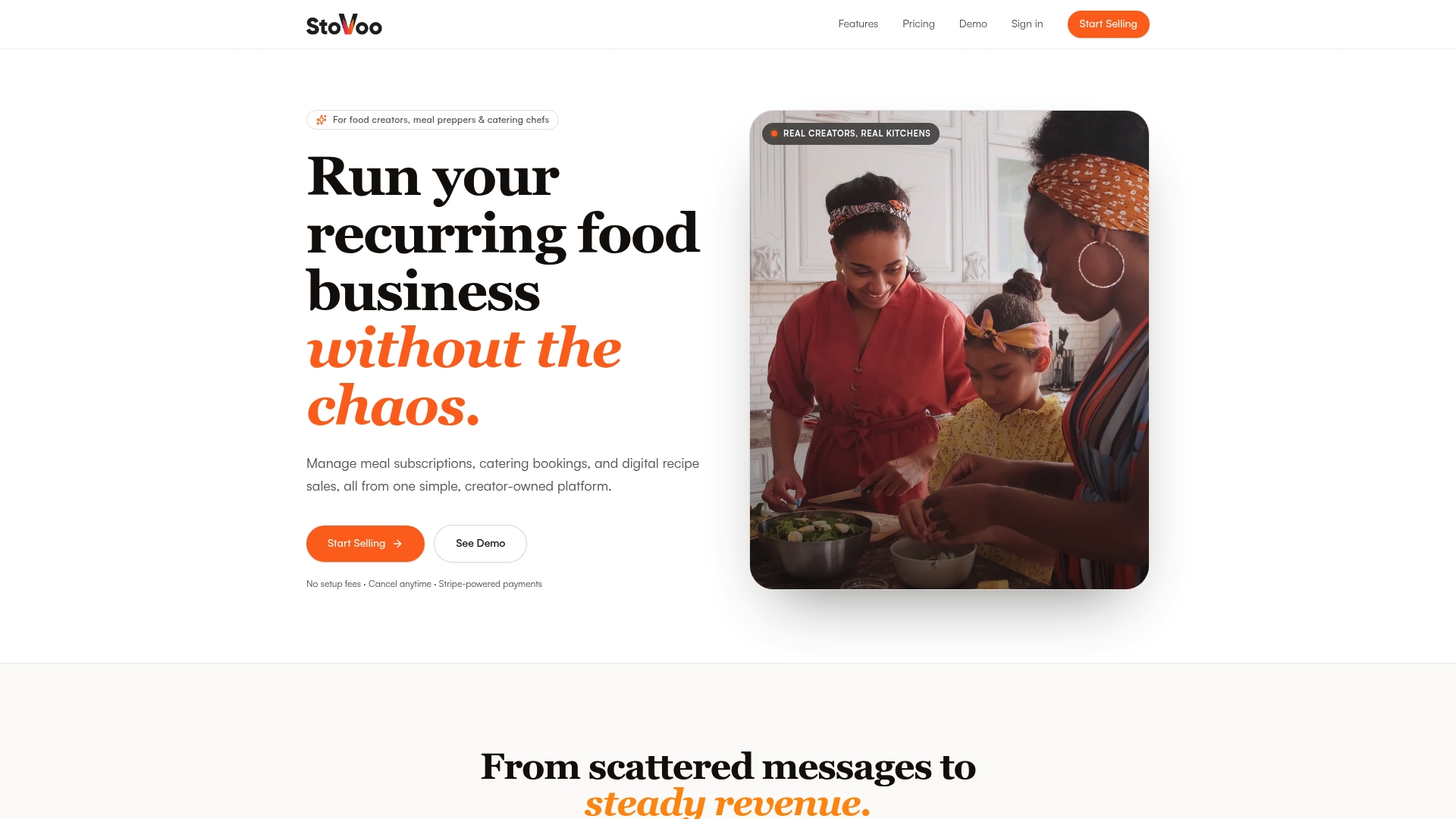
Whether you are running a weekly meal prep service, a catering operation, or selling digital recipe guides, Stovoo fits the model you are building. You can start selling on Stovoo in minutes and share your shopfront link across social media and messaging apps immediately. Food entrepreneurs across Lagos, London, Nairobi, and Accra are already using Stovoo to build recurring food businesses that generate steady income without the operational headache.
FAQ
What is a DTC-first food business model?
A DTC-first model means selling directly to consumers online before pursuing retail or wholesale distribution. Brands like Chomps built nearly all their early revenue through direct sales before expanding to retail shelves.
How many virtual brands can one ghost kitchen run?
A single ghost kitchen team can typically manage 3 to 5 virtual brands at the same time. Each brand shares the same kitchen, staff, and equipment, which keeps costs low while diversifying revenue.
What is food business flexibility and why does it matter?
Food business flexibility is the ability to change your menu, brand, or sales channel without major reinvestment. Modular kitchen layouts and scalable tech stacks make that possible and give you a real advantage when consumer trends shift.
When should a food entrepreneur invest in a central kitchen?
Invest in a central kitchen once you have validated demand and are ready to open a second location or scale production volume. The infrastructure cost pays off fastest when you are supplying multiple outlets or high-volume delivery orders.
What is the lowest-risk way to start a food business?
The lowest-risk entry points are DTC online sales or a mobile food truck. Both require less capital than a physical restaurant and let you test your product and pricing before committing to fixed overhead.