

The three resource buckets every U.S. food creator needs right now are official government guidance, ready-to-use operational templates, and a platform to run billing and your shopfront. Get those three working together and you go from scattered notes to a live, compliant business faster than most people expect.
Here is your immediate action plan:
- Bucket 1 — Official U.S. guidance: Bookmark the SBA licensing page, the FDA's food business start guide, and the FTC Negative Option Rule PDF. These three sources answer your compliance questions before you spend a dollar.
- Bucket 2 — Operational templates: Recipe costing sheet, subscription terms with a cancellation policy, invoice, commissary agreement, and a HACCP checklist. Download or build these before you take your first paid order.
- Bucket 3 — Execution platform: Stovoo handles automated billing, shopfront creation, and customer management in one dashboard so you are not duct-taping WhatsApp and spreadsheets together.
Two actions in the next 48 hours: (1) Download a recipe costing sheet and run your top three menu items through it. (2) Visit your county health department's website to confirm whether your kitchen setup is permitted for your business model.
Key Takeaways
The fastest path to a compliant, revenue-generating food business combines official U.S. guidance from the SBA, FDA, and FTC with ready-to-use templates and a single platform like Stovoo that handles billing, shopfront, and customer management together.
| Point | Details |
|---|---|
| Three resource buckets | Collect official U.S. guidance, operational templates, and an execution platform before your first paid order. |
| Local rules vary | Check your county health department page early; some jurisdictions require a commissary agreement and inspection even for home-based operations. |
| FTC billing compliance | Subscription checkout copy and cancellation flow are legal controls, not marketing copy; disclose terms before collecting billing information. |
| Recipe costing is non-negotiable | Include labor minutes and overhead in every costing sheet or your pricing will undercut your margins from day one. |
| Stovoo as your execution layer | Stovoo combines FTC-aligned billing consent, a mobile-first shopfront, and exportable customer data in one dashboard built for food creators. |
This article is general information, not a substitute for advice from a qualified lawyer. Consult a qualified legal professional about your own circumstances before acting on anything here.
Table of Contents
- What educational resources for food creators should you collect first?
- Where do you find trustworthy U.S.-specific guidance on running a food business?
- Which templates should you download right now?
- What certifications and short courses are worth your time?
- What does your regulatory timeline and cost range look like?
- How do you monetize your food business across three models?
- How do you choose an operational platform for your food business?
- How does Stovoo get you live in minutes?
- What mistakes do food creators make with their training resources?
- Stovoo gets you from checklist to live business fast
- Sources
- FAQ
What educational resources for food creators should you collect first?
Think of your first four weeks as a compliance-and-revenue sprint. The goal is to have every template in hand and every license check completed before your first customer pays you.
- Week 1 — Compliance foundation: Download a recipe costing sheet, a HACCP food-safety checklist, and your state's food-handler certification requirements. Check your county health department page for home-kitchen or commissary rules. This single step removes the biggest legal risk for all three business models.
- Week 2 — Business structure and billing: File your business entity (LLC or sole proprietor), then pull the FTC Negative Option Rule and draft your subscription terms and cancellation policy. For meal-subscription creators, this is the highest-risk document to get right early.
- Week 3 — Templates for operations: Build or download your commissary agreement template (if applicable), invoice and payment receipt, and a menu-tier pricing template. Catering creators need the commissary agreement before booking any events.
- Week 4 — Marketing and shopfront: Set up your Stovoo shopfront, upload your priced menu, and test a subscription checkout flow end to end. Digital-recipe sellers should also prepare a product spec sheet and a simple sales page at this stage.
The Food Entrepreneur Workflow Guide on the Stovoo blog maps these steps into a repeatable weekly workflow if you want a pre-built schedule.
Where do you find trustworthy U.S.-specific guidance on running a food business?
Official sources are not just for lawyers. Each one answers a specific operational question, and knowing which page to open saves hours of guesswork.
- SBA — Licenses and permits: The SBA confirms that most small businesses need a combination of federal and state/local licenses, and that required permits depend on your specific activities and location. Use the SBA's business license search to identify your federal triggers, then follow the links to your state agency. Note every fee and renewal date.
- FDA — How to start a food business: The FDA's start-a-food-business page frames regulatory compliance as a core part of launch planning, not an afterthought. Scroll to the facility registration section and note whether your prep method qualifies as manufacturing or processing.
- FTC — Negative Option Rule: If you sell subscriptions, the FTC's rule requires clear disclosure of billing terms before you collect payment info, unambiguous consent to recurring charges, and a simple cancellation path. Save the disclosure and consent sections and paste the required language directly into your checkout copy.
- County-level check (King County example): King County Public Health requires separation or a commissary kitchen for some home-based catering operations and may require a commissary agreement and inspection. Your county may have identical or stricter rules. Search "[your county] + food business permit" before assuming your home kitchen qualifies.
Which templates should you download right now?
Every template below has a direct compliance or revenue function. Skip one and you either leave money on the table or expose yourself to a regulatory gap.
- Recipe costing sheet: Required fields: ingredient name, unit cost, quantity per batch, portion size, labor minutes, and overhead allocation. Without portion-level cost data, your pricing is a guess.
- Ingredient/spec sheet: Captures allergens, substitution notes, and supplier details. Catering creators need this for every menu item; digital-recipe sellers need it for each product listing.
- Commissary agreement template: Required fields: facility address, permitted hours, storage allocation, inspection contact, and fee structure. Check fresh-ingredient sourcing considerations when negotiating storage terms.
- Subscription terms and cancellation policy: Required fields: billing cycle, price, renewal notice period, cancellation method, and refund policy. This document is your FTC compliance layer.
- Invoice and payment receipt: Required fields: business name and address, customer name, itemized services, tax line, payment method, and date. Keep a numbered series for bookkeeping.
- Menu-tier pricing template: Maps each product or plan to a price point, cost margin, and minimum order quantity. Useful for both meal subscriptions and catering quotes.
- HACCP/food-safety checklist: Required fields: critical control points, temperature logs, corrective action steps, and sign-off fields. Your local health inspector will ask for this.
Pro Tip: Date-stamp every template with a version number (e.g., "v1.2 — March 2026") and store all files in a single shared folder. When a health inspector or billing dispute arises, you want the exact version you were using on a specific date, not a file called "final_FINAL."
What certifications and short courses are worth your time?
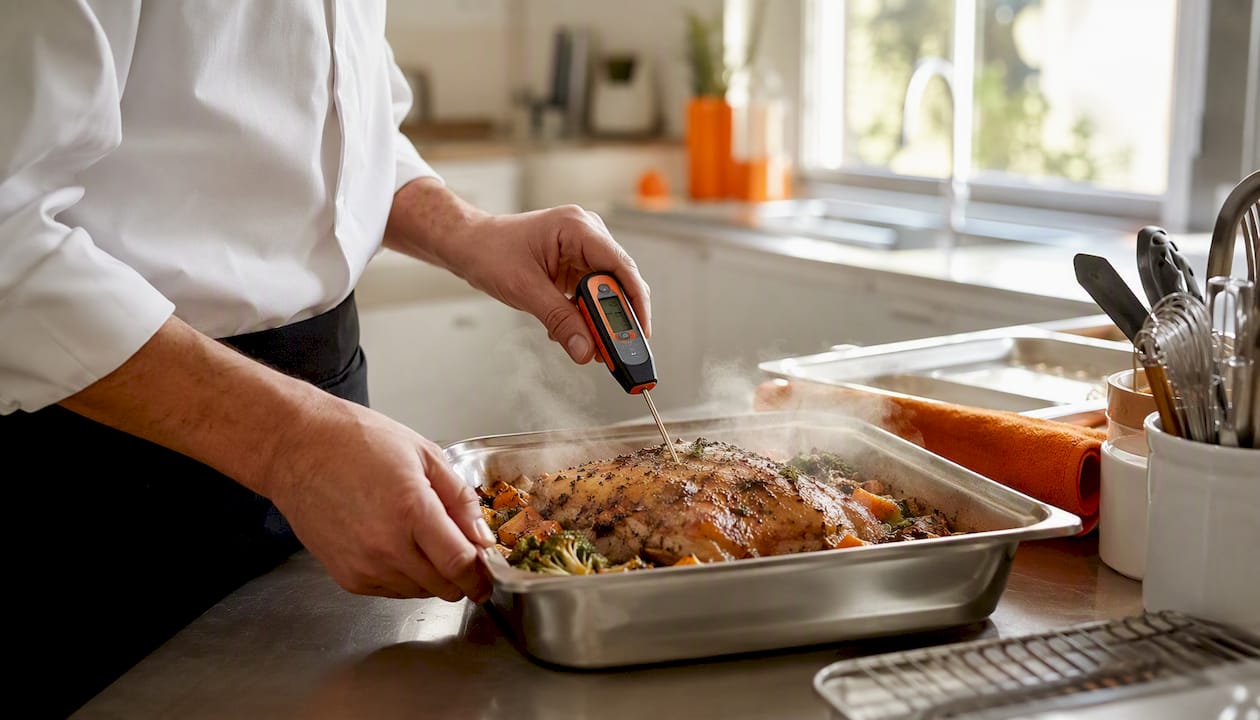
Food safety certification is the non-negotiable starting point. ServSafe's Food Manager Certification is widely accepted in the U.S. and covers key food safety principles including temperature control, cross-contamination prevention, and HACCP. Many local health departments also accept state-specific food-handler cards for lower-risk roles. Check your county's requirements before enrolling, because some jurisdictions require a food manager cert on-site during all operating hours.
Beyond food safety, Clemson's HGIC factsheet outlines the product-development stages from idea through test marketing to commercialization, including shelf-life testing and packaging decisions. Running your product through those stages before scaling prevents costly reformulations later.
For business basics, the SBA's free online courses cover business plan writing, pricing strategy, and local licensing walkthroughs. Pair those with a short subscription-billing module that covers FTC consent requirements. For marketing, focus on social-selling fundamentals and content-to-product funnels: how a cooking tutorial online becomes a digital recipe ebook sale, or how a catering reel drives booking inquiries.
What does your regulatory timeline and cost range look like?
The Escoffier home-based catering guide recommends checking city, county, and state allowances before any other step, and the SBA echoes that licensing is activity- and location-specific. Here is a practical pre-launch sequence:
- Days 1–7: Form your business entity, open a business bank account, and run your county health department check.
- Days 8–21: Apply for your state food-handler or food-manager certification, submit your local business license application, and confirm whether your kitchen requires a commissary agreement.
- Days 22–42: Book your facility inspection, complete FDA facility registration if your operation manufactures or processes food under 21 U.S.C. § 350d, and finalize your commissary lease if required.
Estimated cost ranges vary widely by state and county. Business entity filing typically runs $50–$500. Local food-business permits range from under $100 to several hundred dollars annually. ServSafe Food Manager exam fees are around $36 for the exam alone. Commissary rental costs depend entirely on your market. Budget a low-end total of roughly $300–$600 for a home-based digital-recipe or meal-prep operation, and $800–$2,000 or more for a catering setup requiring a commissary lease and multiple inspections.
How do you monetize your food business across three models?
Three primary revenue models suit most food creators, and the best operators run at least two simultaneously.
- Recurring meal subscriptions: Revenue depends on average order value (AOV), weekly frequency, and churn rate. A simple formula: monthly revenue = (subscribers × AOV) × delivery frequency. Reducing monthly churn by even one percentage point compounds significantly over a year. Track AOV, churn rate, customer acquisition cost (CAC), and lifetime value (LTV) from day one.
- Event catering: Revenue is driven by event size, price per head, and booking frequency. Use a catering booking checklist to standardize quotes and reduce scope creep. Pricing formula: (food cost + labor + overhead) ÷ (1 minus target margin) = per-head price.
- Digital recipe sales: Low overhead, high margin. A recipe ebook priced at $15–$25 with a 40% email-list conversion rate on a list of 500 subscribers generates meaningful revenue with zero fulfillment cost. Bundle with a live cooking class ticket to increase average transaction value.
For meal subscriptions specifically, the meal plan scheduling guide covers batching, prep windows, and delivery cadence to protect your margins as volume grows.
How do you choose an operational platform for your food business?
Ask every platform vendor these questions before committing: Where does customer data live, and can you export it? How does the cancellation flow work for subscribers? What are the transaction fees at your expected monthly volume? What is the support response time?
Red flags to watch for:
- Cancellation buried behind multiple screens or a phone-call requirement
- No data export option (you lose your customer list if you leave)
- Checkout copy that obscures recurring billing terms
A platform that handles billing, shopfront, and customer messaging in one place removes the biggest operational friction for early-stage food creators. Stovoo is built specifically for this: it combines subscription billing with FTC-aligned cancellation UX, a mobile-first shopfront, and exportable customer data, all without requiring technical setup.
How does Stovoo get you live in minutes?
- Create your Stovoo account at Stovoo.
- Upload your menu items with costed prices from your recipe costing sheet.
- Enable subscription billing and paste your FTC-compliant cancellation copy into the checkout terms field.
- Publish your shopfront link and share it on Instagram, WhatsApp, or your email list.
- Test a full subscription checkout as a customer to confirm the billing consent and cancellation flow work correctly.
By the end of day one, you have a live shopfront accepting recurring orders and digital product downloads, with customer data you own. See a completed example storefront to understand what the customer-facing experience looks like.
Key compliance features built into Stovoo: billing consent capture at checkout, a visible and simple cancellation mechanism, exportable customer records, and location/commissary fields on your storefront profile.
What mistakes do food creators make with their training resources?
Three patterns show up repeatedly, and each one has a fast fix.
Skipping the local rule check is the most expensive mistake. Creators assume a national checklist covers everything, then discover their county requires a commissary agreement they never signed. Fix: add a "confirm permitted setup" step to every template you use, and check your county health department page before week two.
Conflating marketing consent with billing consent creates FTC exposure. Collecting an email address for a newsletter is not the same as obtaining affirmative consent to charge a recurring fee. Fix: treat your checkout copy and cancel UX as legal controls. The FTC's Negative Option Rule is explicit: disclosure must happen before you collect billing information, not after.
Under-costing recipes is the silent margin killer. Labor minutes and overhead rarely make it into early cost sheets. Fix: run every recipe through a costing sheet that includes a labor line and a percentage-based overhead allocation. The catering business tips guide on the Stovoo blog covers markup frameworks that work for both catering and subscription pricing.
Stovoo gets you from checklist to live business fast
Running a food business from a patchwork of DMs, spreadsheets, and manual invoices costs you time and customers. Stovoo gives you a single dashboard where subscription billing, shopfront management, catering bookings, and digital recipe sales all live together, with no technical setup required.
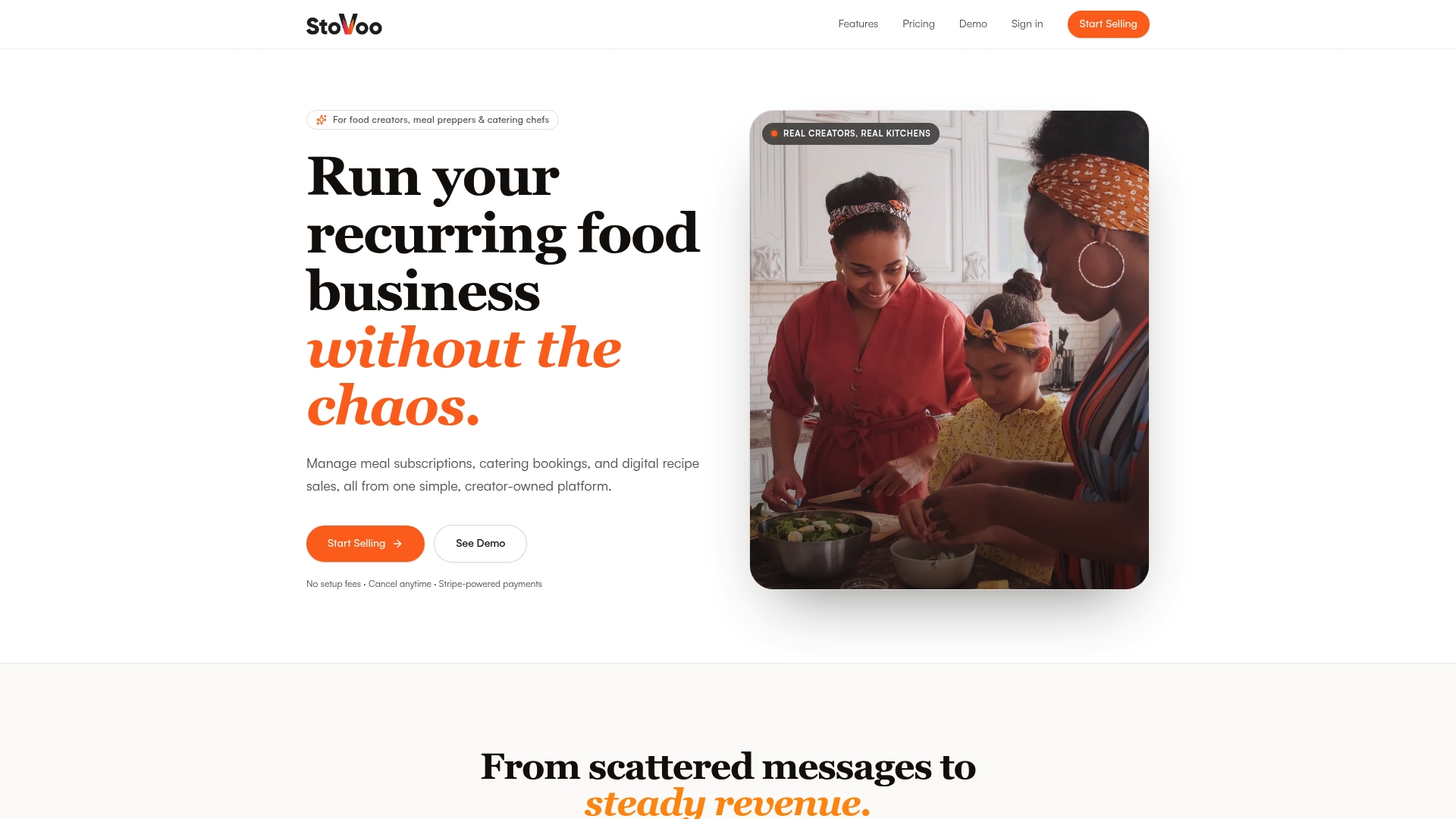
Your onboarding checklist: create your account, upload three menu items with costed prices, connect your payment method, publish your shopfront link, and run a test subscription checkout. That sequence takes most creators under an hour. For platform help or template imports, the Stovoo support team is reachable directly from your dashboard. Start selling on Stovoo and have your shopfront live before the week is out.
Sources
- Apply for licenses and permits | U.S. Small Business Administration
- FEDERAL TRADE COMMISSION 16 CFR Part 425 — Negative Option Rule (PDF)
- FDA — How to start a food business
- King County Public Health — Catering and home-based business permit
- Starting a food business | HGIC (Clemson)
FAQ
Do food creators need FDA facility registration?
Registration under 21 U.S.C. § 350d is required when your operation manufactures, processes, packs, or holds food for U.S. consumption. Restaurants and most retail food establishments are exempt, but a production or commissary kitchen may not be.
What does the FTC Negative Option Rule require for subscription food businesses?
The FTC requires sellers to disclose all material billing terms before collecting payment information, obtain clear affirmative consent to recurring charges, and provide a simple cancellation mechanism. Non-compliance can result in enforcement action.
Which food safety certification is most widely accepted in the U.S.?
ServSafe's Food Manager Certification is accepted in most U.S. states. Some jurisdictions also accept state-specific food-handler cards; check your county health department's requirements before enrolling.
How do I price a meal subscription plan profitably?
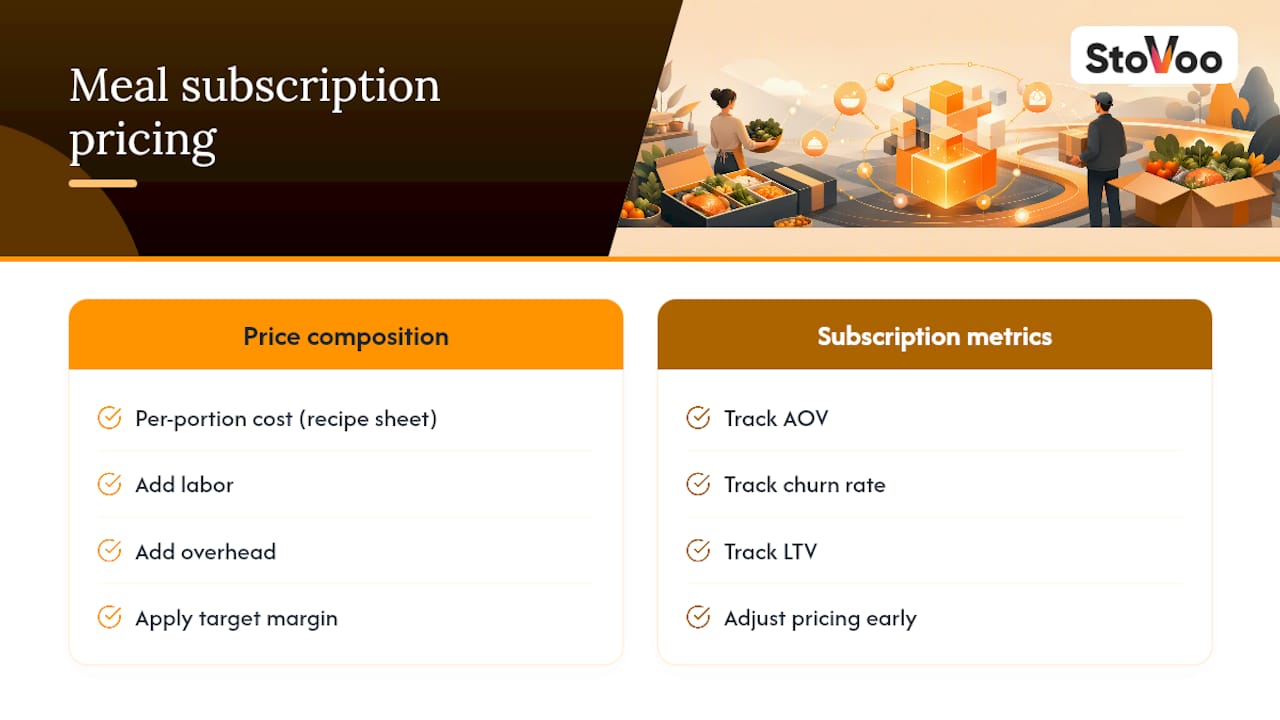
Start with a per-portion cost from your recipe costing sheet, add labor and overhead, then apply your target margin. Track AOV, churn rate, and LTV from your first month so you can adjust pricing before losses compound.
Can Stovoo handle both subscription billing and catering bookings?
Yes. Stovoo's dashboard manages recurring meal-plan subscriptions, catering inquiries and bookings, and digital recipe sales in one place, with automated billing and a mobile-first shopfront you can share across social media and messaging apps.