
TL;DR:
- Food ecommerce allows food vendors to expand their market and control customer data effectively. Success depends on legal compliance, transparent product information, and choosing the right logistics and sales channels. Building trust and owning customer relationships are crucial for long-term sustainability in online food sales.
Ecommerce for food vendors is defined as the practice of selling food products through digital channels, combining specialized logistics, legal compliance, and direct customer marketing to reach buyers beyond a physical location. This model, formally called food direct-to-consumer (DTC) ecommerce, gives vendors full control over pricing, branding, and customer relationships. Unlike general retail ecommerce, selling food online requires managing perishability, FDA registration, cold chain fulfillment, and allergen labeling. Understanding what is ecommerce for food vendors means understanding these unique layers, not just setting up a shopping cart.
What is ecommerce for food vendors, and why does it matter?
Food ecommerce is the process of accepting orders, processing payments, and fulfilling food products through an online storefront or digital marketplace. The core benefit is market expansion. A meal prepper who once served 20 local clients can reach hundreds of customers across multiple states with the right setup. Vendors also gain direct control over customer data, which third-party delivery apps and marketplaces do not share. That data ownership is the foundation of long-term brand growth.
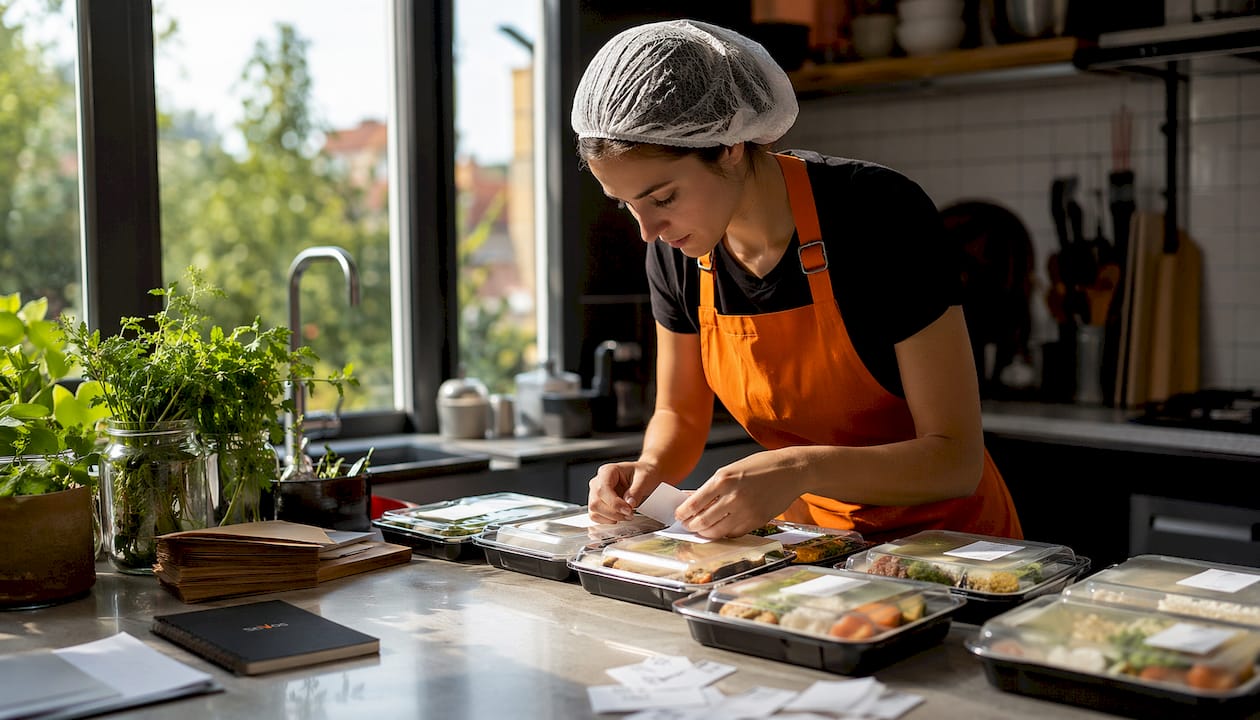
Food ecommerce also creates recurring revenue opportunities that a farmers market stall simply cannot. Subscription meal plans, digital recipe downloads, and catering bookings can all run through a single online channel. Platforms like Stovoo are built specifically for this model, giving food creators a centralized dashboard to manage meal subscriptions, catering inquiries, and recipe sales without juggling spreadsheets or WhatsApp threads. The result is a more predictable income stream and a more professional customer experience.
What are the essential components of a successful food ecommerce business?
A food ecommerce business requires four foundational pillars: a compliant online storefront, legal credentials, specialized packaging, and trust signals that convert browsers into buyers.
Legal compliance comes first
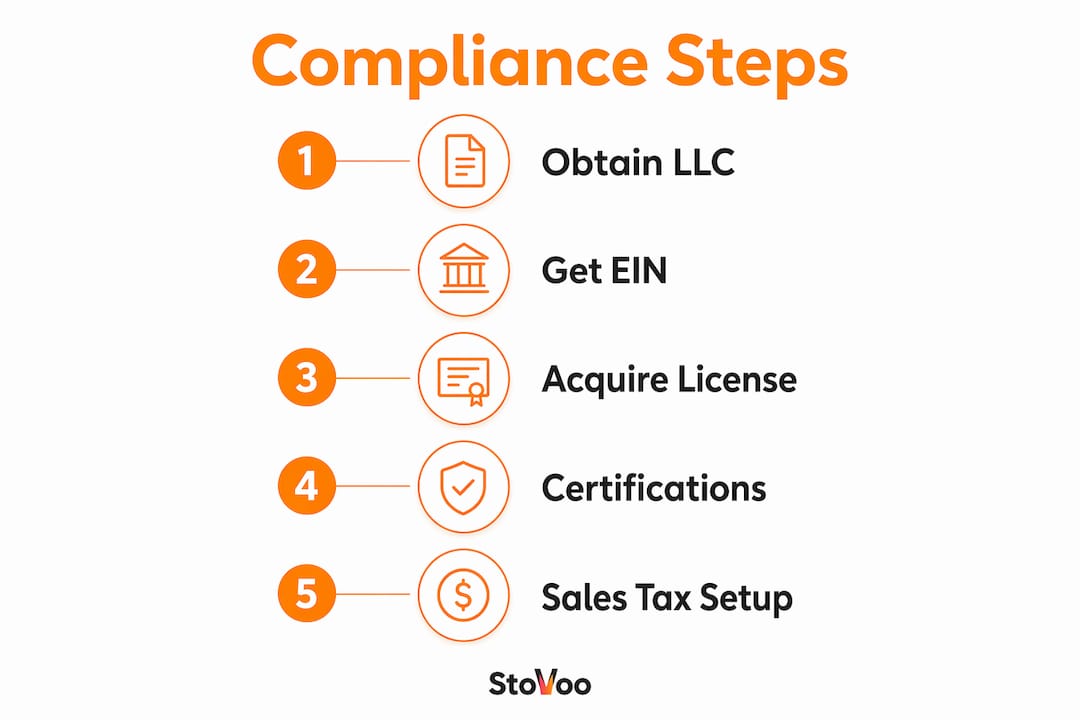
Selling food online legally requires an LLC, an EIN, a state food manufacturing license, ServSafe certification, a sales tax permit, and FDA registration for any interstate sales. That list is non-negotiable. Skipping even one item exposes you to fines, forced shutdowns, or product seizures. Check your state's cottage food laws before you ship a single package.
Storefront setup and trust signals
Your online storefront must do the selling your physical presence used to do. Effective food ecommerce storefronts include high-quality photos and videos, clear ingredient and allergen listings, FAQ pages, contact options, and transparent shipping and return policies. Each element reduces purchase hesitation.
Key trust signals to include on every product page:
- High-resolution photos showing texture, portion size, and packaging
- Full ingredient and allergen lists with common allergens bolded
- Nutritional data including calories, macros, and serving size
- Shipping timelines with clear cutoff days for fresh or frozen orders
- Return and refund policy written in plain language
Pro Tip: Add a short video of the food being prepared or plated. Video builds emotional connection faster than any written description and significantly reduces return inquiries.
Food ecommerce platforms need features that general retail platforms lack, including expiry tracking and cold-chain integration. Choose a platform built for food, not one adapted from a clothing or electronics store.
How do food vendors handle logistics and fulfillment in ecommerce?
Logistics is where most food vendor online businesses lose money without realizing it. The fulfillment method you choose directly sets your cost floor, and that floor determines whether your pricing is profitable.
| Fulfillment Method | Avg. Cost Per Order | Best For |
|---|---|---|
| Local driver delivery | $7–$12 | Fresh meals, local meal prep |
| 3PL ambient pick/pack | $2–$5 | Shelf-stable packaged goods |
| Cold chain 3PL | 20–50% above ambient | Frozen meals, perishable kits |
Local delivery costs average $7–$12 per order, while cold chain 3PL services run 20–50% more than ambient fulfillment. That gap eats directly into margin on lower-priced products. A $15 meal kit with $10 in cold chain fulfillment costs leaves almost nothing after packaging and ingredients.
Choosing the right fulfillment model
Local delivery works best for meal preppers and catering chefs serving a defined geographic area. It keeps costs predictable and allows same-day or next-day service. Ambient 3PL suits shelf-stable products like spice blends, sauces, or packaged snacks that do not require refrigeration. Cold chain 3PL is necessary for frozen meals or fresh ingredient kits but demands higher retail prices to stay profitable.
Cold chain logistics substantially increase per-order handling fees and require insulated packaging, dry ice, or gel packs. Many food entrepreneurs underestimate these costs when setting their initial prices. Build fulfillment costs into your pricing model before you launch, not after your first month of losses.
Return policies for food businesses
Food businesses handle returns differently from standard retail. Food vendors typically offer replacements or refunds rather than accepting physical product returns, due to food safety regulations and the cost of return shipping perishables. Your shipping zones must also exclude states where you are not licensed to sell. Configure these zones in your platform settings before going live.
Pro Tip: Set up automated order confirmation emails that include your return policy, expected delivery window, and a customer service contact. Proactive communication cuts support requests by a significant margin.
What ecommerce platforms and sales channels best serve food vendors?
The channel strategy you choose shapes your revenue ceiling and your customer relationships. Food vendors have three main options: a branded DTC website, third-party marketplaces, and food delivery apps. Each has a different cost and control profile.
Building a primary ecommerce website is the most important step for long-term brand control. A branded site gives you full ownership of customer data, email lists, and purchase history. That data powers repeat sales, loyalty programs, and targeted promotions. Marketplaces and delivery apps provide traffic but charge commission fees and keep customer data for themselves.
The strongest food ecommerce strategies combine multiple channels:
- Branded DTC website or platform for subscription plans, direct orders, and customer ownership
- Social media storefronts (Instagram, Facebook) for discovery and impulse purchases
- Food delivery apps for local volume, used as a customer acquisition tool rather than a primary channel
- Marketplaces for shelf-stable specialty products with national shipping potential
Social media and marketplaces provide initial traffic, but a primary ecommerce website is the only channel that gives you full control over branding and customer data. Treat delivery apps as a top-of-funnel tool, not your main revenue source. The goal is to move customers from those platforms onto your own channel over time.
Stovoo addresses this directly by giving food vendors a mobile-first shopfront link they can share across Instagram, WhatsApp, and messaging apps, while keeping all customer data and recurring billing in one place. That setup eliminates the dependency on third-party platforms for relationship management.
How can food vendors effectively market and build customer trust online?
Marketing a food business online requires a specific sequence. Trust comes before traffic. If your product pages do not convert, more visitors just means more wasted ad spend.
-
Build complete product listings first. Standardized nutritional data labels reduce bounce rates and abandoned baskets by building immediate shopper trust. Include calorie counts, macro breakdowns, and allergy flags on every product page before running any paid promotion.
-
Use automation for catalog accuracy. Automated catalog tools that fill in nutritional, allergen, and packaging details reduce workload and improve repeat purchase rates. Manual data entry leads to errors that erode customer confidence.
-
Invest in SEO before paid ads. SEO for food businesses drives organic traffic that compounds over time. Optimize product titles, descriptions, and blog content around the specific terms your customers search, such as "gluten-free meal prep delivery" or "healthy lunch catering."
-
Build an email list from day one. Email is the highest-return marketing channel for food businesses. Collect addresses at checkout and use them for weekly menus, seasonal promotions, and reorder reminders.
-
Leverage customer data for retention. Vendors who own their customer data can segment buyers by order frequency, product preference, and location. That segmentation powers personalized campaigns that outperform generic promotions by a wide margin.
Food shoppers make quick purchase decisions. Clear calorie counts, macro breakdowns, and allergy flags build immediate trust and reduce bounce rates. Pair that transparency with consistent social media content showing your process, ingredients, and real customer results. Authenticity sells food better than any discount.
Key Takeaways
Food ecommerce success requires owning your customer data, pricing logistics costs correctly from the start, and building trust through complete, accurate product information before investing in traffic.
| Point | Details |
|---|---|
| Legal compliance is non-negotiable | Obtain an LLC, EIN, state food license, ServSafe cert, and FDA registration before your first sale. |
| Price logistics into your product cost | Cold chain fulfillment costs 20–50% more than ambient; build this into retail pricing before launch. |
| Own your customer data | A branded DTC site or platform like Stovoo keeps customer data in your hands, not a marketplace's. |
| Trust signals drive conversions | Allergen lists, nutritional data, and transparent policies reduce bounce rates and abandoned baskets. |
| Multi-channel strategy wins | Use delivery apps for discovery, but move customers to your own channel for long-term retention. |
What I've learned from watching food vendors go online
The biggest mistake I see food vendors make is treating ecommerce like a simple website launch. They build a beautiful storefront, take great photos, and then discover that cold chain shipping costs have made every order unprofitable. Logistics pricing is not a detail. It is the business model.
The second pattern I notice is over-reliance on delivery apps. Those platforms are useful for getting your first 50 customers. They are terrible for building a sustainable business. The moment you stop paying their fees or they change their algorithm, your revenue disappears. Vendors who invest early in scaling their own food business through owned channels consistently outperform those who stay dependent on third-party platforms.
The food vendors who succeed long-term share one habit: they treat compliance and logistics as competitive advantages, not administrative burdens. A vendor with clean labeling, reliable fulfillment, and a well-managed email list will outgrow a competitor with better recipes but chaotic operations every single time. Get the infrastructure right first. The marketing becomes much easier once the foundation is solid.
— freeman
Stovoo makes starting your online food business straightforward
Food vendors who want to sell meal plans, take catering bookings, and offer digital recipes without building a custom website have a direct path forward with Stovoo.
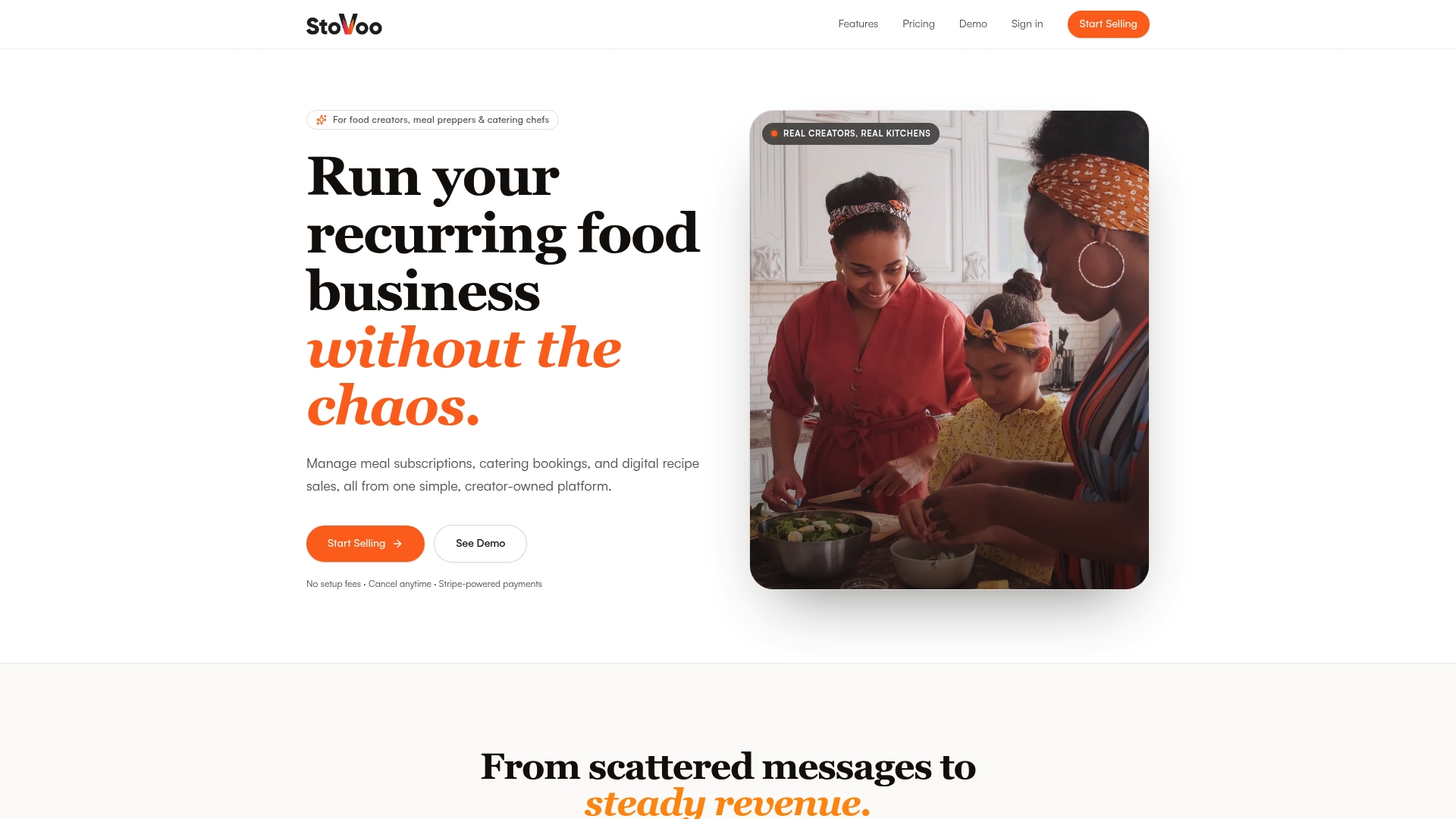
Stovoo gives food creators a professional, mobile-first shopfront they can set up in minutes and share across social media, WhatsApp, and messaging apps. The platform handles automated billing, recurring meal plan subscriptions, and customer management from a single dashboard. There is no need for spreadsheets or scattered messaging threads. Vendors on Stovoo, like those ordering meal plans and catering through the platform, get full customer data ownership and a clean, recurring revenue model from day one. Visit stovoo.com to set up your shopfront and start accepting orders.
FAQ
What is ecommerce for food vendors, exactly?
Ecommerce for food vendors is the practice of selling food products online through a digital storefront or marketplace, combining order management, payment processing, logistics, and compliance into one business model.
Do I need FDA registration to sell food online?
FDA registration is required for interstate food sales in the United States. You also need a state food manufacturing license, ServSafe certification, and a sales tax permit before selling online legally.
How much does food ecommerce fulfillment cost?
Local driver delivery averages $7–$12 per order. Cold chain 3PL fulfillment costs 20–50% more than ambient pick-and-pack services, making it the most expensive option for perishable products.
Can I use delivery apps as my main sales channel?
Delivery apps work well for customer acquisition but charge high commission fees and retain customer data. A branded DTC site or platform like Stovoo gives you full data ownership and better long-term margins.
How do food vendors handle returns online?
Food vendors typically offer refunds or replacements rather than accepting physical returns, due to food safety regulations. Shipping zones must also exclude states where the vendor does not hold a valid food sales license.