
TL;DR:
- Caterers can generate recurring income by selling digital products such as cookbooks, meal plans, and event templates. Using a SaaS platform like Stovoo streamlines creation, billing, and delivery, allowing quick launch with minimal effort. Accurate compliance with state tax and allergen disclosures remains essential for legal sales.
The fastest, highest-return digital products for caterers are interactive cookbooks, meal-plan subscriptions, and a digital menu/proposal shopfront. Each one leverages recipes you already own, costs almost nothing to replicate after the first sale, and fits naturally into a recurring revenue model. To get started today, pick one menu or recipe collection, package it as a gated PDF or a subscription plan, and publish it to a shopfront link you can share across Instagram, WhatsApp, and email. Stovoo is built exactly for this workflow, giving caterers a mobile-first shopfront, automated billing, and file delivery without the spreadsheet chaos.
Table of Contents
- What are the best digital product ideas for caterers?
- How do you manage and sell digital products as a caterer?
- How should you package and price your digital products?
- What are the fastest ways to get your first digital product sales?
- What U.S. legal and tax rules apply to digital product sales?
- How did a caterer use Stovoo to sell meal plans and recipes?
- Key Takeaways
- Why digital products are a smarter growth lever than most caterers realize
- Stovoo is built for exactly this kind of food business
- Further reading and resources
- FAQ
What are the best digital product ideas for caterers?
Converting your culinary expertise into sellable digital products means decoupling revenue from local capacity and reaching customers far beyond your delivery zone. Here are ten concrete ideas, with delivery format and a quick-start step for each.
- Interactive digital cookbook. A themed PDF or EPUB of 15–30 recipes, sold as a one-off download. Fits solo and boutique caterers. Price range: $15–$45. Quick start: export your top recipes to a designed PDF and list it on your shopfront.
- Themed meal-plan subscription. Weekly or monthly meal plans with shopping lists, delivered automatically. Fits meal-prep caterers. Price range: $10–$30/month. Quick start: build a 5-day plan using Stovoo's meal plan creation guide and set billing to recurring.
- Event proposal and menu templates. Downloadable, editable PDF/Word templates for corporate or wedding menus. Fits event caterers. Price range: $20–$60 per template pack. Quick start: clean up your best proposal and convert it to a fillable PDF.
- Recipe video packs. A bundle of 5–10 short cooking videos, gated behind a one-time purchase or a member area. Fits caterers with a social following. Price range: $25–$75. Quick start: record three technique videos on your phone and gate them with a shopfront link.
- Live paid cooking class or masterclass. A ticketed Zoom or webinar session, 60–90 minutes. Fits boutique and specialty caterers. Price range: $30–$100 per ticket. Quick start: set up a ticketed event in your shopfront and promote it two weeks out.
- Downloadable grocery lists and scaling recipes. Standalone scaling calculators or grocery templates for home cooks and small caterers. Fits all caterer types. Price range: $5–$15. Quick start: export a scaled recipe sheet from your existing menu.
- Per-guest pricing calculator. A spreadsheet or interactive tool that calculates per-plate cost and margin. Fits event and corporate caterers. Price range: $20–$50. Quick start: build a Google Sheets template with your standard cost inputs and sell it as a download.
- Virtual tasting or pairing tickets. A ticketed online event where guests receive a curated tasting kit by mail and follow along live. Fits boutique and specialty caterers. Price range: $50–$150 per ticket. Quick start: partner with a local supplier for kit fulfillment and list the event on your shopfront.
- Licensed recipe bundles for local businesses. A curated recipe pack licensed to restaurants, meal-kit companies, or corporate kitchens. Fits experienced caterers with a signature style. Price range: $150–$500 per license. Quick start: identify two or three local businesses and pitch a pilot bundle.
- Staff training packages. A gated video or PDF course covering food safety, plating standards, or service protocols. Fits boutique and corporate caterers with staff. Price range: $50–$200 per seat. Quick start: record a 20-minute onboarding walkthrough and gate it behind a member area link.
How do you manage and sell digital products as a caterer?
Selling digital products reliably means having the right SaaS features in place before your first sale, not after. The table below maps each operational need to the feature that covers it.
| Operational need | SaaS feature required |
|---|---|
| Product listing and discovery | Mobile-friendly shopfront with product builder |
| File delivery after purchase | One-click automated file delivery |
| Subscription billing | Recurring billing with metered options |
| Proposal creation | Digital proposal/menu builder |
| Customer dietary tracking | Customer profiles with dietary and allergen notes |
| Post-sale receipts | Automated invoices and receipts |
| Performance visibility | Analytics dashboard |
The workflow runs in one direction: create the product, list it on your shopfront, a customer purchases it, the platform delivers the file or access link automatically, and a receipt goes out without you touching anything. Automating proposals and billing is where caterers recover the most time. A digital catering menu builder can cut proposal creation from about two hours down to around 15 minutes by replacing manual Word documents with a catalog, dietary filters, and automatic per-guest pricing.

Pro Tip: Tag every product with structured metadata: dietary category (gluten-free, vegan, nut-free), serving size, prep time, and skill level. These tags power search on your shopfront, trigger upsell suggestions, and feed automated fulfillment notes to customers, so your meal plan management scales without extra admin.
How should you package and price your digital products?
Pricing decisions come down to one question: do you want predictable monthly cash flow or higher per-sale revenue? Both are valid, and the right answer depends on your audience and workload.
- Choose one-off pricing when the product is event-specific (a wedding menu template, a virtual tasting ticket) or when your audience is unlikely to need a refill. One-off sales are simpler to manage and carry no churn risk.
- Choose subscriptions when the product refreshes regularly, like weekly meal plans or monthly recipe drops. A base of 100 subscribers at $10/month generates $1,000 in predictable monthly revenue, which is harder to replicate with one-off sales alone.
- Bundle for higher average order value. Pair a cookbook with a grocery list template and a scaling calculator at a 20–30% discount versus buying separately. Bundles lift revenue per customer without adding fulfillment complexity.
- Use a freemium preview. Offer one free recipe or one week of a meal plan to capture email addresses, then convert to a paid subscription or full product. This is the fastest way to validate demand before investing in production.
- Test prices in 30-day cycles. Start at the lower end of your range, measure conversion rate and revenue per visitor, then raise the price by $5–$10 increments until conversion drops meaningfully. Stovoo's meal plan business models guide covers the volume and churn tradeoffs in detail.
What are the fastest ways to get your first digital product sales?
Speed to first sale matters more than a perfect funnel. These channels convert quickly for food businesses.
- Shopfront link in every message. Add your Stovoo shopfront URL to your email signature, WhatsApp bio, and Instagram profile link. Every existing contact becomes a potential buyer with zero ad spend.
- Instagram Reels with a product tease. Post a 30-second clip of a recipe from your cookbook or meal plan, then direct viewers to the link in your bio to get the full version.
- YouTube short clips with gated recipes. A 60-second technique video drives search traffic; the full recipe pack lives behind a paid shopfront link.
- Local partnerships. Event planners, bridal boutiques, and corporate HR teams are warm referral sources. Offer a co-branded recipe pack or a discounted class ticket in exchange for a mention in their client newsletters.
- Email nurture sequence. Capture leads with a free sample (one recipe, one meal plan day), send three emails over two weeks with value and a clear purchase link, then follow up with a welcome email and automatic product delivery on purchase.
Track everything from day one: UTM links on every shared URL, a simple conversion page, and a 90-day revenue log. Digital sales strategies for culinary businesses cover attribution and channel prioritization in more depth.
What U.S. legal and tax rules apply to digital product sales?
Selling digital products in the United States carries a few compliance requirements that differ from physical catering services.
- Sales tax varies by state. Digital goods are taxable in some states (Pennsylvania, New York) and exempt in others (California, for most digital products). Set up state-specific tax collection in your billing system and confirm your obligations with a CPA before your first sale.
- Dietary disclaimers are required. Any recipe or meal plan that references health outcomes needs a clear disclaimer that it is not medical or nutritional advice. Place this on every product page and in every automated receipt.
- Allergen statements belong on every product. List the top nine U.S. allergens (milk, eggs, fish, shellfish, tree nuts, peanuts, wheat, soybeans, sesame) on any recipe product, even a digital one.
- Refund and delivery policy must be explicit. State clearly that digital downloads are non-refundable after access is granted, or define a specific window (e.g., 48 hours, no download initiated). Include this in your checkout flow and receipt.
- Data handling basics. Collect only the customer data you need (name, email, dietary preferences), state how files are delivered, and keep transaction records for at least three years for tax reporting purposes.
This article is general information, not legal or tax advice. Confirm your specific obligations with a qualified CPA or attorney.
How did a caterer use Stovoo to sell meal plans and recipes?
Express Kitchen, a food vendor on Stovoo, illustrates what the SaaS-first path looks like in practice. The business publishes meal plans, catering services, and recipes through a dedicated Stovoo shopfront link, giving customers a single place to browse, order, and pay without any back-and-forth on WhatsApp or email.
The features Express Kitchen relies on include:
- A mobile-first shopfront link shared across social and messaging channels
- Automated recurring billing for meal plan subscribers
- Customer profiles storing dietary preferences and order history
- A product builder for listing individual recipes and plan tiers
"Stovoo gave us a professional shopfront we could share anywhere. Customers order meal plans and recipes directly, billing runs automatically, and we spend less time on admin and more time cooking." — Express Kitchen, via Stovoo
The operational result is a business that generates recurring revenue from digital products without adding headcount or manual billing cycles. That is the model every caterer in this article is building toward.
Key Takeaways
Caterers who launch digital products with a SaaS shopfront, automated billing, and structured product metadata can generate recurring revenue that scales independently of local event capacity.
| Point | Details |
|---|---|
| Start with one product | Launch a gated PDF cookbook or a single meal-plan subscription to validate demand before investing in video production. |
| Subscriptions beat one-offs for cash flow | A modest subscriber base at an affordable monthly rate delivers predictable monthly revenue. |
| Proposal automation saves hours | A digital menu/proposal builder cuts proposal time from about two hours to around 15 minutes. |
| Compliance is state-specific | Digital goods sales tax rules vary by state; confirm obligations with a CPA before your first sale. |
| Stovoo centralizes the workflow | Stovoo's shopfront, automated billing, and customer profiles cover the full digital product sales cycle in one platform. |
Your 7–14 day launch checklist:
- Choose one product (recommended: a themed meal-plan subscription or a digital cookbook).
- Create an MVP: a designed PDF or a 5-day meal plan with a shopping list.
- Set up your Stovoo shopfront and list the product with dietary tags and a clear description.
- Write a short refund and dietary disclaimer and add it to the product page.
- Share your shopfront link via email, WhatsApp, and one social post with a recipe preview.
- Track clicks, conversions, and revenue for 30 days, then adjust price or packaging.
The single product most caterers should launch first is a themed meal-plan subscription. It creates recurring revenue from day one, uses recipes you already have, and gives you a live product to iterate on without a large upfront investment.
Why digital products are a smarter growth lever than most caterers realize
Most caterers underestimate how much leverage they already have. Every recipe you have perfected, every proposal you have written, every technique you have taught a new hire is a product waiting to be packaged. The mistake is treating digital products as a side project rather than a parallel revenue engine.
The SaaS-first approach matters because it removes the operational friction that kills most digital product launches before they gain traction. When billing, delivery, and customer management are automated, you can focus on creating better products instead of chasing payments or manually sending files. The caterers who build recurring digital revenue fastest are not the ones with the most polished cookbooks. They are the ones who published something imperfect, got real customer feedback, and improved from there.
Stovoo is built for exactly this kind of food business
Running a catering business and selling digital products at the same time sounds like double the work. With Stovoo, it is not. The platform maps directly to every operational need covered in this article: a mobile-first shopfront for product listings, automated recurring billing for subscriptions, customer profiles with dietary notes, and a proposal/menu builder that cuts admin time dramatically.
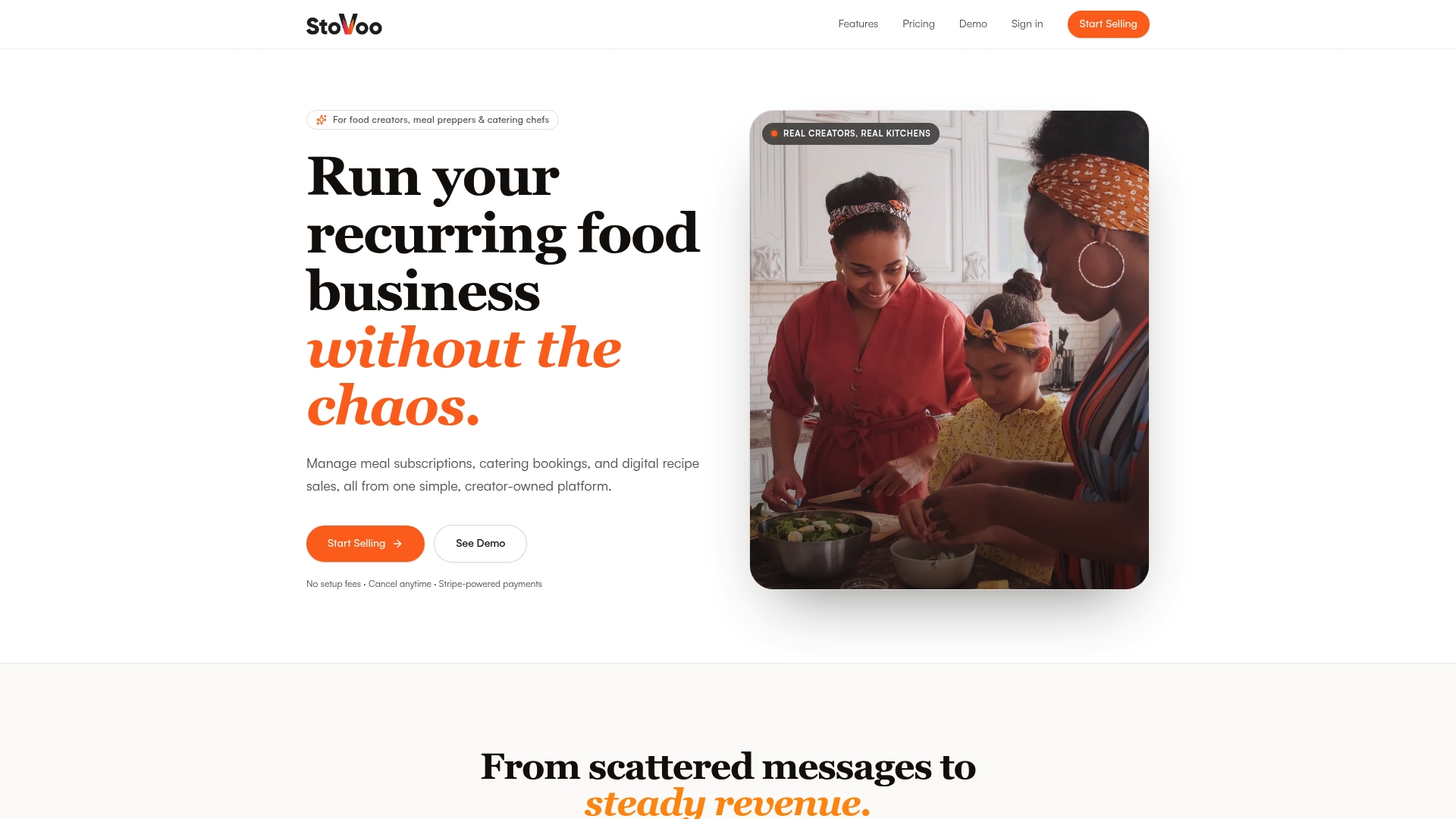
Getting started takes minutes. Create your seller account on Stovoo, build your shopfront, and publish your first digital product. You can see what a live shopfront looks like at a real Stovoo vendor page before you commit to anything. The platform handles the billing, the file delivery, and the customer records. You handle the cooking.
Further reading and resources
These resources go deeper on the topics covered above, all directly relevant to U.S. food business owners building digital revenue.
- Meal plan monetization: Strategies to boost food profits — Practical packaging and pricing strategies for turning meal plans into recurring and one-off digital revenue.
- Food Business Digitalization: A Practical 2026 Guide — Platform feature priorities and a phased approach for moving a food business to digital sales and shopfronts.
- Build a Digital Catering Event Menu Builder — A detailed walkthrough of how a digital menu builder replaces Word proposals and cuts creation time to around 15 minutes.
- Express Kitchen on Stovoo — A live vendor shopfront showing meal plans, catering services, and recipes published through a Stovoo link.
FAQ
What digital products can a caterer sell online?
Caterers can sell interactive cookbooks, meal-plan subscriptions, event proposal templates, recipe video packs, live cooking class tickets, grocery list templates, per-guest pricing calculators, and licensed recipe bundles. Each product leverages existing recipes and expertise with minimal additional cost per sale.
How much can a caterer earn from digital products?
Earnings depend on product type and audience size. A subscription model with 100 customers at $10/month generates $1,000 in recurring monthly revenue; one-off cookbook sales at $25–$45 each require more volume but carry no churn risk.
Do caterers need to charge sales tax on digital products?
Sales tax on digital goods varies by state. States like Pennsylvania and New York tax most digital products, while California generally does not. Set up state-specific tax collection in your billing system and confirm your obligations with a CPA.
What platform do caterers use to sell digital products?
Stovoo is a SaaS platform built specifically for food businesses, offering a mobile-first shopfront, automated billing, file delivery, customer profiles, and a proposal/menu builder in one place, covering the full digital product sales workflow.
How long does it take to launch a first digital product?
With an existing recipe collection and a SaaS shopfront like Stovoo, a caterer can publish a gated PDF cookbook or a meal-plan subscription in a few hours. A more polished product with video content typically takes two to four weeks.