
TL;DR:
- Digital downloads for food creators are digital files like recipe ebooks and meal planners that generate high profit margins. They are problem-focused products that appeal to niche audiences and can be promoted through social media for sustained sales. Stovoo provides a platform for managing and selling these digital products alongside meal plans and catering bookings.
Digital downloads for food creators are digital files, such as recipe ebooks, meal planners, and kitchen guides, that package culinary expertise into products buyers can purchase and access instantly. Unlike physical cookbooks or catering services, these products require no inventory, no shipping, and no fulfillment costs after the initial creation. That structure produces near 90% profit margins, making food creator downloadable content one of the highest-margin business models available to culinary entrepreneurs. Stovoo helps food creators manage and sell these products alongside meal plans and catering bookings from a single dashboard.
What are digital downloads for food creators?
Digital downloads for food creators are any file a buyer purchases and receives electronically, with no physical delivery involved. The industry term for this product category is "digital products," and it covers a wide range of formats built around a creator's food knowledge. Recipe ebooks, printable meal planners, grocery list templates, ingredient trackers, and interactive kitchen guides all qualify. The defining feature is that the creator builds the product once and sells it an unlimited number of times.

The high-margin potential is the core business case. Packaging food knowledge into digital assets generates approximately 90% profit margins because there are no inventory or fulfillment costs after the initial build. A food creator who sells 100 copies of a $12 meal planner keeps roughly $10.50 per sale after platform fees. That math is simply not possible with physical products.
Food business digital assets also give creators something equally valuable: passive income. Once a product is listed, it can generate sales while the creator is cooking, filming, or sleeping. That scalability separates digital products for chefs from service-based income like catering, which requires the creator's direct time for every dollar earned.
What types of digital downloads work best for food creators?
The format of a digital product determines its price ceiling, its buyer appeal, and the effort required to build it. Food creators have more format options than most niches, and choosing the right one matters.
Static PDFs vs. interactive planners
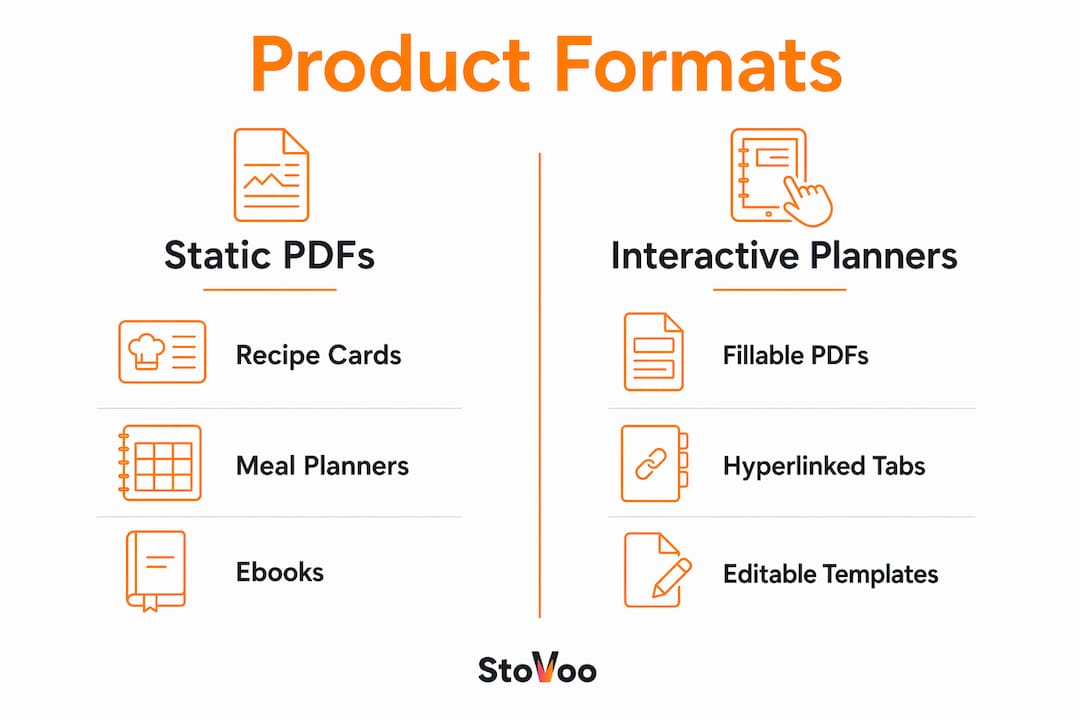
Static PDFs are the entry point for most creators. A beautifully designed recipe card set or a printable weekly meal planner costs little to produce in Canva and sells reliably at lower price points. Buyers print them, fill them in by hand, and move on.
Interactive digital planners with hyperlinked tabs and fillable pages attract higher prices and stronger buyer enthusiasm. These products work inside apps like GoodNotes and are priced between $8 and $15 on average. Buyers use them repeatedly for ongoing kitchen management, which justifies the premium. The tradeoff is a longer build time and a slightly more technical creation process.
Popular product formats at a glance
| Format | Best for | Typical price range |
|---|---|---|
| Printable recipe cards | Beginners, gift buyers | $3–$8 |
| Meal planner PDFs | Health-focused buyers | $7–$15 |
| Interactive GoodNotes planners | Digital-first buyers | $8–$15 |
| Recipe ebook collections | Niche cuisine fans | $9–$20 |
| Editable Canva templates | Other creators | $10–$25 |
| Grocery list and tracker bundles | Meal preppers | $5–$12 |
Editable Canva templates are a strong choice for creators whose audience includes other food entrepreneurs. Buyers pay more for a product they can customize and reuse. Grocery list templates and ingredient trackers appeal to meal preppers who want structure without the complexity of a full planner.
The best digital downloads for cooks follow a product ladder. Start with a low-priced single-solution printable to test buyer interest. Then build a mid-tier ebook or planner once you know what your audience actually buys. Starting with simple printables and validating demand before investing in larger bundles is the recommended path for new creators.
Why raw recipes don't sell and what does instead
Raw recipe sharing is a commodity. Every food blog, social media account, and search engine result page offers free recipes by the thousands. A buyer has no reason to pay for a recipe they can find in seconds online.
"Successful creators treat recipes as commodities but package them into user-focused product solutions that solve specific problems and deliver quick, visible benefits. Buyers pay for structured outcome products like quick guides or beginner-friendly baking plans, not for the recipe itself."
The shift from "here is a recipe" to "here is a solution to your specific problem" is what separates products that sell from content that gets ignored. A creator who specializes in 30-minute weeknight dinners for busy parents is not selling recipes. They are selling time back to an exhausted buyer. That framing changes everything about how the product is built, described, and priced.
Niching down is the single most effective move a food creator can make when building digital recipes for sale. "Vegan meal prep for college students" outsells "healthy recipes" every time because it speaks directly to a buyer who recognizes their own problem in the product title.
Pro Tip: Write your product title as a problem statement, not a description. "5-Day Anti-Inflammatory Meal Plan for Beginners" tells a buyer exactly what they get and who it is for. "Healthy Recipes Ebook" tells them nothing specific.
Themed collections also outperform random recipe compilations. A "Holiday Cookie Baking Guide" timed for november and december, or a "Summer Grilling Playbook" released in may, creates urgency and relevance that a general recipe book cannot match.
How do food creators promote and price their digital downloads?
Pricing and promotion are where most food creators leave money on the table. Getting both right is a repeatable process, not a guessing game.
Pricing that converts
Digital recipe books priced between $7.99 and $19.99 hit the sweet spot for consistent sales on popular marketplaces. Below $7.99, buyers question the quality. Above $19.99, they expect a more substantial product or a recognizable brand behind it. Interactive planners and premium bundles can push past $20 once a creator has an established audience.
Etsy is the most common starting platform for food creator downloadable content. Etsy charges a $0.20 listing fee plus a 6.5% transaction fee and payment processing fees on each sale. Factor those costs into your pricing before you publish. A $9.99 product nets roughly $8.80 after fees, which is still a strong margin compared to physical goods.
Promotion tactics that drive traffic
- Post 1–2 short videos daily on TikTok or Instagram Reels showing the product in use, not just the cover image.
- Film yourself filling in the planner, flipping through the ebook, or using the grocery tracker in your kitchen.
- Use the caption to name the specific problem the product solves, and include a direct link in your bio.
- Create a "before and after" video showing meal prep chaos versus the organized result your planner delivers.
- Bundle two or three related products at a 20% discount to raise the average order value without creating new content.
Consistent promotion on TikTok and Instagram, posting 1–2 videos daily with recipe previews and product walkthroughs, significantly drives traffic to digital downloads. Most creators underestimate how much ongoing promotion is required to sustain sales after the initial launch.
Clear, visually compelling thumbnails that communicate immediate product utility are essential for marketplace success. A thumbnail showing a filled-in weekly meal planner with colorful food photos converts far better than a plain text cover.
Pro Tip: Pin your best-performing product video to the top of your TikTok or Instagram profile. New visitors see it first, and it acts as a permanent, low-effort sales tool.
What practical steps start a food creator's digital download business?
Getting from idea to first sale is a straightforward process when broken into clear steps. The goal is to ship something small and real, then build from there.
- Pick a niche and a specific buyer problem. "Gluten-free baking for beginners" is a niche. "People who want to bake" is not.
- Choose your creation tool. Canva works for visual PDFs and recipe cards. Google Sheets handles trackers and planners. Adobe Acrobat or a free PDF editor handles final file preparation.
- Export in the right format. PDFs are the standard for printables. Interactive planners export as PDFs compatible with GoodNotes. Bundles package multiple files into a ZIP folder.
- Write a clear instruction page. Include download steps, printing instructions, and editing guidance. Effective product listings use clear instruction pages to reduce buyer confusion and refund requests.
- List on a marketplace or your own page. Etsy provides built-in traffic. Gumroad and direct landing pages give you more control over customer data and fees.
- Promote before and after launch. Share the product creation process on social media to build anticipation before the listing goes live.
The how to create digital recipes process does not require design expertise. A clean, readable layout with good food photography and a logical structure beats a complex design every time. Buyers want usability, not decoration.
| Step | Tool | Output |
|---|---|---|
| Design recipe cards or planner | Canva | Branded PDF |
| Build trackers or spreadsheets | Google Sheets | Editable file |
| Finalize and export | PDF editor | Print-ready PDF |
| Package multiple files | File compression tool | ZIP folder |
| List and sell | Etsy, Gumroad, or Stovoo | Live product listing |
Key Takeaways
Digital downloads give food creators a high-margin, passive income stream by packaging culinary expertise into structured, problem-solving products that buyers can access instantly.
| Point | Details |
|---|---|
| High-margin model | Digital food products generate approximately 90% profit margins with no inventory or shipping costs. |
| Format drives price | Interactive planners command higher prices than static PDFs; match format to buyer needs. |
| Niche over general | Specific, problem-focused products outsell broad recipe collections on every platform. |
| Pricing sweet spot | Price recipe ebooks between $7.99 and $19.99 for consistent marketplace sales. |
| Promotion is ongoing | Posting 1–2 product videos daily on TikTok or Reels sustains traffic after launch. |
Why I think most food creators are sitting on a gold mine they haven't tapped
Food creators spend years building expertise, audience trust, and a recognizable style. Then they monetize almost entirely through brand deals or catering bookings, both of which cap out at the hours in a day. Digital products break that ceiling, and the barrier to entry is genuinely low.
The mistake I see most often is waiting for the "perfect" product. A creator spends three months designing a 60-page ebook with custom illustrations, launches it to silence, and concludes that digital products don't work for them. The real lesson is that they skipped validation. A $9 printable meal planner tested on Instagram Stories in week one would have told them exactly what their audience wanted to buy.
The creators who build sustainable digital income treat their product catalog the way a restaurant treats its menu. They start with a few proven items, watch what sells, and expand from there. They also invest in food business marketing consistently, not just at launch. The creators who post once and wait are the ones who say digital products don't work.
One more thing worth saying directly: the role of ebooks in food business growth is not just about the revenue from the ebook itself. A well-designed recipe ebook builds credibility, attracts new followers, and creates a natural entry point for higher-ticket offers like meal plan subscriptions or catering packages. The product is also the marketing.
— freeman
How Stovoo helps food creators sell digital products and meal plans
Food creators who want to sell digital downloads alongside meal plan subscriptions and catering bookings need one place to manage all of it. Stovoo is built exactly for that.
Stovoo gives food entrepreneurs a mobile-first shopfront where customers can order meal plans and digital recipes in the same place. There is no need to juggle WhatsApp messages, spreadsheets, and separate payment tools. Stovoo handles billing, customer management, and digital product delivery from a single dashboard. Creators share their Stovoo link across social media and start accepting orders the same day. For food creators ready to build a real business around their recipes, Stovoo removes the admin so they can focus on the food.
FAQ
What are digital downloads for food creators?
Digital downloads for food creators are files like recipe ebooks, meal planners, and kitchen templates that buyers purchase and receive instantly online. They require no physical production or shipping, which gives creators near 90% profit margins.
What is the best format for a food creator's first digital product?
A simple printable PDF, such as a weekly meal planner or a recipe card set, is the best starting point. It is fast to build in Canva, easy to price between $7.99 and $12, and lets you validate buyer interest before investing in more complex products.
How much should I charge for a digital recipe ebook?
Digital recipe books priced between $7.99 and $19.99 sell most consistently on marketplaces like Etsy. Price below that range and buyers question quality; price above it without an established audience and conversions drop.
Do I need a large following to sell food digital downloads?
No. A small, niche-focused audience converts better than a large general one. A creator with 2,000 followers who specialize in gluten-free baking will outsell a creator with 20,000 followers posting generic food content, because the niche audience has a specific, recognized problem the product solves.
What platform should food creators use to sell digital downloads?
Etsy provides built-in marketplace traffic and is the most common starting point. Gumroad offers more control over customer data with lower fees. Stovoo is purpose-built for food creators who want to sell digital recipes and meal plans alongside subscriptions and catering bookings from one place.