
TL;DR:
- Digital recipe ownership relies on copyright for creative expression and trade secrets for proprietary formulas. Storing recipes privately protects full control, while public platforms may grant broad rights that diminish ownership. Clear written agreements prevent disputes, especially in collaborations, and building direct relationships helps maintain revenue against AI and aggregator risks.
Digital recipe ownership is defined by copyright law as the protection of original literary and creative expression surrounding a recipe, not the functional recipe itself. That distinction matters enormously for food entrepreneurs, chefs, and digital recipe authors who build businesses around their culinary content. Defining digital recipe ownership correctly means knowing what you can protect, what you cannot, and which legal tools fill the gaps. Copyright, trade secrets, and contracts each play a distinct role. Getting this right from the start protects your revenue, your brand, and your relationship with your audience.
What legal protections exist for digital recipes?
Copyright protects original expression around a recipe, not the functional list of ingredients or the method itself. That means your evocative headnote about a grandmother's kitchen in New Orleans, your original food photography, and your unique storytelling are all protectable. The bare instruction "combine flour, butter, and sugar" is not.
This is the most misunderstood aspect of intellectual property in recipes. Many chefs assume their full recipe is protected the moment they publish it online. The law draws a clear line between creative expression and functional information, and a recipe's ingredient list falls firmly on the unprotected side.
Three distinct IP tools apply to recipes:
- Copyright covers original text, photos, video content, and creative commentary. It applies automatically when you create and publish original work. It does not cover the underlying idea, method, or ingredient list.
- Trade secrets protect unpublished, proprietary recipes through active confidentiality. NDAs, restricted access, and contract clauses prohibiting unauthorized use are all required to maintain trade secret status. This is the strongest tool for a signature sauce or a proprietary spice blend you have never published.
- Trademarks protect the brand name, logo, or product name associated with your recipes, not the recipes themselves. "Grandma Rosa's Hot Sauce" as a brand name is trademarkable. The hot sauce formula is not.
- Patents are rarely used in food but are possible for genuinely novel culinary processes or food technology inventions.
Pro Tip: Register your original recipe photos and written content with the U.S. Copyright Office. Registration costs under $100 and gives you the right to sue for statutory damages, which is a far stronger legal position than unregistered copyright.
The most practical takeaway here is that trade secret law is the most effective protection for proprietary culinary businesses. Copyright covers your published creative work. Trade secrets cover what you keep private. You need both.
How does digital storage affect who owns your recipes?
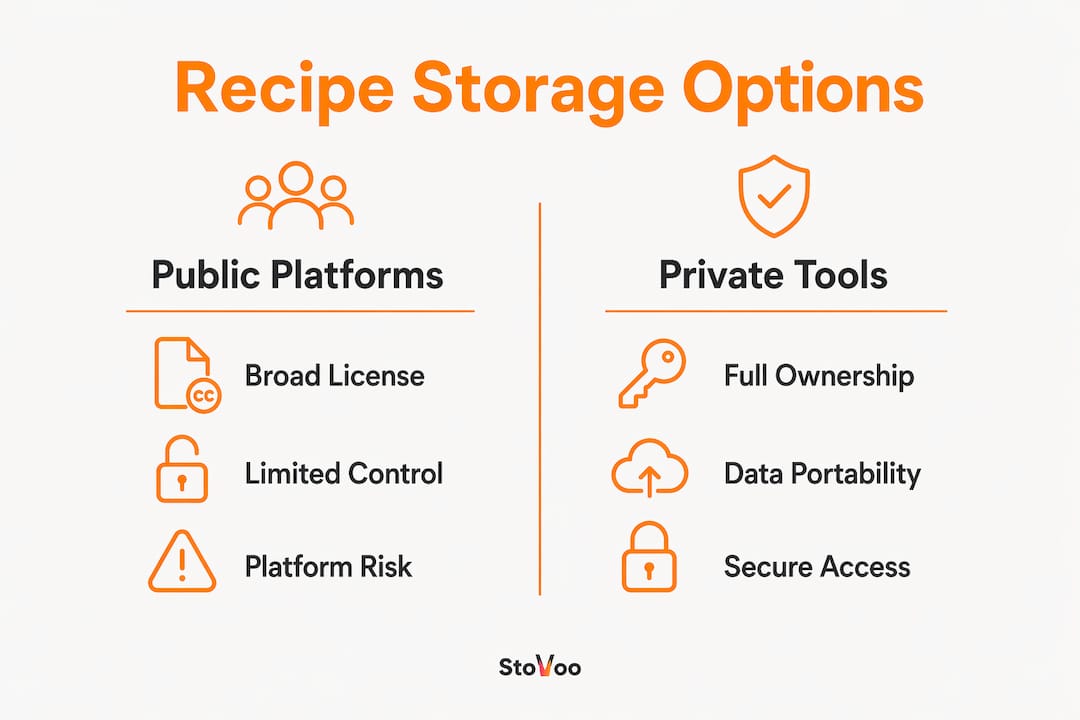
Where you store your recipes digitally determines how much control you actually keep. This is one of the most overlooked dimensions of digital recipe rights for food creators building long-term businesses.
Public recipe platforms like large recipe sharing sites typically require you to grant a broad license when you upload content. Recipes shared on public platforms usually give the platform rights to display, distribute, and monetize your content. That does not mean you lose copyright, but it does mean the platform can use your work in ways you did not explicitly approve.
| Storage type | Ownership control | Data portability | Platform risk |
|---|---|---|---|
| Public recipe platform | Limited by license terms | Often restricted | High if platform shuts down |
| Private subscription tool | Full user ownership | Exportable | Low |
| Personal website or blog | Full ownership | Full control | Moderate (hosting dependent) |
Private subscription-based recipe storage tools help creators retain full control, portability, and ownership against platform risks. Sharp Cooking, for example, positions its private collection model around the principle that your recipes belong to you and should be exportable at any time. That philosophy directly contrasts with public platforms that monetize your content as part of their business model.
Platform shutdowns are a real risk. When a recipe platform closes or changes its terms of service, creators who stored their entire library there can lose access or face unexpected licensing changes. Private storage eliminates that vulnerability.
Pro Tip: Always read the terms of service before uploading original recipes to any public platform. Look specifically for the words "royalty-free," "sublicensable," and "worldwide license." Those phrases signal that the platform claims broad rights over your content.
Digitizing recipes for personal use is lawful and respects copyright. Public redistribution requires attribution or explicit permission. That distinction applies whether you are storing your own recipes or organizing recipes you have collected from other sources.
How do you protect ownership in recipe collaborations?
Recipe collaborations between chefs, food bloggers, and brand partners create ownership disputes more often than any other scenario in the culinary creator space. The root cause is almost always the same: no written agreement.
Without explicit contracts, both parties in a collaboration may assume they own the resulting recipe. One chef contributes the flavor profile, another contributes the technique, and a food photographer shoots the final dish. Who owns the copyright to the written recipe? Who owns the photos? Who can publish the recipe in a future cookbook? These questions have no clean legal answer without a contract.
Treat recipe collaborations like corporate partnerships. A solid collaboration agreement covers these points:
- IP assignment clause. State explicitly who owns the final recipe, the photos, and any written content. Assign ownership to one party or define co-ownership terms clearly.
- Usage rights and permissions. Specify where each party can publish, sell, or license the recipe. A brand partner may want exclusive digital rights for 12 months. A chef may want to include the recipe in a future ebook. Both need to be written down.
- Confidentiality clause. If the recipe is unpublished and proprietary, a confidentiality clause maintains its trade secret status during and after the collaboration.
- Credit and attribution terms. Define how each contributor is credited across all platforms and publications.
- Dispute resolution clause. Specify the jurisdiction and process for resolving disagreements before they become expensive legal battles.
Collaborations should be treated like corporate partnerships with detailed agreements on who owns what and how the recipe may be used. This applies equally to employment relationships. If you hire a recipe developer as a contractor, include an IP assignment clause in their contract. Without it, the contractor may retain copyright over the recipes they create for you.
The cost of a simple collaboration agreement drafted by a food and beverage attorney is far lower than the cost of an ownership dispute after a recipe goes viral.
What challenges do AI and content aggregation create for recipe creators?
AI-driven recipe aggregation is reshaping the ownership conversation in ways that copyright law has not yet fully addressed. The core issue is not always copying. It is the erosion of the creator-to-audience relationship.
AI-driven recipe aggregation complicates ownership by intercepting the relationships creators depend on for revenue and brand growth. When an AI tool summarizes your recipe in a search result or a chat interface, users get the functional information without visiting your site. Your photography, your story, your brand, and your monetization all disappear from that interaction.
The Cookpad recipe scrap controversy illustrates this clearly. Cookpad, one of the world's largest recipe platforms, faced significant creator backlash when its platform design was seen as reducing traffic back to original recipe authors. The rise of AI in recipe aggregation shifts the ownership focus from mere copying to the relationship between creator and user.
Key ethical and practical considerations for recipe creators in 2026:
- Attribution matters even when law does not require it. Copyright may not protect a bare recipe, but ethical norms in the creator community expect credit. Platforms and aggregators that strip attribution damage creator trust and long-term content ecosystems.
- Personal use versus public republishing are legally distinct. Saving a recipe for your own kitchen is lawful. Republishing it on your own site or social feed without permission is a copyright issue if the original expression is involved.
- Platform design shapes creator economics. A platform that shows full recipe content without requiring a click-through removes the creator's ability to earn ad revenue, sell products, or build an email list.
- Creator advocacy is growing. Food creators are increasingly organizing around licensing standards and platform accountability, similar to movements in music and journalism.
"The true value in recipes lies more in the literary expression and unpublished formulas than in the functional ingredient lists." — Recipe copyright insight
The practical response for food entrepreneurs is to build direct audience relationships that do not depend on platform algorithms. Email lists, subscription models, and private digital storefronts give you ownership of the customer relationship, not just the recipe content.
Key Takeaways
Digital recipe ownership depends on protecting creative expression through copyright, guarding unpublished formulas through trade secrets, and securing all collaborations with explicit written contracts.
| Point | Details |
|---|---|
| Copyright scope | Copyright protects original text, photos, and commentary, not the ingredient list or method. |
| Trade secrets are essential | Active confidentiality measures like NDAs and access restrictions protect proprietary recipes. |
| Storage location matters | Private tools preserve full ownership; public platforms often claim broad usage licenses. |
| Contracts prevent disputes | Written agreements on IP assignment and usage rights are required in every collaboration. |
| AI changes the equation | Aggregation tools can erode creator revenue and brand even without infringing copyright. |
Why most food creators are protecting the wrong things
Food entrepreneurs tend to focus their energy on copyright when the real protection gap is in trade secrets and contracts. I have seen chefs spend months worrying about someone copying their published blog post while their actual proprietary formulas sit completely unprotected because they never signed an NDA with a kitchen employee.
Copyright is automatic and covers your published creative work. That part largely takes care of itself as long as you are producing original content. The harder work is building the systems around what you keep private. That means documented confidentiality protocols, clear contractor agreements, and a digital storage strategy that does not hand your content library to a platform on a broad license.
The other mistake I see constantly is treating collaboration as informal. Two chefs develop a recipe together over a weekend, it becomes a viral hit, and then neither party has any legal clarity on who can publish it in their cookbook. A one-page agreement drafted before the collaboration starts eliminates that entire category of risk.
My honest recommendation: treat your recipe IP as a tiered asset. Accept that published recipes have limited copyright protection and focus your legal energy on what you have not published yet. Use private digital tools like those offered through recipe ebook platforms to keep your core library out of public platform licensing agreements. And build your audience through direct channels, because the creator who owns the customer relationship wins regardless of what any platform does with their content.
— freeman
Manage your recipes and your business with Stovoo
Food creators who understand digital recipe ownership need tools that respect that ownership. Stovoo is built specifically for food entrepreneurs who want to sell digital recipes, manage meal subscription plans, and run catering bookings without surrendering control of their content or their customer relationships.
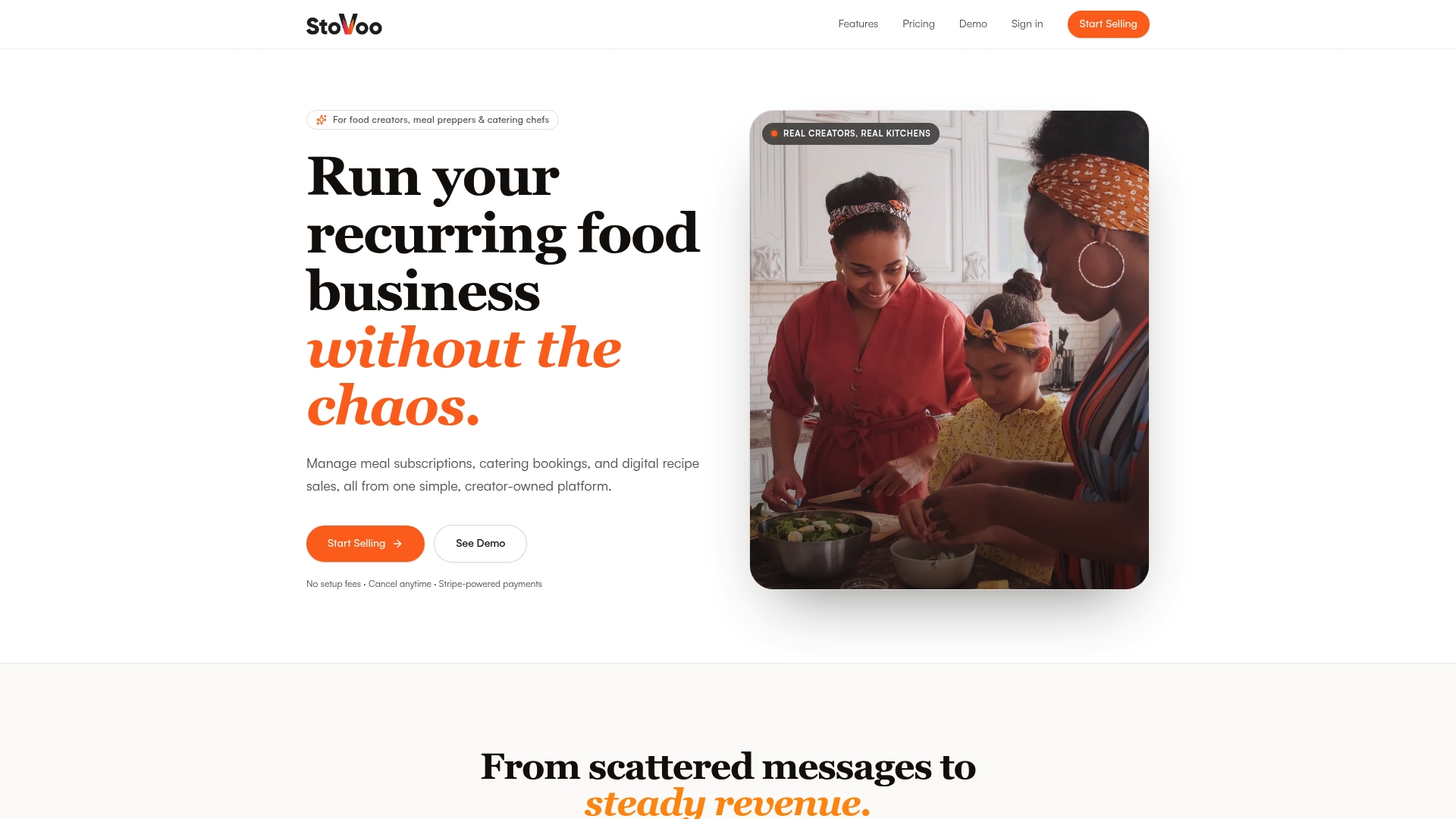
Stovoo gives you a private, branded shopfront where you own the customer data, the transaction history, and the recipe catalog. You share your link across social media and messaging apps, and your audience orders directly from you. No broad platform licenses. No algorithm dependency. Creators like bitcook in London already use Stovoo to manage recurring orders and digital recipe sales in one place. Start building your storefront and keep full control of what you create.
FAQ
Does copyright protect a recipe's ingredient list?
Copyright does not protect a recipe's ingredient list or functional cooking instructions. It protects only the original literary expression, such as creative headnotes, storytelling, and original photography surrounding the recipe.
What is the best way to protect a proprietary recipe?
Trade secret law is the most effective protection for unpublished proprietary recipes. Active confidentiality measures including NDAs, restricted access, and contract clauses are required to maintain that protection.
Who owns a recipe created during a collaboration?
Ownership depends entirely on the written agreement between the parties. Without a contract, both parties may have competing claims, which is why explicit IP assignment clauses are required before any collaboration begins.
Can a platform claim rights to recipes I upload?
Public recipe platforms typically require a broad license when you upload content, which can give them rights to display and monetize your work. Private storage tools avoid this issue by keeping full ownership with the creator.
Is it legal to save someone else's recipe digitally for personal use?
Digitizing a recipe for personal use is lawful and does not infringe copyright. Publicly republishing or redistributing that recipe online without permission is a separate matter and may constitute copyright infringement if original expression is involved.