

TL;DR:
- Effective meal planning is essential for food entrepreneurs to reduce waste, save hours weekly, and build customer loyalty.
- A solid system starts with assessing inventory, choosing overlapping recipes, and batching prep to streamline operations.
Meal planning sounds simple until you're staring at a full fridge on Sunday night, unsure what to cook, burning prep time you don't have. For food entrepreneurs and dedicated meal preppers, learning how to create meal plans that actually work is not just a personal convenience, it's a business necessity. Done right, it cuts food waste, saves hours each week, and keeps customers coming back. This guide walks you through everything from the foundational ingredients of a solid plan to the exact steps that turn weekly chaos into a repeatable, profitable system.
Table of Contents
- Understanding what you need for effective meal planning
- Step-by-step process to create streamlined meal plans
- Common pitfalls and how to avoid them when creating meal plans
- What to expect after implementing a meal planning system
- Why traditional meal planning advice falls short for food entrepreneurs
- Discover meal plan solutions to streamline your food business
- Frequently asked questions
Key Takeaways
| Point | Details |
|---|---|
| Prioritize nutrient-dense foods | Quality meal plans focus on whole vegetables, fruits, proteins, whole grains, and healthy fats per updated guidelines. |
| Inventory first approach | Always check your pantry and fridge before planning to prevent waste and save money. |
| Ingredient overlap saves time | Select recipes sharing ingredients and batch prep to cut cooking time and labor in half. |
| Meal planning saves resources | Effective meal planning saves 5+ hours weekly and reduces grocery spending by up to 25%. |
| Flexible systems win | Adaptable, scalable meal plans tailored to business needs outperform rigid personal diet plans. |
Understanding what you need for effective meal planning
Before you write a single recipe name on a planning sheet, you need to set the right foundation. Skipping this step is the fastest way to build a plan that falls apart by Wednesday.
Start with nutritional principles. Effective meal plans prioritize minimally processed, nutrient-dense foods with portion sizes tailored by calorie needs. That means vegetables, fruits, lean proteins, whole grains, and healthy fats should anchor your plan, whether you're cooking for yourself or building a menu offer for customers. Nutrient density keeps satisfaction high, which matters enormously for customer retention in a meal prep business.
Assess what you already have. One of the most overlooked parts of reviewing schedules and inventory before planning is how much it reduces both food waste and unnecessary spending. Check your pantry, freezer, and fridge before selecting any recipes. You'll often find proteins, grains, or sauces already on hand that can anchor two or three meals with minimal additions.

Choose the right planning tools. A whiteboard in the kitchen works for personal use, but food entrepreneurs need something that scales. Digital tools that let you organize recipes, track inventory, and manage customer preferences pay off quickly as your order volume grows.
Here's a quick look at the essential planning elements you need before you start:
| Planning element | What it includes | Why it matters |
|---|---|---|
| Dietary framework | Nutrient-dense food categories, calorie targets | Builds plans customers trust and repeat |
| Inventory audit | Pantry, fridge, and freezer contents | Prevents waste and unnecessary purchases |
| Recipe library | 10 to 20 tested, repeatable recipes | Speeds up weekly selection |
| Planning tool | Digital or physical scheduling system | Keeps plans consistent and shareable |
| Portion guidelines | Calorie ranges per customer segment | Ensures satisfaction and portion accuracy |
Pro Tip: Build a "foundation five" list: five proteins, five grains, and five vegetables that appear repeatedly across your menu. This dramatically cuts your prep variation without making meals feel repetitive.
Step-by-step process to create streamlined meal plans
With your essentials in place, let's walk through the exact steps to build effective, repeatable meal plans. The step-by-step meal planning process used by experienced food entrepreneurs is not complicated, but most people skip at least one stage and pay for it later in the week.
Standard weekly meal planning involves reviewing your schedule, taking an inventory check, selecting three to five recipes with ingredient overlap, building a grocery list, batch prepping, and doing a weekly review. Here's what that looks like in practice:
-
Review your schedule. Look at the week ahead and identify which days are high-demand and which have room for longer prep. A Tuesday with back-to-back client deliveries is not the day to schedule a recipe that takes 90 minutes.
-
Audit your pantry and fridge. Write down what proteins, grains, and produce you already have. This list drives your recipe selection, not the other way around.
-
Select three to five recipes with ingredient overlap. If grilled chicken appears in a Monday bowl and a Wednesday wrap, you only prep it once. This is the core mechanic of an efficient plan. Easy meal plan ideas often live in this overlap zone, think roasted vegetables that shift from a side dish to a grain bowl topping to a frittata filling.
-
Build a consolidated grocery list by store section. Organize by produce, proteins, dairy, pantry staples, and frozen goods. Jumping back to the produce aisle three times costs time you cannot recover.
-
Batch cook proteins and vegetables. Batch cooking proteins and vegetables on prep day is the single highest-return activity in the entire process. Cook a large batch of your protein base, roast two or three vegetable varieties, and you've pre-built the foundation of most meals for the week.
-
Review and adjust weekly. After each week, spend five minutes noting what worked and what didn't. Which meal was left uneaten? Which sold out first? These answers shape better plans over time.
| Planning step | Time investment | Key output |
|---|---|---|
| Schedule and inventory review | 10 to 15 minutes | List of what you have and when you need meals |
| Recipe selection | 10 minutes | Three to five meals with shared ingredients |
| Grocery list creation | 5 to 10 minutes | One organized shopping trip |
| Batch prep session | 60 to 120 minutes | Pre-cooked proteins, grains, and vegetables |
| Weekly review | 5 minutes | Adjustments for next week |
Pro Tip: Plan your grocery list as a template that you update each week rather than building from scratch. After four weeks, the core list barely changes, and you'll cut shopping prep time by half.
Common pitfalls and how to avoid them when creating meal plans
Before wrapping up the execution steps, let's address the mistakes that quietly derail even the best-intentioned plans.
The biggest trap most meal preppers and food entrepreneurs fall into is planning meals in isolation from what they already own. Cross-checking pantry inventory against recipes first prevents out-of-staples failures, and bulk prep can save up to 50% of your weekly labor. That's not a minor efficiency gain. That's the difference between a profitable prep week and an exhausting one.
Here are the most common pitfalls, and how to sidestep each one:
- Planning without an inventory check. You buy another bag of lentils when you have three at home. You're now over-stocked and under-prepared for the protein you forgot. Managing food waste and inventory starts here.
- Building plans that are too complicated. Seven different proteins across five days creates prep chaos. Complexity does not equal quality. Customers want reliable, delicious meals, not variety for variety's sake.
- Ignoring leftovers. A roast chicken should fuel at least two meals. If your plan doesn't map where leftovers go, food gets tossed and profit margin shrinks.
- Skipping bulk prep. Cooking chicken breast four times in one week instead of once in a large batch is one of the most common time-wasters in meal prep operations.
- Never reviewing what worked. Without feedback loops, you repeat the same inefficiencies every week. Even a simple note like "spinach went bad again, cut quantity" is worth money over time.
Pro Tip: Keep a "waste log" for one month. Track every ingredient you throw out and why. Most food entrepreneurs discover that two or three items account for 80% of their waste, and fixing those alone transforms their margins.
"A flexible meal plan that accounts for pantry reality and leftover mapping is always more profitable than a 'perfect' plan built from scratch every week."
What to expect after implementing a meal planning system
Now that you know how to build and avoid mistakes in meal planning, let's look at the real-world results that follow when the system clicks into place.
The numbers are clear. Meal planners save over 5 hours per week on food decisions and reduce takeout spending by 50%, saving between $1,040 and $3,000 per year. For a food entrepreneur, those hours and dollars go directly back into the business.
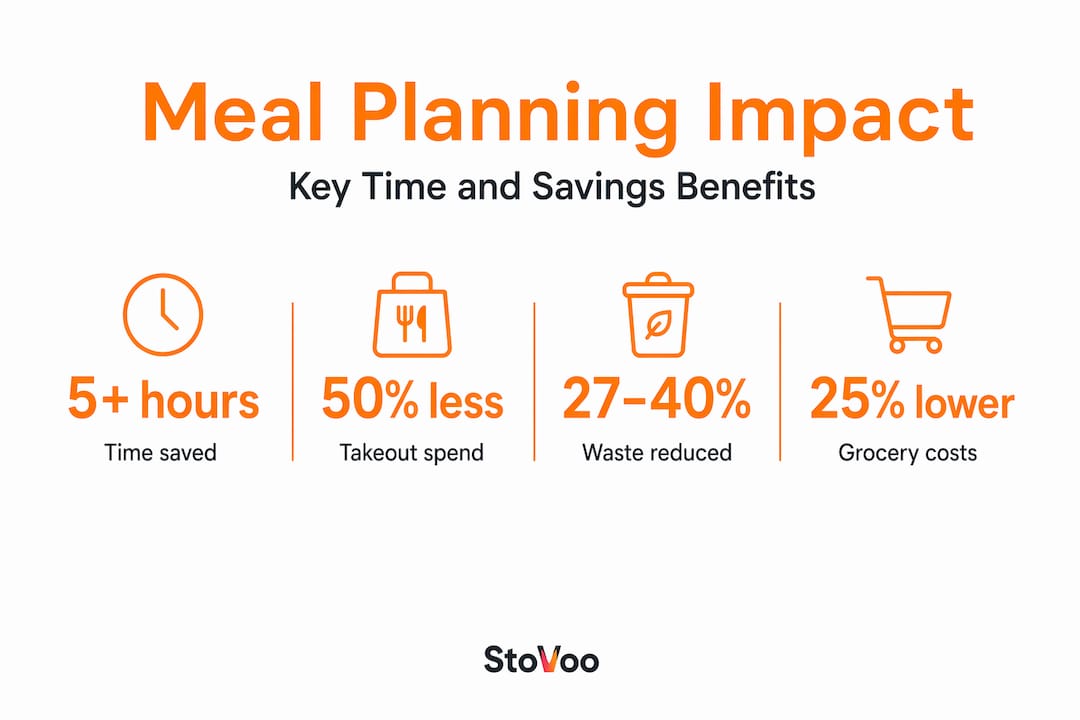
And the savings don't stop there. Committed meal planning reduces food waste by 27 to 40% and cuts grocery bills by up to 25%. When you're running a weekly meal plan business with recurring customers, a 25% reduction in ingredient costs is the kind of margin improvement that changes whether a business is viable or thriving.
Here's a side-by-side look at what changes when a meal planning system is in place:
| Area | Without meal planning | With meal planning |
|---|---|---|
| Weekly decision time | 8 to 12 hours | 2 to 3 hours |
| Weekly food waste | High (30 to 40% of perishables) | Low (10 to 15% of perishables) |
| Monthly grocery spend | Unpredictable, often inflated | Consistent, reduced by up to 25% |
| Customer satisfaction | Variable, depends on mood | Consistent, repeatable quality |
| Takeout dependency | Frequent, costly | Rare, planned exceptions only |
Beyond the numbers, there's an operational benefit that's harder to measure but equally important: consistency. Customers who receive financial benefits of meal planning through a food business build trust in the chef or entrepreneur behind it. Consistent quality week over week is what turns a first-time buyer into a subscriber.
The benefits compound over time. As your plan library grows, selection gets faster. As your batch prep routines become muscle memory, your Sunday or Monday prep sessions shrink. You move from reacting to your kitchen to running it.
Why traditional meal planning advice falls short for food entrepreneurs
Most conventional meal planning guides are written for people trying to lose weight or stop ordering pizza on weeknights. That's a useful audience, but it's not yours.
The advice in those guides centers on calorie counting, elimination diets, and personal discipline. Starting with expert-designed balanced plans does build confidence faster than calorie math alone, but for food entrepreneurs, confidence is only one piece of the puzzle. You also need systems that scale, customers who stay, and a plan that doesn't collapse when ingredient prices shift or a supplier runs out.
Creating balanced meal plans for a business audience requires a fundamentally different lens. You're not designing meal plans for yourself. You're designing them to work across multiple customers, dietary preferences, delivery windows, and price points simultaneously. That's an operations challenge, not just a nutrition one.
Meal planning tools that automate lists, reduce waste, and enable flexibility for customer preferences give food entrepreneurs a real competitive edge. The goal isn't a rigid seven-day grid. The goal is a dynamic system that responds to what customers actually order, what ingredients are available and affordable, and what your kitchen can realistically produce at volume.
The food entrepreneurs who build sustainable meal prep businesses are not the ones with the most elaborate plans. They're the ones who design for reuse, build in flexibility, and treat their weekly meal plan guide as a living document rather than a fixed schedule. Adaptability is the actual skill. The plan is just where you write it down.
Discover meal plan solutions to streamline your food business
If you've made it this far, you already have the framework to build meal plans that save time, reduce waste, and keep customers engaged. The next step is putting that framework into a system that works without requiring you to manage it manually every week.
Stovoo is built specifically for food entrepreneurs and meal preppers who want to move beyond WhatsApp threads and spreadsheets. With Stovoo, you can set up a professional mobile shopfront, manage ami meal plans and catering or ggg catering and meal plans as real examples of what's possible, and start accepting recurring orders from day one. Automated billing, customer management, and a centralized dashboard replace the admin chaos that eats into your prep time. Whether you're launching your first weekly plan offer or scaling an existing food business, you can start selling with Stovoo and turn your meal planning skills into a consistent income stream.
Frequently asked questions
What are the basic steps in creating an effective meal plan?
Start by reviewing your schedule and pantry inventory, select recipes with overlapping ingredients, build an organized grocery list, batch prep key items, and review weekly for adjustments. This standard weekly planning process is the foundation most successful meal preppers build on.
How can meal planning reduce food waste and save money?
Planning around existing inventory and buying only what's needed reduces food waste by 27 to 40% and cuts grocery bills by up to 25%, making it one of the highest-return habits a food business can build.
What common mistakes should food entrepreneurs avoid in meal planning?
Avoid planning without first checking inventory, building overly complex plans that lack flexibility, and skipping bulk prep. Cross-checking pantry before planning prevents ingredient shortfalls and bulk prep alone can cut your weekly labor by half.
How much time can meal planning save food entrepreneurs?
Consistent meal planners save over 5 hours per week on food decisions, with AI-assisted planning tools reducing the selection process from up to 90 minutes down to as little as two minutes per session.