
TL;DR:
- Effective catering menu planning involves gathering event details early, sizing menus appropriately, and communicating clearly. Limiting menus to 8-15 well-structured items and verifying venue capabilities ensures consistency and quality. Systematic planning and communication build client trust and improve event success.
Catering menu planning is a structured sequence of decisions that ensures your menu meets client needs, balances flavors, accommodates dietary restrictions, and fits logistical constraints. Done well, it transforms a list of dishes into a complete event experience. Done poorly, it creates last-minute chaos that no amount of talent can fix. These catering menu planning steps give you a repeatable framework to build menus that work every time, from intimate corporate lunches to large-scale celebrations with hundreds of guests.
What are the core catering menu planning steps?
Effective menu planning starts with gathering the right information before you write a single dish name. Catering accounts for 11% of food service revenue, which means the stakes for getting menus right are real and measurable. Caterers who follow a defined planning process consistently deliver better guest experiences and tighter profit margins.

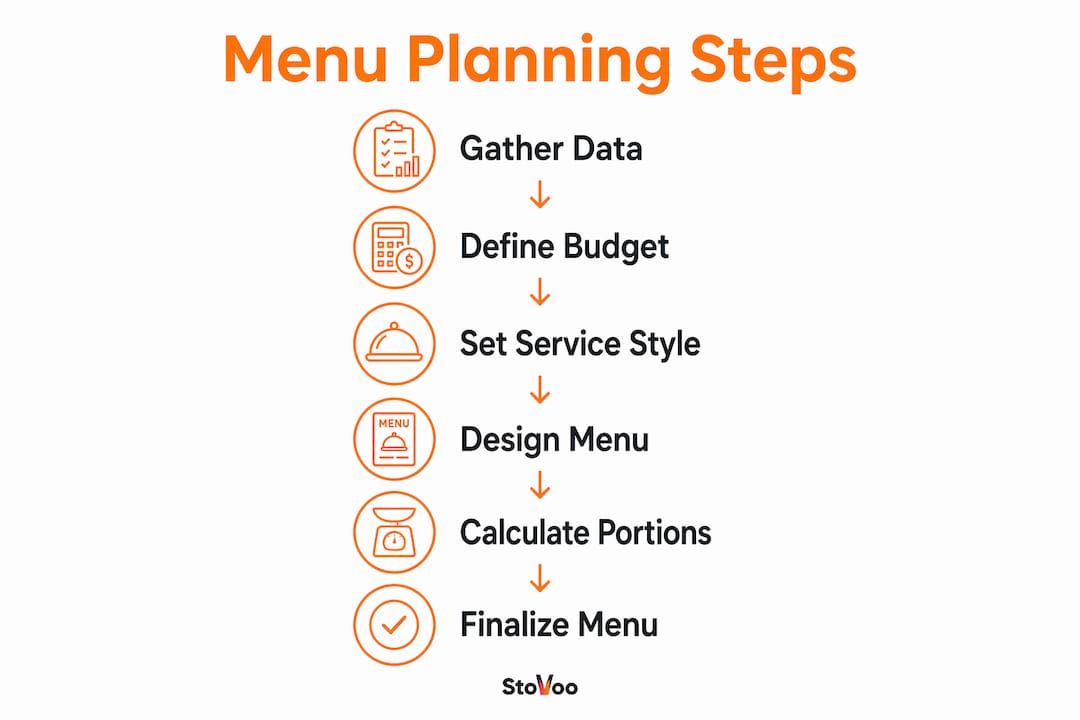
The process breaks into six clear stages: defining event basics, setting the budget and service style, designing the menu, calculating portions, managing logistics, and finalizing for execution. Each stage builds on the last. Skipping one creates gaps that show up on event day.
How to define event basics and guest profiles
The foundation of any catering menu is accurate event data. Lock in event type, guest count, budget, and venue at least 3–6 months out for large events. That lead time gives you room to source ingredients, confirm staffing, and adjust the menu without panic.
Guest profiling goes deeper than asking about allergies. Build a guest profile matrix that captures dietary categories across your confirmed headcount. Common categories to document include:
- Gluten-free (GF): celiac disease or gluten sensitivity
- Vegan (VE): no animal products of any kind
- Vegetarian (V): no meat, but dairy and eggs are acceptable
- Kosher or Halal: religious dietary requirements with specific preparation rules
- Nut-free: critical for allergy management and liability
Knowing the percentage of guests in each category lets you size those menu options correctly. A corporate lunch with 15% vegan guests needs more than a token salad. It needs a full vegan protein option with sides that work for the whole table.
Pro Tip: Ask clients to send a dietary survey to their guest list at least four weeks before the event. A simple Google Form works. The data you get back will prevent more last-minute changes than any other single action.
How does budget shape your service style and menu?
Budget is not just a ceiling. It is a design constraint that shapes every menu decision you make. Food costs typically run 55–65% of the total catering budget, with the remainder covering staffing, equipment rental, transportation, and logistics. Knowing this split upfront stops you from over-promising on ingredients before you have accounted for labor.
Service style has a direct impact on both cost and menu complexity. Here is how the three main formats compare:
- Plated service: Higher labor cost per head. Allows precise portion control and a more formal presentation. Best for weddings and corporate galas.
- Buffet service: Lower labor cost per head. Requires more food volume and careful station planning. Works well for conferences and casual celebrations.
- Food stations: Mid-range labor cost. Creates interactive guest experiences. Ideal for cocktail receptions and multi-course events with themed menus.
Choosing the right service style early shapes how you price packages. Transparent per-person pricing with clear dietary labels improves client clarity and reduces back-and-forth during the sales process. For guidance on building profitable pricing structures, the catering pricing framework at Stovoo's blog breaks this down in practical terms.
Pro Tip: Build your menu packages around service style first, then fill in the dishes. Trying to retrofit a plated-service menu into a buffet setup mid-planning creates portion and staffing problems that are hard to fix.
How do you design a balanced catering menu?
Menu size is one of the most misunderstood factors in catering menu design. Professional catering menus work best with 8–15 core items total, using 3–5 package tiers to guide client decisions. More options do not increase satisfaction. A curated, well-labeled menu reduces client confusion and improves kitchen workflow.
Scale your menu to the event size:
- Small events (under 100 guests): 2–3 protein options, 3–4 sides, 1–2 salads, 1–2 desserts
- Large events (100+ guests): 4–6 options per category with broader dietary coverage
- All events: one signature anchor dish that defines the menu's identity
Dietary labeling must be consistent across every menu you produce. Use "V" for vegetarian, "GF" for gluten-free, and "VE" for vegan on every item that qualifies. Short allergen notes at the menu bottom cover liability without cluttering the design. Seasonal menus reduce ingredient costs and improve freshness. A spring menu built around asparagus, peas, and strawberries costs less and tastes better than forcing those ingredients in october.
Pro Tip: Pick one anchor dish per menu that your kitchen executes flawlessly. Build the rest of the menu around it. Clients remember the standout dish, not the full list.
How do you calculate portions and manage event logistics?
Portion accuracy separates professional caterers from amateur ones. Standard portion benchmarks per person are:
- Proteins: 6–8 oz per person for a main course
- Sides: 5–7 oz per side dish
- Salads: 3–4 oz per person for a side salad
- Desserts: one standard serving per person, with 10% extra for seconds
Plan a 10–15% food overage for unexpected appetite, staff tasting, and service losses. That buffer prevents shortages without creating wasteful excess. For buffet events serving 500 or more guests, phased production timelines reduce the risk of food sitting too long before service.
Logistics alignment is where many caterers lose control. Verify oven capacity, storage, and prep areas before finalizing any menu. A menu that requires six oven racks when the venue kitchen has two is not a menu. It is a problem waiting to happen. Check the catering equipment checklist from CulinaryProfis to confirm your equipment matches your menu requirements before you commit.
For buffet setups, station planning prevents bottlenecks. Place high-demand items like proteins at separate stations from sides and salads. This keeps guest flow moving and reduces crowding at peak service times. Locking the menu at least two weeks before the event date gives your kitchen team time to prep, source, and practice.
Pro Tip: Walk the venue kitchen before you finalize the menu. A 20-minute site visit will reveal equipment gaps that no amount of planning documents can catch.
How do you finalize a catering menu for execution?
Menu finalization is a communication process as much as a culinary one. Early communication and menu alignment with venue and staffing prevent quality compromises and last-minute stress. Set a hard deadline for menu changes, typically two weeks before the event, and communicate it clearly in your client contract.
Key steps for the finalization phase include:
- Tasting session: Schedule a client tasting at least three weeks before the event. Use it to confirm presentation, portion size, and flavor profile.
- Allergen documentation: Prepare a written allergen policy for your service staff. Every team member should know which dishes contain which allergens before they arrive on site.
- Guest count confirmation: Get a final headcount no later than one week before the event. Use this number to finalize your food order and staffing schedule.
- Communication checkpoint: Send a written summary of the confirmed menu, service style, timing, and dietary accommodations to the client 10 days before the event.
Reducing flexibility near the event date is not inflexibility. It is quality control. Last-minute menu changes create sourcing gaps, confuse kitchen staff, and increase the risk of errors on the day. For a full timeline framework, the catering bookings guide covers scheduling milestones that keep every event on track.
Pro Tip: Send clients a one-page menu summary PDF after the tasting. It confirms their choices in writing and reduces the "I thought we agreed on..." conversations that derail event week.
Key Takeaways
Successful catering menu planning requires locking in event data early, sizing menus to 8–15 core items, calculating portions with a 10–15% overage buffer, and aligning every menu decision with venue capabilities and staffing realities.
| Point | Details |
|---|---|
| Start with event data | Lock in guest count, venue, and budget at least 3–6 months before large events. |
| Size menus deliberately | Use 8–15 core items with 2–3 proteins for small events and 4–6 per category for large ones. |
| Label dietary options clearly | Apply consistent V, GF, and VE labels plus brief allergen notes on every menu. |
| Build in food overage | Plan 10–15% extra food per person to cover appetite variation and service losses. |
| Verify venue infrastructure | Check kitchen equipment and storage capacity before finalizing any menu. |
Why the best caterers treat menu planning as a system
Most caterers treat menu planning as a creative exercise. The best ones treat it as a system. I have seen talented chefs produce extraordinary food and still lose clients because the menu was too long, the portions were miscalculated, or the venue kitchen could not support the dishes they promised.
The uncomfortable truth is that limited, well-structured menus outperform sprawling ones every time. Clients do not want 40 choices. They want confidence that you have thought through their event and built a menu that works. A focused menu signals expertise. A bloated one signals insecurity.
The other lesson I keep coming back to is that communication is the real product. The food is what clients pay for. The communication is what makes them come back. Confirming dietary details in writing, sharing tasting notes, and sending a pre-event summary are not administrative tasks. They are the service. Caterers who treat catering operations as a communication-first business build the kind of client relationships that generate referrals without asking for them.
Menu planning is not a one-time document. It is a living process that you refine with every event. The caterers who grow fastest are the ones who build a repeatable planning framework and improve it after each job.
— freeman
How Stovoo helps caterers manage menus and bookings
Running a catering business means juggling menu versions, client inquiries, dietary requests, and booking confirmations all at once. Stovoo is built specifically for food entrepreneurs who want to manage all of that from one place without relying on WhatsApp threads and spreadsheets.
With Stovoo, you can set up a professional catering shopfront that displays your menu packages with clear pricing and dietary labels, accepts catering inquiries directly, and manages recurring orders without manual follow-up. The platform handles automated billing and customer management so you spend more time cooking and less time chasing confirmations. If you are ready to build a catering business that runs on systems instead of stress, create your Stovoo account and get your shopfront live today.
FAQ
What are the first steps in catering menu planning?
Start by locking in the event type, guest count, venue, and budget at least 3–6 months before large events. Then build a guest profile that captures all dietary restrictions and preferences before writing any dishes.
How many items should a catering menu have?
Professional catering menus work best with 8–15 core items total. Small events need 2–3 protein options, while large events benefit from 4–6 options per category to cover dietary variety.
What portion sizes should caterers plan per person?
Plan 6–8 oz of protein per person and 5–7 oz per side dish. Add a 10–15% food overage to cover unexpected appetite and service losses.
Why does service style matter for menu planning?
Service style determines labor cost, portion control, and menu complexity. Plated service suits formal events with precise portions, while buffet and station formats work better for larger, more casual gatherings.
When should a catering menu be finalized?
Lock the menu at least two weeks before the event date. This gives your kitchen team time to source ingredients, practice preparation, and align staffing without last-minute changes creating errors.