
TL;DR:
- Targeted outreach, online presence, venue partnerships, and systematic nurturing help caterers grow reliably. Consistent follow-up and quick responses increase client conversions, while strong digital marketing attracts inquiries. Using tools like CRM and proposal software enhances operational efficiency and boosts repeat bookings.
Catering client acquisition methods are the proven strategies that combine targeted outreach, a strong online presence, strategic partnerships, and consistent client nurturing to grow a catering business reliably. Most caterers lose potential revenue not because their food is average, but because their marketing is fragmented and reactive. A structured funnel approach that links awareness, consideration, conversion, and retention outperforms one-off tactics every time. The caterers who grow fastest treat acquisition as a system, not a series of lucky breaks.
What are the most effective catering client acquisition methods?
Targeted outreach to corporate clients is the highest-return acquisition channel available to most caterers. Cold email outreach to local companies with personalized offers can yield 3–8 new catering accounts per 100 emails sent. That number climbs significantly when you combine email with LinkedIn connection requests and a physical sample drop.
Building your corporate prospect list
Start by identifying every business within a two-mile radius of your kitchen or delivery zone. Focus on companies with 20 or more employees, since those teams regularly need catering for meetings, training days, and client lunches. Office managers and HR coordinators are your primary decision-makers. LinkedIn makes it straightforward to find these contacts by company name and job title.
Here is a repeatable outreach sequence that works:
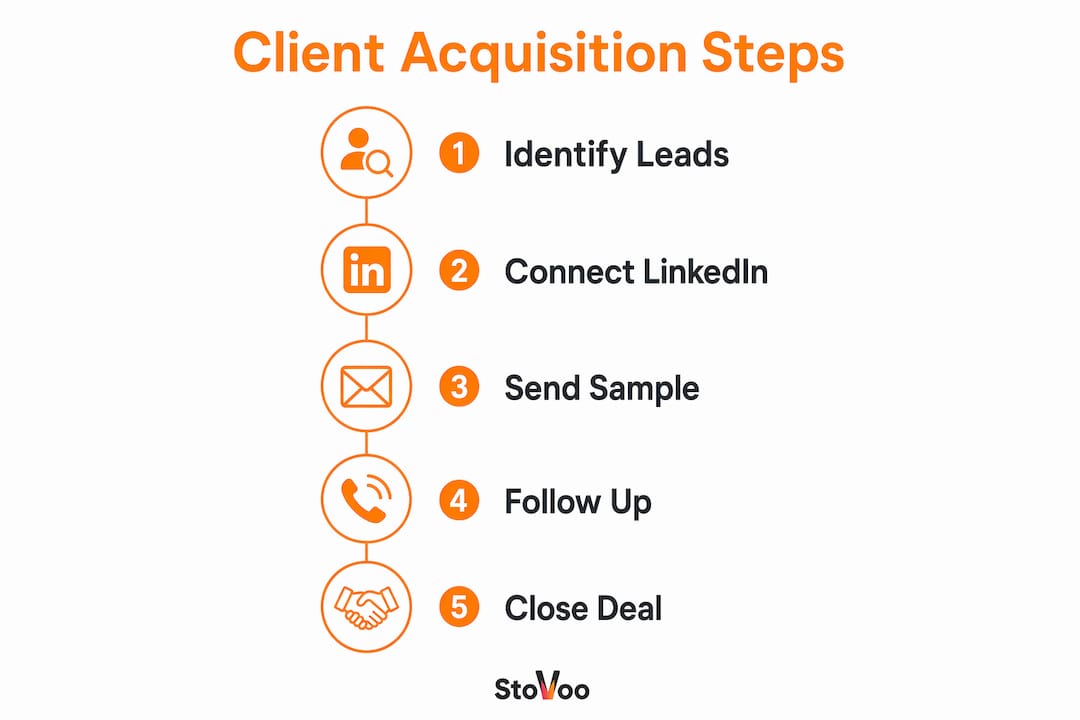
- Connect with the office manager or HR coordinator on LinkedIn with a short, personalized note referencing their company by name.
- Send a follow-up message two days later with a brief menu highlight and a specific offer, such as a complimentary tasting for their next team lunch.
- Follow up by email three days after that, attaching a one-page menu PDF and a direct booking link.
- Deliver a sample drop to the office if you have not received a reply within a week. Personalized LinkedIn outreach yields 8–15% reply rates, and sample drops convert 25% of targets into paying clients.
- Send a final follow-up email referencing the sample drop and asking for a 10-minute call.
Pro Tip: Always connect on LinkedIn before the sample drop. A warm introduction makes the physical delivery feel like a courtesy, not a cold sales call. That context is what drives the 1-in-4 conversion rate.
The key to this sequence is consistency. Most caterers send one email and give up. The caterers who close corporate accounts send five or more touches across multiple channels before they hear "yes."
How does your online presence attract catering inquiries?
Your online presence is your 24-hour sales rep. Professional food photography increases sales by 20–45%, and listings with photos get up to 70% more orders. That single investment pays for itself faster than almost any other marketing spend.
Google Business Profile and local SEO
Claim and fully complete your Google Business Profile. Add the catering attribute, upload at least 10 high-quality food photos, and list your catering menu items directly in the profile. Ask every satisfied client to leave a review immediately after their event, while the experience is fresh. Local SEO built on a complete profile puts you in front of high-intent searchers who are already ready to book.
Key features every catering landing page needs:
- A clear headline stating what you cater, for whom, and in which area
- A photo gallery with real event images, not stock photography
- A short video of food being prepared or served at an actual event
- Three to five client testimonials with names, event types, and dates
- A simple inquiry form that asks for event date, guest count, and budget
- A direct phone number visible above the fold on mobile
Pro Tip: Speed wins bookings. 80% of catering inquiries go to the first vendor who responds. Set up an automated email reply that confirms receipt within five minutes and promises a full proposal within 24 hours.
The table below shows how different online channels compare for generating inbound catering leads.
| Channel | Lead quality | Setup effort | Ongoing cost |
|---|---|---|---|
| Google Business Profile | High | Low | Free |
| Catering landing page | High | Medium | Low |
| Instagram (weddings, events) | Medium | Medium | Low |
| LinkedIn (corporate catering) | High | Medium | Low |
| TikTok (brand-driven caterers) | Variable | High | Low |
Social media platforms work best when you match the platform to your catering type. LinkedIn suits corporate catering, Instagram works for weddings and social events, and TikTok rewards personality-driven food brands. Spreading yourself across all three equally is a waste of time.
How do partnerships with venues and planners generate catering leads?
Preferred vendor relationships with venues and event planners generate the highest-trust referrals in the catering industry. A single venue relationship can generate $75,000 or more annually through consistent referrals. That is a revenue channel worth pursuing deliberately.
The most effective partnership tactics include:
- Researching every event venue, hotel ballroom, and conference center in your area and identifying which ones maintain preferred vendor lists
- Submitting a formal application package that includes your menu, insurance certificate, health license, and three client references
- Hosting a private tasting event specifically for venue coordinators and wedding planners, with no sales pitch attached
- Offering a referral fee or reciprocal promotion to florists, photographers, and AV companies who work the same events you do
- Sending a quarterly update to your venue contacts with your latest seasonal menu and any new service offerings
The tasting event is particularly underused. Most caterers wait to be invited. Hosting your own tasting, even for six to eight planners, positions you as the confident choice rather than one name on a long list. Pair your food with corporate gifting ideas or complementary office beverage offerings to make the experience memorable for corporate-focused planners.
Referral programs for related vendors work well when the incentive is simple. A flat fee per confirmed booking, paid within 30 days of the event, is more motivating than a percentage or a credit toward future services.
How do you retain catering clients and generate repeat bookings?
Client retention in catering is where the real profit lives. Acquiring a new client costs significantly more than keeping an existing one, yet most caterers invest almost nothing in post-event follow-up. Quarterly email campaigns featuring seasonal menus counteract "catering decay," which is the natural tendency for past clients to forget you exist between events.
A practical retention sequence looks like this:
- Send a thank-you email within 48 hours of every event, including two or three photos from the day if you have them.
- Send a short feedback survey one week after the event. Keep it to three questions maximum.
- Add the client to a segmented email list based on their event type, such as corporate lunches, weddings, or private parties.
- Send a seasonal menu update every quarter, timed to when clients typically start planning their next event.
- Reach out personally by phone or email before major booking seasons, such as the weeks before the holiday party season in october and november.
Pro Tip: Segment your email list by client type before you send anything. A corporate client who books weekly office lunches does not want to read about wedding menus. Relevance drives open rates, and open rates drive repeat bookings.
Referral programs work equally well for existing clients. A simple offer, such as a $50 credit toward their next booking for every new client they refer, costs you very little and generates warm leads with built-in social proof. Pair this with your catering booking management process to track referrals without losing them in a spreadsheet.
What tools do caterers need to manage client acquisition efficiently?
CRM adoption boosts operational efficiency by 35% in catering businesses. That gain comes from replacing scattered WhatsApp messages and spreadsheets with a single system that tracks every lead, proposal, and follow-up in one place.
The right technology stack for a growing catering business covers three areas. First, a CRM tracks every prospect from first contact through signed contract. Entry-level CRM platforms designed for small service businesses handle this without requiring technical expertise. Second, a digital proposal tool lets you send branded, itemized quotes with e-signature capability. Responding with a digital proposal and a follow-up call within 48 hours boosts close rates by up to 35%. Third, an analytics dashboard connected to your inquiry form shows you which channels generate the most leads so you can put more effort where it pays.
Stovoo brings these functions together for food entrepreneurs. The platform manages catering inquiries, bookings, and client communication from a single dashboard, replacing the chaos of multiple apps. You can explore catering operations tips that pair well with any technology setup you choose.
Key Takeaways
The most effective catering client acquisition strategy combines corporate outreach, a conversion-ready online presence, venue partnerships, and systematic client nurturing into one repeatable process.
| Point | Details |
|---|---|
| Corporate outreach converts | Cold email plus LinkedIn plus sample drops yields 3–8 new accounts per 100 contacts. |
| Speed captures inquiries | 80% of catering inquiries go to the first vendor who responds, so automate your initial reply. |
| Venue partnerships pay long-term | A single preferred vendor relationship can generate $75,000 or more annually in referrals. |
| Retention beats acquisition cost | Quarterly seasonal email campaigns prevent client drop-off and drive repeat bookings. |
| Technology closes more deals | Digital proposals with follow-up calls within 48 hours increase close rates by up to 35%. |
What I've learned about catering client acquisition after years in the industry
The caterers I've watched grow fastest share one habit: they treat marketing like a kitchen prep schedule. They do it every week, on a fixed cadence, whether they feel inspired or not. The ones who struggle treat marketing as something they do when bookings get slow. By then, the pipeline is empty and the pressure makes every decision worse.
The biggest mistake I see is chasing every channel at once. Pick two acquisition methods, run them consistently for 90 days, and measure the results. Corporate outreach and Google Business Profile optimization together are enough to fill a calendar for most caterers. Add venue partnerships in month four once you have a system for the first two.
Quick response is the most underrated advantage in this business. Most caterers take 24–48 hours to reply to an inquiry. Responding in under 10 minutes, even with an automated message, puts you ahead of the majority of your competition before the conversation even starts.
Finally, your food is your best marketing asset. Every event you cater is a tasting for the next 50 potential clients in the room. Carry business cards, ask happy guests if they host events, and make it easy for them to find your booking link. The food business marketing tips that actually move the needle are almost always the ones that connect your product directly to the next sale.
— freeman
How Stovoo helps caterers build a client acquisition system
Running a catering business means juggling inquiries, proposals, bookings, and follow-ups at the same time. Stovoo gives food entrepreneurs a professional shopfront and a centralized dashboard to manage all of it without the chaos of spreadsheets and messaging apps.
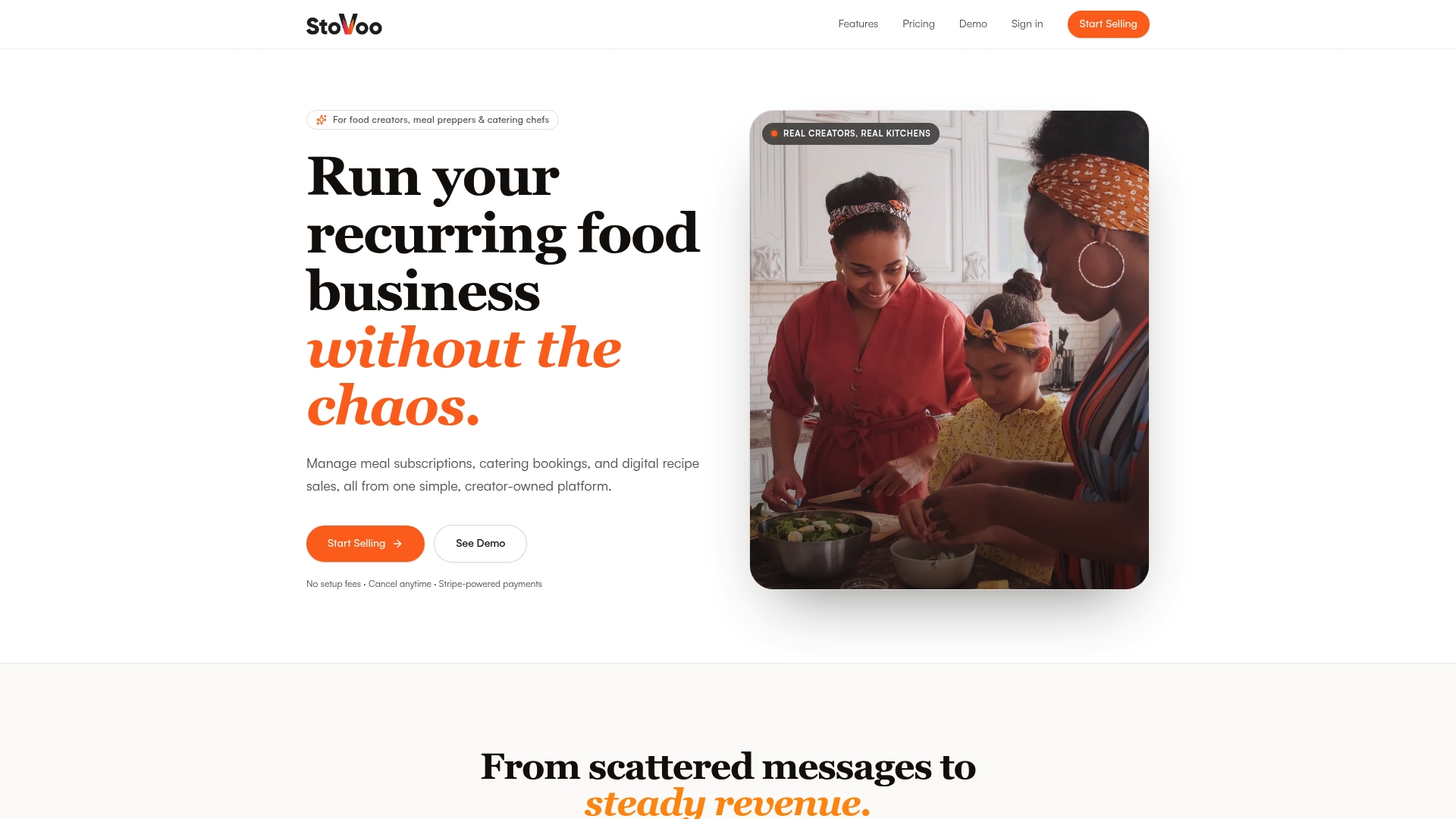
With Stovoo, you can set up a catering shopfront in minutes, share your booking link across LinkedIn, Instagram, and email, and start capturing inquiries with automated responses. The platform handles billing, client records, and recurring orders so you spend more time cooking and less time chasing payments. Caterers using Stovoo report cleaner workflows and stronger client relationships from day one.
FAQ
What are the highest-ROI catering client acquisition methods?
Targeted cold outreach combined with sample drops and an optimized Google Business Profile consistently delivers the highest return. Cold email campaigns yield 3–8 new accounts per 100 contacts when paired with LinkedIn connection requests.
How quickly should I respond to a catering inquiry?
Respond within five minutes using an automated reply, then follow up with a full proposal within 24 hours. Research shows 80% of catering inquiries go to the first vendor who responds.
How do I get catering clients through venue partnerships?
Apply to preferred vendor lists at local event venues and host private tastings for event planners. A single strong venue relationship can generate $75,000 or more in annual referral revenue.
How often should I email past catering clients?
Send a minimum of four emails per year, timed to seasonal menu changes and major event planning windows. Quarterly touches prevent client drop-off and keep your business top of mind for repeat bookings.
What technology do I need to manage catering leads?
A CRM to track prospects, a digital proposal tool with e-signature capability, and an analytics dashboard connected to your inquiry form cover the core needs. CRM adoption alone boosts operational efficiency by 35% for catering businesses.