
TL;DR:
- A comprehensive catering booking checklist ensures smooth event execution by covering client details, menu planning, staffing, contracts, and safety. Establishing clear timelines, written agreements, and designated contacts minimizes errors and last-minute surprises. Using centralized management platforms like Stovoo can streamline operations and improve business growth.
A solid catering booking checklist is the difference between a flawless event and a chaotic one. Before a single dish leaves the kitchen, you need client details locked, contracts signed, staffing confirmed, and timelines mapped. Here is the complete framework:
- Client and event details: event date, time, venue, guest count with buffer, service style
- Menu planning: item selection, portion sizing, dietary and allergy accommodations, beverage options
- Staffing: ratios by service style, written confirmations, backup assignments
- Contracts: deposit structure, cancellation ladder, force majeure clause, payment schedule, liability coverage
- Communication: designated day-of contact confirmed, vendor contacts listed, emergency protocols set
- Equipment and rentals: tables, chairs, linens, chafers, kitchen tools, serviceware
- Timeline milestones: inquiry response, contract finalization, staffing confirmation, final headcount, day-of run-of-show
- Health and safety: food handler certifications, temperature compliance, allergen labeling
- Post-event cleanup: responsibilities assigned, equipment returned, venue left per contract terms
Miss any one of these and the ripple effect touches everything downstream.
Table of Contents
- What client and event details should you collect first?
- How do you plan the menu and set staffing levels?
- Who should be your day-of event contact?
- What contract clauses protect both you and your client?
- What does a solid booking timeline look like?
- Expert perspective on catering booking best practices
- Who handles cleanup after the event?
- What health and safety requirements apply to catering events?
- Stovoo makes catering operations easier to manage
- FAQ
- Key Takeaways
What client and event details should you collect first?
The intake stage sets the quality of every decision that follows. Structured data collection at this point prevents the back-and-forth that burns time and erodes client confidence. Automation tools can deliver proposals within 15–30 minutes of inquiry and lock deposits automatically, which keeps momentum high.
Gather these specifics before anything else:
- Event date, start time, and end time (including setup and breakdown windows)
- Venue name, address, loading dock access, parking, and kitchen availability
- Confirmed guest count plus a buffer (a small percentage buffer)
- Service style: plated, buffet, family-style, or drop-off
- Dietary restrictions and food allergies for the full guest list
- Beverage service needs: open bar, beer and wine only, non-alcoholic, or client-supplied
- Budget per person and total ceiling
- Primary client contact name, phone, and email
Send an automated acknowledgment the moment the inquiry arrives. It signals professionalism and buys you time to build a proper proposal. For a deeper look at managing this intake process, the catering bookings guide covers common intake pitfalls worth avoiding.
How do you plan the menu and set staffing levels?
Menu planning and staffing are tightly linked. The service style you choose directly determines how many people you need on the floor, which affects your cost structure and your proposal pricing.
Start with the menu planning steps before finalizing any staffing numbers:
- Confirm cuisine type and course structure with the client
- Size portions based on event duration and time of day
- Build in at least two options per dietary category (vegetarian, gluten-free, dairy-free)
- Finalize beverage pairings and service timing
For staffing, professional standards from Cynthia Concierge are the benchmark most operators follow:
| Service Style | Staff-to-Guest Ratio | Notes |
|---|---|---|
| Plated / formal | 1 per 10–12 guests | Higher attention per table required |
| Buffet | 1 per 15–20 guests | Station monitoring, replenishment focus |
| Drop-off / boxed | Minimal or none | Delivery and setup only |
Equipment needs follow directly from these decisions. Confirm chafers, serving utensils, linens, plates, and glassware quantities against your final headcount before the contract is signed.

Who should be your day-of event contact?
This is one of the most overlooked items on any event catering checklist, and it causes more day-of confusion than almost anything else. Clients often assume the person who sold them the service will also be running the event. That is rarely true.
Confirming a dedicated day-of contact early prevents miscommunication and builds client trust. Set this expectation during the proposal stage, not the week before the event.
Your contact confirmation checklist:
- Name and direct mobile number of the day-of event manager
- Name and contact for the venue coordinator
- Emergency contact for each key vendor (rental company, bar service, transportation)
- Backup contact if the primary manager is unreachable
Pro Tip: Institute a single point-of-contact policy in writing. One person owns all day-of decisions. When clients know exactly who to call, and your team knows exactly who speaks for the client, the entire operation runs cleaner.
What contract clauses protect both you and your client?
A well-drafted contract is your primary risk management tool. Verbal agreements and email threads do not hold up when a client cancels three weeks out or a venue floods. Every catering contract needs these clauses:
- Detailed order description: menu items, quantities, service style, staffing count, equipment included
- Pricing and payment schedule: total price, deposit amount, balance due date, accepted payment methods
- Cancellation ladder: tiered penalties scaled by days before the event (90, 60, and 30-day thresholds are standard)
- Force majeure clause: specific and balanced language defining rescheduling terms and refund conditions for both parties
- Late payment fees: a clause charging $150 or 5% of the outstanding balance with a firm 7-day payment deadline reduces no-shows and lost revenue
- Liability and insurance: your coverage limits and any venue-specific requirements
- Change procedures: how menu or headcount changes are submitted and what fees apply
Pro Tip: Collect the signed contract, deposit, and electronic signature in one transaction. That single moment creates a clear, documented commitment from the client and protects your revenue from the start.
For deposit sizing, events booked seven or more months out typically require 50% upfront; events within six months often warrant 60%. Adjust based on your market and event size.
What does a solid booking timeline look like?
Milestones without deadlines are just wishes. Map every critical action to a specific date, and build your operational specifications document from day one. This living document should include guest counts, menu portions, staffing assignments with backups, equipment specs, vendor contacts, and a full timeline, updated weekly as the event approaches.
| Milestone | Timing |
|---|---|
| Respond to initial inquiry | Promptly |
| Send proposal | Promptly via automation or same day |
| Contract finalized and deposit received | Several weeks before event |
| Staffing written confirmations secured | Well in advance of event |
| Equipment and rental order confirmed | Weeks before event |
| Dietary restriction final review | A couple of weeks before event |
| Final headcount locked | About one to two weeks before event |
| Day-of run-of-show shared with all parties | A few days before event |
For large events, written backup assignments for every staff role at the 45-day mark are non-negotiable. A no-show at 6 AM on event day is not the time to start recruiting.
Expert perspective on catering booking best practices
The caterers who scale past six figures consistently are not the ones with the best recipes. They are the ones with the tightest systems. Every checklist item above exists because something went wrong without it.
The core principles that hold across every event type:
- Capture complete client data before committing any resources
- Align menu complexity with your staffing capacity, not just client preference
- Put every agreement in writing, including verbal scope changes
- Confirm your day-of contact chain at least two weeks out
- Track every milestone in a shared, living document
"The difference between a $500,000 catering business and a $1.2 million catering business often isn't more events. It's fewer lost deals and smoother execution. Systematize every stage: clear timelines, documented procedures, assigned responsibilities, and technology that tracks everything." — Cynthia Concierge
A catering checklist guide for event planners reinforces this point: the planners who outperform their peers treat the checklist as a living system, not a one-time document.
Who handles cleanup after the event?
Post-event cleanup responsibilities must be spelled out in the contract before the event date, not negotiated in a parking lot at midnight. Ambiguity here damages client relationships and creates real liability exposure.
Assign and confirm these responsibilities in writing:
- Breakdown and packing: who disassembles chafing stations, collects serviceware, and boxes leftovers
- Trash removal: whether the caterer hauls waste or leaves it for venue staff
- Equipment return: rental pickup windows, who is present, and condition expectations
- Venue restoration: returning furniture to original positions, clearing the kitchen, wiping surfaces
- Leftover food: client preference for donation, disposal, or packaging for guests
Some venues charge cleanup fees if their standards are not met. Know those standards before your team arrives, and include them in your pre-event briefing.
What health and safety requirements apply to catering events?
Health and safety compliance is not optional, and it is not just about avoiding fines. A foodborne illness incident at a catered event can end a business. The U.S. Food and Drug Administration's Food Safety Modernization Act sets the federal baseline, but state and county health departments add their own licensing and inspection requirements.
Cover these items on every event:
- Food handler certifications: verify that all staff hold current state-required food handler cards or ServSafe certifications
- Temperature control: hot food held above 140°F, cold food below 40°F throughout service
- Allergen labeling: every dish labeled with major allergens (the FDA's "Big Nine" include milk, eggs, fish, shellfish, tree nuts, peanuts, wheat, soybeans, and sesame)
- Catering license and liability insurance: confirm your business license covers off-site catering and that your general liability policy is current
- Venue health permits: some venues require caterers to provide proof of permits before setup begins
- Cross-contamination protocols: separate utensils and prep surfaces for allergen-sensitive dishes
Build a pre-event compliance checklist that travels with your team to every job. A quick verification at setup takes five minutes and eliminates a category of risk entirely.
Stovoo makes catering operations easier to manage
Running a catering business from scattered spreadsheets and group chats costs you time and clients. Stovoo gives food entrepreneurs a centralized, mobile-first platform where catering inquiries, bookings, and payments live in one place, not across five apps.
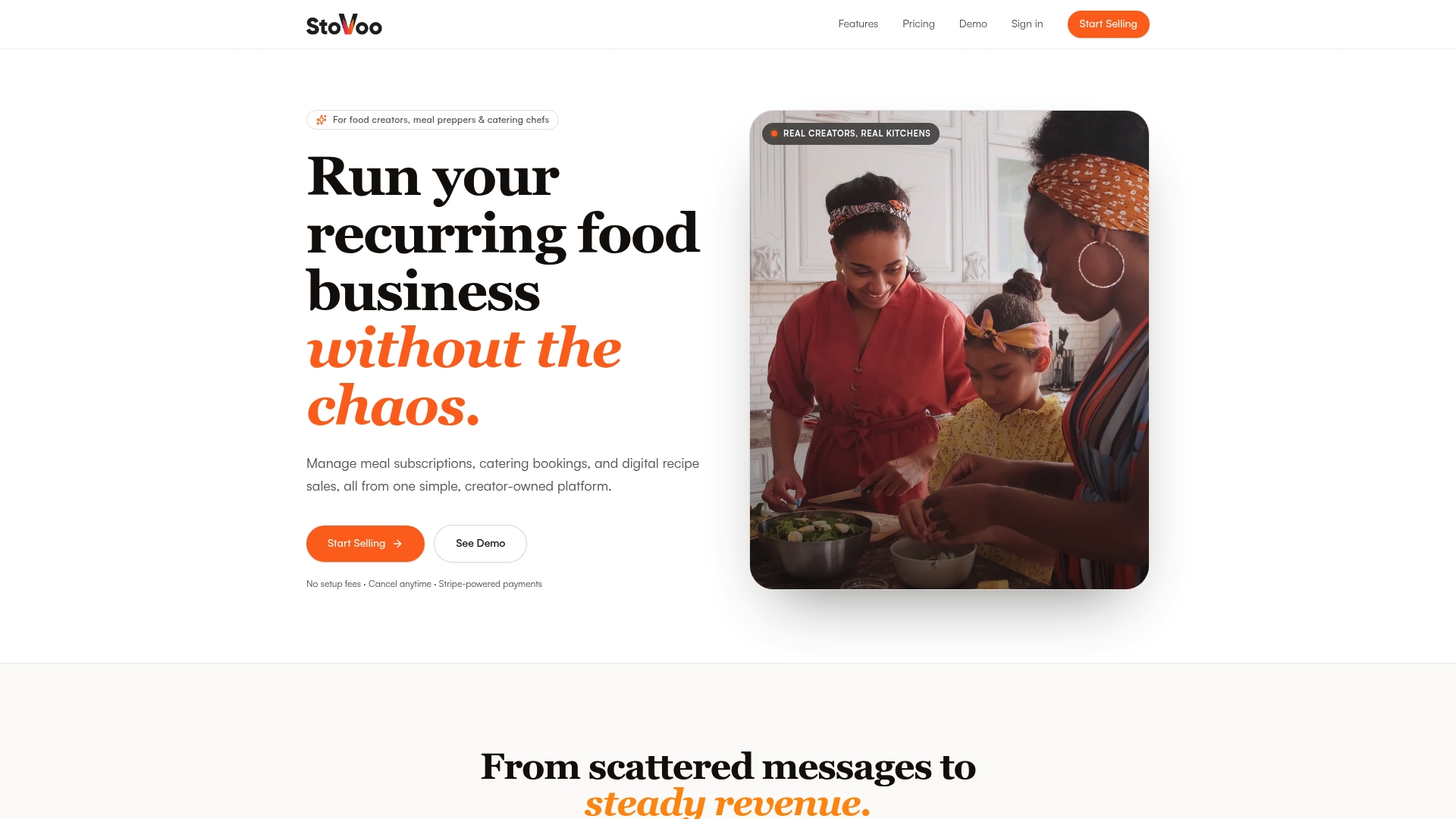
The platform handles automated billing, customer management, and a professional shopfront you can share across social media and messaging apps in minutes. Whether you are managing recurring meal plans or one-off event bookings, Stovoo keeps your pipeline organized and your revenue predictable. It is built specifically for catering chefs and small food businesses who want to grow without adding administrative overhead.
Ready to replace the chaos with a system that works? Set up your Stovoo shopfront and start accepting catering bookings today.
FAQ
What should a catering booking checklist include?
A complete checklist covers client and event details, menu planning, staffing ratios, contract clauses, communication contacts, equipment needs, payment schedules, dietary accommodations, health compliance, and post-event cleanup responsibilities.
How far in advance should you confirm staffing for a catering event?
Written staffing confirmations with backup assignments should be secured at least 45 days before the event date, according to professional standards for large events.
What are the most important clauses in a catering contract?
The most critical clauses are the cancellation ladder with tiered penalties at 90, 60, and 30 days, a balanced force majeure clause with specific rescheduling terms, and a late payment fee structure to protect against last-minute cancellations.
When should the final headcount be confirmed?
Lock the final guest count 7–10 days before the event. Build a buffer of 5–10% into your ordering to account for last-minute additions.
How do you handle dietary restrictions in catering?
Collect dietary restrictions and food allergies during the initial intake, review them again a couple of weeks before the event, and label every dish with major allergens on the day of service.
Key Takeaways
A complete catering booking checklist requires structured intake, staffing aligned to service style, airtight contracts, and milestone-driven timelines to execute events without costly oversights.
| Point | Details |
|---|---|
| Staffing ratios by service style | Follow a ratio of one staff member per 10–12 guests for plated service and one per 15–20 guests for buffet style, consistent with professional standards. |
| Contract must-haves | Include a cancellation ladder, force majeure clause, and late payment fee of $150 or 5% of balance. |
| Staffing confirmation deadline | Secure written commitments from all team members at least 45 days before the event. |
| Final headcount timing | Lock guest count 7–10 days out and share the day-of run-of-show 48 hours before service. |
| Stovoo for catering ops | Stovoo centralizes catering inquiries, bookings, and payments in one mobile-first platform for food businesses. |