
TL;DR:
- Validating demand with strangers and launching with one or two products helps food entrepreneurs build sustainable businesses.
- Early compliance integration, full-cost modeling, and operational discipline prevent costly mistakes during growth.
Best practices for food entrepreneurs are defined as the coordinated set of strategies covering product validation, regulatory compliance, operations, marketing, and customer retention that separate profitable food businesses from ones that stall. The food industry rewards preparation. Entrepreneurs who treat compliance as a launch step, not an afterthought, and who model their true costs before pricing a single unit, build businesses that last. This guide covers the critical moves from your first product test through your first retail expansion, with specific frameworks, regulatory standards, and tools that actually move the needle.
1. Best practices for food entrepreneurs start with product validation
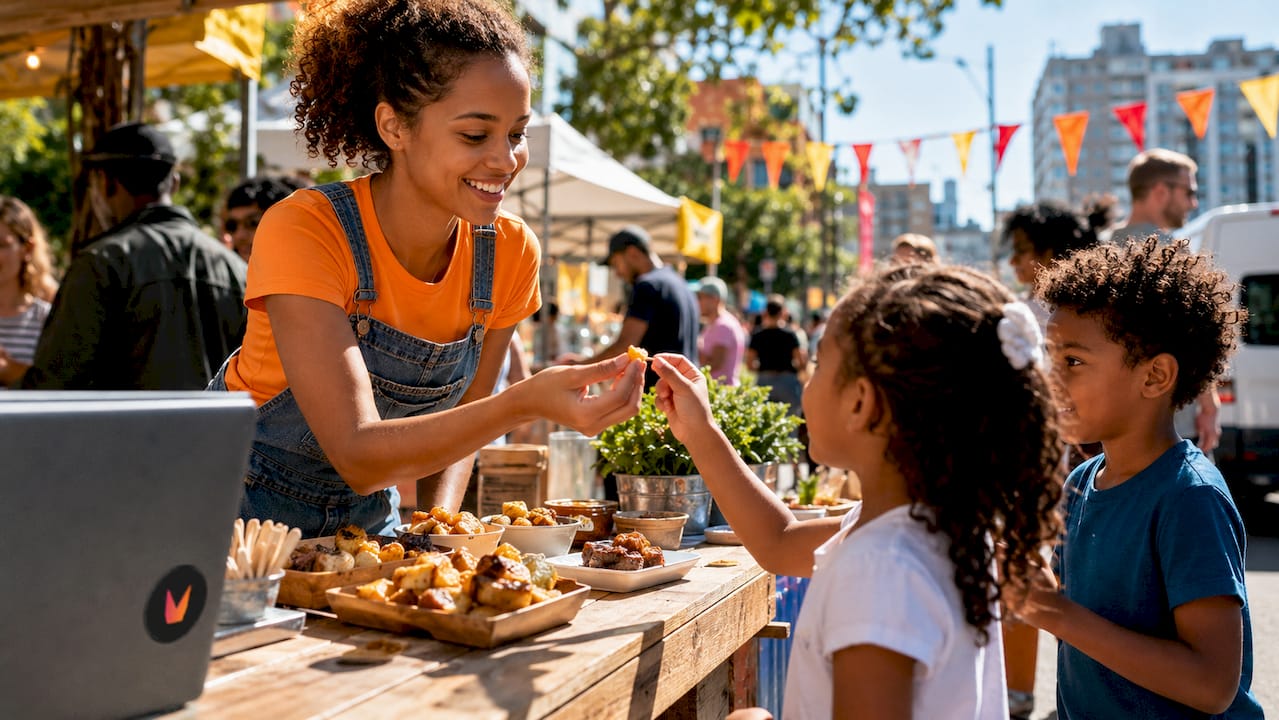
Validating demand before investing in production is the single most important early decision you will make. Family and friend feedback is biased; strangers' purchase decisions at real markets provide the only valid signal. A compliment from your cousin tells you nothing. A stranger pulling out their wallet tells you everything.
Experts recommend testing with 20–30 objective testers before committing to packaging, labeling, or production equipment. That number is large enough to surface real patterns but small enough to keep costs low. Follow that with a limited pre-order campaign, targeting your first 50 orders, to confirm that people will actually pay your price point.
- Run a soft launch at a farmers market or community pop-up to collect live feedback
- Track which flavors or formats sell out first, not which ones get the most compliments
- Use pre-order data to set your initial production run size
Launching with one or two flagship products simplifies your operations and makes the buying decision easier for customers. Menus with too many options slow down both your kitchen and your customer's checkout.
Pro Tip: Set up a table at a local farmers market before you spend a dollar on branding. Real transactions, not surveys, are your most reliable market research.
2. Navigating regulatory requirements and food safety compliance
Regulatory compliance is not a final checklist item. Recipe changes after label design is finalized restart the compliance review process entirely, adding weeks and real costs to your launch. Build compliance into your formulation workflow from day one.
The core permits and standards every food entrepreneur needs to understand:
- FDA registration for facilities that manufacture, process, pack, or hold food for human consumption
- Health department permits issued at the state and county level before you can sell commercially
- Good Manufacturing Practices (GMP) under 21 CFR Part 117, which govern sanitation, personnel hygiene, and facility design
- HACCP plans (Hazard Analysis and Critical Control Points) that identify and control biological, chemical, and physical hazards
- SQF certification (Safe Quality Food), a Global Food Safety Initiative benchmark used by major retailers
Facility inspections take 4–8 weeks on average before a state manufacturing permit is issued. Plan that window into your launch calendar, not around it. Showing up unprepared for an inspection extends that timeline further.
Cottage food laws in most states allow home-based production of low-risk products like baked goods, jams, and candies without a commercial kitchen permit. Shared-use or commissary kitchens offer a middle path: licensed commercial space you rent by the hour, which satisfies health department requirements without the overhead of a dedicated facility. For food safety equipment that meets inspection standards, resources like CulinaryProfis outline the specific tools regulators look for.
Pro Tip: If you produce acidified foods, fermented products, or anything shelf-stable, hire a Process Authority to review your formulation. Their sign-off protects you legally and prevents FDA action. Pair that with product liability insurance before your first sale.
3. Implementing operational systems for inventory, payment, and cost control
Operational discipline is what keeps a food business profitable as it grows. Real-time inventory tracking with low-stock alerts consistently outperforms manual methods, saving significant waste-related costs every month. Manual spreadsheets fail at scale because they depend on someone remembering to update them.
The most damaging operational mistake food entrepreneurs make is underpricing. Most entrepreneurs underprice their products by 30–50% because they calculate cost using only raw ingredients. A full cost model includes labor, overhead, utilities, packaging, and, once you enter retail, trade spend and slotting fees. Trade spend and slotting fees alone can reduce gross margins from 43.6% to 42.3% on a single product line. That margin compression compounds fast across a full catalog.
The operational systems worth prioritizing:
| System | Key feature for food businesses |
|---|---|
| Inventory management | Low-stock alerts, waste tracking, supplier reorder triggers |
| Point-of-sale (POS) | Fast checkout, multiple payment methods, loyalty program integration |
| Cost accounting | Full unit cost modeling including labor and overhead |
| Order management | Recurring order handling, subscription billing, customer history |
| Customer data | Purchase frequency, average order value, retention tracking |
Platforms like Stovoo handle order management, recurring billing, and customer data in one place, which removes the need to stitch together separate tools. For equipment planning that supports these systems, restaurant startup equipment guides cover the physical infrastructure side of the equation.
Pro Tip: Before investing in enterprise-level software, audit what you actually need in your first 12 months. Many food entrepreneurs overspend on features they will not use until year two. Start with a system that covers inventory, payments, and customer records, then add complexity as volume demands it.
4. Marketing strategies and building customer engagement
A compelling brand story is not optional. Customers buy from food brands they trust, and trust comes from knowing where ingredients come from, who made the product, and why. Ingredient sourcing transparency and founder passion are the two narrative elements that consistently convert browsers into buyers.
Consistency on social media matters more than production quality. A weekly video filmed on a phone in your kitchen, showing your actual process, builds more authentic connection than a polished ad. Authenticity signals honesty, and honesty builds the kind of loyalty that survives a price increase.
Effective low-cost marketing tactics for food entrepreneurs:
- Post behind-the-scenes content showing your sourcing, prep, and packaging process
- Share customer photos and reviews as social proof on every platform you use
- Run a referral program that rewards existing customers for bringing in new ones
- Partner with local gyms, offices, or community organizations for bulk meal plan orders
- Use email to communicate directly with customers you own, not just followers you rent
Loyalty programs integrated into your POS system increase repeat purchase rates and give you data on your best customers. Accepting EBT/SNAP benefits, where applicable, expands your addressable market and captures local spending that competitors often ignore.
Penetrate your local market deeply before attempting national distribution. Local success gives you the case study, the reviews, and the operational confidence to scale. For more on food business marketing tactics that drive real growth, the fundamentals remain consistent: own your customer relationships and communicate with them directly.
5. Scaling your food business sustainably and avoiding common pitfalls
Scaling without a plan is the fastest way to destroy the margins you worked to build. A structured food brand launch covering formulation, compliance, packaging, manufacturing, and distribution typically takes 28–32 weeks. That timeline exists because each phase depends on the one before it. Skipping steps does not save time. It creates rework.
The four disciplines that protect you during growth:
- Build a 12-month demand plan before approaching any retail buyer. Buyers want to see that you can supply consistently, not just that you have a great product.
- Align your sales, operations, and finance functions early. Misalignment between what sales promises and what operations can deliver is the most common cause of quality failures during scale.
- Run pilot production runs before committing to large manufacturing contracts. Inconsistent product quality at scale kills retail relationships faster than any competitor.
- Track unit economics continuously. Know your cost per unit, your customer acquisition cost, and your average order value every week, not every quarter.
Premature distribution expansion is the most common scaling mistake. Entrepreneurs land a regional grocery account before their production process is stable, then ship inconsistent product, lose the account, and spend months rebuilding credibility. For a deeper look at food business scalability, the core principle is the same: grow your operational capacity before you grow your distribution footprint.
Pro Tip: Use staged product line expansions. Launch your second SKU only after your first is operationally stable and profitable. Adding complexity too early splits your attention and your cash.
Key takeaways
The most effective food entrepreneur strategy combines rigorous product validation, compliance integration, full-cost pricing, and direct customer ownership to build a business that scales without breaking.
| Point | Details |
|---|---|
| Validate with strangers | Test with 20–30 objective buyers at real markets before investing in production. |
| Integrate compliance early | Build FDA and GMP requirements into formulation to avoid costly rework after label design. |
| Model your full cost | Include labor, overhead, and trade spend to avoid underpricing by 30–50%. |
| Own your customer data | Use integrated order and loyalty systems to track retention and purchase behavior directly. |
| Scale operations before distribution | Stabilize production quality before expanding into retail or new markets. |
What I've learned after watching food businesses succeed and fail
The gap between food entrepreneurs who build real businesses and those who stay stuck is almost never about the product. The product is usually good. The gap is operational. Founders who treat their food business like a creative project, and not like a company with unit economics, consistently hit the same wall: they are busy, they are growing, and they are losing money without knowing why.
The cost accounting issue is the one that surprises me most. Entrepreneurs who have been selling for two years still cannot tell you their true cost per unit. They know their ingredient spend. They do not know what their labor costs per batch, what their packaging adds per unit, or what their overhead allocates to each SKU. That is not a minor gap. That is the difference between a business and an expensive hobby.
Consumer preferences are shifting toward transparency and local sourcing faster than most food brands are adapting. Customers want to know who grew the ingredients, where the kitchen is, and what the founder's story is. Brands that tell that story clearly, and consistently, build loyalty that advertising cannot buy.
The entrepreneurs I have seen succeed treat every launch as a learning loop. They ship, they measure, they adjust. They do not wait for a perfect product before going to market. They use the market to make the product better. That mindset, combined with the operational discipline to track numbers weekly, is what separates the food brands that are still around in year three from the ones that are not.
— freeman
How Stovoo helps food entrepreneurs build without the chaos
Running a food business across WhatsApp threads, spreadsheets, and manual invoices is a system that breaks the moment volume picks up. Stovoo gives food creators, meal preppers, and catering chefs a single platform to manage recurring orders, subscription meal plans, catering bookings, and digital recipe sales.
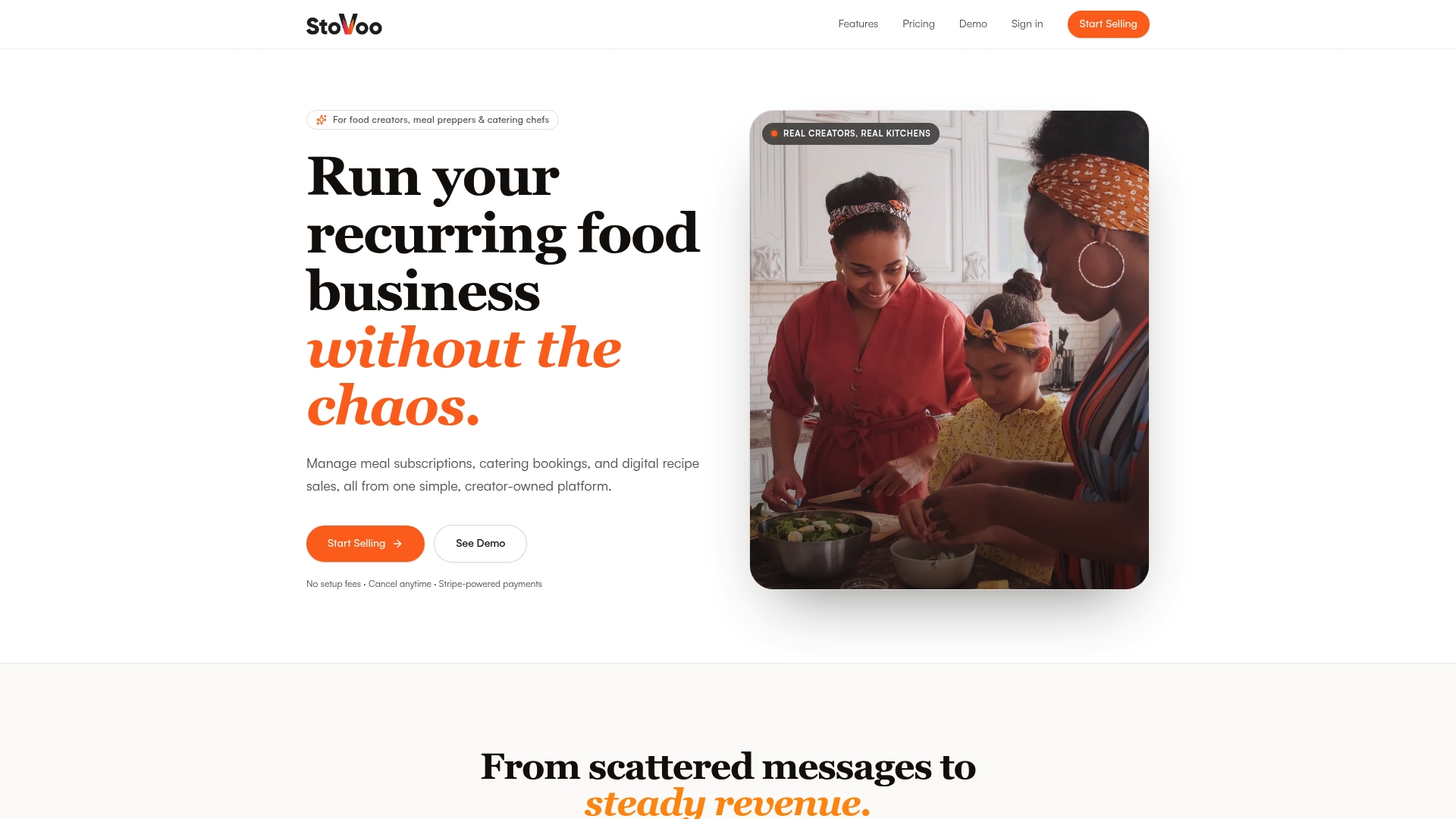
Stovoo's mobile-first shopfront lets you share a single link across social media and messaging apps so customers can browse, order, and pay without you chasing anyone down. Automated billing and customer management replace the admin work that eats into your production time. Businesses like Freeman Bistro in Lagos and Courtside Kitchen in Nairobi already use Stovoo to run their recurring food operations. If you are ready to start selling on Stovoo, setup takes minutes and requires no technical background.
FAQ
What are the most important best practices for food entrepreneurs?
The most critical practices are product validation with real buyers, compliance integration from the start, and full-cost pricing that includes labor and overhead. Entrepreneurs who master these three areas build profitable businesses faster than those who focus on product alone.
How long does it take to launch a food brand properly?
A structured food brand launch covering formulation, compliance, packaging, manufacturing, and distribution takes 28–32 weeks. Rushing any phase typically creates compliance or quality problems that cost more to fix than the time saved.
Why do food entrepreneurs underprice their products?
Most food entrepreneurs underprice by 30–50% because they calculate cost using only raw ingredients. A complete cost model must include labor, overhead, packaging, and, for retail, trade spend and slotting fees.
What permits does a food entrepreneur need to start selling?
The core requirements are FDA registration, a state or county health department permit, and GMP compliance under 21 CFR Part 117. Cottage food laws in many states allow home-based production of low-risk items without a commercial kitchen permit.
How can food entrepreneurs build customer loyalty on a small budget?
Loyalty programs integrated into a POS system, direct email communication, and referral programs are the highest-return options for small food businesses. Accepting EBT/SNAP benefits, where eligible, also expands your local customer base at no additional marketing cost.