

TL;DR:
- Recurring orders in catering provide stable revenue and improve profit margins through repeat clients who spend more over time. They enable operational efficiencies like better scheduling, reduced food waste, and automated admin tasks, while strengthening client relationships with loyalty and reliable service. Building structured recurring programs and owning client data are essential for long-term growth and higher profitability.
Recurring orders in catering are the most direct path to stable revenue and higher profit margins. The benefits of recurring orders for caterers go far beyond convenience. Repeat clients generate 6 times the annual revenue of one-time buyers, and retaining a client costs 5–25 times less than acquiring a new one. Catering businesses that build recurring order programs, also called subscription catering or repeat booking systems, gain predictable cash flow, lower food waste, and stronger client relationships. This guide breaks down exactly how those advantages compound over time and what you can do to build them into your business.
What are the real benefits of recurring orders for caterers?
Recurring orders give caterers something that one-off events never can: financial predictability. When you know a corporate client will place a weekly lunch order every Monday, you can plan staffing, purchase ingredients in bulk, and schedule kitchen prep without guessing. That certainty alone changes how you run your business.
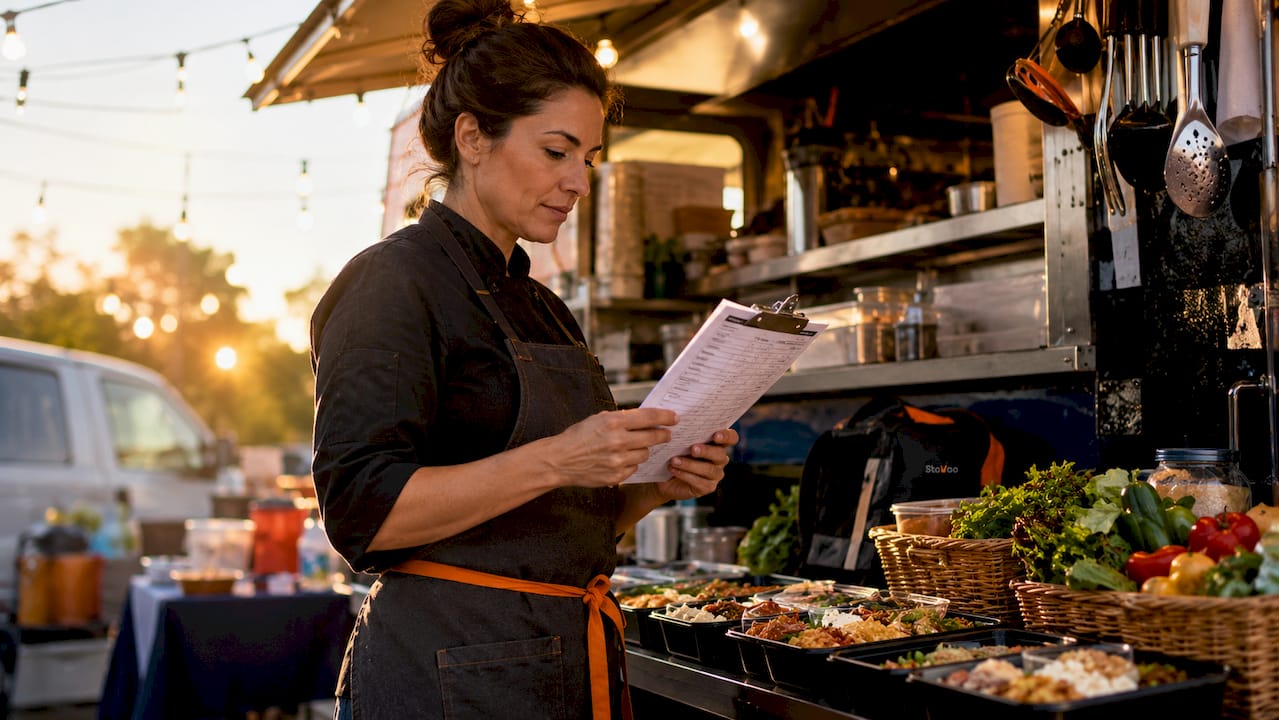
The financial case is strong. Repeat buyers spend 67% more per order by their third year with a caterer, and they negotiate on price far less than new clients. That means your margins improve without you raising your rates. Daily and weekly meal programs have grown 26% year over year as of mid-2026, which signals that corporate and institutional clients are actively seeking caterers who can commit to a regular schedule.
The advantages of repeat orders also show up in your cost structure. Acquiring a new catering client requires marketing spend, proposal time, tastings, and follow-up calls. A returning client skips all of that. Increasing customer retention by 5% can boost profits by 25%–95%. That is not a marginal improvement. It is a structural shift in how profitable your business becomes.
Here is what the recurring catering model delivers financially:
- Predictable monthly revenue that lets you plan cash flow weeks or months ahead
- Lower cost per order as client onboarding and admin work shrinks with familiarity
- Higher average order values from clients who trust you and expand their requests over time
- Reduced price sensitivity because loyal clients prioritize reliability over the cheapest quote
- Compounding lifetime value as most bookings by year three come from repeat clients with larger budgets
What operational efficiencies do recurring catering orders enable?
Recurring orders make your kitchen easier to run. When you know what is coming, you can batch prep, schedule your team efficiently, and order ingredients with precision. That is the operational core of recurring catering benefits.
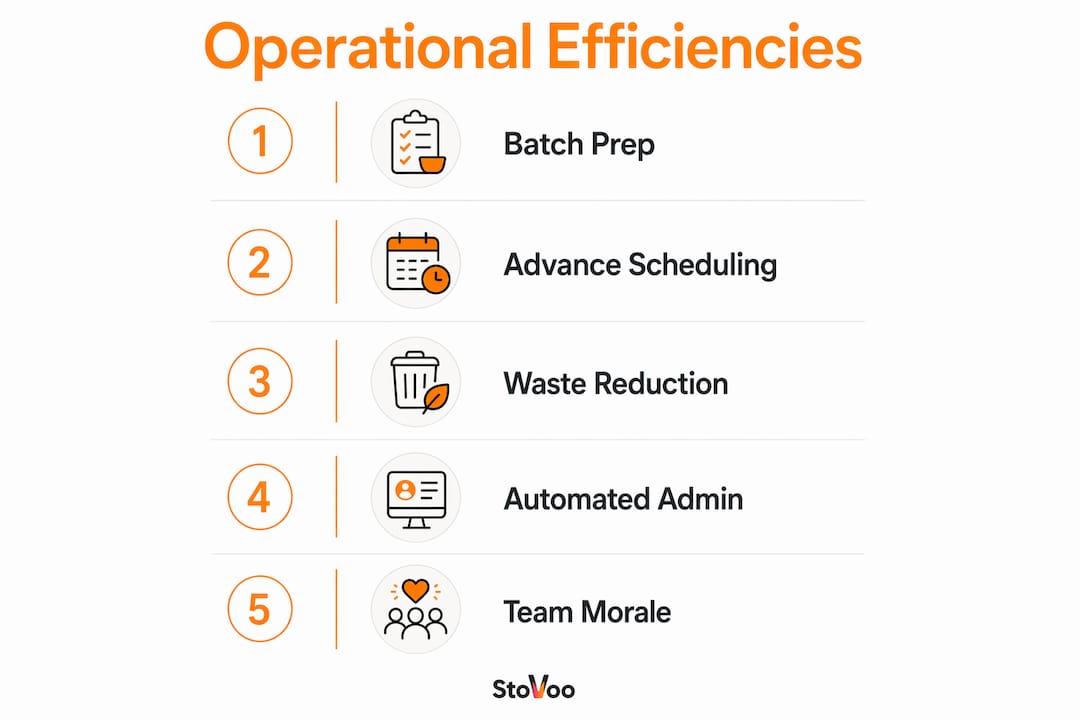
Advance scheduling is the biggest win. A caterer serving a corporate client every Tuesday and Thursday can prep sauces, proteins, and sides in larger batches on Monday and Wednesday. That cuts active cooking time per meal and reduces the frantic pace that leads to mistakes and waste. Revenue predictability from recurring orders lets you plan staffing and inventory months ahead, which directly lowers your labor-to-revenue ratio.
Food waste drops sharply when you forecast accurately. One-off catering events often require over-ordering to avoid running short. Recurring programs let you track exactly what a client consumes each week and adjust quantities accordingly. Over time, that precision saves real money on food costs.
Catering order automation tools also reduce the admin burden. Automated billing, order confirmations, and reminders replace the back-and-forth messages that eat up hours every week. Your team spends less time on logistics and more time on food quality.
Pro Tip: Set up a recurring order template for each regular client that includes their preferred menu, headcount, delivery time, and dietary notes. Updating one template takes seconds and eliminates repeated questions.
The operational benefits extend to team morale. Kitchen staff who work predictable schedules with consistent order volumes experience less burnout than those managing chaotic, unpredictable event loads. A calmer kitchen produces better food and retains staff longer.
How do recurring orders strengthen client relationships?
Repeat clients are easier to serve well. You already know their preferences, dietary restrictions, and delivery quirks. That knowledge lets you deliver a better experience every time without starting from scratch. Corporate clients prioritize reliability over novelty, and a caterer who handles invoicing, dietary needs, and scheduling without friction becomes an extension of their office operations.
Saved client profiles are a practical tool here. When a client's gluten-free requirements, preferred delivery window, and invoice contact are stored in your system, every order runs smoothly. That reliability builds trust faster than any sales pitch.
Loyalty rewards and tiered pricing also encourage clients to stay. A client who books weekly earns a discount or a complimentary upgrade after a set number of orders. That structure gives them a reason to keep coming back rather than testing a competitor.
Pro Tip: Rotate your core menu seasonally rather than changing it entirely. Clients want variety, but they also want the dishes they love. A rotating seasonal add-on alongside a stable core menu keeps things fresh without disrupting your kitchen workflow.
Menu fatigue is a real risk in recurring catering. Rotating a core menu with seasonal add-ons keeps clients engaged without forcing your kitchen to learn entirely new dishes every few weeks. This balance between consistency and variety is one of the most underrated tactics in corporate catering retention.
Reliable invoicing and scheduling also reduce client friction. When a client receives the same clean invoice on the same day every week, they stop thinking about the administrative side of the relationship. That mental ease makes them far less likely to shop around.
What steps help caterers build a recurring order system?
Building a recurring order program requires clear structure from the start. Without defined minimums, lead times, and reorder paths, even willing clients drift back to one-off bookings.
-
Set order minimums and lead times. Define the smallest order you will accept on a recurring basis and how far in advance clients must confirm. This protects your kitchen planning and filters out clients who are not serious about a regular commitment.
-
Create simple reorder paths. Simplified reorder paths and saved preferences dramatically increase repeat order rates. A client who can reorder in two clicks will. A client who has to call, email, and wait for a quote often will not.
-
Capture client data directly. Owning your customer data lets you send proactive follow-ups, seasonal offers, and reminders before a client's next event. Relying on a third-party marketplace means you lose that relationship the moment they stop ordering through that platform.
-
Build packages for common group sizes. A lunch package for 10, 25, and 50 people removes the friction of custom quoting every time. Clients can select a package, confirm headcount, and place the order without a back-and-forth conversation.
-
Automate billing and reminders. Manual invoicing creates delays and errors. Automated billing tied to a recurring schedule means clients pay on time and you spend zero time chasing checks. Platforms built for catering order automation handle this without requiring technical expertise.
-
Build direct relationships outside marketplaces. Marketplace platforms charge commissions and own the client relationship. Moving clients to a direct ordering channel, even gradually, protects your margins and gives you full control over communication and retention.
Pro Tip: After every third or fourth order, send a short check-in message asking if the client wants to adjust anything. This small gesture signals attentiveness and catches dissatisfaction before it becomes a cancellation.
The comparison below shows how a structured recurring program differs from an ad-hoc approach across key operational areas:
| Area | Ad-hoc catering | Recurring program |
|---|---|---|
| Revenue predictability | Low | High |
| Food waste | High | Low |
| Client acquisition cost | High per order | Amortized over months |
| Admin time per order | High | Low after setup |
| Client lifetime value | Single event | Multi-year relationship |
Learning how to streamline catering orders through structured packages and automation is the single fastest way to improve both margins and client satisfaction simultaneously.
Key Takeaways
Recurring catering orders build compounding value: the longer a client stays, the more profitable and easier to serve they become.
| Point | Details |
|---|---|
| Revenue stability | Repeat clients generate 6x the annual revenue of one-time buyers with far lower acquisition cost. |
| Profit growth from retention | A 5% increase in retention can boost profits by 25%–95% through reduced costs and higher spend. |
| Operational efficiency | Advance scheduling cuts food waste, lowers labor costs, and reduces kitchen stress significantly. |
| Client relationship depth | Saved preferences, reliable invoicing, and rotating menus keep corporate clients loyal long term. |
| Direct data ownership | Capturing client data directly enables proactive follow-ups that convert one-time buyers into regulars. |
Why I think most caterers underestimate the compounding effect
Most catering businesses I have observed treat client retention as a nice-to-have rather than a core growth strategy. That is a costly mistake. The math on recurring catering is not linear. A client who books once a month for three years does not just bring three years of revenue. They bring referrals, expanded order sizes, and almost zero acquisition cost. By year three, most bookings come from repeat clients with larger budgets. That is the compounding effect in action.
The operational improvements are just as underrated. I have seen catering teams transform their kitchen culture simply by shifting from chaotic event-by-event scheduling to a structured weekly program. Staff morale improves. Food quality improves. Turnover drops. None of that shows up in a revenue spreadsheet, but all of it affects your bottom line.
The one mistake I see most often is neglecting direct client relationships in favor of marketplace convenience. Marketplaces generate orders, but they own the client. The moment you build a direct channel with a weekly meal plan or a recurring corporate program, you own that relationship and everything it produces over time.
If you run a catering business and you are not actively building a recurring order program, you are leaving your most profitable revenue on the table. Start with one corporate client, one package, and one automated billing cycle. The results will make the case better than any article can.
— freeman
How Stovoo supports caterers building recurring revenue
Stovoo is built for food businesses that want to move beyond scattered WhatsApp messages and spreadsheets. The platform gives caterers a professional mobile-first shopfront where clients can place recurring orders, select meal plans, and pay automatically without any back-and-forth.
Caterers on Stovoo manage bookings, client preferences, and invoicing from one dashboard. Automated billing means you get paid on schedule without chasing anyone. Services like Culater Catering's on Stovoo show how a structured recurring catering setup looks in practice. If you are ready to build a recurring order program that runs itself, set up your Stovoo shopfront and start accepting repeat bookings today.
FAQ
What are the main benefits of recurring orders for caterers?
Recurring orders stabilize revenue, reduce client acquisition costs, and increase profit margins. Repeat clients spend significantly more over time and require far less effort to serve than new clients.
How much more do repeat catering clients spend over time?
Repeat buyers spend 67% more per order by their third year with a caterer. That increase comes from expanded order sizes and less price negotiation, not from rate increases.
How do recurring orders reduce food waste?
Accurate weekly order volumes let caterers buy and prep exactly what they need. That precision eliminates the over-ordering that typically happens with unpredictable one-off events.
How can caterers prevent menu fatigue with recurring clients?
Rotating seasonal add-ons alongside a stable core menu keeps clients engaged without disrupting kitchen operations. Clients get variety while your team maintains the efficiency of familiar recipes.
What technology do caterers need to manage recurring orders?
Caterers need a platform that handles automated billing, saved client preferences, and simple reorder paths. Stovoo provides all three in a single mobile-first dashboard built specifically for food businesses.